Sunday 8 November 2026 Archive
SUNDAY 8 NOVEMBER 2026Dangerous to those who trade in lies.THE E-PAPER · ENGLISH EDITION · 8 PAGES
234567Westline pull-out8

Pakistani astronaut to be first foreigner on China’s space station

A Long March rocket climbs away from its launch tower in the desert at Jiuquan, trailing flame and clouds of smoke
A Long March 2F rocket carrying the Shenzhou-22 spacecraft lifts off from the Jiuquan Satellite Launch Center on November 25, 2025. File photo. — CHINA NEWS SERVICE/WIKIMEDIA COMMONS (CC BY 4.0)

A Pakistani payload specialist will fly to Tiangong on the Shenzhou-24 mission and return on Shenzhou-23, in the first joint flight of China’s crewed space programme

TT Islamabad Bureau · Islamabad

A Pakistani astronaut will fly to China’s Tiangong space station on the Shenzhou-24 mission, becoming the first foreign national to visit the station and the first non-Chinese crew member in the history of China’s crewed space programme, the China Manned Space Agency said on Saturday.

The astronaut will fly as a payload specialist and, after a short stay in orbit, will return to Earth aboard the Shenzhou-23 spacecraft, the agency said. It is the first joint flight of Chinese and foreign astronauts since China began sending people into space.

China has not said who will fly or when the mission will launch. Two Pakistani pilots, Muhammad Zeeshan Ali and Khurram Daud, have been training at the China Astronaut Research and Training Center in Beijing since April. Both passed their assessments, and one has now been assigned to the flight while the other will serve as backup, the agency said.

How they were chosen: the selection began after Pakistan and China signed a space cooperation agreement in Islamabad in February last year, and went through three stages: initial screening, a second evaluation and final confirmation. When the mission was first announced, the agency said the Pakistani astronaut would help with daily work on board and carry out scientific experiments for Pakistan.

Since it began operating in 2021, Tiangong has hosted only Chinese astronauts. The agency also unveiled the Shenzhou-24 mission emblem, which shows a spacecraft docking with the station against the Earth, with a motif drawn from a dragon-patterned jade arc and the marks “2026” and “SZ-24”.

The flight will be Pakistan’s biggest step yet in a space partnership with China that sent its first satellite to the Moon aboard China’s Chang’e-6 mission in 2024.

Trump offers UFC boss Dana White the job of White House press secretary

President Donald Trump said on Saturday that he had offered Dana White, the chief executive of the Ultimate Fighting Championship, the job of White House press secretary, and asked him to bring six of the sport’s biggest names, among them Khabib Nurmagomedov and Islam Makhachev, as his assistants.

“I am pleased to announce that the Great Dana White, a violent Fighter and Warrior, has been offered the job of Press Secretary of the United States,” Trump wrote on Truth Social. “I have requested that he bring with him assistants, even though some are not from our Country, of Islam Makhachev, Khabib Nurmagomedov, Justin Gaethje, Daniel Cormier, Amanda Nunes, and Kayla Harris.”

“We need these people to defend us against the Lunatic Left,” he wrote. “Dana will be a Press Secretary like none other. Dana, please take the job!” The post carried a picture of White at a podium bearing the presidential seal, alongside photos of the six fighters. There was no immediate word from White.

The fighters: Khabib Nurmagomedov, who retired unbeaten in 29 professional fights, and Islam Makhachev are Muslims from Dagestan in Russia, and Amanda Nunes, a former champion in two weight classes, is from Brazil. Justin Gaethje and Daniel Cormier, a former two-division champion who now commentates, are American, as is Kayla Harrison, a two-time Olympic judo gold medallist. Trump’s post spelt her name “Kayla Harris”.

White is not a fighter himself. He has run the UFC for more than two decades, is a longtime friend of Trump and spoke for him at the Republican conventions of 2016, 2020 and 2024. In June he staged UFC Freedom 250, a card fought in a cage on the White House South Lawn to mark Trump’s 80th birthday, the first professional sporting event held at the White House.

An empty podium: Karoline Leavitt, who had been press secretary since the first day of Trump’s second term, left the job at the end of August. In October, White House officials said Katie Zacharia, a senior communications adviser at Trump Media, which owns Truth Social, would replace her. Trump’s post did not mention Zacharia.

The offer came on the same day Trump ordered the Justice Department to investigate Democrats he accused of “extortion”, and a day after he named Stephen Miller White House chief of staff, as he reshapes his team after Republicans lost both houses of Congress in Tuesday’s midterm elections.

“Dana will be a Press Secretary like none other. Dana, please take the job!”Trump offers UFC boss Dana White the job of White House press secretary Page 1

What peace in the Gulf would be worth to Pakistan

Cheaper fuel, Qatari gas back for the winter, a safer path for Reko Diq and protection for the Gulf jobs behind Pakistan’s remittances: the sums behind the country’s stake in a US-Iran deal

TT MONITORING DESKPAGE 5 ›

Netanyahu’s call for unity is ‘political panic’, Yair Golan says

Yair Golan, the leader of Israel’s Democrats, said on Saturday that Prime Minister Benjamin Netanyahu’s sudden appeal for a national unity government was “political panic”, and that he could have no place in the next government, hours after President Isaac Herzog said he would ask Gadi Eisenkot to form it.

“Someone who for years nurtured Hamas rule himself, turned his office into a conduit for Qatari interests, torpedoed a state commission of inquiry, strengthened Iran’s position and brought Israel to a state of security and international emergency cannot be part of fixing Israel,” Golan wrote on X.

“Netanyahu understands that this time he is out. He sees the change government taking shape, and he is afraid,” he wrote. “After years of inciting, dividing, pitting people against one another and trying to delegitimise the change bloc, he suddenly remembers unity. This is political panic.”

Golan promised a government that would “dismantle Hamas rule, restore security to Israel’s citizens, strengthen democracy, investigate the worst disaster in the country’s history and begin to repair everything Netanyahu has destroyed”. “We will not let him sabotage this opportunity too,” he wrote.

What he was answering: in a video statement earlier on Saturday, Netanyahu said a government formed by Eisenkot with the support of Arab parties would destroy Israel from within, and called for a national unity government that would include Likud’s ultranationalist and ultra-Orthodox partners. Eisenkot’s Yashar party also dismissed the appeal as hypocrisy.

Golan’s reference to Qatar points to a police investigation into allegations that aides in Netanyahu’s office worked on behalf of Qatar, which Netanyahu has called a political witch hunt. The state commission of inquiry is the independent investigation into the October 7, 2023 attack that Netanyahu’s government has refused to set up.

A retired general and former deputy army chief, Golan leads the Democrats, formed from the merger of Labour and Meretz. His party recommended Eisenkot to Herzog, and he is the only Jewish opposition leader who has openly backed relying on the Arab parties to form a government, which others in the bloc, such as Avigdor Liberman, have ruled out.

Yair Golan, grey-haired, in a dark jacket and blue shirt with a yellow ribbon pin, holds a finger to his temple as he speaks
Yair Golan, the leader of the Democrats, in his office in Tel Aviv in July 2024. File photo. — REUTERS/ELOISA LOPEZ
Pakistan todayPAGE 2
NASA picks eight firms for up to $10bn in moon lander deals
Herzog to hand Eisenkot the mandate to form Israel’s next government
Trump orders Justice Department to investigate Democrats over ‘extortion’
THE THURSDAY TIMES · PUBLISHED BY THURSDAY MEDIA INTERNATIONAL · THURSDAYTIMES.COM1
US MIDTERMS · THE WORLD · PAKISTAN · SUNDAY 8 NOVEMBER 20262

Six satellite internet firms, Starlink among them, still await licences

All six are registered as companies in Pakistan, but none can sell internet until the space regulator signs off and the interior ministry clears their foreign directors and shareholders

TT Islamabad Bureau · Islamabad

Six satellite internet companies, including Elon Musk’s Starlink, have registered in Pakistan, but none of them can offer services yet because their licences are waiting on security clearances from the interior ministry, the Securities and Exchange Commission of Pakistan has told a Senate committee.

In a report to the Senate standing committee, sent after a letter from its chairman, Rana Mahmood-ul-Hassan, the commission said four of the companies, Aether One, Flanavotics, Galaxy Space and SpaceP, had registered after the Pakistan Space Activities Regulatory Board was set up. Starlink and SpaceCell Pakistan have also registered as local companies.

Registration is only the first step. “Company registration does not allow businesses to offer satellite internet services,” the commission said.

The approvals chain: each company first needs a no-objection certificate from the space regulatory board. The Pakistan Telecommunication Authority can then issue a licence, but only after the interior ministry has completed security checks on the company’s foreign directors and shareholders. So far only SpaceP has submitted its no-objection certificate, the commission said, while security approvals for Starlink, Galaxy Space and SpaceCell Pakistan are still pending, leaving them unable to move ahead with licensing.

Satellite internet could bring connections to mountain valleys, deserts and villages that fibre and mobile networks have never reached. For now, there is no date for when any of the six will be allowed to switch on.

Maryam Nawaz removes Jhelum DC and orders exam back to original dateThe Punjab chief minister says intermediate Computer Science papers postponed for her visit will be held on Tuesday as first scheduled, after removing the official who recommended the delay
Continued from page 1

Netanyahu’s call for unity is ‘political panic’, Yair Golan says

Yair Golan, grey-haired, in a dark jacket and blue shirt with a yellow ribbon pin, holds a finger to his temple as he speaks
Yair Golan, the leader of the Democrats, in his office in Tel Aviv in July 2024. File photo. — REUTERS/ELOISA LOPEZ

Yair Golan, the leader of Israel’s Democrats, said on Saturday that Prime Minister Benjamin Netanyahu’s sudden appeal for a national unity government was “political panic”, and that he could have no place in the next government, hours after President Isaac Herzog said he would ask Gadi Eisenkot to form it.

“Someone who for years nurtured Hamas rule himself, turned his office into a conduit for Qatari interests, torpedoed a state commission of inquiry, strengthened Iran’s position and brought Israel to a state of security and international emergency cannot be part of fixing Israel,” Golan wrote on X.

“Netanyahu understands that this time he is out. He sees the change government taking shape, and he is afraid,” he wrote. “After years of inciting, dividing, pitting people against one another and trying to delegitimise the change bloc, he suddenly remembers unity. This is political panic.”

Golan promised a government that would “dismantle Hamas rule, restore security to Israel’s citizens, strengthen democracy, investigate the worst disaster in the country’s history and begin to repair everything Netanyahu has destroyed”. “We will not let him sabotage this opportunity too,” he wrote.

What he was answering: in a video statement earlier on Saturday, Netanyahu said a government formed by Eisenkot with the support of Arab parties would destroy Israel from within, and called for a national unity government that would include Likud’s ultranationalist and ultra-Orthodox partners. Eisenkot’s Yashar party also dismissed the appeal as hypocrisy.

Golan’s reference to Qatar points to a police investigation into allegations that aides in Netanyahu’s office worked on behalf of Qatar, which Netanyahu has called a political witch hunt. The state commission of inquiry is the independent investigation into the October 7, 2023 attack that Netanyahu’s government has refused to set up.

A retired general and former deputy army chief, Golan leads the Democrats, formed from the merger of Labour and Meretz. His party recommended Eisenkot to Herzog, and he is the only Jewish opposition leader who has openly backed relying on the Arab parties to form a government, which others in the bloc, such as Avigdor Liberman, have ruled out.

The world in brief

EVERY STORY IN FULL AT THURSDAYTIMES.COM
Mars may still be volcanically alive, European orbiter findsHydrogen chloride rising from fresh cracks on the flanks of the Alba Mons volcano suggests magma may still be stirring beneath the planet’s surface, scientists say
Sony brings back the original Walkman headphones, now with USB-CThe MDR-3R copies the 1979 MDR-3 down to its orange ear cushions and 23mm drivers, but plugs into a phone and adds a remote and a microphone

Pakistan

NATIONAL · ECONOMY · MILITARY

KP to set up faceless anti-terrorism courts, spend Rs70bn on police and CTD

TT Peshawar Bureau · Peshawar

Khyber Pakhtunkhwa will set up faceless anti-terrorism courts to protect the identities of witnesses, prosecutors and judges in terrorism cases, and will spend Rs70 billion a year on the police and the Counter-Terrorism Department, the province’s home secretary said on Sunday.

“Witnesses in terrorism cases are afraid to come forward due to their identity. So we have recently sent the amendment for these faceless courts,” Home Secretary Amjad Ali Khan told a briefing in Peshawar attended by Governor Faisal Karim Kundi. “Through this measure, witnesses, prosecutors, and judges will have their protection ensured.”

Where the money goes: the police will get Rs59.8 billion, of which Rs33.4 billion is for infrastructure and Rs26.4 billion for equipment, and the CTD will get Rs10.3 billion. Khan said police surveillance capacity would rise from 15 per cent to 60 per cent, the police’s capacity to counter aerial threats from 1 per cent to 50 per cent, and counter-drone capability from 52 per cent to 60 per cent. Anti-drone systems will be installed in Dera Ismail Khan, Lakki Marwat and Bannu, district nerve centres will start working in 10 districts, the Safe City project will be extended, and satellite communications will reach areas with no signal. The administration is also using AI tools to monitor social media and counter the terrorists’ narrative.

The gaps: Khan said the police were short of more than 10,000 personnel, that the merged districts received only 3.2 per cent of the budget for security and still depended largely on former Khasadars and Levies, and that terrorists were using drones, “due to which we are suffering considerable losses”. Over the past two or three years, he said, 1,003 personnel of the armed forces and 627 police personnel had been martyred and there had been 808 civilian casualties. Earlier this month, terrorists killed two policemen on polio duty in Mohmand.

Intelligence-based operations will be stepped up, he said, facilitators of terrorists will be arrested and people on the Fourth Schedule will be re-verified. A Rapid Response Force will be mobilised, more check posts built, and police trained in anti-drone systems and sniping with the help of the armed forces. Regular jirgas and tribal liaison committees will be set up, and action taken against smuggling, narcotics and extortion.

‘Not our war’: Kundi said the police could not fight “using just one Kalashnikov and a few bullets”, and that not a single police lines had been built in the former tribal districts. He blamed a past “lack of political ownership” of the fight. “When something happened here, voices always came from the assemblies saying that this is ‘not our war’,” he said. Decisions and policies would now be made in Islamabad, he said, not in “Kabul, Kandahar or Jalalabad”. He accused Afghanistan of facilitating India and Israel in using its soil against Pakistan. “Anyone who takes up arms against the state cannot be offered dialogue; they will be responded to accordingly.”

The federal government imposed governor’s rule and an emergency in the province on October 11, citing the PTI-led provincial government’s “deliberate disengagement” from the fight against terrorism. Khan said the province and the Centre were on the same page over a Rs160 billion federal package for Khyber Pakhtunkhwa.

InsideGulf, 3 · Views, 4 · Analysis, 5 · T:LIFE, 6 · Sports, 7 · Westline, 8
2THE THURSDAY TIMES · THURSDAYTIMES.COM
EMIRATES · SAUDI · QATAR · SUNDAY 8 NOVEMBER 20263

No backpacks, no passengers: UAE delivery riders face new rules from January

Riders must carry orders in approved boxes, wear uniforms, carry valid permits and never give anyone a lift while working, under federal traffic rules that take effect on January 1

Delivery riders in green uniforms with green delivery boxes ride motorcycles along a Dubai road below the Burj Khalifa and other towers
Delivery riders on a road in Dubai, with the Burj Khalifa behind them. File photo. — GETTY IMAGES
Thursday Emirates · Dubai

Delivery riders in the UAE will no longer be allowed to carry orders in backpacks or give anyone a lift while working from January 1, under new federal traffic regulations that also require them to use approved equipment, wear a uniform and carry a valid professional permit.

The rules are set out in Cabinet Decision No. 174 of 2026, which puts into effect Federal Decree-Law No. 14 of 2024 on the regulation of traffic. Riders on motorcycles licensed for delivery work must not carry a passenger behind them during deliveries, and must carry orders in approved equipment instead of backpacks. They must also log in to the approved system installed in their vehicles, wear the prescribed uniform and carry their professional driving permit, showing it when asked. Working without a valid permit, or with an expired one, is banned, as is carrying prohibited goods or anything that violates public order.

For every motorcyclist: helmets are compulsory. Riders may not ride with no hands or one hand on the handlebars except to signal, weave through traffic or ride at dangerous speeds, and must ride in single file unless conditions require otherwise. Passengers may be carried only on motorcycles equipped for them, and a motorcycle may not be towed by another vehicle.

Watched on the road: Dubai’s Roads and Transport Authority plans to use cameras and smart sensors to track delivery riders’ speed, location and driving behaviour, and smart monitoring will become mandatory for delivery motorcycles in the emirate after June 2027.

The delivery rules are part of a wider overhaul of the traffic law that takes effect on the same day, capping drivers at nine hours at the wheel in any 24, limiting each person to five registered vehicles and making child seats compulsory for children aged four and under. Many of the riders who carry the country’s food and parcel orders come from South Asia, including large numbers of Pakistanis.

Fines for breaking the new delivery rules have not yet been published.

Grey smoke rises over the towers of an oil refinery in a desert landscape

Aramco profit jumps 34.5% to $36.25bn despite attacks and lower output

Riyadh · thursdaytimes.com
Illustration of a traffic light with an orange lamp above a Dubai skyline with the Burj Khalifa and an e-scooter

UAE’s new traffic rules from January: five-car cap, child seats, nine-hour limit

Dubai · thursdaytimes.com

Hormuz crisis has drained nearly a billion barrels from world oil stocks, ADNOC chief says, as shipping hits 30% of a barrel’s cost

THE THURSDAY TIMES · THURSDAYTIMES.COM3
EDITORIAL · OPINION · SUNDAY 8 NOVEMBER 20264

A slogan on the tin will not feed Pakistan’s babies

The drug regulator’s new formula label is welcome. But Pakistan has had a strong law against formula marketing since 2002, and it has barely been enforced

From now on, every tin of formula milk sold in Pakistan must tell the parent holding it, in Urdu and in English, that mother’s milk is best for babies. The Drug Regulatory Authority of Pakistan has the right instinct, and its order deserves support. But a slogan on a tin will change far less than it should unless the state finally enforces the law it already has.

The order, which follows directions from the Senate Standing Committee on Health, covers locally made and imported formula alike, including the so-called growing-up milks sold for children aged one to three. Manufacturers must also explain the benefits of breastfeeding on the information panel of every pack. It changes what is printed on the tin. It does not restrict what is sold, where it is sold or how it is pushed, and no deadline for compliance has been made public.

That gap matters, because the tin is the last place the decision is made, not the first. By the time a parent is reading the side of a formula pack in a pharmacy aisle, the choice has usually been shaped somewhere else: in a labour ward where the newborn was not put to the breast in the first hour, in a clinic where a free sample found its way into a tired mother’s bag, in an office with no room to express milk and no leave long enough to make breastfeeding possible. A warning on the label reaches the parent at the till. Almost everything that matters has happened before.

Pakistan has made progress, slowly. The 2018 National Nutrition Survey found that 48.4 per cent of babies under six months were fed only breast milk, up from 37.7 per cent in 2011, according to UNICEF. The share of newborns put to the breast within an hour of birth rose from 40 per cent to 45.8 per cent over the same period. These are real gains, and the health workers, doctors and mothers behind them deserve credit.

They also mean that more than half of Pakistan’s infants are not getting what paediatricians say they need in their first six months, and that most newborns miss the first hour, when the first thick milk, colostrum, does its most important work.

The national figure also hides wide gaps. UNICEF reported exclusive breastfeeding above 50 per cent in Sindh, Khyber Pakhtunkhwa and Gilgit-Baltistan, but only 42 to 44 per cent in Punjab, Balochistan and Azad Jammu and Kashmir. Breastfeeding within the first hour ranged from 61.1 per cent in Khyber Pakhtunkhwa to just 20.1 per cent in Gilgit-Baltistan. Gaps that wide suggest the problem is not culture or poverty alone. It is practice: what happens in the labour ward in the first minutes of a child’s life, and whether anyone is there to help a new mother get started.

The consequences are not abstract. Roughly 38 per cent of Pakistani children under five are stunted, according to official figures. Breastfeeding alone will not fix that, but it is the cheapest protection a child will ever receive, and the first one. UNICEF estimates that better breastfeeding worldwide could prevent 823,000 deaths of children under five every year.

Dr Khalid Shafi, secretary-general of the Pakistan Pediatric Association, has put the medical advice simply: a newborn should get mother’s milk within the first hour of birth, and nothing but mother’s milk for the first six months. Nobody seriously disputes that. The argument is about why so many families cannot follow it, and whose interests are served when they do not.

None of this is new to the state. Pakistan voted for the World Health Organization’s International Code on the marketing of breast-milk substitutes in 1981. In 2002 it went further than many countries and wrote the Code into national law, through the Protection of Breast-feeding and Child Nutrition Ordinance, followed by rules in 2009. Punjab passed its own version in 2012.

On paper, then, Pakistan already bans the promotion of formula as a substitute for breast milk. It bars companies from giving gifts and free samples to health workers. It requires health facilities to support breastfeeding. It backs these rules with fines and prison terms. Few developing countries can point to a stronger statute.

On paper. For years the ordinance produced barely a complaint, let alone a conviction, while promotion carried on through the very channels it was meant to close: sponsored seminars, branded material in clinics, and advice from health workers who should never have been on a company’s mailing list. Parents are told that a particular tin will make a baby taller, cleverer or calmer, and too often the advice comes from someone in a white coat. A law that nobody enforces is not a protection. It is a press release.

The regulator’s order is a useful reminder that the state has the power to act on formula companies when it chooses to. The question is whether it will use the far larger powers it already has.

The government does not need a new law to make a difference. It needs to use the one it has, and to fix the places where the decision really gets made.

None of this is expensive by the standards of what poor nutrition costs. A stunted child carries the cost of a bad start through school, into work and into the next generation. The cheapest point at which to intervene is the first hour of life, and the second cheapest is the first six months. Everything after that costs more.

There is one more thing this debate must get right. Some mothers cannot breastfeed, for medical reasons or because their circumstances make it impossible. Some babies need formula, and for them it is a safe and necessary food. Nothing in the regulator’s order, or in this newspaper’s argument, should make a single parent feel ashamed of feeding a child. The target is the marketing, not the mothers. If your baby is on formula, speak to a doctor before you change anything.

A label is a start. It costs the government nothing and it tells the truth, which is more than much of the advertising around it has done. But a country that already passed one of the developing world’s strongest laws on formula marketing, and then let it gather dust for more than two decades, should not mistake a sentence on a tin for a policy. Enforce the law. Fix the labour wards. Give working mothers time and space. Then the warning on the tin will be backed by a country that means it.

Editorial · The Thursday Times
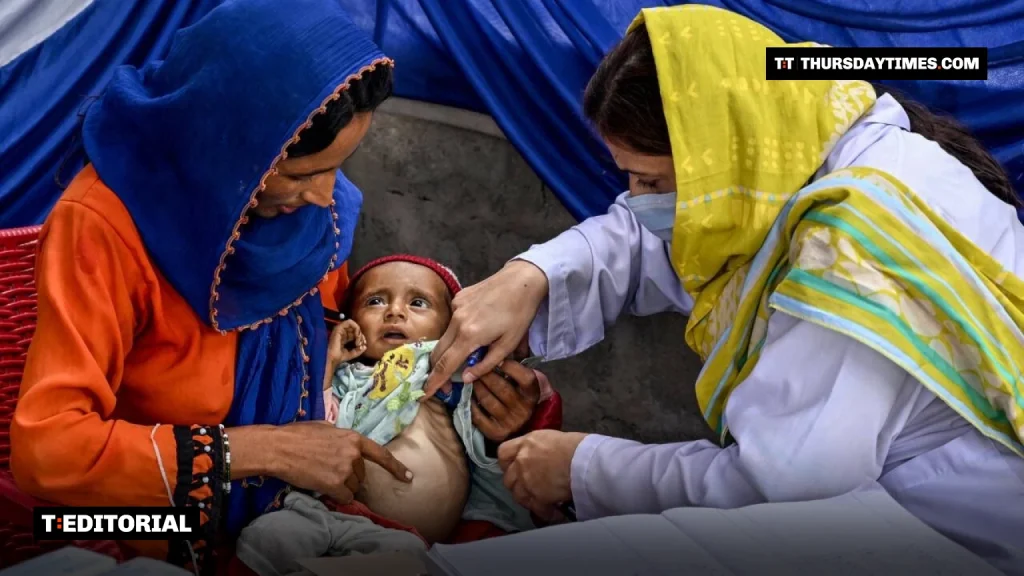
A mother holds her thin baby on her lap while a doctor examines the child at a nutrition programme in a Sindh village
“Manufacturers must also explain the benefits of breastfeeding on the information panel of every pack.”
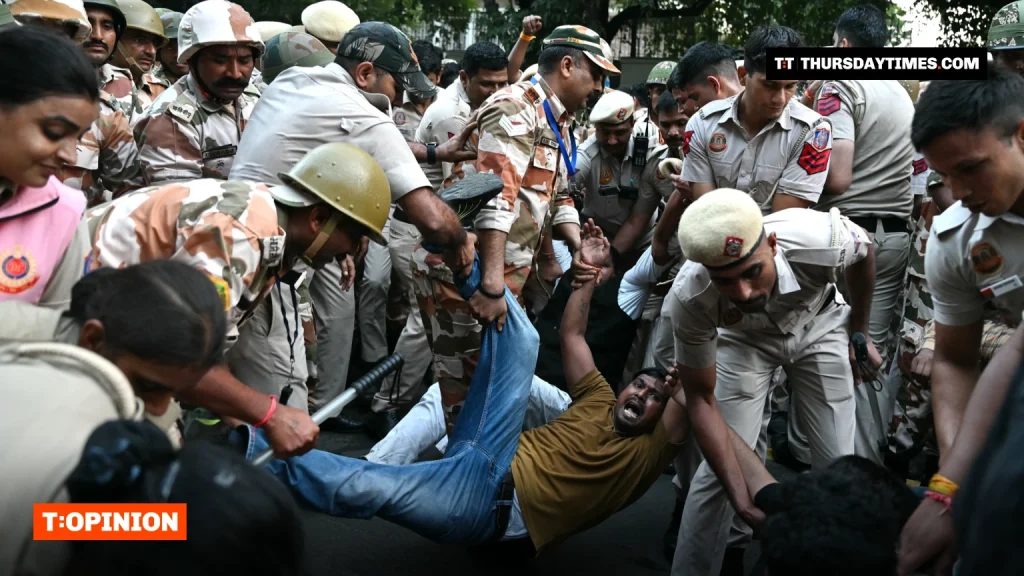
Police officers in helmets and uniforms drag a shouting protester in jeans across the road during a crowded demonstration
Police drag a protester during a demonstration in New Delhi against the removal of names from voter lists on October 12, 2026. File photo. — SAJJAD HUSSAIN/AFP

The fetish of democracy

“90% of Indians have feudal, not rational, mindsets, full of casteism and communalism, which I often call ‘gobar’, so they are unfit to vote,” writes former Supreme Court of India Justice Markandey Katju.

Words by Justice Markandey Katju

In India the topic which is nowadays being hotly discussed, and which has gone viral in the media, is vote chori (vote theft) by the Chief Election Commissioner Gyanesh Kumar.

This followed the publication on 23.09.2026 of an investigative report by the reporter Ritika Chopra in the prominent Indian newspaper The Indian Express on the alleged unilateral deletion by Gyanesh Kumar of the names of 130 million voters who would have voted against the ruling BJP, against the objections of his two colleagues in the Election Commission of India.

There have been widespread protests in India calling for the removal or resignation of Gyanesh Kumar, including the recent rally on November 1 on Delhi’s Ramlila grounds called by Congress party leader Rahul Gandhi, and attended by the leaders of many opposition parties.

These protests have proclaimed the murder of democracy by the acts of Gyanesh Kumar. The assumption is that democracy is a good thing in India, and therefore vote chori (vote theft) is a bad thing as it undermines democracy. But is this assumption correct?

The test of every political activity is one, and only one: does it raise the standard of living of the people? Does it give people better lives?

The test of every political activity is one, and only one: does it raise the standard of living of the people?

In my opinion, democracy is not an end in itself. It can only be a means to an end. And that end must be raising the standard of living of the people, and giving them better lives. If democracy helps in obtaining that end, it is a good thing, but not otherwise. In India, our democracy blocks the progress of the country, so how can it be called a good thing? Therefore the very assumption that democracy is a good thing for India is questionable. Let me explain.

In theory, and in the abstract, democracy is a fine, rosy word, as it connotes rule by the people. But we have to see what democracy actually is as practised in India, and not what it is in theory and in the abstract. In other words, democracy must not become a fetish, to be worshipped like a holy cow.

Everyone who has even a little knowledge of Indian politics knows that in India democracy largely runs on the basis of caste and religious vote banks. When most Indian voters cast their votes in elections in India, they do not see the merit of the candidate, whether he is a good man or a bad one, whether if elected he will work for their welfare or not, whether unemployment and prices of essential commodities have risen or not. They only see the caste or religion of the candidate (or the caste/religion his party claims to represent).

In the 2024 Indian parliamentary elections almost half the MPs elected had criminal records, which means that most Indian voters do not see whether the candidate they voted for is a criminal or not; they only see his caste or religion.

Casteism and communalism are feudal forces, and without destroying them India cannot progress. But democracy, as it really functions in India, further entrenches and fortifies casteism and communalism (as it runs on their basis).

Democracy must not become a fetish, to be worshipped like a holy cow.

There are 28 states in India and 8 union territories, so at all times either some state/union territory assembly election is taking place, or preparations for it are going on. In other words, the country is permanently in election mode. For instance, elections in UP, the biggest state in India, and in Punjab, are scheduled for February or March 2027.

To win elections, Indian politicians polarise society, and incite caste or religious hatred, to get votes. For instance, in UP, the biggest state in India, mosques of Muslims are nowadays being targeted (obviously to secure Hindu votes in the forthcoming state assembly elections).

This is how democracy actually functions in India.

China has no democracy, but it has rapidly progressed, and has become the second superpower in the world, with a GDP of 21.5 trillion dollars, while India’s GDP is said to be about 4 trillion dollars, and even that figure is questionable.

4THE THURSDAY TIMES · THURSDAYTIMES.COM
SUNDAY 8 NOVEMBER 20265

What peace in the Gulf would be worth to Pakistan

Cheaper fuel, Qatari gas back for the winter, a safer path for Reko Diq and protection for the Gulf jobs behind Pakistan’s remittances: the sums behind the country’s stake in a US-Iran deal

TT Monitoring Desk · 6 min read
Motorcyclists queue at night at a brightly lit petrol station forecourt in Karachi
People queue for fuel at a petrol station in Karachi on March 6, 2026. File photo. — AKHTAR SOOMRO/REUTERS

Pakistan has spent the war with Iran as a mediator. It has also been one of the war’s quieter casualties. If the talks now being pushed by Washington, Islamabad and Doha produce a settlement, the gains will show up in four places: at the petrol pump, on the gas grid, at the mines of Balochistan and in the money sent home by Pakistanis working in the Gulf.

None of these gains is guaranteed, and some would take months to arrive. But they are large, and they explain why Field Marshal Asim Munir’s near-daily conversations with US Vice President JD Vance are not an act of charity. Peace next door is worth more to Pakistan than to almost any country outside the war itself.

The clearest measure of the war in Pakistani lives is the price of fuel. Petrol peaked at Rs458.41 a litre on April 3 and diesel at Rs520.35. Since then, as world oil prices fell, the government has cut the price four times in a row under its pricing formula. From Friday, petrol costs Rs352.59 a litre and diesel Rs382.25.

The direction of world prices depends heavily on the talks. When Vance said on November 2 that Washington had “made some progress” with Iran, oil fell more than 7 per cent in a day. A settlement that reopens the Strait of Hormuz would remove the war premium that has sat on every barrel shipped out of the Gulf. A collapse would put it back.

How much of any fall reaches the pump is a decision for Islamabad. The government levies about Rs114 a litre in taxes and duties on petrol and Rs100 on diesel, and under a 30-day arrangement refineries are absorbing Rs15 billion, which the government says takes Rs14.71 a litre off petrol. Cheaper oil gives the finance ministry a choice between lower prices and higher revenue. Either way, it widens the room the country has to work with.

The war’s effect on gas has been harsher and will last longer. Pakistan buys most of its imported liquefied natural gas from Qatar under long-term contracts and uses it for power, industry and homes. QatarEnergy has declared force majeure since the war began, and has now told Pakistani buyers that it will not deliver before the end of December. That leaves Pakistan facing the winter peak without its main supplier.

Even the cargoes Pakistan arranged have been at risk. On November 1 the Qatari tanker Al Mayeda, carrying LNG for Pakistan, came under fire near the Strait of Hormuz, hours after Iran had cleared its passage following talks with Islamabad. It turned back into the Gulf. Pakistani diplomacy had kept several earlier shipments moving safely, but the episode showed how thin the margin is.

The country’s exposure is made worse by a gap in its own infrastructure: Pakistan has no LNG storage, so its supply depends entirely on ships arriving on schedule. A US-backed group has applied to build a $4.4 billion terminal at Port Qasim with storage tanks and a 1,100km pipeline upcountry, after a venture of the Lucky Group and QatarEnergy pulled out. That will take years. A ceasefire that lets Qatari cargoes sail normally would help this winter.

The war has also reached investments that have nothing to do with energy. At Reko Diq in Balochistan, one of the largest undeveloped copper and gold deposits in the world, first production could slip by two years to 2030, government sources and industry insiders say, with security in the province and the war in neighbouring Iran both cited.

Barrick, the Canadian company that holds half the project, began a review in February, the month the war started. Nearly $1 billion has already been invested, all 700 permanent staff and about 2,000 contract workers have been kept on, and people at the site insist work has not stopped. But the company’s chief executive has said it wants “some sort of security improvement” before committing to a full construction schedule. Balochistan shares a long border with Iran. A settlement next door would not solve the province’s security problems, but it would remove one of the reasons for delay.

The biggest number in Pakistan’s external accounts is not oil or gas. It is the money sent home by Pakistanis abroad. In April alone, workers sent $3.5 billion, led by Saudi Arabia at about $842 million and the United Arab Emirates at about $735 million. Britain, the European Union and the United States made up most of the rest.

So far the flow has held up remarkably well. The State Bank has raised its forecast for this fiscal year to $45 billion, and its own reserves have passed $21.5 billion, the highest on record. Saudi Arabia has rolled over a $3 billion deposit. That resilience owes a great deal to the fact that the Gulf economies have kept working through the war.

The risk is in escalation. Saudi Arabia has come under attack from Yemen’s Iran-aligned Houthis, and Gulf energy sites remain targets. A wider war that hit the cities where Pakistanis work would threaten the single most reliable source of foreign exchange the country has. A settlement protects it.

All four of these channels end up in one place: the country’s external accounts. Pakistan’s central bank reserves have passed $21.5 billion, the highest in its history, and the finance ministry puts gross external repayments this cycle at about the same figure. Most of that is rolled over rather than repaid in cash. In the same week that the reserves record was announced, Saudi Arabia rolled over $3 billion, and China and Kuwait were reported to have promised to do the same with $4.3 billion more.

That is a far stronger position than the country held two years ago, but it leaves little room for shocks. A higher oil bill, emergency purchases of spot LNG at winter prices or a dip in Gulf remittances would all come straight out of that cushion. A settlement works in the other direction: cheaper fuel imports, cheaper gas once Qatari cargoes return, and steadier inflows from the Gulf would all add to the reserves rather than draw them down.

There is a fiscal side too. Lower world prices let the government either pass relief to consumers or collect more from the levy it already charges. With the economy only recently stabilised, that room to choose is itself worth having.

THE THURSDAY TIMES · THURSDAYTIMES.COM5
HOME · CULTURE · FOOD · SUNDAY 8 NOVEMBER 20266

Lamps, sweets and a long weekend: how Pakistan’s Hindus are getting ready for Diwali

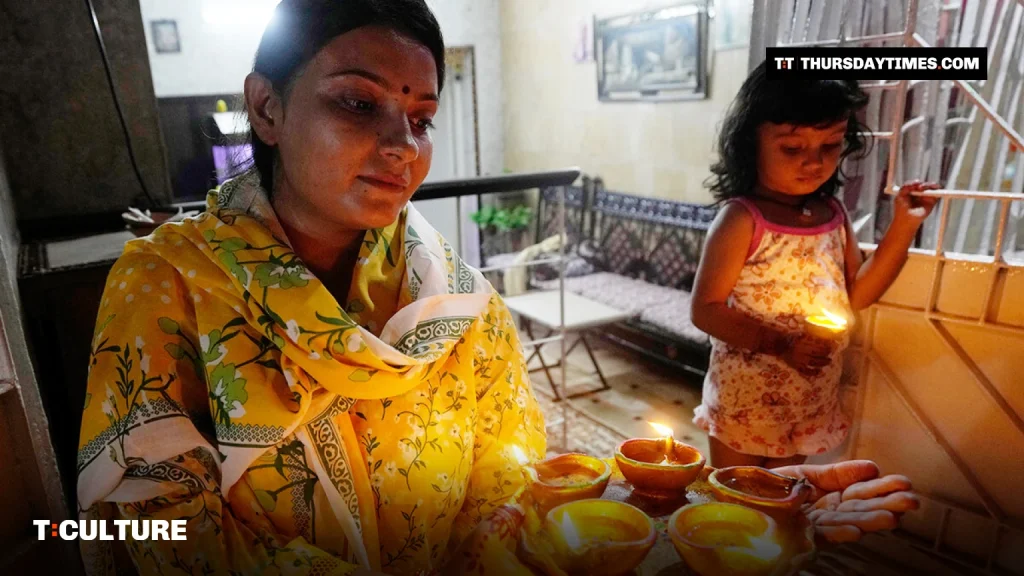
A woman in a yellow sari and a small girl in a pink dress tend rows of lit clay lamps
A Hindu woman and a young girl hold clay lamps during Diwali celebrations in Karachi. File photo. — AP

From temple courtyards in Karachi to Tharparkar, families are preparing for the festival of lights on Sunday, with a holiday in Sindh on Monday and state celebrations in Punjab

TT News Desk · Karachi

Pakistan’s Hindus celebrate Diwali, the festival of lights, on Sunday, and the preparations stretch from temple courtyards in Karachi to the desert villages of Tharparkar.

A long weekend in Sindh: the provincial cabinet, chaired by Chief Minister Murad Ali Shah, has approved a holiday on Monday, November 9, for Sindh’s Hindu community, home to most of the country’s Hindus. Diwali has been an optional holiday across Pakistan since 2016. Monday is also Iqbal Day, a public holiday for everyone, so many families have three days together.

State celebrations in Punjab: the Punjab government planned Diwali events across the province, with a festival in Rahim Yar Khan on November 4 and another in Lahore on November 6, Minority Affairs Minister Ramesh Singh Arora announced. He invited Hindus from Sindh, Balochistan and nearby areas to join the celebrations in Rahim Yar Khan, which sits close to Punjab’s border with Sindh.

In homes and temples: the days before Diwali are for cleaning and decorating. Families buy new clothes, fill rows of clay lamps, or diyas, with oil, draw rangoli patterns in coloured powder at their doorways and trade boxes of sweets with neighbours, Hindu and Muslim alike. On Diwali night they perform the Lakshmi puja, a prayer to the goddess of wealth and good fortune, before the lamps are lit and the fireworks begin. In Karachi the focus is the Shri Swaminarayan temple on M.A. Jinnah Road, the city’s largest, where stalls selling lamps, decorations and figurines have set up behind the temple in past years. In Lahore the main ceremony is usually held at the Krishna Mandir on Ravi Road, strung with lights and flowers.

Across the border, the Golden Temple in Amritsar lit up on Saturday night on the eve of the festival, which Sikhs also mark as Bandi Chhor Divas.

Two shopkeepers wait behind glass counters of mobile phones in a darkened market, lit only by small lights inside the cases

Power cuts this weekend in Lahore, Islamabad and Rawalpindi: check your area

TT Islamabad Bureau · Islamabad

Parts of Islamabad, Rawalpindi and Jhelum will be without electricity on Sunday, and parts of Lahore and nearby districts from Sunday to Tuesday, as the two power distribution companies switch off feeders for maintenance.

Islamabad and Rawalpindi, Sunday: the Islamabad Electric Supply Company says most of the affected 11kV feeders will be off from 9am to 2pm for annual maintenance, construction and development work, and upkeep of grid transformers. In Islamabad the list covers F-6, including Jinnah Super, the Pak Secretariat and State Life, parts of F-7, Tarlai, Rawal Town, Khanna Dak, Bara Kahu, Bani Gala, Margalla Town, the Orchard Scheme, Ghouri Town, Park Enclave, Bahria Enclave and the IT Park. In Rawalpindi city, Satellite Town feeders serving Al-Noor Colony, KRL Road, Airport Housing Society, A Block and Holy Family Hospital will be shut. In Rawalpindi Cantt, Rawat, Mandra, Chaklala and Tariqabad are affected, and the longest cut is on the feeder near Baga Sheikhan, off from 7am to 5pm. The New GHQ feeder will be off from 9am to 5pm, and some Chaklala feeders from 10am to 1pm.

Lahore, Sunday to Tuesday: the Lahore Electric Supply Company says most of its shutdowns will run from 9am to 2pm, with some from 10am to 3pm. On Sunday, the Ghazi grid station feeders serving IT Centre, Hussain Road, Altaf Colony, Bhains Road and Ali Muhammad Bazaar will be off from 9am to 2pm. On Monday, work at grid stations including Allama Iqbal Town, Johar Town, Lahore Cantt, Sabzazar, Shadman, Township, Wapda Town, Kahna and Raiwind will affect Data Abad, Muhammadpura, Shah Kamal, Jallo Park, Hafizpura, Johar Town, Sarwar Road, Kashmir Block, Chauburji Park, Nawan Kot and Punjab Society 2, as well as Kasur, Chunian and Kot Radha Kishan. On Tuesday, the list moves to DHA, Garden Town, Gulshan Ravi, Shahdara, Mochi, New Kot Lakhpat and Wapda Town, with Shadbagh, Misri Shah, Raiwind Road, Ahmad Park, IT Tower and Manawan affected, along with Muridke, Sheikhupura, Kala Shah Kaku, Okara, Pattoki, Nankana and Narang.

Before the power goes: charge phones, laptops and power banks the night before, and fill overhead water tanks, because electric pumps will stop with the supply. Keep fridge and freezer doors shut to hold the cold. Anyone who relies on medical equipment at home, such as an oxygen concentrator, should arrange a backup or stay with someone outside the affected area.

Schedules can change at short notice, and work may finish early or run late. To check your own feeder, call the companies’ helpline on 118.

The Golden Temple glows on the eve of Diwali
Breakfast with the blind dolphins: a new Indus resort opens at TaunsaThe Punjab tourism corporation’s 120-kanal resort at Taunsa Barrage near Kot Addu puts visitors on the bank of one of the best places to see the endangered Indus river dolphin
Saami family wins Mozilla backing to map its 800-year-old khayal
6T:LIFE · THE THURSDAY TIMES · THURSDAYTIMES.COM
CRICKET · FOOTBALL · THE WORLD · SUNDAY 8 NOVEMBER 20267
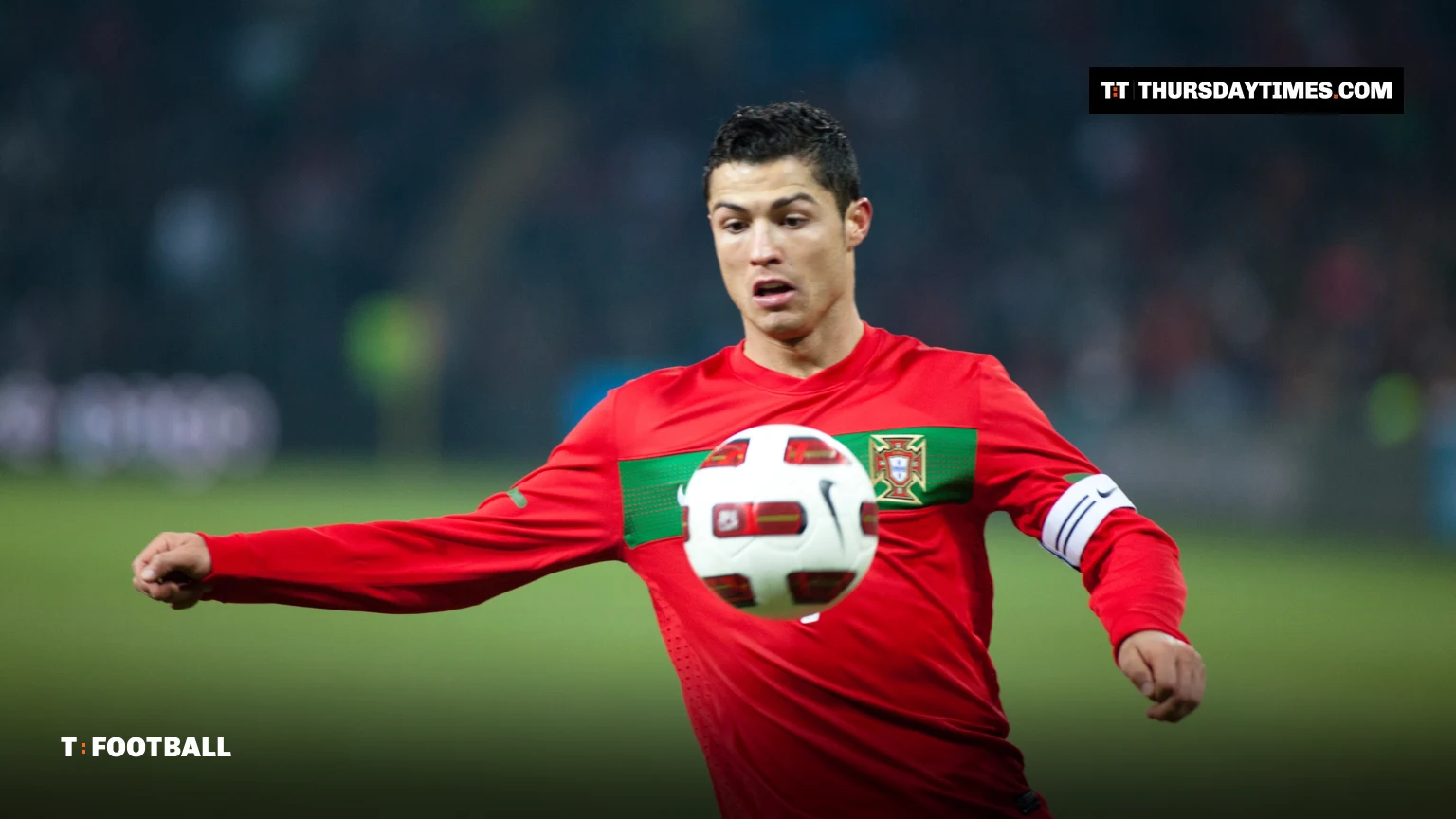
Cristiano Ronaldo in a red Portugal shirt and captain’s armband, chesting a football
FOOTBALL

Cristiano Ronaldo retires from Portugal after 23 years, 234 caps and 146 goals

The 41-year-old hands back the number 7 shirt, weeks after walking out of the national camp

TT Football Desk · Lisbon

Cristiano Ronaldo announced on Thursday that he is retiring from international football, ending a 23-year Portugal career in which he set men’s world records with 146 goals and 234 caps.

“To the Portuguese people, the day has come for me to hand back the number 7 shirt of our national team,” the 41-year-old said in a long video on X. “The goals pass, the cups are in museums, the records end up being beaten.”

He made his debut in 2003, won Euro 2016 and the Nations League in 2019 and 2025, and played at 12 major tournaments: six World Cups and six European Championships. Portugal went out of this year’s World Cup in the round of 16, beaten by eventual champions Spain.

The decision follows a fall-out with new head coach Jorge Jesus. Ronaldo stayed on the bench throughout a 2-1 win over Norway and left the national camp on the eve of the match against Denmark on October 1. His final game was a 1-0 win over Wales.

The Portuguese Football Federation said a fitting tribute would be paid to him in future. “Thank you for everything, CAPTAIN! This will always be your home!” it said. Ronaldo continues at Al Nassr, where he is chasing 1,000 career goals.

First published 4 November 2026

Hunza’s Maliha Ali stuns Russian champion at MMA World Championships

The 24-year-old won by split decision to reach the quarter-finals in Tbilisi, where her twin sister Manesha is also chasing a world title

Maliha Ali, a 24-year-old from Hunza, has beaten Russia’s two-time European champion Veronika Drozdova at the IMMAF World Championships, reaching the quarter-finals of the top event in amateur mixed martial arts.

She won by split decision in Tuesday’s featherweight (65.8kg) bout in Georgia, against a 19-year-old from a Russian team of more than 60 athletes. Maliha, who celebrated in prostration with the Pakistani flag over her shoulders, took the first two rounds, working Drozdova against the cage and then landing heavy blows from full mount after a takedown. She tired in the third, which went to the Russian, but had done enough.

“We worked on our opponent’s game plan, how she fights, and executed our strategy,” she said. “And thankfully it worked.”

Maliha, also a wushu champion and national kickboxing gold medallist, came to Tbilisi with a silver medal from the IMMAF World Cup in Angola this year. The Pakistan MMA Federation then ran a six-week camp and brought in an international jiu-jitsu and grappling coach to fix the weaknesses it saw there.

“We come from almost nothing; the only thing we have is our grit and desire to succeed,” said federation president Omar Ahmed, who described Pakistan as among the least-resourced teams at an event where Russia has one of the best-funded programmes.

Maliha’s quarter-final was set for Wednesday against Mexico’s Andrea Gabriela Guzman Salazar. Her twin sister, Manesha, who won gold at the World Cup in Luanda this year, was due to fight Poland’s Martyna Caruk on the same day. Results had not been reported at the time of writing.

The championships run until November 7, with 881 athletes competing for world titles.

Maliha Ali shouts in celebration with the Pakistani flag held around her shoulders
Maliha Ali celebrates her win over Veronika Drozdova at the IMMAF World Championships in Tbilisi on November 3. — PAKISTAN MMA FEDERATION
Crowds and a floodlit pitch at King Fahd International Stadium in Riyadh
King Fahd International Stadium in Riyadh in April 2014. File photo. — ALI AL-MAZARQAH/WIKIMEDIA COMMONS (CC BY-SA 3.0)
First published 4 November 2026

Saudi Pro League postpones all this weekend’s matches after Asian Cup move

The Saudi Pro League has postponed all of this weekend’s matches, hours after the Asian Cup was pushed back by almost a year because of the attacks on the kingdom.

The league said the decision was part of a wider review of the 2026-27 fixture list, with the new Asian Cup dates “creating additional flexibility in the domestic football calendar”. It gave no new dates for the games.

All of Matchday 13 is affected. Al-Qadsiah were due to host Al-Fayha on Thursday and Al-Nassr to visit Al-Hazem, with Al-Ittihad at home to NEOM on Friday. Al-Hilal were to play Al-Ettifaq in Dammam on Saturday, and Al-Ahli to host Al-Taawoun in Jeddah.

The league had already moved several matches in October after attacks on the country, including a missile strike on Riyadh’s airport. It has mostly managed to carry on as usual until now.

The Asian Cup, which was to begin on January 7, will now run from December 23, 2027, to January 21, 2028. The new dates must still be approved by Fifa, and will ease a crowded calendar that coaches have complained about. “It is difficult for the same player to play every three days,” Al-Ittihad coach Jens Wissing said earlier.

Other sport in the Gulf is also under pressure. The Qatar Grand Prix, set for November 27 to 29, and the Abu Dhabi race that follows it are in doubt, after Formula 1 lost its Bahrain and Saudi races in April.

THE THURSDAY TIMES · THURSDAYTIMES.COM7
PULL-OUT · THE THURSDAY TIMES08.11.20268
Westline
BRITAIN, FROM THE OTHER SIDE OF THE LINEWESTLINE × THE THURSDAY TIMES
A STATE THAT STOPPED DECIDING

The backlog Britain built

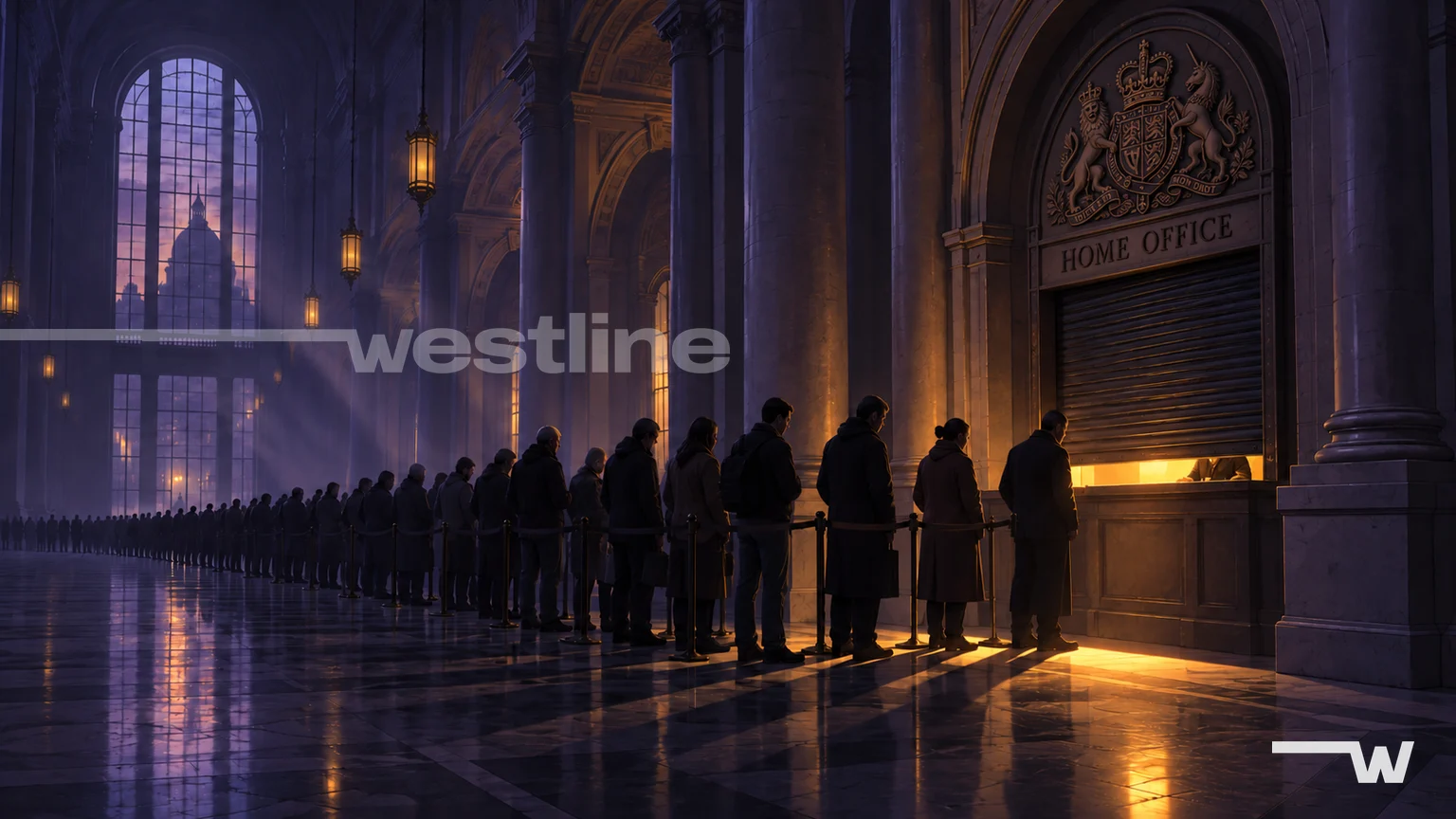
A queue stretches back into the dark while the Home Office counter stays barely open — Illustration: Westline

Ministers of both parties have spent a decade blaming the people in the queue. The numbers point at the people running it.

Abdullah Esquire
Read it in fullthursdaytimes.com/westline

CONSIDER SOMEONE WHO CLAIMED asylum in Britain in January 2023. Where they came from, and how they arrived, matters less than what happened next — which is to say, very little. When the National Audit Office took a sample of 5,000 claims lodged that month and checked on them nearly three years later, more than half were still unresolved. In the meantime our claimant will probably have been housed at public expense, largely barred from working, interviewed by a caseworker who may not have been in post for long, refused, appealed, and then left waiting again: this time for a tribunal that now takes, on average, well over a year to hear a case.

In the political conversation, that person is the problem. The backlog is discussed as though it were a weather system blown in off the Channel — too many boats, too many claims, too many people gaming the system. Arrivals do matter, and nobody serious pretends otherwise. The number of people claiming asylum peaked at around 110,000 in the year to September 2025, the highest figure in nearly two decades.

But a backlog is not a measure of how many people turn up. It is the gap between the cases that come in and the cases a department decides — and decides properly. Judged that way, the story of Britain’s asylum queue is not one of an overwhelmed border. It is the story of an institution that, over ten years, stopped doing its core job, then tried to do it at a sprint, then passed the consequences down the corridor to the courts. The people in the queue designed none of it.

Initial asylum decisions made per year

Home Office annual statistics · output collapsed before small boats became a mass phenomenon, then quadrupled on command

The rot set in long before small boats became a nightly news item. In 2015 the Home Office made 28,623 decisions on asylum applications. By 2017 that had fallen by a quarter, to 21,269, and the department never recovered its old pace. The more striking figure is what happened per head. According to the Institute for Government, in 2011/12 some 380 caseworkers were each producing around 13.7 decisions a month. By December 2022 there were 1,237 of them, managing about four apiece. The workforce had more than tripled; the output of each worker had fallen by over two-thirds.

Then, in January 2019, with ministerial approval, the department dropped its own service standard: the commitment to decide 98 per cent of straightforward claims within six months. The stated reason was to prioritise the most vulnerable cases rather than the simplest. The practical effect was to remove the one clock that had been ticking. The Migration Observatory later found that in 2014 eight in ten applicants received an initial decision within six months; within five years it was one in four.

Why this isn’t a story about the Channel In 2021 the UK had 14.9 cases in its asylum backlog per 10,000 people, more than Germany or France, even though it received far fewer applications per head than either. Countries facing heavier demand were simply getting through their caseloads faster. By December 2022 two-thirds of those waiting — almost 110,000 people — had been in the queue for more than six months. That is not a surge. It is a department that had quietly stopped deciding things.

In December 2022 Rishi Sunak did something the Home Office had not done in years: he set it a deadline. The so-called legacy backlog — roughly 92,000 claims lodged before 28 June 2022 — would be cleared within twelve months. The department doubled its decision-makers to around 2,500 and, for nationalities with very high grant rates such as Afghans, Eritreans and Syrians, swapped lengthy interviews for a questionnaire. The results were instructive. In one four-week stretch in November and December 2023, officials made 20,481 initial decisions, more than in the whole of 2021. Across that year they made 112,138. For anyone who still believed the queue was driven by forces beyond Whitehall’s control, that was the rebuttal.

The sprint had a cost, though, and it was paid in shortcuts. Asylum withdrawals in 2023 were more than four times the 2022 figure, and 79 per cent of them were “implicit” — claims the Home Office itself closed because someone missed an interview, missed a questionnaire deadline or had not updated an address. When the pledge was declared met, 4,537 legacy cases were still awaiting a decision, and the chair of the UK Statistics Authority warned that the episode might affect public trust. A Conservative government that had staked its reputation on control ended up being rebuked by the statistics watchdog for its arithmetic.

Worse, at the same moment that one arm of the department was racing through old cases, another had been told to stop deciding new ones. The Illegal Migration Act meant that claims from those who had arrived irregularly after 7 March 2023 could not be granted. By the end of that year, 55,533 of the 98,599 claims awaiting a decision had been made after the bill was introduced. The backlog stopped falling and, by March 2024, stood at 118,329 people. Those claims were being held for removal to Rwanda, a scheme that by Labour’s later accounting had cost around £700 million — £290 million of it paid to Kigali — to send four volunteers. The Home Affairs Committee later concluded that holding up decisions while the scheme stalled had made the crisis worse. Parliament had, in effect, legislated the state into not processing cases, and then the state paid to house everyone it had declined to process.

Every month a claim sits undecided is a month of bed, board and administration, and this is where the failure becomes a fiscal one. In 2019 the Home Office signed seven regional contracts with Serco, Mears and Clearsprings, expecting them to cost £4.5 billion over ten years. The National Audit Office now puts the figure at £15.3 billion. Between December 2019 and December 2024 the number of asylum seekers in paid-for accommodation rose from about 47,000 to 110,000. Hotels, the emergency option, became the default: at the peak, in September 2023, 56,018 people were in them, spread across roughly 400 sites.

The economics were dreadful. In 2024-25 hotels held around 35 per cent of people in asylum accommodation but swallowed 76 per cent of the contracts’ annual cost.

NAO, asylum accommodation contracts (2025) · hotels held just 35% of people in the system

The three providers made a combined profit of £383 million between 2019 and 2024. The NAO’s verdict was that the department had few levers to control the cost. Across the Home Office and Ministry of Justice, asylum cost £4.9 billion in 2024-25.

For a centre-right reader, this ought to be the scandal. A man waiting for a decision cannot choose to move out of a hotel and is, for the most part, forbidden from earning his own keep. The bill is not run up by his presence so much as by the length of his stay, and the length of his stay is set in Whitehall. Treat the backlog as a migrant problem and you reach for deterrents. Treat it as a productivity problem and you reach for the thing that actually saves money: a decision.

WESTLINE · A THURSDAY TIMES PULL-OUT8
Archive