Sunday 15 November 2026 Archive
SUNDAY 15 NOVEMBER 2026Dangerous to those who trade in lies.THE E-PAPER · ENGLISH EDITION · 8 PAGES
234567Westline pull-out8

Taiwan tells Chinese coast guard ship to leave its waters in radio clash

Taiwan coast guard vessel Hualien at sea
The Taiwanese coast guard vessel Hualien, which ordered China Coast Guard ship 2503 to leave Taiwan’s exclusive economic zone on Thursday. — HANDOUT/TAIWAN COAST GUARD ADMINISTRATION

Taiwan’s coast guard says it ordered a Chinese ship out of its exclusive economic zone off Orchid Island and is still tracking Chinese vessels off the east coast.

TT Foreign Desk · Taipei

Taiwan’s coast guard said on Saturday it was still tracking Chinese coast guard ships off the island’s east coast after one of its patrol vessels told a Chinese ship over the radio to leave Taiwan’s exclusive economic zone.

The Coast Guard Administration said its vessel Hualien detected China Coast Guard ship 2503 at about 3pm on Thursday, some 40 nautical miles (74km) southeast of Orchid Island and 14 nautical miles outside Taiwan’s restricted waters.

The Chinese ship broadcast that it was carrying out a law-enforcement patrol east of Taiwan, declaring that Taiwan was part of China and that the People’s Republic of China was the sole legitimate government of China, the agency said.

The Hualien rejected those claims in its own broadcast, saying that the Republic of China (Taiwan) was a sovereign, independent country and that Taiwan and China were not subordinate to each other. It told the Chinese crew they were inside Taiwan’s exclusive economic zone, where China had no jurisdiction, and demanded they leave.

By 8am on Saturday the Chinese ship had moved away and was about 67 nautical miles southeast of Hualien port, the coast guard said. It accused China of undermining freedom of navigation and regional peace, and of violating the UN Convention on the Law of the Sea, and said it would keep up its patrols.

The radio clash follows a week of Chinese military activity around the island. Taiwanese officials said this week that China had staged unannounced drills in the Pacific involving more than 100 vessels, days before President Xi Jinping is due to host Donald Trump and Vladimir Putin in Shenzhen.

Xi said this month that “reunification” with Taiwan was the Communist Party’s historic mission. Beijing claims the self-governed island as its own territory and has not ruled out the use of force to take it.

On Saturday, three more F-16V Block 70 fighters bought from the United States landed at Chihhang Air Base in Taitung county, the second batch of a 66-jet order. Deliveries had been due to start in 2023 and finish this year, but technical problems have pushed the timetable back.

Over 11,600 migrants reached Yemen in October despite fighting, IOM says

More than 11,600 migrants from the Horn of Africa landed in Yemen in October, the International Organization for Migration says, even as fighting between government forces and the Houthis spread along the coasts they cross to reach.

The UN migration agency counted 11,677 arrivals last month in its monthly flow monitoring report, down 1.2% from 11,841 in September. Most were Ethiopians.

The agency put the small drop down mainly to the fighting, which disrupted boat movements, particularly around the Bab al-Mandeb strait, and limited how safely its field teams could collect information.

Djibouti was the departure point for 60.6% of the migrants recorded, Somalia for 36%, and Oman for 3.4%, according to the IOM’s Displacement Tracking Matrix. Of those who sailed from Djibouti, 94% landed in Abyan province and 6% in Taiz.

Men made up 70% of arrivals, women 14%, and children 16%. The October count takes arrivals since January to 145,776.

Yemen is the main transit point on what aid agencies call the Eastern Route, which carries people fleeing conflict, poverty, and drought across the Red Sea and the Gulf of Aden in the hope of finding work in Saudi Arabia and other Gulf states.

The crossing is among the most dangerous in the world. In October, at least 139 migrants died and 84 were reported missing when a boat sank off Djibouti, the IOM said at the time.

Those who make it arrive in a country where fighting has displaced more than 340,000 people since August, and where UN agencies and rights groups have repeatedly warned of exploitation, detention, and the danger of moving across front lines.

“It told the Chinese crew they were inside Taiwan’s exclusive economic zone, where China had no jurisdiction, and demanded they leave.”Taiwan tells Chinese coast guard ship to leave its waters in radio clash Page 1

Xi’s Taiwan vow sets the terms for his meeting with Trump

A week before he meets Trump in Shenzhen, China’s leader told his party that taking Taiwan is a mission it must complete. A frozen arms package, the chips both sides want, and the Iran war will all be on the table, and Pakistan has a stake in calm.

TT MONITORING DESKPAGE 5 ›

Uzbekistan’s Mirziyoyev heads to Oman for state visit as trade ties grow

Uzbekistan’s President Shavkat Mirziyoyev will begin a state visit to Oman on Monday, the Diwan of the Royal Court announced on Saturday, as the two countries try to turn a small trade relationship into a wider economic partnership.

The royal court said the visit, which starts on November 16, was meant to strengthen relations between the two countries and widen cooperation across various fields, and that talks would cover issues of mutual interest. Oman’s ambassador to Uzbekistan, Sayyidah Wafa bint Jabr al Busaidi, said the two-day visit would deepen political consultations and advance economic and investment cooperation, with agreements and memoranda of understanding in the political, economic, and development fields on the table.

Mirziyoyev returns to the Gulf days after the COP31 climate summit in Antalya, where he told world leaders Uzbekistan aims to cut greenhouse gas emissions by 50% by 2035 and would take over the chairmanship of the International Fund for Saving the Aral Sea next year.

Trade between the two countries is still modest. Omani officials say it passed $3 million in the first eight months of 2026, but the two governments are working on about 35 joint projects worth more than $5 billion. Omani figures show Uzbek investment registered in the sultanate rose from 2.564 million rials in 2024 to 2.909 million rials in 2025, spread across 57 companies working in trade, construction, manufacturing, and professional services.

Oman’s Minister of Commerce, Industry and Investment Promotion, Anwar bin Hilal al Jabri, called the visit an important milestone and said cooperation should move beyond conventional trade towards industrial partnerships, joint projects, and a stronger business presence in both markets. He named manufacturing, food processing, and industries linked to natural resources as areas of opportunity.

Uzbekistan’s Minister of Investment, Industry and Trade, Laziz Kudratov, said the two countries were preparing a preferential trade agreement and an updated investment protection agreement, and were working to turn existing agreements into a road map with specific projects, timelines, and responsible institutions.

Logistics is a large part of the push. Oman’s state logistics group Asyad signed an agreement with Uzbekistan’s investment ministry in October 2024 to explore dry ports, railways, warehouses, air freight, and e-commerce, and Asyad and its Uzbek partners have since taken majority stakes in two logistics companies in Tashkent. Oman Air began twice-weekly direct flights between Muscat and Tashkent in July.

For doubly landlocked Uzbekistan, Omani ports offer one of several possible outlets to the Indian Ocean as Central Asian states look for trade routes south. The visit comes days after Uzbekistan sought Pakistan Air Force expertise during defence talks with Pakistan’s air chief.

The sixth session of the Omani-Uzbek joint committee is due to meet in Muscat on Sunday, on the eve of the visit. The two countries established diplomatic relations in 1992.

Uzbekistan’s President Shavkat Mirziyoyev and his wife wave from the door of their plane in Antalya
Uzbekistan’s President Shavkat Mirziyoyev and First Lady Ziroat Mirziyoyeva wave as they leave Antalya, Türkiye, after the COP31 climate summit this week. — PRESS SERVICE OF THE PRESIDENT OF UZBEKISTAN/HANDOUT
Pakistan todayPAGE 2
Imran Khan’s views appear to back new provinces, says Tariq Fazal
Elahi calls for end to political deadlock after briefing on Imran meeting
Philippines signs deals to tap Thai and Indonesian oil stocks in emergencies
THE THURSDAY TIMES · PUBLISHED BY THURSDAY MEDIA INTERNATIONAL · THURSDAYTIMES.COM1
US MIDTERMS · THE WORLD · PAKISTAN · SUNDAY 15 NOVEMBER 20262

Shehbaz and Field Marshal Munir share top spot in Muslim 500 list

The 2027 edition ranks the prime minister and the army chief joint No. 1 with Saudi Arabia’s King Salman and crown prince and Türkiye’s Erdoğan, citing the Makkah defence pact.

TT Islamabad Bureau · Islamabad

Prime Minister Shehbaz Sharif and Field Marshal Asim Munir have been ranked joint No. 1 in the 2027 edition of The Muslim 500, an annual list of the world’s most influential Muslims, alongside Saudi Arabia’s King Salman, Crown Prince Mohammed bin Salman, and Türkiye’s President Recep Tayyip Erdoğan.

The editors said the five leaders were placed together at the top because of the Makkah Joint Defence Agreement, the mutual-defence pact that Pakistan, Saudi Arabia, and Türkiye signed on August 7 and activated at an emergency summit in Riyadh. They called it a “historic decision” and said the pact had reshaped regional politics by bringing Saudi wealth, Turkish technology and manufacturing, and Pakistan’s military strength into one collective alliance.

The list puts all five under a single No. 1 ranking and describes them as leaders whose shared approach to collective security has transformed modern Islamic diplomacy.

Neither Shehbaz nor Munir appeared in the top 50 of last year’s edition, which was led by Qatar’s Emir Sheikh Tamim bin Hamad Al Thani. Sheikh Tamim is sixth this year.

The Muslim 500 is compiled by the Royal Islamic Strategic Studies Centre, a research body affiliated with the Royal Aal al-Bayt Institute for Islamic Thought in Amman, Jordan. The 2027 edition was released this week.

Four other Pakistanis made the top 50. The scholar Mufti Muhammad Taqi Usmani is ranked seventh, down from second last year. The preacher Maulana Tariq Jamil is 32nd, Maulana Nazar ur-Rehman, the amir of the Tablighi Jamaat, is 41st, and Maulana Muhammad Ilyas Attar Qadiri is 44th.

That puts six Pakistanis in the top 50, level with Egypt for the most of any country.

Iran’s Supreme Leader, Ayatollah Sayyid Mojtaba Khamenei, enters at No. 4, followed by Jordan’s King Abdullah II at No. 5. The UAE’s President Sheikh Mohamed bin Zayed is 12th and Malaysia’s Prime Minister Anwar Ibrahim 13th.

The edition named two Persons of the Year: Dr Hussam Abu Safiya, the former director of Kamal Adwan Hospital in Gaza, and Fatemeh Zahra Sheikhabadi of Minab.

The Makkah pact took effect in Türkiye this week after it was published in the country’s official gazette, completing Türkiye’s approval of the pact. The agreement’s text bars any member from leaving for ten years, and Pakistan’s army has said its commitment to Saudi security is “non-negotiable”.

Riyadh Air’s first Airbus A321neo rolls out in Hamburg ahead of test flightsThe Saudi carrier’s first narrow-body jet left Airbus’s paint shop in its pearl livery and will undergo test flights before delivery to Riyadh, the airline said.
Continued from page 1

Uzbekistan’s Mirziyoyev heads to Oman for state visit as trade ties grow

Uzbekistan’s President Shavkat Mirziyoyev and his wife wave from the door of their plane in Antalya
Uzbekistan’s President Shavkat Mirziyoyev and First Lady Ziroat Mirziyoyeva wave as they leave Antalya, Türkiye, after the COP31 climate summit this week. — PRESS SERVICE OF THE PRESIDENT OF UZBEKISTAN/HANDOUT

Uzbekistan’s President Shavkat Mirziyoyev will begin a state visit to Oman on Monday, the Diwan of the Royal Court announced on Saturday, as the two countries try to turn a small trade relationship into a wider economic partnership.

The royal court said the visit, which starts on November 16, was meant to strengthen relations between the two countries and widen cooperation across various fields, and that talks would cover issues of mutual interest. Oman’s ambassador to Uzbekistan, Sayyidah Wafa bint Jabr al Busaidi, said the two-day visit would deepen political consultations and advance economic and investment cooperation, with agreements and memoranda of understanding in the political, economic, and development fields on the table.

Mirziyoyev returns to the Gulf days after the COP31 climate summit in Antalya, where he told world leaders Uzbekistan aims to cut greenhouse gas emissions by 50% by 2035 and would take over the chairmanship of the International Fund for Saving the Aral Sea next year.

Trade between the two countries is still modest. Omani officials say it passed $3 million in the first eight months of 2026, but the two governments are working on about 35 joint projects worth more than $5 billion. Omani figures show Uzbek investment registered in the sultanate rose from 2.564 million rials in 2024 to 2.909 million rials in 2025, spread across 57 companies working in trade, construction, manufacturing, and professional services.

Oman’s Minister of Commerce, Industry and Investment Promotion, Anwar bin Hilal al Jabri, called the visit an important milestone and said cooperation should move beyond conventional trade towards industrial partnerships, joint projects, and a stronger business presence in both markets. He named manufacturing, food processing, and industries linked to natural resources as areas of opportunity.

Uzbekistan’s Minister of Investment, Industry and Trade, Laziz Kudratov, said the two countries were preparing a preferential trade agreement and an updated investment protection agreement, and were working to turn existing agreements into a road map with specific projects, timelines, and responsible institutions.

Logistics is a large part of the push. Oman’s state logistics group Asyad signed an agreement with Uzbekistan’s investment ministry in October 2024 to explore dry ports, railways, warehouses, air freight, and e-commerce, and Asyad and its Uzbek partners have since taken majority stakes in two logistics companies in Tashkent. Oman Air began twice-weekly direct flights between Muscat and Tashkent in July.

For doubly landlocked Uzbekistan, Omani ports offer one of several possible outlets to the Indian Ocean as Central Asian states look for trade routes south. The visit comes days after Uzbekistan sought Pakistan Air Force expertise during defence talks with Pakistan’s air chief.

The sixth session of the Omani-Uzbek joint committee is due to meet in Muscat on Sunday, on the eve of the visit. The two countries established diplomatic relations in 1992.

The world in brief

EVERY STORY IN FULL AT THURSDAYTIMES.COM
Fire sweeps through Syrian refugee camp in Lebanon’s Bekaa, hundreds homelessWitnesses said the blaze in Bar Elias destroyed tents housing about 486 people, while Lebanon’s Civil Defence said 30 tents and a car burned and one person was treated for smoke inhalation.
Kate to join William in Mumbai on first long-haul trip since cancerKensington Palace confirmed the Princess of Wales will join Prince William for three days of events in India, including Tuesday’s Earthshot Prize awards.
Kurdistan’s Khor Mor gas field still shut after attack, Dana Gas saysThe UAE company said the field was badly damaged in last Sunday’s drone strike and cannot produce any gas, as Iraq’s parliament set up an inquiry into the attack.
Mumbai raises Bollywood stars’ security a month after Tiger Shroff shootingPolice have moved at least two actors to Y-plus cover after the October attack on Shroff’s car, officials say, and are questioning a man held with two pistols over a suspected link.
Japan weighs 60 trillion yen defence plan as ministries clash over costThe Finance Ministry wants the five-year total kept below 60 trillion yen, while the Defence Ministry says it needs 70 trillion to 80 trillion yen for drones and missiles.
ASEAN summit opens in Manila with Trump due for final day and Quad talksLeaders meet from Sunday on Myanmar, the South China Sea, and the wars in the Middle East and Ukraine, with no breakthroughs expected, before Trump joins on Tuesday.

Pakistan

NATIONAL · ECONOMY · MILITARY

NAB widens assets inquiry into Asad Qaiser, who calls it political vendetta

TT Peshawar Bureau · Peshawar

The National Accountability Bureau has widened its inquiry into the assets of the PTI’s Asad Qaiser, the former National Assembly speaker, who on Saturday called the action political vendetta and said he would fight it in the courts.

In notices issued on Friday, the bureau asked the Registrar of Firms for details of partnership firms registered in the names of 10 people. It also sought records of business partnerships, partnership deeds, business addresses, and registration details linked to Qaiser, his family members, and others connected to the inquiry, which concerns assets allegedly beyond his known sources of income.

The details were made public on Saturday by Samar Haroon Bilour, adviser on information to Khyber Pakhtunkhwa Governor Faisal Karim Kundi, in a post on X.

Qaiser said in his own post on X that he had learned from media reports that NAB had opened an inquiry against him. He said he had spent 30 years of his life with the PTI, had lived with integrity, and rejected all the corruption allegations against him. The party, he said, has a zero-tolerance policy towards corruption.

He condemned the way the notice had been leaked with the names and personal details of his family members, including his minor children, and said it could harm their education, mental health, and future. NAB’s law requires information to be kept confidential at the inquiry stage, he said, and disclosing personal details in breach of that was unacceptable.

He said he regarded the action as political vendetta and would pursue every legal and judicial avenue to defend himself.

In a separate inquiry into corruption and assets allegedly beyond known sources of income, NAB has issued notices to nine people as witnesses in the case of Dr Amjad Ali, a former special assistant on housing to the Khyber Pakhtunkhwa chief minister.

Five of them have been asked about payments totalling Rs24.4 million for a property, numbered CLG-003, in Islamabad’s Eighteen housing society. The notices list payments of Rs10 million by Kashif Ali, Rs6 million by Waqar Ali, Rs4.9 million by Kamran Ali, Rs2 million by Ziaur Rehman, and Rs1.5 million by Imran Ali. All five have been told to appear before the investigation officer in Peshawar on November 19.

A second call-up notice in the same inquiry summons Muhammad Tariq as a witness on November 17 and asks for the complete bank account details and statements of four companies: Pioneers Residencia, Pioneers Town, Arabia Pioneers Cranes Trading and Transport, and Pioneers Construction and Real Estate Consultants. It follows an earlier notice to him on October 28. Officials of the Khyber Pakhtunkhwa Housing Authority have also been summoned as witnesses.

Qaiser, an MNA from Swabi, was speaker of the National Assembly from 2018 to 2022.

The notices come in the same week that Asad Mahmood, son of JUI-F chief Maulana Fazlur Rehman, skipped a second NAB summons in an inquiry into appointments at Pakistan Post.

Pakistan faces a warmer winter with more rain in the north, Met Office saysThe seasonal outlook sees above-normal temperatures across most of the country until January, the biggest rise in Gilgit-Baltistan, and a higher risk of smog in central Punjab.
Iran’s oil output sinks below what its refineries used before the warIran pumped 1.86 million barrels a day in October, down 46%, the IEA estimates, as a US naval blockade keeps its crude exports at a standstill.
KP declares eight upper districts vulnerable as above-normal snow forecastThe disaster authority says Chitral, Dir, Swat, Buner, and Kohistan are likely to get more rain and snow than usual this winter, and it has readied a contingency plan.
Petition seeks hospital transfer for jailed PTI leader Yasmin RashidThe petition says the former Punjab health minister, in custody since May 2023, has cancer and asthma and needs spinal surgery that cannot be done in jail.
Minister orders faster Tarbela 5 repairs as river releases riseWater Minister Mueen Wattoo visited the project on Saturday, where engineers said the main dam was not under threat, as Haripur officials warned riverside residents of releases above 150,000 cusecs.
InsideGulf, 3 · Views, 4 · Analysis, 5 · T:LIFE, 6 · Sports, 7 · Westline, 8
2THE THURSDAY TIMES · THURSDAYTIMES.COM
EMIRATES · SAUDI · QATAR · SUNDAY 15 NOVEMBER 20263

Dubai schools must report pupils missing five days in a row under new rules

The KHDA says private schools must report unexplained absences of five consecutive days, or when a pupil misses 10% of a term, under its student protection policy.

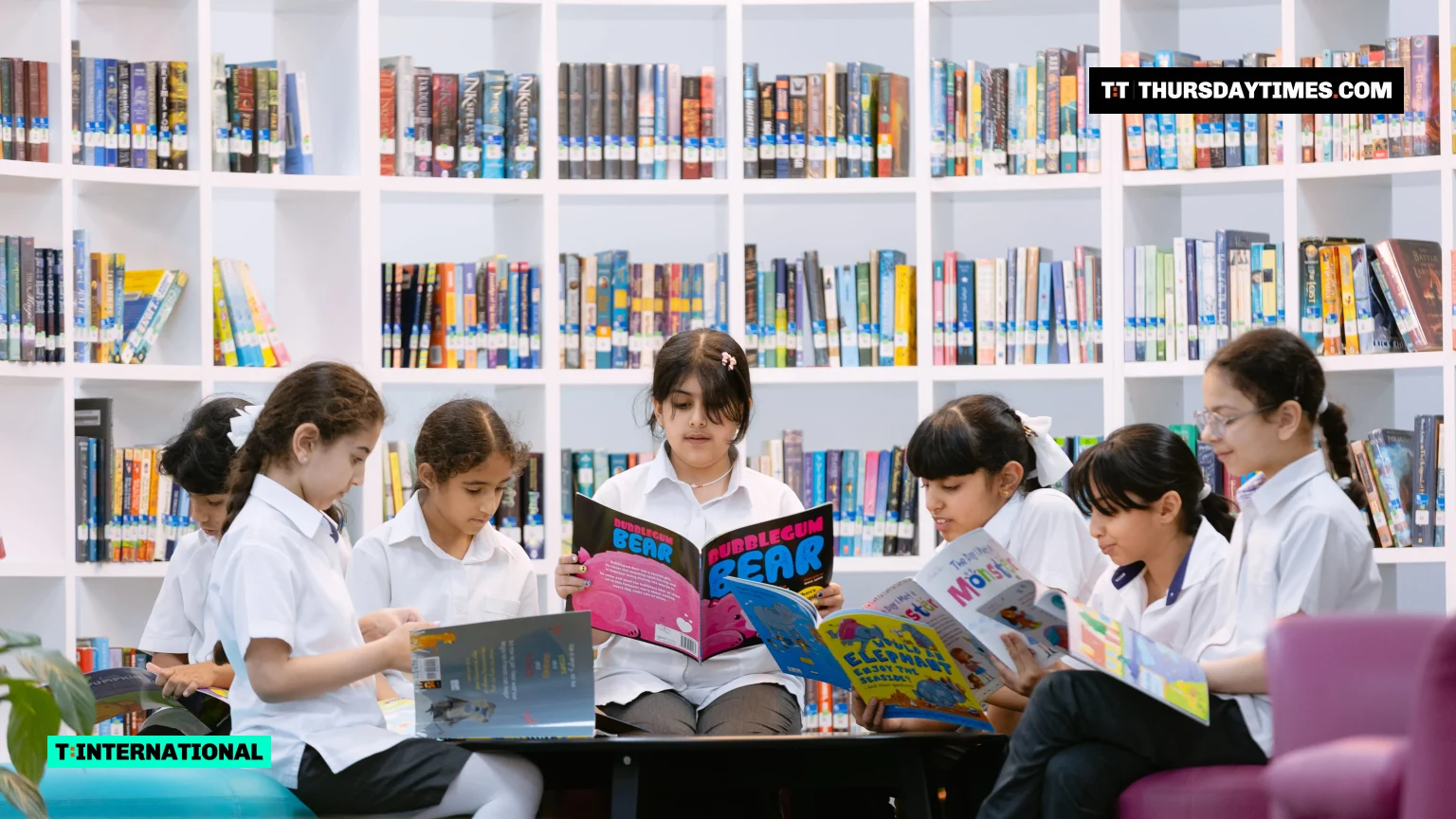
Schoolgirls in uniform reading books in a school library in Dubai
Pupils read in a school library in Dubai. File photo. — DUBAI MEDIA OFFICE/HANDOUT
Thursday Emirates · Dubai

Private schools in Dubai must report any pupil who misses five consecutive days without explanation, or whose absences add up to 10% of a term, under a student protection policy from the emirate’s education regulator, the Knowledge and Human Development Authority (KHDA).

The rules form part of the KHDA’s Student Safety and Protection Policy framework, which ties attendance tracking to spotting children who may be at risk. Either threshold triggers a report, but staff who have any concern about a pupil’s safety must alert the school’s designated protection coordinator straight away, without waiting for a threshold to be reached, the authority said.

Schools must have written attendance policies suited to their pupils’ ages and modes of study, keep reliable records, and analyse patterns of frequent or unexplained absence to find cases that need intervention. They may set lower thresholds for pupils known to be at greater risk, and must watch for repeated short absences during the school day, such as frequent trips to the toilet or the school clinic, where these may point to a problem.

For pupils under 18, schools must follow up absences with parents, guardians, or carers. Students aged 18 and over are contacted directly, and their families can be involved only with consent or where someone’s safety is at risk. The policy recognises that contacting a family may in some cases increase the danger to a child, and leaves that judgment to the school’s designated protection officer.

Every institution must also have a written, tested protocol for when a pupil cannot be found during the school day, with immediate response and escalation steps, and must record every attempt to reach a student and their family and every action taken to protect them. Schools have a 12-month phased implementation period.

Universities and vocational training institutes are not automatically bound by the five-day and 10% thresholds, and must set their own based on their terms, credit hours, and modes of study, including part-time, evening, and distance learning. Early childhood centres will measure absence against each child’s recorded attendance schedule rather than a single model for all children.

Schools with boarding facilities must appoint a protection officer and a deputy for residential areas from the start, and put out-of-hours supervision, visitor controls, and risk assessments fully in place within 12 months. Existing residential staff must complete specialised level-two training within three months.

The rules apply across Dubai’s private school sector, which educates most of the emirate’s children, many of them from expatriate families from South Asia.

Khamzat Chimaev celebrates after a UFC win

Chimaev routs Weidman 10-0 in Abu Dhabi as Dvalishvili wins after brawl

Abu Dhabi · thursdaytimes.com
Mozambique President Daniel Chapo stands between two ministers holding signed folders at a UAE–Mozambique business roundtable in Abu Dhabi

UAE and Mozambique conclude trade deal talks as non-oil trade nears $2.6bn

Abu Dhabi · thursdaytimes.com

Moody’s sees Saudi economy shrinking 2.8% this year before 2027 rebound

THE THURSDAY TIMES · THURSDAYTIMES.COM3
EDITORIAL · OPINION · SUNDAY 15 NOVEMBER 20264

PIMS needs more than a CEO. Every newborn ward needs a fire audit

Fifteen newborns died after the August fire at Islamabad’s largest public hospital. Restructuring PIMS is welcome, but the inquiry’s real lesson was about warnings left unanswered. Every neonatal unit needs an audit, working alarms, open exits, and a public record of what has been fixed.

On the morning of August 26, a fire swept through the nursery of the Mother and Child Health ward at the Pakistan Institute of Medical Sciences in Islamabad. Fourteen newborn babies died there. The fifteenth, the only baby a nurse managed to carry out, died on September 17. Now the government says it will give the capital's largest public hospital a chief executive, more financial and administrative freedom, and a new law to hold it together. That reform is welcome. But it answers a question the inquiry did not ask. The inquiry asked why a hospital that had been warned did not act. Until every newborn ward in the country can show that it has acted, a new title on the director's door will not keep the next baby safe.

The Health Minister, Mustafa Kamal, told the National Assembly's standing committee on health on Wednesday that a draft law prepared by a sub-committee of the prime minister would restructure PIMS. Its departments would get more financial and administrative powers. The draft will go to Prime Minister Shehbaz Sharif for approval. The hospital has already split itself into six major components, each to run as a separate hospital with its own head reporting to the chief executive.

None of this is wrong. PIMS is a vast, overstretched institution, and it has a governance problem as well as a safety one. But the families of fifteen babies are owed something more specific than a new organisation chart. They are owed proof that the failures the inquiry described have been fixed, at PIMS and in every other ward like it.

The government deserves credit for one thing it did quickly and well. It published its findings. The interim report, put before the prime minister on August 29, reconstructed the morning from CCTV footage almost second by second. The final report, made public on September 15, found “systemic and institutional failure” and made 34 recommendations.

What the reports describe is not a freak accident. A charge nurse came out of the nursery seeking help at 6:38am. Within about two minutes, smoke had blinded the cameras. The ward had no fire alarm and no sprinkler system. Oxygen points were fitted at each incubator, and the health minister said that day that the oxygen made the fire worse. Fifteen medically dependent newborns were being treated in a unit designed for ten. The final report named the electrical supply cable of an air-conditioning unit as the most probable point of ignition.

The gap that matters most sits between the first sign of fire and the first call for outside help. The emergency service's own records show the call arriving about 16 minutes after the nurse raised the alarm. Once called, its crew reached the hospital in six or seven minutes. The delay was inside the hospital. The committee found that PIMS's procedures did not say who should raise the alarm, who should call the fire brigade, who should take charge, or who should unlock the emergency exits. Of the hospital's 13 SOPs, only two sub-sections mentioned fire or emergencies at all. No officer was responsible for fire safety as a main job. It was an extra duty for an assistant director.

The emergency service's report said fire and life-safety arrangements were “inadequate and compromised”, that escape routes had been found locked or obstructed, and that firefighters had to break through locked fire-exit doors. The committee treated those findings as serious but said each door's status had to be verified before blame could be assigned to any individual.

The hardest finding is about the past, not the morning itself. On July 6, seven weeks before the nursery fire, a fire broke out at the hospital's female nursing hostel. The inquiry into that fire found no adequate smoke detection, no alarms, no record of drills, and no fire-safety inspections. It recommended a full fire-safety audit, working smoke detectors, emergency lighting, and annual electrical inspections. On August 25, the day before the nursery burned, that report was still being sent back for revision.

The committee was careful to say that finishing the July inquiry would not necessarily have saved the babies. But it drew the lesson plainly, in a line that should hang in every hospital director's office in the country.

That is the real subject of this tragedy. Pakistan does not lack inquiry reports. It lacks the habit of closing them. Changing who sits at the top of PIMS may speed up decisions. It does not, by itself, change that habit.

The clearest sign that the habit has not yet changed came in the same committee room on Wednesday. Mr Kamal said all 34 of the inquiry's recommendations had been fully complied with. A few minutes later, the hospital's own executive director, Professor Tanveer Khaliq, told the same committee that about 17 had been implemented.

Both men may be speaking in good faith. The hospital has done real work. It has expanded its oversight committee, appointed senior administrators, set up a procurement committee, moved to third-party tenders, and trained about 2,000 staff to fight fires and evacuate patients. But when a minister and a hospital chief give Parliament two different numbers for the same list, the public has no way to know which is right.

The prime minister set a clear deadline on September 16. The short-term measures in the inquiry report were to be in place within three months, which means by the middle of December. That is a date the government can be held to. The way to be held to it is to publish, before then, a line-by-line account of all 34 recommendations, with what was done, who signed it off, and who checked it independently.

PIMS is not the only hospital at risk. In the days after the fire, checks at other public hospitals in the capital, including the Polyclinic, found serious fire-safety gaps, and the prime minister ordered the Polyclinic audited too. The reform the country needs is not one law for one institution. It is a standard every neonatal unit must meet, and must be seen to meet.

First, an independent fire, life-safety, and electrical audit of every neonatal and intensive care unit in public hospitals, federal and provincial, starting with the oldest buildings. Every smoke detector, alarm, extinguisher, hydrant, and exit should be tested and the result written down. Where automatic detection is still missing, a fire-watch should cover the gap until it is fixed.

Second, alarms and sprinklers in every ward where patients cannot walk out on their own. Wards that hold them, and that pipe oxygen to every bed, need to detect a fire in seconds and slow it down.

Editorial · The Thursday Times
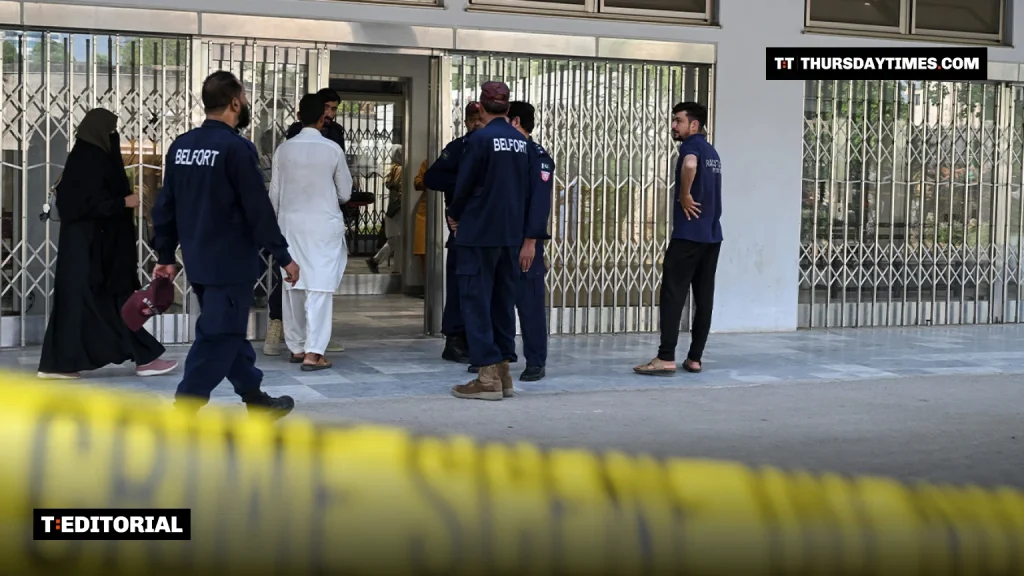
Security guards and patients outside the Mother and Child Health ward at PIMS in Islamabad, behind yellow crime-scene tape
“The hospital has already split itself into six major components, each to run as a separate hospital with its own head reporting to the chief executive.”
4THE THURSDAY TIMES · THURSDAYTIMES.COM
SUNDAY 15 NOVEMBER 20265

Xi’s Taiwan vow sets the terms for his meeting with Trump

A week before he meets Trump in Shenzhen, China’s leader told his party that taking Taiwan is a mission it must complete. A frozen arms package, the chips both sides want, and the Iran war will all be on the table, and Pakistan has a stake in calm.

TT Monitoring Desk · 8 min read
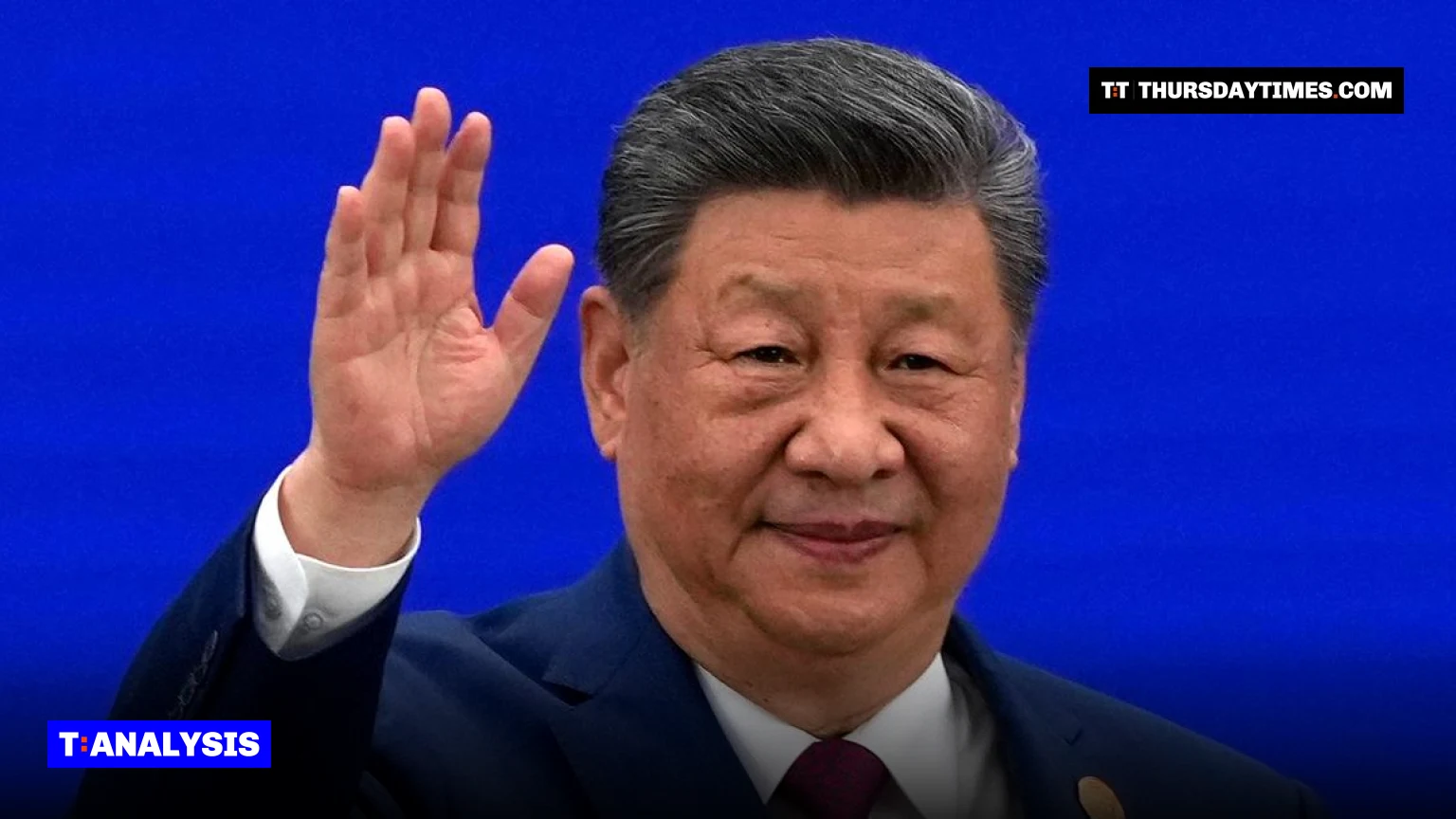
Chinese President Xi Jinping
Chinese President Xi Jinping waves to the camera. File photo. — NG HAN GUAN/AP

Xi Jinping spoke to two audiences on Thursday. At the Great Hall of the People, at a ceremony for the 160th anniversary of the birth of Sun Yat-sen, China’s president said that resolving the Taiwan question was an “unwavering historical mission” of the Communist Party, that reunification “must be realised, and it will certainly be realised”, and that “the tide of history cannot be stopped”. The first audience was at home and across the Taiwan Strait. The second was in Washington. In a week, Xi is due to sit down with President Donald Trump at the Asia-Pacific Economic Cooperation summit in Shenzhen, and the speech made clear, before a word is spoken there, what Beijing does not intend to trade.

Little in the speech was new. Xi repeated China’s offer of “peaceful reunification” under one country, two systems, and called on people on both sides of the strait to oppose what Beijing calls separatist forces. He did not mention the use of force, which China has never renounced.

Taiwan’s Mainland Affairs Council, which handles relations with Beijing, said the wording was not much different from the past. It rejected the offer outright. “The PRC has never ruled Taiwan for a single day,” the council said, and it urged Beijing to recognise that the Republic of China still exists and to respect the island’s democracy and its 23 million people.

What gave the speech its weight was the setting. Sun led the 1911 revolution that ended imperial rule in China and founded the Kuomintang, now in opposition in Taiwan, and he is honoured on both sides of the strait. Beijing uses his anniversaries to present the Communist Party as his rightful heir. Taipei, which counts this year as his 161st by its own reckoning, had told its citizens not to travel to the mainland for the commemorations, accusing Beijing of distorting history. On the day of the speech, Taiwan’s defence ministry reported 29 Chinese military aircraft, including J-16 fighters and drones, on a joint combat readiness patrol with Chinese warships around the island. Taiwan holds local elections in a little over two weeks.

Shenzhen will be the third meeting between the two leaders this year, and each has turned on Taiwan more than either side likes to say in public.

Shenzhen may yet become something larger. China said on Thursday that it was in contact with other parties about a possible meeting of Xi, Trump, and Russia’s Vladimir Putin, which Secretary of State Marco Rubio had raised with Foreign Minister Wang Yi the day before. Xi is also expected in Florida for the G20 summit in December. Taiwan will hang over all of it. On the same day as the speech, Beijing rejected a statement by G7 foreign ministers on Chinese activity in the waters east of the island as gross interference in its internal affairs.

The arms package is the clearest sign of how far Washington has moved. It is separate from an $11.1 billion package approved in December 2025, and it has been frozen since May. Trump’s description of it as a bargaining chip alarmed lawmakers in both parties, who argue that it sits uneasily with the Six Assurances Washington gave Taipei in 1982, among them a promise not to consult Beijing on arms sales. Administration officials have offered other reasons. Before Xi’s visit in September, a senior US official said that more American weapons for Taiwan could prompt China to send more weapons to Iran.

Beijing has read the pause as a signal, and Thursday’s speech was its reply. Restating China’s claim in the strongest terms a week before the summit tells Trump that a frozen arms sale can buy a quieter strait, but not a softer position on sovereignty. What Beijing wants next is a change of words. Washington says it does not support Taiwanese independence. China would like it to say it opposes it. That one verb would matter more in Taipei than any tariff line agreed in Shenzhen.

The two governments now discuss Taiwan with another war in the background. The fighting that began on February 28 has disrupted shipping through the Strait of Hormuz for most of the year. Washington has asked Beijing to use its influence with Tehran to help end it, a request China has passed on. US officials have also accused China of giving Iran help that has cost American lives, and want it stopped. China, for its part, has long been the main buyer of Iranian oil and needs the Gulf’s sea lanes open.

That gives each leader something the other wants. Trump wants Chinese pressure on Tehran and an end to the assistance his officials complain about. Xi wants the arms package to stay frozen and American language that leans further against Taiwanese independence. The danger for Taipei is that its security becomes one line in a larger bargain about a war it has no part in.

Trump may have made that bargain harder to strike. In a post on Thursday, he wrote, “We don’t need a deal with Iran,” and said the United States already had Iran’s money and its strait. If Washington no longer wants a settlement, it needs Beijing’s help less, and has less reason to pay for it with concessions on Taiwan. If the post is a negotiating posture rather than a policy, the trade is still on the table.

Technology is the other front, and Taiwan sits at its centre, because its factories make the most advanced chips that artificial intelligence runs on, including Nvidia’s. The fight over who may buy those chips has already reshaped one of America’s most valuable companies.

Trump loosened the rules last December, letting Nvidia sell its H200 chips to approved Chinese buyers with the US government taking a 25% cut. Washington has since licensed sales to Alibaba, Tencent, ByteDance, and others, but Beijing has not approved large-scale imports, and H200 shipments to China made up less than 1% of Nvidia’s data-centre revenue in the quarter to July.

On Thursday, Jensen Huang resigned as Nvidia’s chief executive after reports of an affair with a woman US officials believe was a Chinese intelligence asset, a claim Beijing calls baseless. Huang had been the most persistent voice in Washington for selling to China. With him gone, and with Democrats taking control of both chambers of Congress in January and promising to investigate Nvidia’s China ties, Trump has less room to offer chip access as a sweetener in Shenzhen. Beijing has already pushed back, with its foreign ministry telling Washington on Thursday to stop “fabricating” spy narratives as a pretext for technology restrictions. US officials said in September that they had no interest in easing export controls. Trade, tariffs, and rare earths look like safer ground for anything the two leaders announce.

Few countries have a more direct stake in how Shenzhen goes than Pakistan, and its stake is in calm. China is its closest partner, its main source of infrastructure investment through the CPEC programme, and a partner in its defence. The United States is its biggest single export market and, this year, its partner in the search for an end to the Iran war, a search in which Islamabad hosted the talks that produced the June memorandum.

On Taiwan, Islamabad’s position is settled. It regards the island as an inalienable part of China and supports the One-China policy without reservation, a view President Asif Ali Zardari and Prime Minister Shehbaz Sharif have both restated. Last month that commitment took a practical form, when Pakistan closed its airspace to Taiwanese airlines, in what appeared to be the first such step by any country, and then renewed their permits days later. The episode showed how a principle Pakistan has held for decades can, at a tense moment, become a question of daily operations.

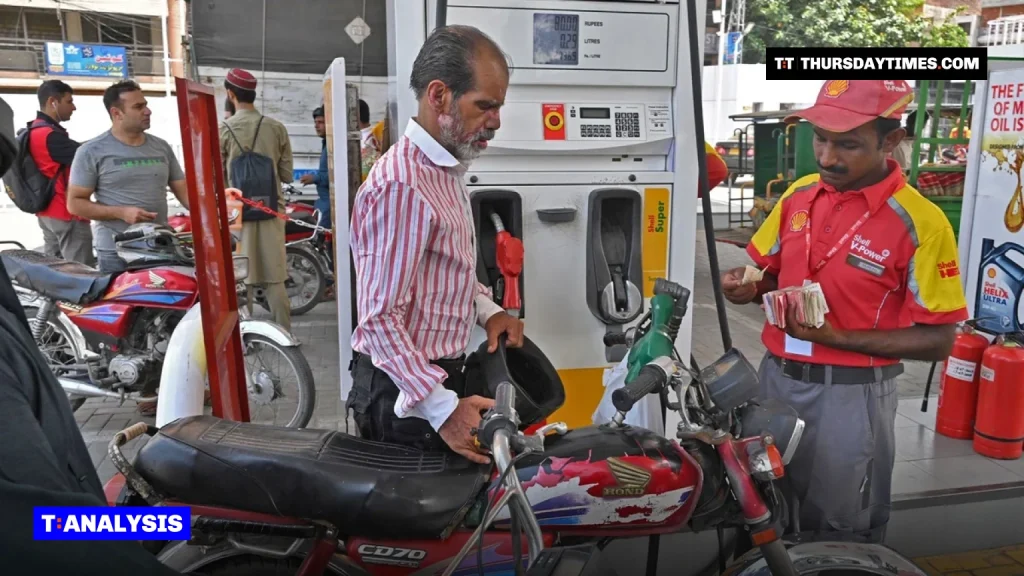
A motorcyclist buys petrol at a fuel station in Lahore
An attendant counts cash as a motorcyclist buys petrol at a fuel station in Lahore. File photo. — AFP

Rs80 a litre: what Pakistan’s petroleum levy pays for, and who pays

Petrol fell to Rs338 a litre on Wednesday, the second cut in less than a week, and diesel to Rs371. The more telling number sits inside the price. Rs80 of every litre of petrol and diesel sold in Pakistan is petroleum levy, a charge that goes straight to the federal government. Jamaat-e-Islami wants it abolished and has called a rally at Minar-e-Pakistan in Lahore on November 29 to press the demand. The government says it cannot simply switch the levy off, because the budget and the IMF programme are built around it. Both sides now speak of a phased reduction. What that could look like depends on three things: what the levy pays for, what cutting it would cost, and how much of the pump price Pakistan controls at all.

The petroleum levy is a fixed charge per litre, set by the federal government and collected on fuel before it reaches the pump. It is now Rs80 a litre on both petrol and high-speed diesel. On top of it sits a Climate Support Levy of Rs5 a litre, and customs duty on imported fuel. Planning Minister Ahsan Iqbal has put the total of these charges at close to Rs106 a litre.

Unlike most taxes, the levy is not shared with the provinces. It sits outside the divisible pool, so every rupee stays with the federal government. That makes it one of the most valuable lines in the federal budget, and one of the most dependable, because it is collected on every litre sold whatever the world price of oil.

The government expects the levy to raise Rs1.676 trillion in the 2026-27 fiscal year. That is Rs109 billion more than it actually collected last year, when receipts of Rs1.567 trillion beat the original budget estimate of Rs1.468 trillion by about Rs99 billion. In July and August, the first two months of this year, the levy brought in Rs220 billion, about 13.1 per cent of the annual target, according to official figures.

The other two fuel charges are smaller. The Climate Support Levy raised Rs27.5 billion in the same two months, already 55 per cent of its Rs50 billion annual target, and a levy that funds the adoption of new energy vehicles raised Rs7.2 billion. Together the three fuel levies brought in Rs254.7 billion against a full-year target of Rs1.748 trillion.

Over a longer stretch the levy has become a pillar of federal revenue. Petroleum Minister Ali Pervaiz Malik told the National Assembly that it had raised Rs4.4 trillion since 2022-23, which was Rs227 billion more than the government’s own targets over those four years. He also told the House that the levy was part of the targets agreed with the International Monetary Fund under the $7 billion Extended Fund Facility.

That is the heart of the government’s case. The programme sets targets for revenue and for the budget balance, and each review checks them. Money the levy does not raise has to come from somewhere else: other taxes, lower spending, or more borrowing. Pakistan’s tax take is still low for an economy of its size, which is why the levy has carried so much of the load. Jamaat-e-Islami’s deputy chief, Liaquat Baloch, puts the same point the other way round. The levy, he argues, shifts the burden of the Federal Board of Revenue’s shortfalls onto everyone who buys fuel.

The arithmetic is simple. At Rs80 a litre, each Rs10 cut gives up an eighth of the levy’s take. Against this year’s target, that is roughly Rs210 billion a year, if fuel sales held steady. Abolishing the levy outright would remove the whole Rs1.676 trillion, roughly five times what the fuel relief scheme would cost over a full year.

The two sides also disagree about the scale of what is collected and what is given back. Jamaat-e-Islami chief Hafiz Naeemur Rehman says the government takes about Rs150 billion a month through the levy and returns only Rs26 billion to Rs30 billion in relief. The official figures for July and August work out at about Rs110 billion a month. The relief figure is close to the government’s own: the petroleum minister said in September that the fuel relief scheme would cost Rs25 billion to Rs30 billion a month.

The government’s position has moved, but not far. Ahsan Iqbal ruled out an immediate cut under political pressure and said proposals for a gradual decrease would be considered for the next budget. “Pakistan’s current macroeconomic situation, which we have managed with great difficulty, cannot afford a repetition of the mistakes of the past,” he said. A committee of Deputy Prime Minister Ishaq Dar, Iqbal, and Rana Sanaullah has met the party’s representatives about ten times. After the latest round, Baloch said the two sides had agreed the broad outline of a draft, and that the government would share a framework for reducing the levy gradually after consulting the IMF.

The levy is the part of the fuel price the government controls. Most of the rest is set abroad. Pakistan imports most of its oil, so the pump price follows the world price of crude and refined fuel, the rupee’s exchange rate, freight and insurance, and the margins of refiners, oil marketing companies, and dealers. Officials say the pricing formula uses a rolling weekly average of import costs, so a fall in world prices takes about a week to reach the pump.

This year has shown how much that matters. Petrol cost Rs266.17 a litre at the end of February, before the war with Iran sent crude soaring. It peaked at Rs458.41 in early April. Diesel, which runs the trucks, buses, and tractors that move most of the country’s goods, cost Rs280.86 before the war and was still above Rs400 at the end of October.

The latest cuts track the world market. Brent crude, the international benchmark, fell to about $90 a barrel this week, its lowest since late August, as Washington played down the need for further military action against Iran. The rupee has helped too, holding steady at around 276 to the dollar. Gulf supply is recovering. Saudi Arabia pumped 10.56 million barrels a day in October, its highest since the war began, and the wider OPEC+ group raised output by about two million barrels a day.

But the single largest risk is still in the Gulf. Iran says the Strait of Hormuz will stay shut until the United States meets its conditions, and this week a tanker caught fire after hitting a mine there. If that disruption worsens, world prices could climb again within days, and the pump price with them.

The levy also does quieter work inside the formula. Since October 31 the government has frozen several cost components it allows local refineries for petrol at their March 7 levels, and takes the difference, Rs49.02 a litre, as petroleum levy. The four main refineries have written to the petroleum minister asking for the change to be withdrawn, arguing that it ignores higher crude, freight, and insurance costs and threatens their upgrade plans. The dispute shows how the levy works as the system’s shock absorber. The only question is which way it absorbs.

Between abolishing the levy and leaving it untouched there is a range of choices. Each has a cost, and each has been raised in some form by one side or the other.

THE THURSDAY TIMES · THURSDAYTIMES.COM5
HOME · CULTURE · FOOD · SUNDAY 15 NOVEMBER 20266

Harlem opens New York’s first civil rights museum, centring the North

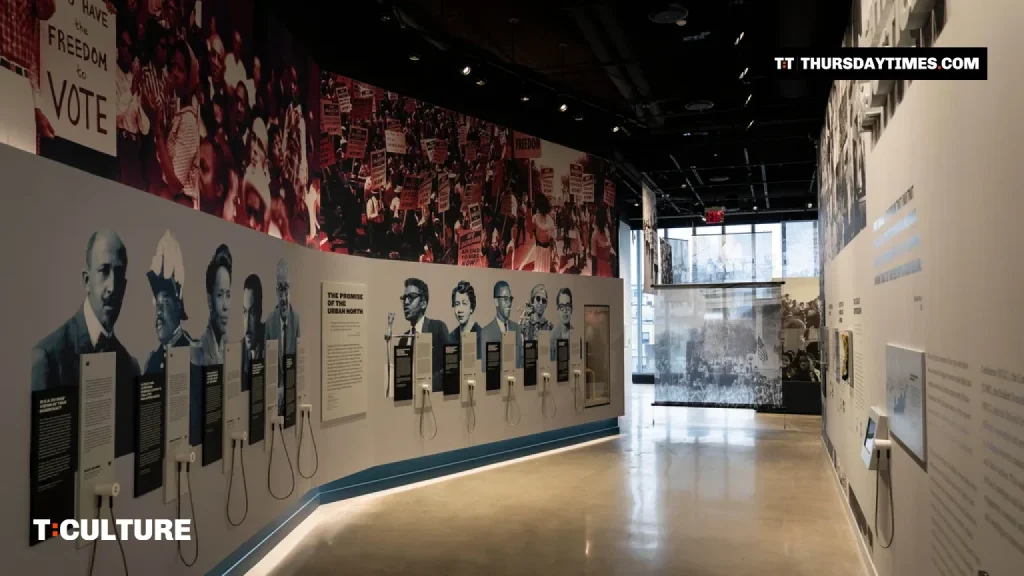
A gallery at the Urban Civil Rights Museum in Harlem, New York
A gallery at the Urban Civil Rights Museum in Harlem, New York, on November 6, 2026, ahead of its opening. — YUKI IWAMURA/AP

The National Urban League’s Urban Civil Rights Museum opened on Saturday on 125th Street, telling the story of the fight for civil rights in the American North.

TT Foreign Desk · New York

New York City’s first museum devoted to the civil rights struggle in the American North opened in Harlem on Saturday, as the National Urban League unveiled the Urban Civil Rights Museum at its new headquarters on 125th Street.

The museum fills nearly 12,000 square feet (about 1,100 square metres) on the fourth floor of the Urban League Empowerment Center, a few blocks from the Apollo Theater and the Schomburg Center for Research in Black Culture. It mixes a permanent installation with rotating galleries, recorded speeches, and oral histories.

Dozens of civil rights museums are spread across the United States, most of them in the South. The Urban League says none has focused on the North, where Black families who left the Deep South in the Great Migration met their own segregation in housing, schools, and jobs.

The permanent exhibition, Moving History Forward, traces the fight for justice from the 1500s to today. The opening displays cover the trans-Atlantic slave trade, both waves of the Great Migration, and the Civil Rights Movement and its legacy. Feedback walls ask visitors whether they have joined a protest or read a banned book, and the first temporary show runs until May 17, 2027.

“We want people to know that they are key participants,” said Jennifer Scott, the museum’s founding executive director and chief curator. “History is living, it’s unfinished, and we can impact it.”

Marc Morial, the Urban League’s president and chief executive, said the museum’s name was chosen to tie it to the neighbourhood. “Designating this the Urban Civil Rights Museum in Harlem anchors it to a place, and this place tells the story,” he said.

The opening comes as some American museums face pressure over how they present race. Last year the Trump administration ordered a review of federally guided museums for what it called “divisive, race-centred ideology”.

Morial said the museum would tell the history “with all of its beauty, and with all of its warts”, and that it would not be “minimalised or suppressed in any way”. Scott said the galleries were only “scratching the surface” of local stories, from Harlem Renaissance nightlife to the Black press.

The Urban League, founded in 1910 and one of the oldest civil rights groups in the United States, plans to change the exhibitions over time. “This museum is not static,” Morial said. “We are just getting started.”

Johnny Depp at the London premiere of Ebenezer

Johnny Depp’s ‘Ebenezer’ tops US box office in his Hollywood return

TT Foreign Desk · Los Angeles

Ebenezer, director Ti West’s take on Charles Dickens’s A Christmas Carol with Johnny Depp as Ebenezer Scrooge, led the North American box office on its opening day, taking $6.7 million on Friday in the actor’s first major studio film in eight years.

The total includes $1.5 million from Thursday preview screenings at 3,535 cinemas in the United States and Canada, industry figures showed. Paramount Pictures, which released the film, is looking at an opening weekend of about $20 million, though rival studios expect a little less, plus roughly another $20 million from 63 international markets, including the United Kingdom, France, Germany, Japan, and Mexico.

A $20 million start would put the film close to the openings of Depp’s 2015 crime drama Black Mass, at $22.6 million, and 2009’s Public Enemies, at $25.2 million. Families appear to be buying tickets: the film’s highest-grossing cinema so far is at the Disney Springs complex in Florida.

Ebenezer is Depp’s first big Hollywood release since Fantastic Beasts: The Crimes of Grindelwald in 2018. Warner Bros removed him from the Harry Potter spin-off series in 2020 after he lost a libel case in London against a British tabloid that had called him a “wife beater”. He later won a defamation case in the United States against his former wife, the actress Amber Heard.

Since then he has worked mostly on smaller films, including the French period drama Jeanne du Barry, which opened the 2023 Cannes Film Festival, and he directed the 2024 biopic Modì, about the Italian painter Amedeo Modigliani.

The cast includes Ian McKellen as Jacob Marley, Rupert Grint, Daisy Ridley, Andrea Riseborough, Sam Claflin, and Tramell Tillman. Critics have been divided, with just over half of reviews positive on the Rotten Tomatoes aggregator, while audiences polled on opening night gave it four and a half stars out of five.

Overall ticket sales are modest before next weekend’s release of The Hunger Games: Sunrise on the Reaping, which some in the industry expect to open with about $100 million. The animated The Cat in the Hat was second on Friday, ahead of the Japanese monster film Godzilla Minus Zero.

Amazon MGM’s heist comedy How to Rob a Bank, starring Nicholas Hoult and Zoë Kravitz, took $2.2 million on Friday and is heading for an opening of about $4 million to $5 million, against a production cost of more than $40 million.

The Indian epic Ramayana, released in North America by Sony, was on course for about $5 million in its second weekend there, and has passed $100 million worldwide, most of it earned in India.

Heirs of Jewish publisher challenge Sotheby’s $180m Van Gogh sale
Philippines’ Carmelle wins first Eurovision Asia with ‘Sobra-Sobra’The 19-year-old scored 211 points with her women’s empowerment anthem, ahead of Thailand’s MANG x DAOU and Vietnam’s Tóc Tiên, in the 11-country final in Bangkok.
Dar-e-Nijaat’s Abu Bakar becomes a cross-border heartthrob in India
6T:LIFE · THE THURSDAY TIMES · THURSDAYTIMES.COM
CRICKET · FOOTBALL · THE WORLD · SUNDAY 15 NOVEMBER 20267
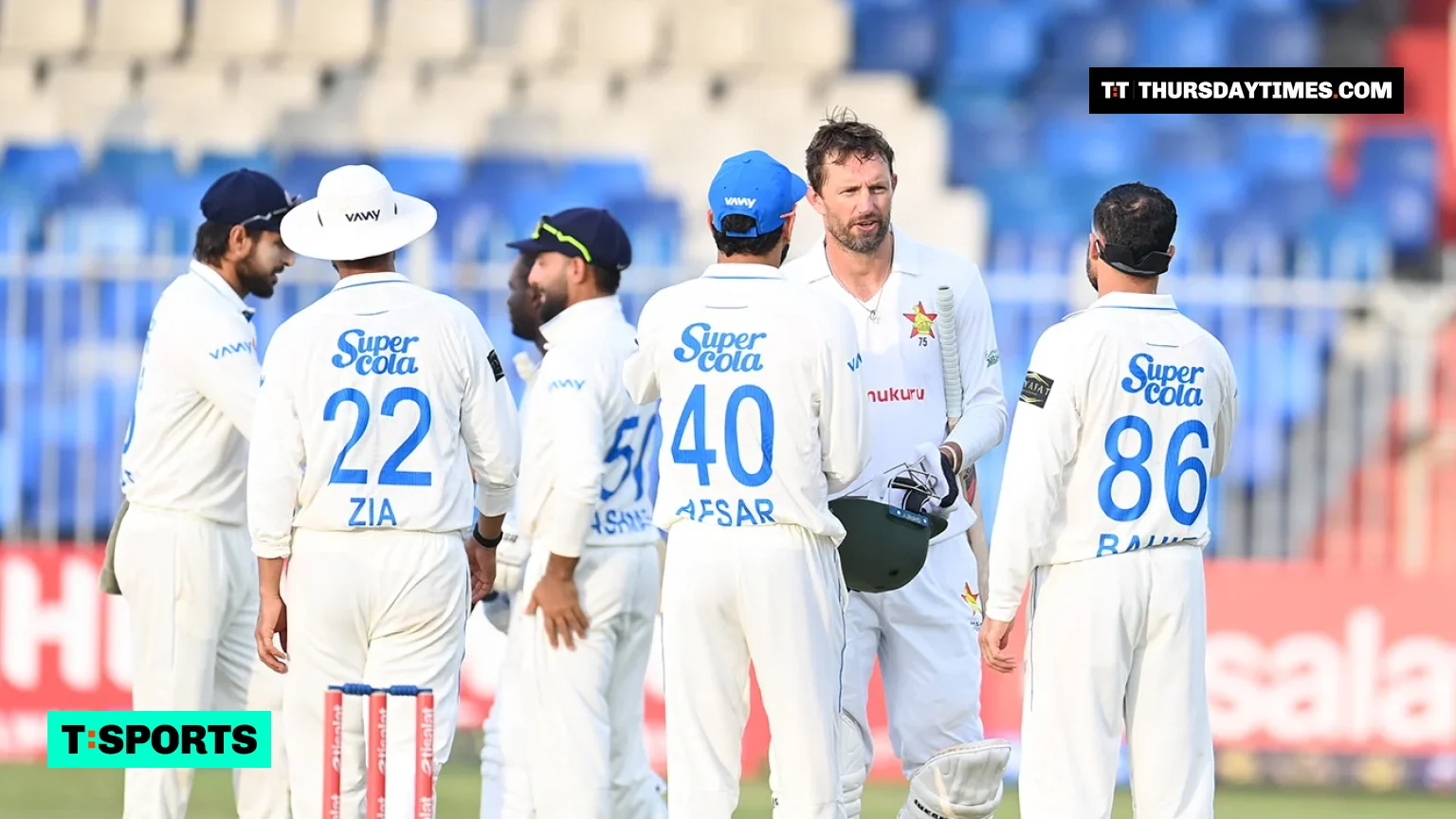
Afghanistan players with Zimbabwe batter Brendan Taylor in Sharjah
CRICKET

Debutant Maroofkhil takes seven but Zimbabwe on top in Sharjah Test

The 20-year-old spinner took 7-151 as Zimbabwe made 339, but Brendan Taylor's century and Blessing Muzarabani's three wickets left Afghanistan 159-6 in reply.

TT Cricket Desk · Sharjah

Naseer Khan Maroofkhil took seven wickets on his Test debut for Afghanistan, but a century from Brendan Taylor and a sharp spell from Blessing Muzarabani left Zimbabwe on top after the second day of the second Test at the Sharjah Cricket Stadium on Saturday.

The 20-year-old spinner finished with 7-151 from 44 overs as Zimbabwe were bowled out for 339 in 114.5 overs. In reply, Afghanistan were 159-6 at stumps, still 180 runs behind, with Afsar Zazai unbeaten on 33 and Maroofkhil on three.

The first Test of the two-match series ended in a draw, so the result in Sharjah will decide it. Afghanistan swept the three-match T20 International series against Zimbabwe 3-0 earlier this month.

Zimbabwe had looked set for a big total on the first day. Openers Innocent Kaia and Ben Curran put on a solid stand, and the visitors were 200-1 before Kaia fell for 96, four short of a century. His dismissal set off a slide to 212-4, with Maroofkhil doing most of the damage, and Zimbabwe closed the day on 250-5.

Taylor, unbeaten on 96 overnight, reached his eighth Test century on Saturday, his second of the series. He made 119 off 217 balls, with 14 fours and a six, before Maroofkhil removed him. Zimbabwe lost their last nine wickets for 139 runs, though Brad Evans added a useful unbeaten 32 off 50 balls with the tail.

Ziaur Rahman took two wickets and Yamin Ahmadzai one. Reports said Maroofkhil’s seven matched the most wickets taken by an Afghanistan bowler in an innings on Test debut, and one more would have put him level with the best haul by any bowler in a debut innings.

Afghanistan made a shaky start, losing openers Sediqullah Atal for one and Abdul Malik for 18 inside 10 overs with 27 on the board. Hashmatullah Shahidi and Rahmanullah steadied the innings with a third-wicket stand of 46 before Rahmanullah fell to Vincent Masekesa for a 44-ball 34, the top score so far.

Shahidi made 30 before Afghanistan lost wickets at regular intervals to slide to 154-6. Zazai held firm and will resume on the third day on Sunday alongside Maroofkhil, who bats at No. 8.

Muzarabani was the pick of Zimbabwe’s attack with 3-31 from 13 overs. Masekesa took two wickets and Evans one.

Rawalpindiz name ex-Australia batter Adam Voges head coach for PSL 12

The former Australia Test batter, who led Western Australia and the Perth Scorchers to a string of titles, will set the franchise’s style before its squad is picked.

Rawalpindiz have appointed former Australia Test batter Adam Voges as their head coach for the 12th edition of the Pakistan Super League, the franchise said, as it looks to recover from a last-place finish in its first season.

The franchise said it had chosen its head coach before its players so that the team’s style of play could be settled first and the squad built around it. It called Voges “the right person to lead that approach” and described the cricket it wants to play as “bold, loud and fearless”.

“One of the most successful coaches in modern domestic cricket, Voges will set how The Pindiz play and lead the squad built to play that way,” the franchise said in a statement.

Voges, 47, played 20 Tests for Australia and finished with a batting average of 61.87, alongside one-day and Twenty20 internationals, before his international career ended in 2016.

He has since built one of the strongest coaching records in Australian domestic cricket. He led Western Australia to Sheffield Shield and One-Day Cup titles and took the Perth Scorchers to Big Bash League titles, before stepping down from the state job at the end of last season to concentrate on franchise cricket. He also coached the Seattle Orcas in Major League Cricket in the United States this year.

The franchise also pointed to his record of bringing through young players, noting that Cameron Green, Josh Inglis, Aaron Hardie, Lance Morris, and Josh Philippe all made their Australia debuts under his watch.

Rawalpindiz, one of the league’s newest franchises, had a difficult first campaign. They won only one of their 10 league matches and finished at the bottom of the table with two points.

The appointment comes as franchises begin planning for the next season, in a busy year for Pakistani sport that also includes the South Asian Games, which Pakistan is due to host in April.

Adam Voges in Perth Scorchers training kit
Adam Voges, then Perth Scorchers head coach, before a Big Bash League match. File photo. — GETTY IMAGES
Elina Svitolina waves to the crowd after her WTA Finals semi-final win
Ukraine’s Elina Svitolina celebrates after beating Linda Noskova in the WTA Finals semi-final at Indian Wells, California, on Saturday. — DANIEL COLE/REUTERS

Svitolina to face Andreeva for WTA Finals title as Sabalenka apologises

Elina Svitolina will play Mirra Andreeva for the WTA Finals title on Sunday after routing Wimbledon champion Linda Noskova 6-2, 6-1 in 64 minutes on Saturday, a week after Andreeva beat her in their opening group match.

The Ukrainian, who won the season-ending event in 2018, broke Noskova three times in the first set and raced to a 5-0 lead in the second. The Czech served 11 double faults. It is Svitolina’s third WTA Finals final in three appearances.

“After losing the first match I was ready to go home, and now I’m in the final,” the 32-year-old said. Andreeva beat her 6-4, 6-0 in the group stage, and Svitolina said she would work with her coaches on winning “a bit more games” this time.

Svitolina lost that opening match, then won her next three, including a three-set victory over Aryna Sabalenka on Friday that ended a six-match losing run against the Belarusian. She now has 11 wins over top-10 players this year, more than anyone else on the tour, and is back in the top 10 for the first time since October 2021, having taken maternity leave in 2022.

Andreeva, the 19-year-old French Open champion, came from a break down in both sets to beat Jessica Pegula 6-3, 6-4 in the first semi-final. She has not dropped a set all week and has lost only 18 games in four matches, the fewest by a finalist since the event adopted its round-robin format in 2003.

The Russian is the youngest player to reach the final since Maria Sharapova won the title at 17 in 2004, and she will rise to world No 2 on Monday whatever happens on Sunday. “I did not feel one bit of pressure today, I don’t know why,” she said.

Sabalenka apologised on Saturday after a clip of her swearing in Russian during Friday’s defeat by Svitolina spread on social media, with some viewers reading it as an insult aimed at her opponent or at Ukrainians.

“My comment was not directed at Elina,” she wrote, saying she had lost her temper with a small group of spectators who were cheering her mistakes. “I should have handled my frustration differently, and I apologise to anyone offended.”

Ukrainian players do not shake hands or pose for pre-match photographs with Russian or Belarusian opponents because of the war, a policy that will apply again when Svitolina meets Andreeva on Sunday.

Earlier this week: Svitolina knocks Sabalenka out of WTA Finals to reach semis, and Andreeva wins 11 straight games to rout Sabalenka.

THE THURSDAY TIMES · THURSDAYTIMES.COM7
PULL-OUT · THE THURSDAY TIMES15.11.20268
Westline
BRITAIN, FROM THE OTHER SIDE OF THE LINEWESTLINE × THE THURSDAY TIMES
A STATE THAT STOPPED DECIDING

The backlog Britain built

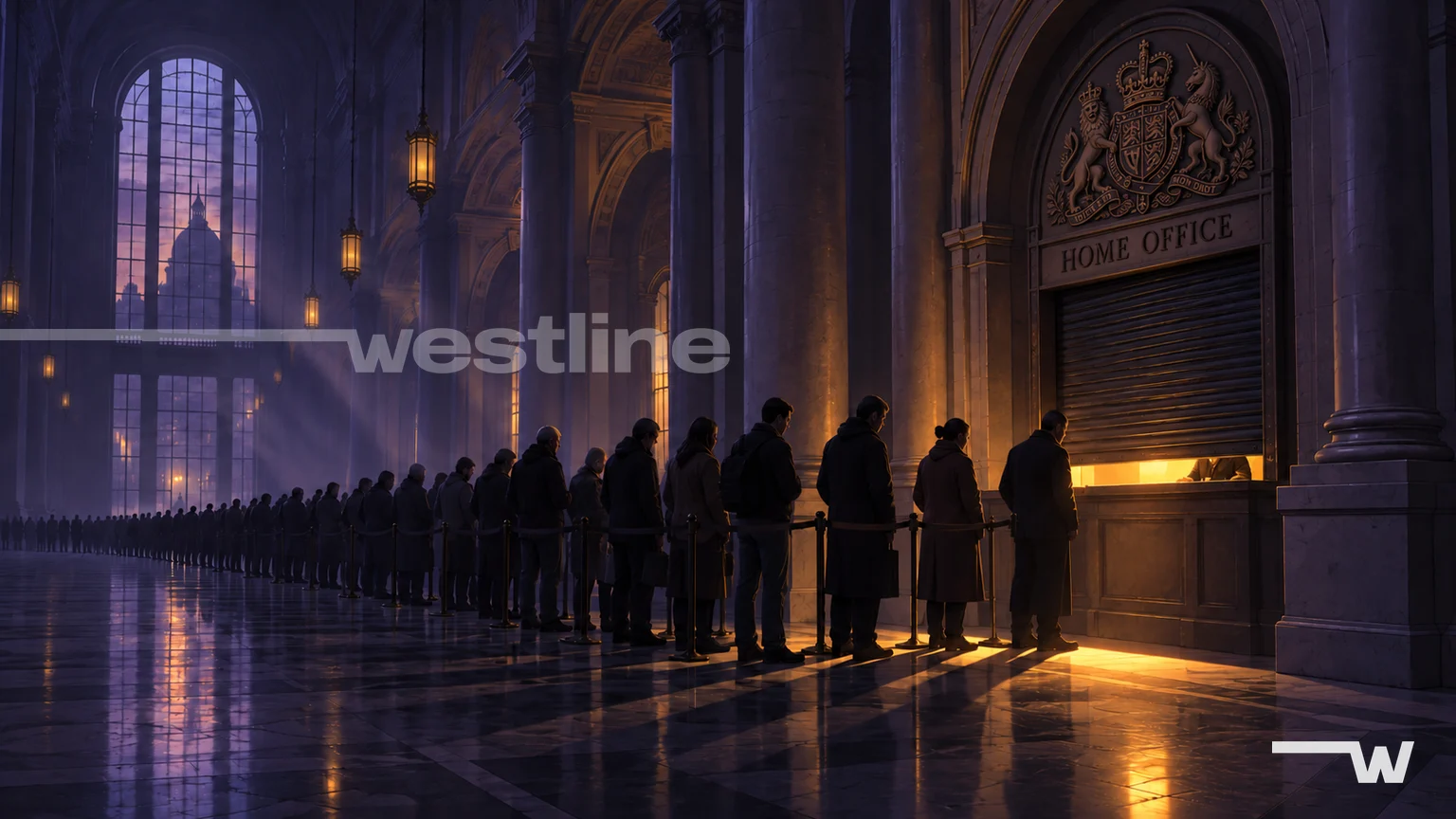
A queue stretches back into the dark while the Home Office counter stays barely open — Illustration: Westline

Ministers of both parties have spent a decade blaming the people in the queue. The numbers point at the people running it.

Abdullah Esquire
Read it in fullthursdaytimes.com/westline

CONSIDER SOMEONE WHO CLAIMED asylum in Britain in January 2023. Where they came from, and how they arrived, matters less than what happened next — which is to say, very little. When the National Audit Office took a sample of 5,000 claims lodged that month and checked on them nearly three years later, more than half were still unresolved. In the meantime our claimant will probably have been housed at public expense, largely barred from working, interviewed by a caseworker who may not have been in post for long, refused, appealed, and then left waiting again: this time for a tribunal that now takes, on average, well over a year to hear a case.

In the political conversation, that person is the problem. The backlog is discussed as though it were a weather system blown in off the Channel — too many boats, too many claims, too many people gaming the system. Arrivals do matter, and nobody serious pretends otherwise. The number of people claiming asylum peaked at around 110,000 in the year to September 2025, the highest figure in nearly two decades.

But a backlog is not a measure of how many people turn up. It is the gap between the cases that come in and the cases a department decides — and decides properly. Judged that way, the story of Britain’s asylum queue is not one of an overwhelmed border. It is the story of an institution that, over ten years, stopped doing its core job, then tried to do it at a sprint, then passed the consequences down the corridor to the courts. The people in the queue designed none of it.

Initial asylum decisions made per year

Home Office annual statistics · output collapsed before small boats became a mass phenomenon, then quadrupled on command

The rot set in long before small boats became a nightly news item. In 2015 the Home Office made 28,623 decisions on asylum applications. By 2017 that had fallen by a quarter, to 21,269, and the department never recovered its old pace. The more striking figure is what happened per head. According to the Institute for Government, in 2011/12 some 380 caseworkers were each producing around 13.7 decisions a month. By December 2022 there were 1,237 of them, managing about four apiece. The workforce had more than tripled; the output of each worker had fallen by over two-thirds.

Then, in January 2019, with ministerial approval, the department dropped its own service standard: the commitment to decide 98 per cent of straightforward claims within six months. The stated reason was to prioritise the most vulnerable cases rather than the simplest. The practical effect was to remove the one clock that had been ticking. The Migration Observatory later found that in 2014 eight in ten applicants received an initial decision within six months; within five years it was one in four.

Why this isn’t a story about the Channel In 2021 the UK had 14.9 cases in its asylum backlog per 10,000 people, more than Germany or France, even though it received far fewer applications per head than either. Countries facing heavier demand were simply getting through their caseloads faster. By December 2022 two-thirds of those waiting — almost 110,000 people — had been in the queue for more than six months. That is not a surge. It is a department that had quietly stopped deciding things.

In December 2022 Rishi Sunak did something the Home Office had not done in years: he set it a deadline. The so-called legacy backlog — roughly 92,000 claims lodged before 28 June 2022 — would be cleared within twelve months. The department doubled its decision-makers to around 2,500 and, for nationalities with very high grant rates such as Afghans, Eritreans and Syrians, swapped lengthy interviews for a questionnaire. The results were instructive. In one four-week stretch in November and December 2023, officials made 20,481 initial decisions, more than in the whole of 2021. Across that year they made 112,138. For anyone who still believed the queue was driven by forces beyond Whitehall’s control, that was the rebuttal.

The sprint had a cost, though, and it was paid in shortcuts. Asylum withdrawals in 2023 were more than four times the 2022 figure, and 79 per cent of them were “implicit” — claims the Home Office itself closed because someone missed an interview, missed a questionnaire deadline or had not updated an address. When the pledge was declared met, 4,537 legacy cases were still awaiting a decision, and the chair of the UK Statistics Authority warned that the episode might affect public trust. A Conservative government that had staked its reputation on control ended up being rebuked by the statistics watchdog for its arithmetic.

Worse, at the same moment that one arm of the department was racing through old cases, another had been told to stop deciding new ones. The Illegal Migration Act meant that claims from those who had arrived irregularly after 7 March 2023 could not be granted. By the end of that year, 55,533 of the 98,599 claims awaiting a decision had been made after the bill was introduced. The backlog stopped falling and, by March 2024, stood at 118,329 people. Those claims were being held for removal to Rwanda, a scheme that by Labour’s later accounting had cost around £700 million — £290 million of it paid to Kigali — to send four volunteers. The Home Affairs Committee later concluded that holding up decisions while the scheme stalled had made the crisis worse. Parliament had, in effect, legislated the state into not processing cases, and then the state paid to house everyone it had declined to process.

Every month a claim sits undecided is a month of bed, board and administration, and this is where the failure becomes a fiscal one. In 2019 the Home Office signed seven regional contracts with Serco, Mears and Clearsprings, expecting them to cost £4.5 billion over ten years. The National Audit Office now puts the figure at £15.3 billion. Between December 2019 and December 2024 the number of asylum seekers in paid-for accommodation rose from about 47,000 to 110,000. Hotels, the emergency option, became the default: at the peak, in September 2023, 56,018 people were in them, spread across roughly 400 sites.

The economics were dreadful. In 2024-25 hotels held around 35 per cent of people in asylum accommodation but swallowed 76 per cent of the contracts’ annual cost.

NAO, asylum accommodation contracts (2025) · hotels held just 35% of people in the system

The three providers made a combined profit of £383 million between 2019 and 2024. The NAO’s verdict was that the department had few levers to control the cost. Across the Home Office and Ministry of Justice, asylum cost £4.9 billion in 2024-25.

For a centre-right reader, this ought to be the scandal. A man waiting for a decision cannot choose to move out of a hotel and is, for the most part, forbidden from earning his own keep. The bill is not run up by his presence so much as by the length of his stay, and the length of his stay is set in Whitehall. Treat the backlog as a migrant problem and you reach for deterrents. Treat it as a productivity problem and you reach for the thing that actually saves money: a decision.

WESTLINE · A THURSDAY TIMES PULL-OUT8
Archive