Tuesday 17 November 2026 Archive
TUESDAY 17 NOVEMBER 2026Dangerous to those who trade in lies.THE E-PAPER · ENGLISH EDITION · 8 PAGES
234567Westline pull-out8

Pentagon fails ninth straight audit, but most units pass for first time

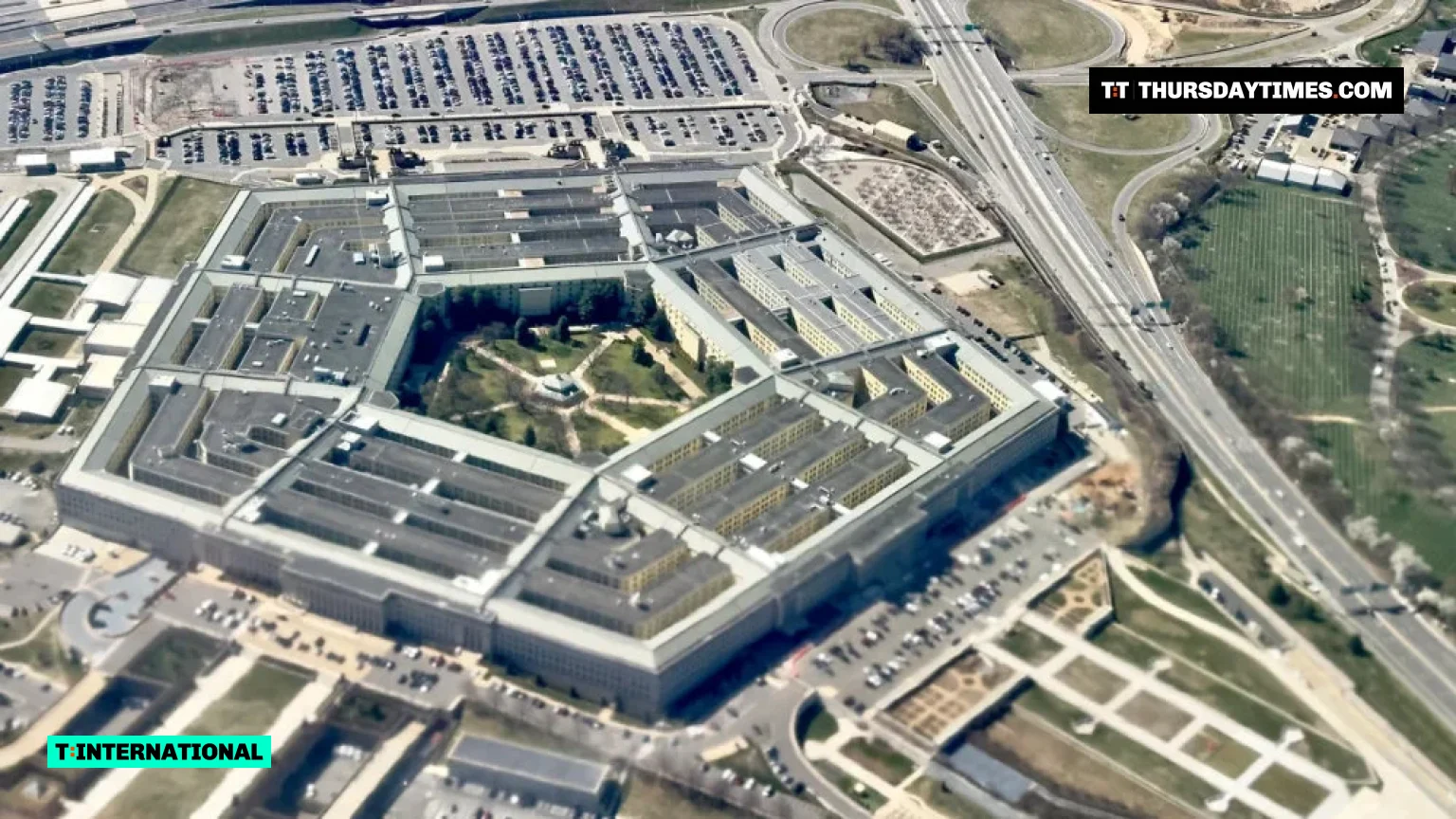
Aerial view of the Pentagon building in Washington
An aerial view of the Pentagon, the headquarters of the US Department of Defense, in a file photo from 8 March 2023. — AFP

An inspector general report found the Pentagon failed its audit again, but 14 of its 25 reporting entities passed, up from 11 last year.

TT Foreign Desk · Washington

The Pentagon failed a financial audit for the ninth consecutive year, according to an inspector general report released on Monday, although a majority of its reporting units passed for the first time.

Jules Hurst, the chief financial officer of the Department of Defense, said an independent auditor found that the financial statements of 14 of the Pentagon’s 25 standalone reporting entities passed in fiscal 2026, which ended in September, up from 11 the year before. Those entities account for 56 percent of the department’s assets and 86 percent of its liabilities.

“For the first time ever, a majority of assets from the department are on clean opinions,” Hurst said.

The Pentagon has struggled with some 149 financial management systems, many of them inadequate and outdated, including technology built on 50-year-old computer code. To complete the audit without relying on those systems, officials drew on 61 core systems in the department’s cloud-based War Data Platform and took statistically significant data samples.

The department is also using artificial intelligence tools from Palantir and xAI, alongside in-house applications, to automate financial reconciliations and documentation. “Passing the audit is ultimately a time problem,” Hurst said, adding that AI allows auditors to test more data.

The Pentagon as a whole was first audited in 2018 and has failed every year since. Congress gave it 10 years to pass, a deadline that falls in the fiscal year starting in October 2027. Beginning this year, the department plans to consolidate its 25 separate audit opinions into eight, ahead of seeking a full department-wide opinion in fiscal 2028.

Among the entities that passed for the first time in fiscal 2026 was the Medicare-Eligible Retiree Health Care Fund. The results come as the administration seeks a record $1.5 trillion in national defence spending from Congress, and modernising the financial systems has become a priority as the Pentagon tries to show lawmakers it can be trusted with the money.

Paraguay’s ex-leader Peña moved to military jail over perks reports

A judge in Paraguay ordered former president Santiago Peña moved to a military prison on Monday, after reports that he had been given special amenities while awaiting trial in a financial corruption scandal.

Judge Osmar Legal ordered the transfer from the Presidential Escort Regiment, a military base in the capital. Media reports had said Peña had a large dining room, furnishings, a private gym and a bathroom there, which set off public anger. He is now held at the Viñas Cue military prison, apart from the other inmates for his own safety. The move came on his 48th birthday.

President Pedro Alliana said at a news conference that he had dismissed Colonel José David Daiub, a military official accused of giving Peña special treatment in detention. “Our priority is to guarantee the country’s stability, restore confidence, and provide concrete and rapid solutions,” Alliana said. Paraguayans, he added, “deserve to know the truth”.

The scandal became public on 3 November, when the central bank took control of Ueno Bank, a lender used by more than half of the country’s adults. Account activity was frozen for nearly three million people. In the months before the collapse, Ueno held roughly $850m in public funds, including money for retirement pensions.

Peña was a shareholder in Ueno’s parent company. The allegations centre on claims that he used his office to steer public funds to the bank while it made insider loans to its owners. He has denied wrongdoing and says he sold his shares in 2025.

Peña, of the conservative Colorado Party, saw his political allies distance themselves after the collapse. His attempt to resign was rejected, and Congress instead pursued impeachment proceedings. He was removed from office on 6 November, and Alliana was sworn in as the new president.

“For the first time ever, a majority of assets from the department are on clean opinions.”Pentagon fails ninth straight audit, but most units pass for first time Page 1

Why Washington chose an Iran hand for its Islamabad embassy

Natalie Baker has run the US embassy for 22 months without the title. Her nomination signals continuity, a focus on the Iran war and a heavy energy and minerals agenda, but a Senate that changes hands in January may make her wait

TT MONITORING DESKPAGE 5 ›

Kremlin says Putin could meet Kim Jong Un if he comes to APEC in China

Russian President Vladimir Putin could meet North Korean leader Kim Jong Un if Kim also travels to China for this week’s APEC summit, Kremlin spokesman Dmitry Peskov said on Monday.

“Of course, if he is at the APEC summit,” Peskov said when asked about a possible meeting. There has been no confirmation that Kim will attend the summit.

Peskov spoke as Putin received a delegation from North Korea’s ruling Workers’ Party at the Kremlin, led by senior party official Jo Yong Won. Putin asked the delegation to pass on his best wishes to Kim. “I place great value on the fact that we have developed business and friendly relations, which undoubtedly help us resolve and develop ties between our countries,” he said.

South Korea’s unification ministry said the delegation had been in Russia since 14 November and had travelled just before a US-China-Russia summit scheduled for this week. The ministry said it would monitor developments.

Moscow and Pyongyang have grown closer in recent years, including through a 2024 strategic partnership treaty that contains a mutual defence provision. Ukrainian and South Korean estimates say North Korea has sent about 14,000 to 15,000 troops to support Russia’s war in Ukraine since 2024, most of them in the Kursk region.

Ukrainian President Volodymyr Zelenskiy said on Monday, citing intelligence, that North Korea was sending dozens of new ballistic missiles to Russia every month, helping Pyongyang make its weapons more effective.

US President Donald Trump has also said he might meet Kim during his trip to China. Separately, North Korean state media reported on Tuesday that Kim inspected the construction of a mountain tourism zone at Samjiyon, near the Chinese border, on Sunday and Monday.

Vladimir Putin speaking at a table in the Kremlin
Russian President Vladimir Putin chairs a meeting at the Kremlin in Moscow on 12 November (file photo). — Sputnik/Sergei Bulkin/Pool via Reuters
Pakistan todayPAGE 2
Qatar’s GDP contraction narrows to 11.8% in Q3 as gas output recovers
Petrol and diesel cut by Rs2 each to Rs328 and Rs358 from 17 Nov
Finnish deputy trade minister brings business delegation to Pakistan
THE THURSDAY TIMES · PUBLISHED BY THURSDAY MEDIA INTERNATIONAL · THURSDAYTIMES.COM1
US MIDTERMS · THE WORLD · PAKISTAN · TUESDAY 17 NOVEMBER 20262

Imran Khan asks top judges to enforce medical orders in open letter

Imran Khan, in a letter written through his counsel, says court orders on his treatment have not been implemented and asks three chief justices to act. The authorities had not publicly responded.

TT Court Reporter · Islamabad

Imran Khan, the former prime minister and founder of the PTI, has written an open letter to the chief justices of the Supreme Court, the Federal Constitutional Court, and the Islamabad High Court, asking them to ensure that court orders on his medical treatment are carried out, according to a copy of the letter dated 16 November.

The letter was written by his counsel, Barrister Salman Safdar, after a three-hour meeting with Khan at Central Jail Adiala on 11 November. Safdar says in the letter that he composed it “faithfully and solely” on Khan’s instructions, and that the words that follow are Khan’s. It is headed an open letter through counsel and described as a humanitarian plea for medical treatment and implementation of court orders.

Khan, who says he is 74, says in the letter that his blood pressure has been uncontrolled in solitary confinement, with readings of 130, then 150, then 170, and 192 and 193 on 10 November. He says doctors have told him he is highly vulnerable to a brain haemorrhage and cardiac arrest, and that his heart has already suffered damage.

He says he lost 85 percent of the vision in his right eye, which his counsel found at a visit on 10 February made at the Supreme Court’s direction as amicus curiae, and that neither his family nor his counsel had been told.

Khan says he has been held in solitary confinement for up to 22 hours a day since 20 December 2025, the day judgment was announced in the Toshakhana (Bvlgari) case, without family, lawyers, calls to his sons, books, or television. He says he has been allowed to meet his counsel only four times this year, on 10 February, 8 April, 2 November, and 11 November.

He says the jail’s own medical board has recorded his anxiety and advised more frequent contact with his wife and family, reading material, and television, and that the advice has not been followed. He says his weekly meeting with his wife has been skipped week after week, and that his sons, Kasim and Sulaiman, are not allowed to call him despite court orders.

Khan also says he has learnt that his three sisters were in custody. Two of them, Noreen Niazi and Uzma Khan, were released from Lahore’s Kot Lakhpat jail on 12 November, the day after the meeting, according to the jail’s superintendent. There was no word then on a third sister, Aleema Khan.

Khan says his wife, Bushra Bibi, had a detached retina in April, underwent eye surgery, and was returned to solitary confinement, and that when he saw her this month she could neither bear the light nor open her eyes. He says she may lose her sight permanently without another surgery, and that her medical records are being withheld.

The Supreme Court ordered on 18 August that Khan be moved to Shifa International Hospital within two days for examination, as reported at the time. In his letter, Khan says the three-member bench also ordered a medical board that includes a cardiologist and an eye specialist, weekly family meetings, and twice-weekly calls to his sons, and that the order has not been implemented. He says his case now awaits a hearing at the Federal Constitutional Court.

The PTI has made the same complaint. Its chairman, Barrister Gohar Ali Khan, said on 11 November that the order had remained unimplemented for nearly three months.

Khan also says he has learnt that his appeal in the Al-Qadir case is being taken up out of turn, ahead of older appeals, while his health and the unimplemented orders have received no attention. The Islamabad High Court has relisted the couple’s appeals against their convictions in the £190 million Al-Qadir Trust case for 18 November.

Khan writes that he does not ask the judges for any favour, and requests only the implementation of the Supreme Court’s orders and proper treatment for himself and his wife. He ends with an appeal, on grounds of human compassion, to “give me justice before it is too late”.

The authorities had not publicly responded to the letter at the time of publishing. On 11 November, the PIMS administration said in a statement that Khan had been brought from Adiala jail overnight for a check-up and follow-up eye treatment, that he was given his sixth injection in the affected eye, and that his vital signs were normal and he was “clinically stable”.

After the 11 November meeting, Khan’s lawyer Latif Khosa said his blood pressure had been fluctuating to a “terrifying extent”. Khan has been in prison since 5 August 2023.

US judge strikes down limits on foreign student and journalist visasJudge Dennis Saylor called the Trump administration rules, which would have capped student visas at four years and journalist stays at 240 days, arbitrary and unlawful.
Continued from page 1

Kremlin says Putin could meet Kim Jong Un if he comes to APEC in China

Vladimir Putin speaking at a table in the Kremlin
Russian President Vladimir Putin chairs a meeting at the Kremlin in Moscow on 12 November (file photo). — Sputnik/Sergei Bulkin/Pool via Reuters

Russian President Vladimir Putin could meet North Korean leader Kim Jong Un if Kim also travels to China for this week’s APEC summit, Kremlin spokesman Dmitry Peskov said on Monday.

“Of course, if he is at the APEC summit,” Peskov said when asked about a possible meeting. There has been no confirmation that Kim will attend the summit.

Peskov spoke as Putin received a delegation from North Korea’s ruling Workers’ Party at the Kremlin, led by senior party official Jo Yong Won. Putin asked the delegation to pass on his best wishes to Kim. “I place great value on the fact that we have developed business and friendly relations, which undoubtedly help us resolve and develop ties between our countries,” he said.

South Korea’s unification ministry said the delegation had been in Russia since 14 November and had travelled just before a US-China-Russia summit scheduled for this week. The ministry said it would monitor developments.

Moscow and Pyongyang have grown closer in recent years, including through a 2024 strategic partnership treaty that contains a mutual defence provision. Ukrainian and South Korean estimates say North Korea has sent about 14,000 to 15,000 troops to support Russia’s war in Ukraine since 2024, most of them in the Kursk region.

Ukrainian President Volodymyr Zelenskiy said on Monday, citing intelligence, that North Korea was sending dozens of new ballistic missiles to Russia every month, helping Pyongyang make its weapons more effective.

US President Donald Trump has also said he might meet Kim during his trip to China. Separately, North Korean state media reported on Tuesday that Kim inspected the construction of a mountain tourism zone at Samjiyon, near the Chinese border, on Sunday and Monday.

The world in brief

EVERY STORY IN FULL AT THURSDAYTIMES.COM
Dutch coalition to keep minority government after four days of crisis talksPrime Minister Rob Jetten’s office said the three parties had decided to continue after talks that it said had restored trust; party leaders will explain on Tuesday.
Kyiv mayor says Russian strikes hit two bridges over the DniproMayor Vitali Klitschko said Russian missiles hit the North and South bridges in Kyiv late on Monday, cutting water and heating in parts of the capital, as Ukraine again struck the Crimean Bridge.
Princess Aiko begins five-day Singapore visit marking 60 years of tiesJapan’s princess is in Singapore from 17 to 21 November at President Tharman’s invitation, her second official trip abroad.
United Airlines hit by systemwide outage days after US ground stopUnited said a technology problem was affecting departing flights; flights in the air and United Express were not affected, and there was no sign of a cyber link.
Freeman Johnson, oldest known Pearl Harbor survivor, dies aged 106The Navy fireman, who spent the 1941 attack below deck on the USS St. Louis, died at home in Massachusetts on Saturday.
Albanese to meet Trump at Quad summit after signing AI pactAustralia signs on to the US-led Pax Silica declaration as its prime minister tries to keep Washington engaged in the Indo-Pacific without angering Beijing.

Pakistan

NATIONAL · ECONOMY · MILITARY

Imran Khan says doctors warn of brain haemorrhage, cardiac risk

TT Court Reporter · Islamabad

Imran Khan says in an open letter that his blood pressure has become uncontrolled in jail, with readings of 130, then 150, then 170, and 192 and 193 on 10 November, and that doctors have told him he is highly vulnerable to a brain haemorrhage and cardiac arrest. The letter is dated 16 November.

Khan, who says he is 74, says in the letter that doctors have also told him his heart has already suffered damage. The letter does not say who took the readings or where.

The letter was written by his counsel, Barrister Salman Safdar, after a three-hour meeting with Khan at Central Jail Adiala on 11 November, and Safdar says he composed it solely on Khan’s instructions. The wider appeal to three chief justices is covered in our main report on the letter.

Khan says he lost 85 percent of the vision in his right eye, a finding his counsel made at a visit on 10 February, which was made at the Supreme Court’s direction. He says neither his family nor his counsel had been told.

He also says the jail’s own medical board has recorded his anxiety and advised more frequent contact with his wife and family, reading material, and television, and that this advice has not been followed. He says prolonged solitary confinement has taken a heavy toll on his mental health.

The letter was written after Khan was taken from Adiala jail to the Pakistan Institute of Medical Sciences (PIMS) in Islamabad overnight on 10 November and 11. The letter does not mention that visit.

In a statement on 11 November, the PIMS administration said Khan was given his sixth injection in the affected eye after informed consent, that his vital signs were normal before, during, and after the procedure, and that he was “clinically stable”. He was discharged at about 2:30am, as reported in our report of 11 November. The hospital has treated him for central retinal vein occlusion in the right eye since January.

After meeting Khan on 11 November, his lawyer Latif Khosa said his blood pressure had been fluctuating to a “terrifying extent”, though Khan was “completely active and his will was very strong”, as reported here. A day earlier, Safdar told the Islamabad High Court that Khan said his eyesight had improved but his blood pressure remained uncontrolled, and warned of a risk of brain haemorrhage.

Khan says in the letter that the Supreme Court ordered on 18 August that he be examined by a medical board including a cardiologist and an eye specialist, and that the order has not been implemented. The court had also directed that he be moved to Shifa International Hospital, as reported at the time. The PTI chairman, Barrister Gohar Ali Khan, said on 11 November that the order had remained unimplemented for nearly three months.

The prisons department and the Punjab and federal governments had not publicly responded to the letter at the time of publishing. Khan’s claims about his wife’s eyesight are reported separately in our report on Bushra Bibi’s eyesight.

ECO adopts Islamabad Declaration as PM urges joint action on securityThe prime minister told ECO foreign ministers in Islamabad that disputes should be settled through dialogue, and welcomed the declaration and the 2026-2035 objectives, according to his office.
Pakistan and Italy set January economic commission after seventh roundThe foreign secretary and Italy’s foreign ministry secretary-general held the seventh round of political consultations in Islamabad, and discussed a Joint Economic Commission session in January 2027.
Pakistan exports up 8.5% to $11.34bn in four months, trade gap widens 16%Merchandise exports rose 8.52% to $11.34bn in July-October, but imports grew faster and the trade deficit widened 15.97% to $14.63bn, PBS data show.
Makkah pact apex committee likely to meet in Islamabad this monthForeign Minister Ishaq Dar said the Strategic Political and Defence Committee of Pakistan, Saudi Arabia, and Türkiye should meet in Islamabad at the end of the month.
Karachi e-challan system issues 1.94 million tickets in its first yearKarachi traffic police have issued more than 1.947 million e-challans in the first year of the digital system, with fines above Rs5 billion, officials said.
InsideGulf, 3 · Views, 4 · Analysis, 5 · T:LIFE, 6 · Sports, 7 · Westline, 8
2THE THURSDAY TIMES · THURSDAYTIMES.COM
EMIRATES · SAUDI · QATAR · TUESDAY 17 NOVEMBER 20263

UAE gets IAEA’s top nuclear safeguards rating for a fourth year

The IAEA has again found that all declared nuclear material in the UAE is in peaceful use, the highest assurance it gives, the regulator said.

IAEA inspectors and Emirati regulator staff in a group photo in front of the Barakah nuclear plant domes
IAEA inspectors and staff of the UAE’s nuclear regulator pose in front of the Barakah nuclear power plant. File photo. — FANR
Thursday Emirates · Abu Dhabi

The International Atomic Energy Agency has again found that all declared nuclear material in the United Arab Emirates remains in peaceful use, the country’s nuclear regulator said on Monday, the fourth year in a row the UAE has received the finding.

The finding, known as the “broader conclusion”, is the highest level of assurance the agency gives under its safeguards system. It appears in the IAEA’s 2025 Safeguards Report and rests on information the UAE supplies under its Comprehensive Safeguards Agreement and Additional Protocol, together with the agency’s own inspections, reporting, and analysis.

Hamad Al Kaabi, director-general of the Federal Authority for Nuclear Regulation (FANR), said the result reflected the strength of the UAE’s regulatory framework, close cooperation with the IAEA, and a commitment to keeping all nuclear activity exclusively peaceful.

The broader conclusion lets the IAEA apply what it calls integrated safeguards in the UAE. The regulator said this makes verification more efficient while keeping the highest level of confidence that nuclear material is used only for peaceful purposes.

During 2025 the UAE also supported the agency’s safeguards work by sharing technical expertise, and it helped build capacity in countries that are setting up nuclear energy programmes, the regulator said. It added that the UAE remains committed to its obligations under the Treaty on the Non-Proliferation of Nuclear Weapons.

The announcement follows an IAEA mission last month that found the UAE’s emergency response to the drone strike on the Barakah nuclear power plant in May had been effective.

Southern Giants Brigades fighters firing a truck-mounted gun during clashes with the Houthis in Taiz province, Yemen

Yemeni allies question Saudi strategy as government forces pull back

Riyadh · thursdaytimes.com
Curved white lattice facade of a Riyadh Metro station beside palm trees

Riyadh begins building Expo 2030 metro station for 19,000 riders an hour

Riyadh · thursdaytimes.com

Saudi king replaces Yemen coalition commander as Houthis advance

THE THURSDAY TIMES · THURSDAYTIMES.COM3
EDITORIAL · OPINION · TUESDAY 17 NOVEMBER 20264

Pakistan fixed the rail line fast. Now build it to survive the floods

Pakistan Railways reopened the flood-hit Lahore-Faisalabad line in 45 days. The next step is to build so the next monsoon takes less away: higher embankments, bigger culverts, shared warnings, stocked materials, and insurance.

Pakistan Railways deserves credit for reopening the flood-hit Lahore–Faisalabad line in 45 days, against the 60 allowed for the work. The minister has said that about 1,500 feet of track was washed away on July 27 and that the Missan Kalar bridge has been rebuilt. Passengers and freight can move again. But the lesson of a good repair is not that floods are survivable if the crew is quick. It is that every repair we can avoid is worth more than a fast one. This monsoon, like the last, showed where the network is weakest. The country now has the means, and some financing, to build the next line so that it loses less when the rains come.

The sequence matters. Federal Railways Minister Hanif Abbasi said the washed-out section had to wait for consultants to be appointed, a feasibility report to be written, and funds to be arranged before work formally began on September 23. In August, when he inspected the collapsed bridge near Missan Kalar, he asked for the feasibility report within 20 days, and reports at the time quoted him as expecting the restoration to take about four months. Counting from the washout to this Sunday’s reopening is about 111 days, so the finished job beat even that early estimate. A private company worked alongside Pakistan Railways. The minister announced cash rewards for everyone involved and called the labourers the real heroes of the project.

That praise is deserved, and it should be said plainly. Public works in Pakistan are often announced with more energy than they are completed. Here a deadline was set, kept, and beaten, and five express services and a goods train have their route back. The institution should want to repeat that, and then ask a harder question: why did a single storm have the power to cut one of the country’s busiest passenger corridors for nearly four months in the first place?

This was not a freak year. Official tallies of the 2026 monsoon passed 100 deaths in late July and had reached about 180 by early September. The year before, the government’s Economic Survey put the monsoon’s toll at 1,039 lives and Rs822 billion in damage, with Punjab taking the largest share. In September 2025, floods forced trains to stop on five sections in Punjab. The pattern is steady enough to plan around, and planners should treat it that way.

The Asian Development Bank puts the average annual loss to floods, earthquakes, and other disasters at about $2 billion. The 2022 floods alone caused $14.9 billion in direct damage and $15.2 billion in economic losses, and pushed as many as 9.1 million people into poverty. Those figures come from the bank’s own announcement of a new $500 million contingent financing facility, approved this month. It is the second subprogram of a climate and disaster resilience program meant to improve preparedness and speed up access to money after a disaster strikes.

Set the $0.5 billion facility beside the $2 billion yearly average and the point is clear: contingent money helps, but it is a cushion, not a cure. The cheapest loss is the one that never happens. That is where railways, roads, and bridges come in, because they are the lifelines through which relief, food, and fuel travel when everything else is under water.

The first demand is the simplest to state and the hardest to fund: raise the embankments on the sections that flood. A railway line sits on a raised bank for a reason. If that bank is too low, or built on soil that softens when saturated, water gets over it or under it, and the track goes. Pakistan Railways should publish a list of the flood-prone sections on its network, ranked by how often and how badly each has been hit, and put the worst on a dated schedule for raising, widening, and protecting the banks with stone pitching or similar cover where the current can scour them.

The second demand concerns the openings under the line. A culvert or bridge that was sized for the rainfall of decades ago will choke on today’s flows, and a choked opening turns the embankment into a dam. Bridges and culverts on flood-prone sections should be checked against recent monsoon flows, not old design tables, and replaced or widened where they fall short. The bridge near Missan Kalar is a reminder of what is at stake: a single structure can cut a corridor in two.

None of this is cheap, and it should not be pretended otherwise. But the costs can be staged. Start with the stretches that have already failed, because the failure has already told engineers where the water goes. Fix those first, and use the repair experience to set standard designs for the rest. The same crew that restored the line in 45 days can write the specification for the line that does not wash away.

The second set of changes costs far less than concrete. The Pakistan Meteorological Department forecasts the rain, the National Disaster Management Authority tracks the damage, and the provincial disaster authorities coordinate the response. Railways and the National Highway Authority run the assets in the water’s path. Each of these bodies issues warnings, yet it is not clear that a warning from the first group reaches a station master, a track supervisor, or a toll-plaza manager in a form they can act on within hours.

A formal link would fix that. When the forecasters raise an alert for a river basin, the railway control rooms and highway patrols on that basin should receive it automatically, with a named person responsible for acting on it. Trains can be held or rerouted before a bridge is tested. Speed restrictions can be placed on a weakened section. Patrols can be sent to the known weak points while there is still daylight. Pakistan has itself called for seamless disaster coordination; this is what that looks like at the level of one track.

A great deal of the time between the washout and the reopening went on preparation, not construction. By the minister’s own account, consultants had to be hired, a feasibility study written, and funds found before work started on September 23. That is a normal government sequence, but it is a slow one for an emergency. Railways and the highway authority should hold pre-positioned stocks of the things that every repair needs: ballast, sleepers, rails, bridge girders, and gabions, spread across the regions rather than kept in one yard. Framework contracts with engineering firms, signed before the season, would allow work to begin within days of a washout instead of weeks.

The same principle applies to money. The ADB’s contingent facility is released as budget support soon after an eligible disaster, and its director for Pakistan has said that investing in preparedness protects lives and livelihoods and reduces economic losses. The federal and provincial governments should do the same with their own budgets, and set aside an emergency repair reserve for transport infrastructure. A ministry that knows funds are waiting will not need to arrange them after the water has gone.

Track, bridges, and signals cannot be moved out of a river’s way. They can be insured. A national scheme for public infrastructure, using the damage data the disaster authorities gather and the post-disaster needs assessments Pakistan has produced after major floods, would put a price on risk before the flood, not after it. Premiums would reward the sections that are raised and protected, and charge more for those that are not. That is how a discipline spreads: not through circulars, but through cost.

There is a quieter benefit. Insurers and lenders ask for data. A railway network that has to show which sections flood, how often, and how much each repair cost will be a better-managed railway. The same applies to the highways. Pakistan’s long-term plan to upgrade the Rohri–Karachi track and to finance the 449-kilometre Rohri–Multan line, which the minister has described, offers a chance to put resilience requirements into the contracts from the first day, instead of retrofitting them after the next storm.

None of this undoes the achievement of the last 45 days. It builds on it. A railway that can restore a washed-out section ahead of schedule has shown that it can plan, contract, and deliver. The question for the coming year is whether that ability is turned toward prevention. The minister has also said that production of safety brackets and other parts has restarted at a workshop that was shut for years, and that all 43 of the locomotives that have been running short of traction motors would be fully equipped by December 15. A department that is repairing its own fleet and workshops is a department that can take on its own flood defences.

Editorial · The Thursday Times
Labourers digging and levelling ground beside a railway track in Multan
“Counting from the washout to this Sunday’s reopening is about 111 days, so the finished job beat even that early estimate.”
4THE THURSDAY TIMES · THURSDAYTIMES.COM
TUESDAY 17 NOVEMBER 20265
FIRST PUBLISHED 10 NOVEMBER 2026

Why Washington chose an Iran hand for its Islamabad embassy

Natalie Baker has run the US embassy for 22 months without the title. Her nomination signals continuity, a focus on the Iran war and a heavy energy and minerals agenda, but a Senate that changes hands in January may make her wait

TT Monitoring Desk · 7 min read
Prime Minister Shehbaz Sharif and Field Marshal Asim Munir with President Donald Trump at the White House in September 2025. File photo. — Government of Pakistan handout

For 22 months the United States has run its embassy in Pakistan without an ambassador. On Monday President Donald Trump moved to change that, sending the Senate the name of Natalie A. Baker, the career diplomat who has led the mission as chargé d’affaires since January 2025. The choice tells Pakistan three things about how Washington sees the relationship: it values continuity, it sees the country through the lens of the war next door, and it expects the embassy to do the practical work while the big decisions are made elsewhere. Whether Baker gets the title before the year is out will depend on a Senate that changes hands in January.

Baker’s name was one of 22 nominations the White House sent to the Senate. She is described in the list as a career member of the Senior Foreign Service with the rank of minister-counselor, from Texas. Before she can present her credentials to President Asif Ali Zardari, she must appear before the Senate Foreign Relations Committee and be confirmed by a vote of the full Senate. Until then she remains what she has been since Donald Blome left Islamabad on January 10, 2025: the most senior American in Pakistan, without the title that usually goes with it.

Most of Baker’s career has been spent on the Middle East and North Africa, and several of her postings bear directly on what now fills the in-tray in Islamabad.

Two lines stand out. The first is Dubai. The Iran Regional Presence Office is where the State Department sends people to study Iran from the outside, because it has had no embassy in Tehran for more than four decades. The second is Doha. Qatar is the other country carrying messages between Washington and Tehran in this war, and Baker served there as the embassy’s second-ranking officer before moving to Islamabad. Few American diplomats have seen the Iran problem from as many of the capitals now trying to solve it.

Pakistan has grown used to American chargés. David Hale, the last ambassador to serve a full term, left in August 2018. Three chargés followed him over nearly four years: John Hoover briefly, then Paul Jones and Angela Aggeler. Blome was nominated in October 2021 and arrived only in May 2022. He stayed until January 2025, and Baker has led the embassy since.

That record has two readings. The generous one is that the relationship has worked well enough without an ambassador. Chargés carry the same authority over the mission, and Baker has been received at every level, from the Foreign Office to the National Counter Terrorism Centre at Pabbi, where she attended the close of the Inspired Gambit exercise in January. The less generous reading is that for two-thirds of the past eight years Washington did not think the post worth the Senate time it takes to fill it.

The nomination signals that this has changed. Ambassadors matter in South Asian capitals for reasons that are partly ceremonial and partly not. An ambassador presents credentials to the head of state, speaks with the personal authority of the president who appointed him or her, and can be summoned to and heard on Capitol Hill as a confirmed official. In October, according to diplomatic sources, the State Department had already made Baker chargé on a permanent basis and sent a new deputy, Catherine Connell, to work under her. Monday’s nomination completes that move.

Much of what Baker would manage as ambassador is shaped by Iran. Since the United States and Israel attacked Iran on February 28, Pakistan has become one of the two main channels between Washington and Tehran. It hosted the talks in April at which Vice President JD Vance led the American team. Vance now speaks almost every day to Field Marshal Asim Munir and to Qatar’s prime minister about a new ceasefire and a return to nuclear negotiations. In April, as Pakistan pressed for the ceasefire to be extended, Deputy Prime Minister Ishaq Dar told Baker that dialogue and diplomacy were the only way forward, and the American side conveyed its appreciation for Pakistan’s role.

At the same time, Washington is tightening the pressure on Iran from every side. Its new Task Force Iron Gate is meant to stop weapons, sanctioned goods and money crossing Iran’s land borders, and Pakistan shares 909 kilometres of one of them. Thousands of tonnes of Iranian cooking gas cross that border every day into Balochistan. An embassy led by an Iran specialist will be better placed to tell the difference between a smuggling network and a family business in Chagai, and to explain to Washington why Pakistan’s border economy cannot be switched off without cost.

It would be wrong to expect the nomination to change the shape of the relationship. Under Trump, the most important conversations between the two countries have run between leaders. Prime Minister Shehbaz Sharif and Field Marshal Munir were received at the White House in September 2025. The Iran channel runs through the vice president’s office and the field marshal. No ambassador, however well connected, replaces that.

What an ambassador does is the work that turns those conversations into something lasting. The agenda for the next year is crowded, and most of it is commercial.

Energy comes first. Last month Baker held talks with Petroleum Minister Ali Pervaiz Malik on long-term supply contracts, as American companies looked at selling liquefied natural gas to a country whose main supplier, Qatar, has declared force majeure for the rest of the year. A group of US companies backed by the Trump administration is seeking to build a $4.4 billion LNG terminal and pipeline, with hopes of help from the US Trade and Development Agency, the Development Finance Corporation and the Export-Import Bank. Projects of that size live or die on the kind of patient, unglamorous work embassies do: getting regulators, financiers and ministries to the same table.

Minerals come next. The Pakistan Minerals Investment Forum opens in Islamabad on Thursday, and Washington has made no secret of its interest in Pakistan’s copper, gold and rare earths. An American firm signed a memorandum with the Frontier Works Organisation in September 2025. Turning such memorandums into mines will take years of negotiation over security, royalties and exports, and the people doing it will need an embassy that can speak for the US government with full authority.

Then there is security. Inspired Gambit, now in its 13th round, is one of the oldest training programmes between the two armies. Pakistan’s fight against terrorists operating from Afghan soil, and Washington’s interest in it, will not end with the Iran war. A confirmed ambassador gives that relationship a permanent, senior American voice in Islamabad.

The timing is awkward. The nomination arrived a week after midterm elections in which Democrats won control of both houses of Congress, taking effect in January. The current Senate, with a Republican majority, has only a few weeks left in its session, broken by the Thanksgiving and Christmas holidays. Under Senate rules, nominations still pending when a session ends are normally sent back to the president unless senators agree otherwise.

Two things work in Baker’s favour. She is a career diplomat, not a political appointee, and such nominees rarely draw strong objections. And since September 2025 the Senate has been able to confirm sub-cabinet nominees, including ambassadors, en bloc. It used the new rule to confirm 48 nominees in one vote that month and 107 in October. If the Foreign Relations Committee moves quickly, she could be included in a year-end package.

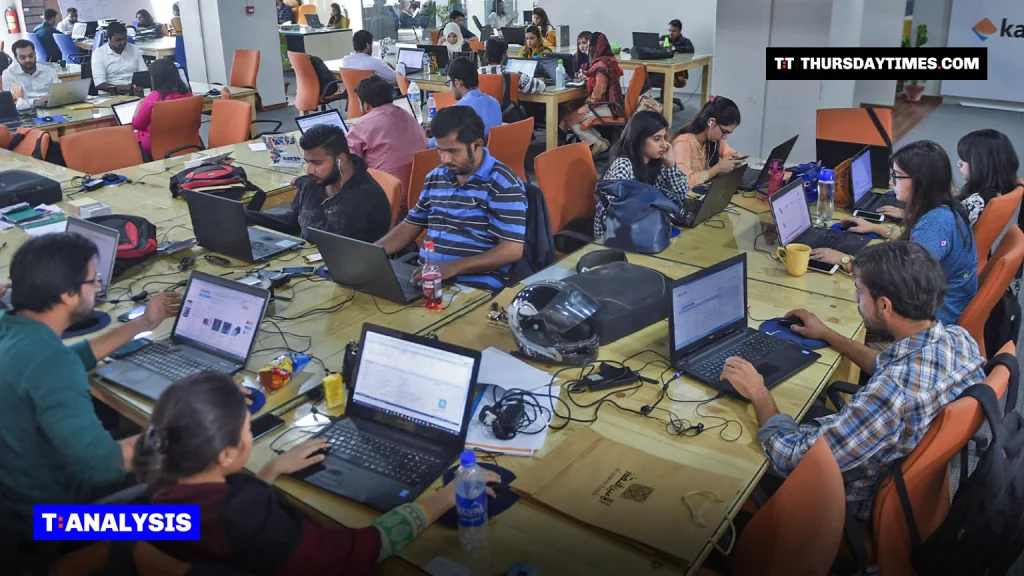
Rows of young Pakistani men and women working at laptops in an open-plan office in Karachi
Young Pakistanis at work in the Karachi office of an online marketplace company. File photo. — AFP
First published 9 November 2026

Pakistan’s freelancers had a record year. The plumbing is catching up

Pakistan’s freelancers earned a record $1.76 billion in the 2025-26 financial year, 78 per cent more than the year before, according to central bank figures. This week brought two changes meant to keep that going: Upwork began paying Pakistani freelancers straight into local mobile wallets, and the government opened refunds of up to Rs70,000 for international IT certifications. Together they show where the freelance economy is heading, and where it still gets stuck.

Neither change is dramatic on its own. A new withdrawal button and a refund scheme for exam fees will not make headlines beyond the people who use them. But freelancing has become one of the few parts of Pakistan’s export economy that grows quickly without new factories, new loans or new trade deals. What the state and the platforms do to the plumbing around it matters more than its size suggests.

The jump in a single year is striking. Freelancers brought in $984 million in 2024-25. A year later the figure was $1.76 billion. Earnings from IT freelancing, the core of the trade, rose 49 per cent to about $1.16 billion. Earnings recorded outside the IT category grew much faster, by 188 per cent, from $205 million to $592 million.

The momentum has carried into the new financial year. Freelancers earned $549 million between July and September 2026, 45 per cent more than in the same quarter a year earlier, central bank figures show. Growth is slowing from last year’s pace, as it was always going to, but it is still far faster than almost any other source of foreign exchange the country has.

Some caution is due on the fastest-growing line. A near-tripling of non-IT freelance income in one year may reflect real new work, from writing and design to online tutoring and support. It may also reflect money that was always being earned but now arrives through channels that record it properly. The two explanations are not exclusive, and the official figures cannot separate them. Either way, more of the money is now visible, and visible money can be taxed, banked and borrowed against.

Pakistan’s IT and IT-enabled exports reached a record $4.6 billion in 2025-26, about 20 per cent more than the year before, though some $400 million short of the government’s $5 billion target. IT freelancers alone accounted for roughly a quarter of that total. The rest comes from software houses, call centres and technology companies with offices, payrolls and corporate clients.

The comparison with remittances is useful. Money sent home by Pakistanis working abroad reached $41.6 billion in 2025-26, more than twenty times what freelancers earned. Freelancing will not replace that any time soon. But remittances grew 8.6 per cent last year and freelance earnings grew 78 per cent. And there is a difference in kind: a remittance is money earned abroad by someone who has left; a freelance payment is an export, earned by someone who still lives here, spends here and can hire here.

Until this week, most Pakistani freelancers on Upwork moved their money in at least two hops: from Upwork to Payoneer, then on to a bank account or wallet, paying fees and losing a slice to currency conversion along the way. Upwork’s new direct-to-wallet option sends earnings straight to JazzCash, Easypaisa, NayaPay, SadaPay or Finja, and the money usually arrives within minutes, the platform says.

It is not free, and it is not always the cheapest option. Upwork says the fee varies by wallet. Users report a flat $1.99 a withdrawal, against $0.99 for Upwork’s direct transfer to a local bank. The currency conversion is built into the exchange rate, and the wallet company may add its own charges. For someone who withdraws large sums a few times a month, the bank route still costs less per transfer.

The bigger gain is reach. A student in Multan or a young graduate in Mardan with a smartphone and a wallet, but no bank account and no Payoneer card, can now be paid directly by one of the world’s largest freelance platforms. For people at the start of their freelance careers, earning small amounts from first jobs, the simplest route is often the one that decides whether they keep going. The option is also available in Bangladesh, Indonesia, the Philippines and Kenya, markets that compete with Pakistan for much of the same work, so it removes a disadvantage as much as it creates an advantage.

The second change is about skills. The Prime Minister’s IT Certification Reimbursement Program, run by the PSEB, will refund up to Rs70,000 for approved certifications from Amazon Web Services, Microsoft, Google, Cisco and Oracle. On crowded freelance platforms, clients often use such certificates as a quick way to sort hundreds of profiles, and in cloud computing and networking, the better-paid end of the market, they can open doors that a portfolio alone does not.

The design has a catch. It is a refund, so candidates pay the exam fee first and are repaid only after they pass and submit their certificate. That favours people who already have the cash, and the young graduate in Mardan is exactly the person who may not. A voucher, or payment straight to the exam provider for candidates who meet set criteria, would reach the talented but cash-poor. No deadline or limit on places has been published, which leaves open how far the money will stretch.

Three things will show whether this week’s changes add up to more than convenience. First, whether other platforms follow Upwork into Pakistani wallets, which would make direct payment the norm rather than one platform’s feature. Second, how many people actually claim the certification refund, and whether the government is willing to turn it into an upfront voucher if take-up is low among those who need it most. Third, the central bank’s figures for October to December, which will show whether a 45 per cent growth rate can hold through the year.

The underlying trend is already clear. Pakistan has hundreds of thousands of young people selling skills to the world from bedrooms, cafes and co-working spaces, and they are earning more every year. They do not need the state to create their market. They need it, and the platforms they use, to make the road home for their money as short, cheap and safe as possible, and to help the next ones in line get the skills to join them.

THE THURSDAY TIMES · THURSDAYTIMES.COM5
HOME · CULTURE · FOOD · TUESDAY 17 NOVEMBER 20266

Raye leads Grammy nominations with 11 as Beyoncé hits 100th

Beyoncé waving
Beyoncé has received her 100th Grammy nomination. — SUSAN WALSH/AP

Rosalía is second with nine, and Dolly Parton is nominated three times after her death in August. The ceremony is on 7 February.

TT News Desk · Los Angeles

The British singer-songwriter Raye leads the field for the 2027 Grammy Awards with 11 nominations, while Beyoncé has become the first artist to reach 100 nominations in the history of the awards.

Raye is up for album of the year for This Album May Contain Hope, and her single Where Is My Husband! is nominated for both song and record of the year. She is also in the running for songwriter of the year. The Spanish artist Rosalía follows with nine nominations for her album Lux, a week after she won album of the year at the Latin Grammys.

Olivia Rodrigo, Phoebe Bridgers, Miranda Lambert and Ella Langley have seven nominations each. Langley’s Choosin’ Texas, which this year became the longest-running number one single in the history of the Billboard Hot 100, is up for song of the year. The other album of the year nominees are Olivia Dean, Bruno Mars and Taylor Swift. Dean, who won best new artist last year, has six nominations in all.

Beyoncé’s 100th nomination came for Morning Dew (Donk), in the best R&B solo performance category. She remains the most nominated artist in Grammy history and the most awarded, with 35 wins. Bruno Mars and Leon Thomas have six nominations each, the most for any male artist. Madonna has four, including best dance/electronic album, and Swift has five.

Dolly Parton, who died in August, received three posthumous nominations, including two in the best country duo/group performance category. This year’s awards add five new categories, among them best Latin song and best Asian pop music performance. The ceremony takes place in Los Angeles on Sunday, 7 February.

Two iPhones showing the Apple Health AI Usage Study app welcome screen and conversation suggestions

Apple opens 200,000-person study on how people use AI for health

TT Foreign Desk · Cupertino

Apple has launched a research study into how people use conversational AI tools for health questions, working with the clinical AI platform OpenEvidence and recruiting up to 200,000 volunteers in the United States.

The Apple Health AI Usage Study is run through a dedicated study app. Apple said it will examine what drives trust in health AI, the quality of the responses, how well users understand them, and the health actions people take afterwards. Participants can ask everyday health questions and see answers that link to peer-reviewed clinical citations, and the study will also explore whether AI can help people prepare for visits to their own doctors.

OpenEvidence says its answers draw on established medical sources including the New England Journal of Medicine, the Journal of the American Medical Association, and Nature. Participants can choose to share HealthKit data such as resting heart rate, activity, sleep, or lab results to see how personal data changes the relevance of the answers.

“Health is deeply personal, and conducting a dedicated research study is the most thoughtful way to understand how people engage with, comprehend, and evaluate health AI in everyday life,” said Sumbul Desai, Apple’s vice president of Health and Fitness. Apple acknowledged that tools powered by large language models may at times give responses that are incomplete or unclear.

The company says study data will not be used to train AI models, that sharing HealthKit metrics or survey answers is optional, and that the app has safety guardrails designed to detect certain concerning questions and suggest following up with a provider or other resources.

The study is open to people aged 21 and older in the United States who have an Apple Intelligence-enabled iPhone, meaning an iPhone 15 Pro or later, running iOS 26 or later.

Eurovision seeks answers over Malaysian TV cuts to Asia final
Robert Pattinson named as the next James BondAmazon MGM Studios confirmed the 40-year-old as Daniel Craig’s successor, the seventh actor to play 007 in the official films, with Denis Villeneuve directing.
Irish embassy pays tribute to Isobel Shaw, who opened Pakistan to trekkers
6T:LIFE · THE THURSDAY TIMES · THURSDAYTIMES.COM
CRICKET · FOOTBALL · THE WORLD · TUESDAY 17 NOVEMBER 20267
Mitchell Santner in New Zealand kit with arms outstretched at the 2023 Cricket World Cup
CRICKET

Santner ruled out of India Tests with fractured right hand

The New Zealand all-rounder broke his right hand batting in the fifth ODI, and Dean Foxcroft replaces him before Thursday’s first Test in Wellington.

TT Cricket Desk · Wellington

New Zealand all-rounder Mitchell Santner has been ruled out of the two-Test series against India after fracturing his right hand, New Zealand Cricket said on Tuesday.

Santner was struck on the hand while batting in the fifth and final one-day international in Mount Maunganui on Sunday. Scans after New Zealand’s 22-run defeat showed the fracture. The 34-year-old’s availability for the four-Test tour of Australia, which begins on 9 December, will be updated later.

Dean Foxcroft, a Central Districts spin-bowling all-rounder who made his Test debut against Ireland in May, has been called into the 14-man squad. The first Test starts on Thursday 19 November at the Basin Reserve in Wellington, and the second begins on 27 November at Hagley Oval in Christchurch.

The injury leaves coach Rob Walter short of spin options. Rachin Ravindra and Glenn Phillips are now the only other spinners in the squad, local reports said.

New Zealand lost the one-day series 3-1, as The Thursday Times reported. They currently top the World Test Championship standings and won their last Test series against India 3-0 in 2024.

Medvedev beats Cobolli 7-6(4), 6-3 in ATP Finals opener in Turin

The 2020 champion won all ten of his service games in Turin, and now meets Alcaraz on Wednesday with both unbeaten in the group.

Daniil Medvedev opened his Nitto ATP Finals campaign on Monday night with a 7-6(4), 6-3 win over Italy’s Flavio Cobolli in 1 hour and 27 minutes, spoiling the home favourite’s debut at the season-ending event.

The 2020 champion, seeded fourth, won all ten of his service games, hit nine aces, and took 83 per cent (34 of 41) of the points behind his first serve. Match reports said he did not face a single break point.

The first set was decided on Cobolli’s serve. Medvedev created two break points at 2-2 and three more at 4-4, after leading 40-0, but Cobolli saved them all, including with a deep backhand pass that lifted the crowd. Medvedev then took the tie-break 7-4 after moving ahead with a mini-break at 4-2. In the second set, Cobolli was broken at 3-3 and Medvedev held to 15 for 5-3, then broke again to finish the match on his second match point. Cobolli saved six of the eight break points he faced.

“I managed to serve well,” Medvedev said. “It’s a very fast indoor court, so the serve is important. I’m happy I managed to stay tough and get the win.” The Russian is making his seventh appearance at the tournament after missing out in 2025, and has won four tour-level titles this season.

Cobolli was playing his first match since retiring against fellow Italian Matteo Berrettini in the third round in Vienna last month. “Now, yeah, I’m a little bit sad about this performance, about this loss, but it’s not the end, and I have two more matches,” he said. Berrettini was in the crowd.

The result leaves Medvedev 1-0 in the Ivan Lendl Group alongside Carlos Alcaraz, who beat Frances Tiafoe 6-2, 6-2 earlier on Monday. Alcaraz stretched his winning run to ten matches. The two meet on Wednesday, 18 November, while Cobolli faces Tiafoe, with both still looking for a first win in Turin.

Daniil Medvedev hits a backhand at the Nitto ATP Finals in Turin
Daniil Medvedev plays a backhand against Flavio Cobolli at the Nitto ATP Finals in Turin on Monday. — NITTO ATP FINALS
Alvyn Sanches of Switzerland scores against Scotland
Switzerland’s Alvyn Sanches scores against Scotland in the Nations League in St Gallen. — MICHAEL SCHMID/KEYSTONE/AP

Switzerland beat Scotland 4-0 as Boteli, Sanches, and Amdouni score

Switzerland beat Scotland 4-0 in the Nations League on Monday, 16 November, after an own goal by Lewis Ferguson and second-half strikes from Winsley Boteli, Alvyn Sanches, and Zeki Amdouni.

Ferguson turned a tame cross into his own net in the 22nd minute to put the hosts ahead. Boteli doubled the lead two minutes into the second half, and Sanches shot across goalkeeper Craig Gunn into the corner in the 51st. Amdouni completed the scoring in the 89th minute, finishing from inside the box after a short corner.

Scotland captain Andy Robertson said his side were in the game in the first half but were 3-0 down within 50 minutes. “That can’t happen in international football. A really tough night for us,” he said. He added that Scotland now face a long break until March.

Scotland had beaten North Macedonia 2-1 in their previous Nations League match, on 13 November.

THE THURSDAY TIMES · THURSDAYTIMES.COM7
PULL-OUT · THE THURSDAY TIMES17.11.20268
Westline
BRITAIN, FROM THE OTHER SIDE OF THE LINEWESTLINE × THE THURSDAY TIMES
A STATE THAT STOPPED DECIDING

The backlog Britain built

A queue stretches back into the dark while the Home Office counter stays barely open — Illustration: Westline

Ministers of both parties have spent a decade blaming the people in the queue. The numbers point at the people running it.

Abdullah Esquire
Read it in fullthursdaytimes.com/westline

CONSIDER SOMEONE WHO CLAIMED asylum in Britain in January 2023. Where they came from, and how they arrived, matters less than what happened next — which is to say, very little. When the National Audit Office took a sample of 5,000 claims lodged that month and checked on them nearly three years later, more than half were still unresolved. In the meantime our claimant will probably have been housed at public expense, largely barred from working, interviewed by a caseworker who may not have been in post for long, refused, appealed, and then left waiting again: this time for a tribunal that now takes, on average, well over a year to hear a case.

In the political conversation, that person is the problem. The backlog is discussed as though it were a weather system blown in off the Channel — too many boats, too many claims, too many people gaming the system. Arrivals do matter, and nobody serious pretends otherwise. The number of people claiming asylum peaked at around 110,000 in the year to September 2025, the highest figure in nearly two decades.

But a backlog is not a measure of how many people turn up. It is the gap between the cases that come in and the cases a department decides — and decides properly. Judged that way, the story of Britain’s asylum queue is not one of an overwhelmed border. It is the story of an institution that, over ten years, stopped doing its core job, then tried to do it at a sprint, then passed the consequences down the corridor to the courts. The people in the queue designed none of it.

Initial asylum decisions made per year

Home Office annual statistics · output collapsed before small boats became a mass phenomenon, then quadrupled on command

The rot set in long before small boats became a nightly news item. In 2015 the Home Office made 28,623 decisions on asylum applications. By 2017 that had fallen by a quarter, to 21,269, and the department never recovered its old pace. The more striking figure is what happened per head. According to the Institute for Government, in 2011/12 some 380 caseworkers were each producing around 13.7 decisions a month. By December 2022 there were 1,237 of them, managing about four apiece. The workforce had more than tripled; the output of each worker had fallen by over two-thirds.

Then, in January 2019, with ministerial approval, the department dropped its own service standard: the commitment to decide 98 per cent of straightforward claims within six months. The stated reason was to prioritise the most vulnerable cases rather than the simplest. The practical effect was to remove the one clock that had been ticking. The Migration Observatory later found that in 2014 eight in ten applicants received an initial decision within six months; within five years it was one in four.

Why this isn’t a story about the Channel In 2021 the UK had 14.9 cases in its asylum backlog per 10,000 people, more than Germany or France, even though it received far fewer applications per head than either. Countries facing heavier demand were simply getting through their caseloads faster. By December 2022 two-thirds of those waiting — almost 110,000 people — had been in the queue for more than six months. That is not a surge. It is a department that had quietly stopped deciding things.

In December 2022 Rishi Sunak did something the Home Office had not done in years: he set it a deadline. The so-called legacy backlog — roughly 92,000 claims lodged before 28 June 2022 — would be cleared within twelve months. The department doubled its decision-makers to around 2,500 and, for nationalities with very high grant rates such as Afghans, Eritreans and Syrians, swapped lengthy interviews for a questionnaire. The results were instructive. In one four-week stretch in November and December 2023, officials made 20,481 initial decisions, more than in the whole of 2021. Across that year they made 112,138. For anyone who still believed the queue was driven by forces beyond Whitehall’s control, that was the rebuttal.

The sprint had a cost, though, and it was paid in shortcuts. Asylum withdrawals in 2023 were more than four times the 2022 figure, and 79 per cent of them were “implicit” — claims the Home Office itself closed because someone missed an interview, missed a questionnaire deadline or had not updated an address. When the pledge was declared met, 4,537 legacy cases were still awaiting a decision, and the chair of the UK Statistics Authority warned that the episode might affect public trust. A Conservative government that had staked its reputation on control ended up being rebuked by the statistics watchdog for its arithmetic.

Worse, at the same moment that one arm of the department was racing through old cases, another had been told to stop deciding new ones. The Illegal Migration Act meant that claims from those who had arrived irregularly after 7 March 2023 could not be granted. By the end of that year, 55,533 of the 98,599 claims awaiting a decision had been made after the bill was introduced. The backlog stopped falling and, by March 2024, stood at 118,329 people. Those claims were being held for removal to Rwanda, a scheme that by Labour’s later accounting had cost around £700 million — £290 million of it paid to Kigali — to send four volunteers. The Home Affairs Committee later concluded that holding up decisions while the scheme stalled had made the crisis worse. Parliament had, in effect, legislated the state into not processing cases, and then the state paid to house everyone it had declined to process.

Every month a claim sits undecided is a month of bed, board and administration, and this is where the failure becomes a fiscal one. In 2019 the Home Office signed seven regional contracts with Serco, Mears and Clearsprings, expecting them to cost £4.5 billion over ten years. The National Audit Office now puts the figure at £15.3 billion. Between December 2019 and December 2024 the number of asylum seekers in paid-for accommodation rose from about 47,000 to 110,000. Hotels, the emergency option, became the default: at the peak, in September 2023, 56,018 people were in them, spread across roughly 400 sites.

The economics were dreadful. In 2024-25 hotels held around 35 per cent of people in asylum accommodation but swallowed 76 per cent of the contracts’ annual cost.

NAO, asylum accommodation contracts (2025) · hotels held just 35% of people in the system

The three providers made a combined profit of £383 million between 2019 and 2024. The NAO’s verdict was that the department had few levers to control the cost. Across the Home Office and Ministry of Justice, asylum cost £4.9 billion in 2024-25.

For a centre-right reader, this ought to be the scandal. A man waiting for a decision cannot choose to move out of a hotel and is, for the most part, forbidden from earning his own keep. The bill is not run up by his presence so much as by the length of his stay, and the length of his stay is set in Whitehall. Treat the backlog as a migrant problem and you reach for deterrents. Treat it as a productivity problem and you reach for the thing that actually saves money: a decision.

WESTLINE · A THURSDAY TIMES PULL-OUT8
Archive