Friday 20 November 2026 Archive
FRIDAY 20 NOVEMBER 2026Dangerous to those who trade in lies.THE E-PAPER · ENGLISH EDITION · 8 PAGES
234567Westline pull-out8

Field Marshal Munir Briefed on Balochistan Operations in Turbat

Field Marshal Asim Munir seated with senior officers during a security briefing in Turbat
Field Marshal Asim Munir, seated centre right, at a briefing during his visit to Turbat. — ISPR (handout)

The Chief of Defence Forces was briefed on security, operational preparedness and ongoing operations in Balochistan, the ISPR said on Thursday.

TT Defence Desk · Turbat

Chief of Defence Forces and Chief of Army Staff Field Marshal Asim Munir visited Turbat in Balochistan, where he was briefed on the security situation, operational preparedness and ongoing operations against what the military calls externally sponsored terrorism, the Inter-Services Public Relations (ISPR) said on Thursday.

The field marshal was received on arrival by the Corps Commander Balochistan, laid a floral wreath at the Shuhada Monument and offered Fateha, the ISPR said.

Field Marshal Munir was given a comprehensive briefing on the prevailing security environment, operational preparedness and the ongoing operations, and was apprised of the progress of socio-economic development initiatives for the people of Balochistan. Meeting troops, he commended their high state of operational preparedness, professionalism and unwavering resolve to defend the motherland amid challenging operational conditions.

He reaffirmed the army's commitment to stand shoulder to shoulder with the people of Balochistan in their pursuit of peace, prosperity and sustainable development, the ISPR said.

Egypt unearths Ptolemaic-era necropolis with hundreds of coffins

Egyptian archaeologists have uncovered a cemetery of tombs and burials from the end of the Late Period, the Ptolemaic Period, and the early Roman Period at the Abu Billo site in Monufia Governorate, Egypt’s Ministry of Tourism and Antiquities said on Wednesday.

A mission of the Supreme Council of Antiquities found a large collection of stone and pottery coffins, along with the remains of several wooden coffins, vaulted tombs built of mudbrick, and another tomb constructed inside with limestone, the ministry said.

Among the finds were several gold tongues, an earring, a gold necklace pendant, gold foil sheets, and scarabs. The team also recovered many figurines of different shapes and sizes, some carrying hieroglyphic inscriptions, as well as offering tables, small limestone statue heads, and fragments of terracotta figurines depicting Isis-Aphrodite. One piece is part of a fired-clay vessel lid shaped like Isis-Aphrodite seated on a lotus flower, nursing her child Harpocrates.

The ministry said the necropolis was most likely used to bury middle-class members of society. Initial studies of the artefacts, stone and pottery coffins, and burials suggest it dates to the early Ptolemaic Period, in the 3rd and 2nd centuries BCE, with some burials going back to the end of the Late Period.

The site lies within the archaeological zone of the ancient city of El-Tarrana, known in antiquity as Terenuthis, at the eastern entrance of Wadi El Natrun. The area was historically known for extracting natron, a salt used in mummification, which the ministry said adds to the importance of the discovery.

The excavations also revealed a surface layer containing hundreds of stone coffins. Some are missing their lids, and others are completely shattered because of earlier looting and quarrying in the area, the ministry said.

“The field marshal was received on arrival by the Corps Commander Balochistan, laid a floral wreath at the Shuhada Monument and offered Fateha, the ISPR said.”Field Marshal Munir Briefed on Balochistan Operations in Turbat Page 1

Qatar’s Amir and Swiss president hold talks on first state visit

Qatar’s Amir, Sheikh Tamim bin Hamad Al Thani, held official talks with Swiss President Guy Parmelin at the Bernerhof in Bern on Wednesday, during what the Swiss president described as the Amir’s first state visit to Switzerland.

Welcoming the Amir and his delegation, Parmelin said he hoped the visit would strengthen cooperation between the two countries. He praised recent progress and said he looked forward to ties expanding into all fields. Sheikh Tamim thanked the president, the government, and the people of Switzerland for the reception and hospitality, and pointed to the strength and steady growth of Qatari-Swiss relations.

Qatar’s delegation included Prime Minister and Foreign Minister Sheikh Mohammed bin Abdulrahman bin Jassim Al Thani, Finance Minister Ali bin Ahmed Al Kuwari, Minister of State for Energy Affairs Saad bin Sherida Al-Kaabi, and Commerce and Industry Minister Sheikh Faisal bin Thani Al Thani. On the Swiss side, Vice President and Foreign Minister Ignazio Cassis, Finance Minister Karin Keller-Sutter, and Federal Councillor Albert Rösti took part, along with the director of the State Secretariat for Economic Affairs, Helene Budliger Artieda.

The Amir also addressed the Federal Council and the Federal Assembly at the Federal Palace. He said the partnership between Qatar and Switzerland rests on mutual trust and respect, and has grown through political dialogue and cooperation in trade, investment, and scientific research.

Sheikh Tamim said he wanted to expand trade and investment, particularly in the knowledge economy, energy, and healthcare, and pointed to scope for cooperation in education, research, technology, innovation, and sustainable development. He said lasting stability in the region requires dialogue, respect for the sovereignty of states, adherence to international law, and protection of civilians, and that Qatar would keep working with partners such as Switzerland to de-escalate tensions.

Parmelin later hosted a dinner banquet for the Amir and his delegation at the Bernerhof Palace. Sheikh Tamim said the visit reflected Qatar’s appreciation of its relations with Switzerland and its commitment to developing them. He stressed the importance of resolving crises through dialogue and of building on existing cooperation with practical steps between institutions in both countries.

The visit, which the Swiss side announced earlier in the week, runs for two days. As outlined in the earlier programme, the Amir and Parmelin are due to meet business leaders on Thursday to discuss deeper economic cooperation.

Qatar’s Amir Sheikh Tamim shakes hands with Swiss President Guy Parmelin on arrival in Bern
Qatar’s Amir, Sheikh Tamim bin Hamad Al Thani, is welcomed by Swiss President Guy Parmelin in Bern. — QNA
Pakistan todayPAGE 2
THE THURSDAY TIMES · PUBLISHED BY THURSDAY MEDIA INTERNATIONAL · THURSDAYTIMES.COM1
US MIDTERMS · THE WORLD · PAKISTAN · FRIDAY 20 NOVEMBER 20262
Continued from page 1

Qatar’s Amir and Swiss president hold talks on first state visit

Qatar’s Amir Sheikh Tamim shakes hands with Swiss President Guy Parmelin on arrival in Bern
Qatar’s Amir, Sheikh Tamim bin Hamad Al Thani, is welcomed by Swiss President Guy Parmelin in Bern. — QNA

Qatar’s Amir, Sheikh Tamim bin Hamad Al Thani, held official talks with Swiss President Guy Parmelin at the Bernerhof in Bern on Wednesday, during what the Swiss president described as the Amir’s first state visit to Switzerland.

Welcoming the Amir and his delegation, Parmelin said he hoped the visit would strengthen cooperation between the two countries. He praised recent progress and said he looked forward to ties expanding into all fields. Sheikh Tamim thanked the president, the government, and the people of Switzerland for the reception and hospitality, and pointed to the strength and steady growth of Qatari-Swiss relations.

Qatar’s delegation included Prime Minister and Foreign Minister Sheikh Mohammed bin Abdulrahman bin Jassim Al Thani, Finance Minister Ali bin Ahmed Al Kuwari, Minister of State for Energy Affairs Saad bin Sherida Al-Kaabi, and Commerce and Industry Minister Sheikh Faisal bin Thani Al Thani. On the Swiss side, Vice President and Foreign Minister Ignazio Cassis, Finance Minister Karin Keller-Sutter, and Federal Councillor Albert Rösti took part, along with the director of the State Secretariat for Economic Affairs, Helene Budliger Artieda.

The Amir also addressed the Federal Council and the Federal Assembly at the Federal Palace. He said the partnership between Qatar and Switzerland rests on mutual trust and respect, and has grown through political dialogue and cooperation in trade, investment, and scientific research.

Sheikh Tamim said he wanted to expand trade and investment, particularly in the knowledge economy, energy, and healthcare, and pointed to scope for cooperation in education, research, technology, innovation, and sustainable development. He said lasting stability in the region requires dialogue, respect for the sovereignty of states, adherence to international law, and protection of civilians, and that Qatar would keep working with partners such as Switzerland to de-escalate tensions.

Parmelin later hosted a dinner banquet for the Amir and his delegation at the Bernerhof Palace. Sheikh Tamim said the visit reflected Qatar’s appreciation of its relations with Switzerland and its commitment to developing them. He stressed the importance of resolving crises through dialogue and of building on existing cooperation with practical steps between institutions in both countries.

The visit, which the Swiss side announced earlier in the week, runs for two days. As outlined in the earlier programme, the Amir and Parmelin are due to meet business leaders on Thursday to discuss deeper economic cooperation.

The world in brief

EVERY STORY IN FULL AT THURSDAYTIMES.COM

Pakistan

NATIONAL · ECONOMY · MILITARY
InsideGulf, 3 · Views, 4 · Analysis, 5 · T:LIFE, 6 · Sports, 7 · Westline, 8
2THE THURSDAY TIMES · THURSDAYTIMES.COM
EMIRATES · SAUDI · QATAR · FRIDAY 20 NOVEMBER 20263

IMF sees UAE growth at 0.2% in 2026, rebounding to 7.3% in 2027

An IMF team projects UAE real GDP growth of 0.2% in 2026 and 7.3% in 2027, assuming regional disruptions are lifted, after concluding its Article IV mission.

A man looks at the Abu Dhabi skyline across the water
A man looks at the Abu Dhabi skyline on 11 November 2026. File photo. — FADEL SENNA/AFP
Thursday Emirates · Abu Dhabi

An International Monetary Fund staff team projects that the UAE’s real GDP will grow 0.2% in 2026 and 7.3% in 2027, assuming the regional disruptions are lifted, after it concluded its 2026 Article IV mission to the country on Tuesday.

Non-hydrocarbon growth is projected at -0.5% in 2026 and 5.4% in 2027, while hydrocarbon growth is expected at 2.3% in 2026 and 13.3% in 2027. Inflation is projected to average about 5% in 2026 before easing to about 3% in 2027 and converging towards 2% over the medium term as supply pressures and base effects unwind.

Said Bakhache, the IMF mission chief for the UAE, said the economy “has shown strong resilience to the regional conflict, supported by substantial public sector and external buffers, the country’s robust infrastructure, a well-capitalised banking system, and the authorities’ swift and targeted policy response”. He said activity had begun to recover and growth was projected to strengthen in 2027, although the outlook remained subject to significant regional uncertainty.

The Fund expects fiscal and external surpluses to narrow in 2026, with low government debt, substantial sovereign financial assets and ample international reserves continuing to provide buffers. The mission called the temporary fiscal easing in 2026 appropriate given the scale of the shock, but said fiscal support should stay transparent, targeted and carefully calibrated, and called for stronger coordination between federal and emirate-level fiscal policies.

On the financial system, the staff team said capital and liquidity positions are strong and asset quality has continued to improve, while urging close monitoring of liquidity, funding conditions and sectoral exposures. It said real estate activity has moderated from earlier peaks, with conditions varying across emirates, and called for continued supervisory vigilance. Banking assets exceeded Dh5.815 trillion at the end of September, according to the Central Bank of the UAE.

The IMF said an escalation of regional tensions and disruptions to trade, tourism and supply chains could delay the recovery and add to inflationary pressures, and it flagged global financial volatility and cybersecurity risks. On the upside, it said a faster normalisation of the regional conflict and stronger investment and productivity gains, including from artificial intelligence, could support higher growth.

The mission ran from 3 to 17 November. Khaled Mohamed Balama, the central bank governor, who is also the UAE’s governor at the IMF, chaired the concluding meeting in Abu Dhabi. The Fund welcomed the UAE’s trade partnership agreements and its efforts to develop alternative trade routes, as well as improvements in GDP and balance-of-payments data.

Saudi Crown Prince Mohammed bin Salman at a Cabinet session

Saudi Cabinet lets foreign law firms set up companies in the Kingdom

Riyadh · thursdaytimes.com
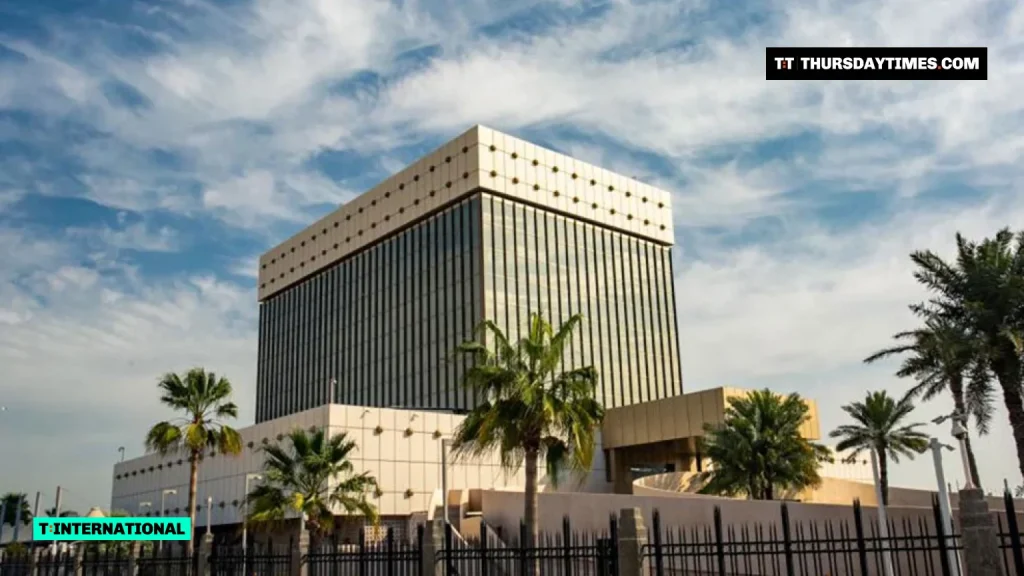
The Qatar Central Bank headquarters in Doha under a blue sky with palm trees in front

Qatar sells QR1bn of bonds in two tranches, with bids at QR1.8bn

Doha · thursdaytimes.com

Saudi-led coalition says it struck 60 Houthi targets in four provinces

THE THURSDAY TIMES · THURSDAYTIMES.COM3
EDITORIAL · OPINION · FRIDAY 20 NOVEMBER 20264
The Shahi Idgah mosque with its white domes beside the spires of the Shri Krishna Janmabhoomi temple in Mathura
The Shahi Idgah mosque (right) and the Shri Krishna Janmabhoomi temple in Mathura, Uttar Pradesh. File photo. — PTI

The winning formula for elections in India

“I would not be surprised if a Krishnajanmabhumi agitation soon starts, culminating in demolition of the Masjid shortly before the UP elections,” writes former Supreme Court of India Justice Markandey Katju.

Words by Justice Markandey Katju

State Assembly elections in UP, India’s largest state population wise, are due in February/March 2027.

Many people have said that after the revelation of massive ‘vote chori’ (vote theft) allegedly at the behest of India’s Chief Election Commissioner Gyanesh Kumar, the ruling BJP will suffer a defeat.

I do not agree. The Ramjanmabhumi agitation and demolition of the Babri Masjid in Ayodhya, which was proclaimed as the birthplace of the Hindu god Ram, and was allegedly built after demolishing a Hindu temple on the site, helped bring the BJP to power, and it has been in power at the Centre since 2014.

Similarly, a controversy has erupted recently on the eve of the UP state assembly elections about the Shahi Idgah Masjid in Mathura, and I would not be surprised if a Krishnajanmabhumi agitation soon starts, culminating in demolition of the Masjid shortly before the UP elections, alleging that it was built after demolishing the Hindu Keshavdev temple on its site.

On a suit filed by some Hindus, the Allahabad High Court has ordered survey of the Mathura Masjid and digging there to find remnants of a Hindu temple, which order has been upheld by India’s Supreme Court. The Archaeological Survey of India has said that the mosque was built there after Moghul Emperor Aurangzeb got demolished a Hindu temple standing on the site.

This is despite the Places of Worship Act (Special Provisions), 1991 enacted by the Indian Parliament which says that the religious character of a place of worship as it existed on 15 August 1947 shall not be changed.

Almost 80% of the population of UP is Hindu, and many of them will celebrate demolition of the Shahi Idgah Masjid, and will regard it as a great victory for Hindus, a revenge for demolition of the Somnath temple in Gujarat by Mahmud Ghaznavi and other Hindu temples by the ‘hated’ Muslim invaders and rulers, as they see it, and will vote for the BJP in the coming UP elections.

So despite all talk of vote chori, despite the growing unemployment, the rise in prices of essential commodities like food, etc., in India, I foresee a landslide victory for the BJP in the coming UP elections in this emotionally surcharged atmosphere.

And why only the UP elections? There are 28 states and 8 union territories in India, in most of which the majority population is Hindu. Elections in some state or the other are constantly taking place, or their preparations are going on, and the winning formula has been discovered, and may be applied everywhere.

Parliamentary elections in India are due in 2029, and I would not be surprised if the historical Jama Masjid in Delhi is demolished soon before that, as demanded by former BJP MP Sakshi Maharaj.

If such demolition is done, it will generate a euphoria, glee, and a sense of triumphant exultation among many Hindus, who would then vote for the BJP in droves, forgetting all their socio-economic distress, and lead to a huge BJP victory in the elections.

The next in line for demolition before some elections (alleging they were built after demolishing a Hindu temple there) are the Gyanvapi mosque in Varanasi, Mecca Masjid in Hyderabad, Tipu Sultan mosque in Kolkata, Jama Masjids in Agra, Ahmedabad, Bangalore, Bijapur, etc., Moti Masjid in Bhopal, Moti Masjid in the Red Fort, Delhi, Taj al Masajid in Bhopal, Atala Masjid in Jaunpur, etc.

And why spare dargahs like the Ajmer Sharif dargah, Nizamuddin Aulia dargah in Delhi, Haji Ali dargah in Mumbai, Salim Chishti dargah in Fatehpur Sikri, etc.?

The ‘final victory’ of sanatan dharma over these ‘devils’, as the zealots would put it, will be by demolishing the Taj Mahal in Agra. After all, they claim it was built by demolishing a Hindu Shiva temple called Tejo Mahalaya on the site, which, they say, must be ‘restored’.

4THE THURSDAY TIMES · THURSDAYTIMES.COM
FRIDAY 20 NOVEMBER 20265
THE THURSDAY TIMES · THURSDAYTIMES.COM5
HOME · CULTURE · FOOD · FRIDAY 20 NOVEMBER 20266

Study finds school phone bans add one to two weeks of learning

Students hold locked phone pouches and phones at a California school
Students unlock their phones from locked pouches at a California school. File photo, August 2024. — LEA SUZUKI/AP

A Harvard-led study of 3.3 million US students found locked phone pouches add roughly one to two weeks of learning a year, a modest gain that its authors say is no cure-all.

TT News Desk · New York

Strict phone restrictions in US schools lead to small academic gains, according to a large study published on Tuesday, 17 November, by Harvard’s Center for Education Policy Research.

The researchers compared the test scores of 3.3 million students in about 4,600 schools. Schools that required students to keep phones in locked pouches for the whole day saw “modest” improvements in academic growth compared with similar schools without such rules. The study estimates the gain at roughly one to two weeks of extra learning over a school year.

“Our answer is yes, phone bans do have a positive effect on growth. But it’s not a panacea,” said Thomas Kane, the Harvard professor who led the work. He said the gain is about half the annual decline in test scores since smartphones became widespread, and that further gains could come if schools keep the bans in place. The study used maths and reading results for grades four to 10 over the past five academic years.

The finding sits uneasily with earlier research. A study published in May by researchers at Stanford, the University of Michigan, Duke, and the University of Pennsylvania, covering the same number of schools using the pouches, found “close to zero” effect on test scores overall, though it did record modest gains in high school maths over three years. One of its authors, Stanford economist Thomas Dee, said the early results from phone bans were “largely disappointing” and that he was not comfortable projecting future gains from small estimates based on a few years of data.

More than 40 US states now have laws restricting phones in schools, but the rules vary widely and enforcement is patchy. San Diego State University psychologist Jean Twenge said some bans were largely cosmetic, with students stowing spare phones in their pouches. Students may also simply move to laptops, and phone use outside school may matter more. Kane said researchers cannot yet test that, because social media companies have not shared data that could link time spent on their platforms to student results.

David Beckham in sunglasses and a navy blazer

Beckham’s brand sues Coty for $41m over discount fragrance sales

TT News Desk · New York

David Beckham’s brand company has sued the perfume maker Coty, alleging that his fragrances were sold through discount channels it never approved, including the British retailer Poundland and a “bargain bin” at a petrol station, according to court documents.

DB Ventures, which licenses the Beckham name, filed the claim in the supreme court in New York. Its lawyers said the company felt “shock and dismay” on finding the products on sale in a gas station and in Poundland. “How could this possibly have happened? Desperation and greed,” the filing said.

The lawyers allege that Coty sold at least $24m of Beckham products through “unapproved distribution channels” and under-reported net sales by $123m, which they say left DB Ventures $6m short in unpaid royalties. They are asking for compensation and damages totalling $41m.

Coty, which is headquartered in the Netherlands, has worked with the Beckham brand for more than a decade and has produced more than 30 fragrances bearing his name. In Britain they sell for about £20 a bottle.

Coty has filed a defence asking for the case to be dismissed. It denies ever selling the fragrances in Poundland, but argues it had the right to decide where to sell the range.

DB Ventures said it ensures that all of its licensing partnerships “maintain the lifestyle and luxury image of the brand that Sir David has carefully cultivated for decades”. None of the claims has been tested in court.

Raye leads Grammy nominations with 11 as Beyoncé hits 100th
Apple opens 200,000-person study on how people use AI for healthThe Apple Health AI Usage Study, run with OpenEvidence, will recruit up to 200,000 US iPhone users to examine trust, comprehension, and real-world use of health chatbots.
Eurovision seeks answers over Malaysian TV cuts to Asia final
6T:LIFE · THE THURSDAY TIMES · THURSDAYTIMES.COM
CRICKET · FOOTBALL · THE WORLD · FRIDAY 20 NOVEMBER 20267
Chelsea players jump for a header beside a Paris Saint-Germain player during a Women’s Champions League match
FOOTBALL

Chelsea edge PSG 1-0 in Women’s Champions League

Veerle Buurman scored a late near-post winner from a corner as Chelsea beat Paris Saint-Germain 1-0 in London on Wednesday.

TT Football Desk · London

Chelsea beat Paris Saint-Germain 1-0 in the Women’s Champions League league phase on Wednesday night, with Veerle Buurman scoring a late winner at the near post.

The game stayed goalless until the closing stages. Substitute Sjoeke Nüsken forced a save from PSG goalkeeper Katarzyna Kiedrzynek, and from the resulting corner Buurman squeezed the ball in after the visitors failed to clear Erin Cuthbert’s delivery.

Chelsea, coached by Sonia Bompastor, dominated possession in the first half, with seven attempts on goal to PSG’s six at the break. PSG’s first shot on target came after the restart, when Merveille Kanjinga forced a near-post save from Hannah Hampton.

Chelsea were without several injured players, including Melvine Malard, Lauren James and Naomi Girma, and had been held 0-0 by Häcken on 10 November. PSG, beaten 2-1 by Bayern Munich in their previous league-phase game, travelled to London without their injured captain Sakina Karchaoui.

Chelsea’s final league-phase match is away to OH Leuven on 16 December, the same day PSG host Juventus.

Pochettino arrives at Carrington to begin Manchester United job

The new head coach flew in from Cincinnati overnight and faces Liverpool at Anfield on Sunday, with United 18th in the Premier League.

Mauricio Pochettino said it was “an honour” and “a privilege” to be Manchester United’s new head coach after arriving in England on Wednesday for his first day at the club’s Carrington training ground.

Pochettino flew overnight from Cincinnati to Manchester after his final game in charge of the United States. Members of his staff landed earlier in the week and have started work at Carrington. His assistant Jesús Pérez, goalkeeping coach Toni Jiménez and fitness coach Sebastiano Pochettino, who is the coach’s son, have already taken training with the players not away on international duty.

Those players will return to the club on Thursday, when they are expected to meet Pochettino for the first time and hold meetings. Pochettino has also spoken with departments across the club as he looks to understand the squad’s health and find areas to improve. He is reunited with strength and conditioning coach Silvia Tuya, analyst Alec Scott, and his long-term assistant Miki D’Agostino.

His first match is at Anfield on Sunday, when 18th-placed United face Liverpool, as the club turns to him after Michael Carrick’s exit.

“It’s a big challenge but at the same time, it’s adrenaline that you want to feel,” Pochettino said. “We know that the situation is not a situation that a club like Manchester United deserves. The fanbase is amazing, and after we signed here in America, of every 10 people I crossed in the street, nine are Manchester United fans.”

Told by former United States international DaMarcus Beasley, who once had a loan spell at Manchester City, that “Manchester’s blue and always will be blue”, Pochettino replied: “No way. You will see. Give me time, give me time and that is going to start to change.”

Mauricio Pochettino smiling in Manchester United training kit at Carrington
Mauricio Pochettino arrives at Carrington for his first day as Manchester United head coach. — Ash Donelon/Manchester United/Getty Images
Argentina player during the friendly against Costa Rica
Argentina's number 18 during the 7-0 friendly win over Costa Rica in Córdoba. — GETTY IMAGES

Argentina thrash Costa Rica 7-0, three players score twice

Argentina beat Costa Rica 7-0 in an international friendly at the Mario Alberto Kempes Stadium in Córdoba on Tuesday night, with Nico Paz, Julián Álvarez, and Franco Mastantuono each scoring twice and Alexis Mac Allister adding the seventh.

Paz opened the scoring in the eighth minute with a left-footed strike on the move, finishing a quick passing sequence that began with Álvarez and ended with a back-heeled pass from Enzo Fernández. He added a second in the 38th minute, firing a right-footed shot into the top corner. Álvarez scored in the 35th minute and again before half-time to make it 4-0.

Mastantuono, who replaced Paz at the break, scored in the 48th minute from a through ball by Máximo Perrone and added his second late on from a pass by Giuliano Simeone. Mac Allister completed the scoring.

The result followed a 2-1 defeat to Uruguay at La Bombonera on Friday, as TT reported, in Argentina’s first match without Lionel Messi. Coach Lionel Scaloni made five changes for the Costa Rica game.

Goalkeeper Emiliano Martínez, back in the side after recovering from a fractured jaw, wore the captain’s armband because of an injury to defender Cristian Romero. It was his 47th clean sheet for Argentina, equalling the record held by Sergio Romero.

“We want to make the fans fall in love with the team all over again,” Martínez said. “We wanted to start winning in this new phase now without Leo.”

Asked about inheriting Messi’s number 10 shirt, Paz said: “I don’t think about that. What I think about is enjoying and having fun on the pitch.”

THE THURSDAY TIMES · THURSDAYTIMES.COM7
PULL-OUT · THE THURSDAY TIMES20.11.20268
Westline
BRITAIN, FROM THE OTHER SIDE OF THE LINEWESTLINE × THE THURSDAY TIMES
A STATE THAT STOPPED DECIDING

The backlog Britain built

A queue stretches back into the dark while the Home Office counter stays barely open — Illustration: Westline

Ministers of both parties have spent a decade blaming the people in the queue. The numbers point at the people running it.

Abdullah Esquire
Read it in fullthursdaytimes.com/westline

CONSIDER SOMEONE WHO CLAIMED asylum in Britain in January 2023. Where they came from, and how they arrived, matters less than what happened next — which is to say, very little. When the National Audit Office took a sample of 5,000 claims lodged that month and checked on them nearly three years later, more than half were still unresolved. In the meantime our claimant will probably have been housed at public expense, largely barred from working, interviewed by a caseworker who may not have been in post for long, refused, appealed, and then left waiting again: this time for a tribunal that now takes, on average, well over a year to hear a case.

In the political conversation, that person is the problem. The backlog is discussed as though it were a weather system blown in off the Channel — too many boats, too many claims, too many people gaming the system. Arrivals do matter, and nobody serious pretends otherwise. The number of people claiming asylum peaked at around 110,000 in the year to September 2025, the highest figure in nearly two decades.

But a backlog is not a measure of how many people turn up. It is the gap between the cases that come in and the cases a department decides — and decides properly. Judged that way, the story of Britain’s asylum queue is not one of an overwhelmed border. It is the story of an institution that, over ten years, stopped doing its core job, then tried to do it at a sprint, then passed the consequences down the corridor to the courts. The people in the queue designed none of it.

Initial asylum decisions made per year

Home Office annual statistics · output collapsed before small boats became a mass phenomenon, then quadrupled on command

The rot set in long before small boats became a nightly news item. In 2015 the Home Office made 28,623 decisions on asylum applications. By 2017 that had fallen by a quarter, to 21,269, and the department never recovered its old pace. The more striking figure is what happened per head. According to the Institute for Government, in 2011/12 some 380 caseworkers were each producing around 13.7 decisions a month. By December 2022 there were 1,237 of them, managing about four apiece. The workforce had more than tripled; the output of each worker had fallen by over two-thirds.

Then, in January 2019, with ministerial approval, the department dropped its own service standard: the commitment to decide 98 per cent of straightforward claims within six months. The stated reason was to prioritise the most vulnerable cases rather than the simplest. The practical effect was to remove the one clock that had been ticking. The Migration Observatory later found that in 2014 eight in ten applicants received an initial decision within six months; within five years it was one in four.

Why this isn’t a story about the Channel In 2021 the UK had 14.9 cases in its asylum backlog per 10,000 people, more than Germany or France, even though it received far fewer applications per head than either. Countries facing heavier demand were simply getting through their caseloads faster. By December 2022 two-thirds of those waiting — almost 110,000 people — had been in the queue for more than six months. That is not a surge. It is a department that had quietly stopped deciding things.

In December 2022 Rishi Sunak did something the Home Office had not done in years: he set it a deadline. The so-called legacy backlog — roughly 92,000 claims lodged before 28 June 2022 — would be cleared within twelve months. The department doubled its decision-makers to around 2,500 and, for nationalities with very high grant rates such as Afghans, Eritreans and Syrians, swapped lengthy interviews for a questionnaire. The results were instructive. In one four-week stretch in November and December 2023, officials made 20,481 initial decisions, more than in the whole of 2021. Across that year they made 112,138. For anyone who still believed the queue was driven by forces beyond Whitehall’s control, that was the rebuttal.

The sprint had a cost, though, and it was paid in shortcuts. Asylum withdrawals in 2023 were more than four times the 2022 figure, and 79 per cent of them were “implicit” — claims the Home Office itself closed because someone missed an interview, missed a questionnaire deadline or had not updated an address. When the pledge was declared met, 4,537 legacy cases were still awaiting a decision, and the chair of the UK Statistics Authority warned that the episode might affect public trust. A Conservative government that had staked its reputation on control ended up being rebuked by the statistics watchdog for its arithmetic.

Worse, at the same moment that one arm of the department was racing through old cases, another had been told to stop deciding new ones. The Illegal Migration Act meant that claims from those who had arrived irregularly after 7 March 2023 could not be granted. By the end of that year, 55,533 of the 98,599 claims awaiting a decision had been made after the bill was introduced. The backlog stopped falling and, by March 2024, stood at 118,329 people. Those claims were being held for removal to Rwanda, a scheme that by Labour’s later accounting had cost around £700 million — £290 million of it paid to Kigali — to send four volunteers. The Home Affairs Committee later concluded that holding up decisions while the scheme stalled had made the crisis worse. Parliament had, in effect, legislated the state into not processing cases, and then the state paid to house everyone it had declined to process.

Every month a claim sits undecided is a month of bed, board and administration, and this is where the failure becomes a fiscal one. In 2019 the Home Office signed seven regional contracts with Serco, Mears and Clearsprings, expecting them to cost £4.5 billion over ten years. The National Audit Office now puts the figure at £15.3 billion. Between December 2019 and December 2024 the number of asylum seekers in paid-for accommodation rose from about 47,000 to 110,000. Hotels, the emergency option, became the default: at the peak, in September 2023, 56,018 people were in them, spread across roughly 400 sites.

The economics were dreadful. In 2024-25 hotels held around 35 per cent of people in asylum accommodation but swallowed 76 per cent of the contracts’ annual cost.

NAO, asylum accommodation contracts (2025) · hotels held just 35% of people in the system

The three providers made a combined profit of £383 million between 2019 and 2024. The NAO’s verdict was that the department had few levers to control the cost. Across the Home Office and Ministry of Justice, asylum cost £4.9 billion in 2024-25.

For a centre-right reader, this ought to be the scandal. A man waiting for a decision cannot choose to move out of a hotel and is, for the most part, forbidden from earning his own keep. The bill is not run up by his presence so much as by the length of his stay, and the length of his stay is set in Whitehall. Treat the backlog as a migrant problem and you reach for deterrents. Treat it as a productivity problem and you reach for the thing that actually saves money: a decision.

WESTLINE · A THURSDAY TIMES PULL-OUT8
Archive