Sunday 22 November 2026 Archive
SUNDAY 22 NOVEMBER 2026Dangerous to those who trade in lies.THE E-PAPER · ENGLISH EDITION · 8 PAGES
234567Westline pull-out8

Three Salvadoran soldiers die in Haiti explosives accident

Armed Salvadoran soldiers in helmets and body armour keep watch from behind a concrete stadium wall, with a machine gun mounted on sandbags
Salvadoran soldiers keep watch from inside the Sylvio Cator stadium in Port-au-Prince, Haiti. File photo. — Patrice Noel/AP

El Salvador says three soldiers died after an explosion while handling explosives in Haiti, the first deaths of its deployment against gangs.

TT Foreign Desk · San Salvador

Three Salvadoran soldiers have died in Haiti after an explosion while they were handling explosives, El Salvador’s armed forces said, in the first officially reported deaths since Bukele sent troops to the Caribbean country.

Two soldiers died at the scene and two others were wounded, the military said in a statement on Friday. Hours later it reported that one of the wounded had died in a hospital in the Dominican Republic, where he had been flown for treatment. The fourth soldier is out of danger.

The military has not named the dead. It has not said where in Haiti the blast happened, when it occurred, or what kind of explosives were involved. “We extend our deepest condolences and solidarity to the families of the three deceased,” it said. Haitian Prime Minister Alix Didier Fils-Aimé offered his condolences, as did the United States embassy in San Salvador.

President Nayib Bukele ordered more than 2,000 troops and special forces into Haiti after four Salvadoran airmen serving with the United Nations-backed Gang Suppression Force went missing in a gang ambush in Port-au-Prince on 18 October. The four remain missing.

The new deployment operates separately from that force. What began as a search for the airmen has grown into a wider offensive against the armed groups that control much of the Haitian capital. Salvadoran troops have destroyed facilities belonging to two gangs and helped push armed groups out of a stadium in Port-au-Prince. Bukele has said he will withdraw the troops once the airmen are rescued, but El Salvador and Haiti have signed a cooperation agreement, its terms unpublished, that could extend the Salvadoran presence. Haitian authorities have welcomed the deployment.

Separately on Friday, Haiti announced an agreement for a Salvadoran company, working with a Haitian firm, to build three new prisons in Haiti. Security and Justice Minister Patrick Pelissier announced the deal after visiting El Salvador this week, where he toured the CECOT mega-prison.

Power bills may rise Rs1.33 a unit in December, reports say

Electricity consumers across the country, including in Karachi, may face a heavier burden in December, with quarterly and monthly adjustments expected to raise the combined charge to Rs4.22 per unit, according to reports citing sources.

Consumers currently pay Rs2.89 per unit under the adjustments. The expected increase of Rs1.33 per unit over November would be added to bills nationwide, the reports said.

The reports said Prime Minister Shehbaz Sharif chaired a meeting that reviewed electricity prices for December, where officials briefed him on the proposed adjustments and their likely effect on consumers. Sources said the government wants to limit the extra burden on consumers. The figures come from unnamed sources, and this report has not seen an official notification of the December rates.

Separately, power distribution companies have asked the National Electric Power Regulatory Authority (NEPRA) to approve an increase of Rs1.34 per unit under the quarterly adjustment for July-September 2026, to apply over the next three months, according to the reports.

On Friday, Finance Minister Muhammad Aurangzeb chaired a steering committee on power-sector reform that weighed solar growth, excess capacity, and capacity payments; read our report.

“We extend our deepest condolences and solidarity to the families of the three deceased.”Three Salvadoran soldiers die in Haiti explosives accident Page 1

Smaller provinces: a public vote can ask the question, but not settle it

Supporters of a public vote on smaller provinces say the people must decide, and the PPP says the Constitution already sets the route. What a referendum can and cannot do, and where the real veto sits.

TT MONITORING DESKPAGE 5 ›

Sindh rainfall is 99% below normal this month as drought risk grows

Sindh is facing a growing risk of drought after months of below-normal rain, which threatens crops, livestock, and rural livelihoods, according to a fresh report from the Pakistan Meteorological Department’s National Drought Monitoring and Early Warning Centre.

The province has had below-normal rainfall in every month since July, measured against the 1991-2020 average. The shortfall was 61 percent in July, 22 percent in August, and 90 percent in September. It reached 100 percent in October and stood at 99 percent over 1-20 November.

Balochistan also recorded below-normal rainfall in all five assessment periods, with deficits of 41 percent in July, 12 percent in August, 68 percent in September, 80 percent in October, and 79 percent over 1-20 November. The report said southern parts of the country, particularly Sindh, Balochistan, and southern Punjab, have had persistent shortages from 1 July to 20 November, even though the July-September monsoon normally supplies a large share of the year’s rain.

The north fared better. Khyber Pakhtunkhwa and Gilgit-Baltistan both recorded surpluses in October and over the first 20 days of November, but the improvement did not reach the south, where October and November are normally dry months.

A monitoring map covering 29 March to 20 November showed a longest dry spell of 237 days, counting days with less than 1 millimetre of rain. Long dry spells reduce soil moisture, raise moisture loss through evaporation, and limit the water available for farming and for households, with rain-fed areas the most exposed.

The Met Office expects normal to below-normal rainfall in Sindh, Balochistan, and southern Punjab from December to February. Winter rain normally helps restore soil moisture and supports rabi crops, so a continued shortage could slow the recovery after the weak monsoon, hurt crop growth, and add pressure on surface water and groundwater.

The centre has advised authorities to strengthen drought monitoring through District Coordination Committees, activate early warning systems, share information with communities, and identify vulnerable households. Farmers and herding families are among those most at risk. Earlier this month, Sindh ordered a drought survey in Thar after crop failures there; read our report.

A herd of sheep and goats grazing on dry ground beside the Indus River in Larkana
A herd of sheep grazes in the katcha area of the Indus River in Larkana on 21 November 2026. — APP
Pakistan todayPAGE 2
India and Canada wrap up sixth round of CEPA trade talks in Delhi
Zardari meets Dar and Speaker Sadiq as new-provinces debate goes on
Peshawar Northern Bypass is 85% complete, due to open in January
THE THURSDAY TIMES · PUBLISHED BY THURSDAY MEDIA INTERNATIONAL · THURSDAYTIMES.COM1
US MIDTERMS · THE WORLD · PAKISTAN · SUNDAY 22 NOVEMBER 20262

Aurangzeb presses power reform as solar erodes grid demand

Finance Minister Muhammad Aurangzeb chaired a steering committee that weighed solar growth, excess capacity, and capacity payments. It asked teams for further recommendations, with no decisions announced.

TT Business Desk · Islamabad

Finance Minister Muhammad Aurangzeb on Friday reaffirmed the government’s commitment to advancing power-sector reforms within clear timelines, chairing a meeting of the Steering Committee on the Power Sector Regulatory Regime in Islamabad, according to an official statement.

The committee reviewed progress on the proposed reforms and the recommendations of a Technical Working Group (TWG), which is drawing up a regulatory and market framework meant to improve efficiency, promote competition, and attract private investment. The group’s work covers tariff methodology, regulatory certainty, investment incentives, performance benchmarks, and the future structure of the electricity market.

Participants discussed transparent and predictable rules for distribution network operators and competitive suppliers, including investment approvals, performance standards, transmission and distribution losses, conflict-of-interest safeguards, and ancillary commercial activities. The meeting also stressed the need to define the roles of the National Electric Power Regulatory Authority (NEPRA) and the Competition Commission of Pakistan clearly, to avoid overlap.

The committee looked at proposals to strengthen incentives under the Multi-Year Tariff framework, including rewards for operational efficiency, better service quality, and lower distribution losses. It also discussed the treatment of returns on equity, inflation-related adjustments, and how efficiency gains are shared, so that improvements translate into benefits for consumers.

Rapid solarisation, battery storage, and changing consumption patterns also came under discussion. Participants examined the pressures created by excess generation capacity, declining grid demand, and mounting capacity-payment obligations, all of which weigh on electricity tariffs.

Against that background, the committee considered adapting the design of the Competitive Trading Bilateral Contract Market to Pakistan’s changing energy landscape. One option is to align existing supply obligations and consumer demand with distribution companies that are being privatised, which could give competitive suppliers more flexibility in setting tariffs and improve the use of existing generation capacity. The statement said the implications for existing power purchase agreements, capacity-payment obligations, and uniform tariffs need further examination, to avoid placing extra costs on consumers connected to the grid.

The committee also discussed the pace and sequencing of the move towards a competitive retail electricity market, with an emphasis on a realistic roadmap that reflects regulatory and institutional readiness, consumer protection, and investor confidence. It reviewed the residual assets and liabilities of distribution companies in the context of privatisation, including land, receivables, pension obligations, and litigation.

Aurangzeb called for a pragmatic and cost-effective institutional arrangement that avoids unnecessary duplication. He said that lower electricity costs, better service delivery, and the sector’s financial sustainability must remain the overriding objectives of the reform process.

The committee agreed that further technical and policy work is needed. The finance minister directed the relevant teams to identify outstanding issues, including areas of divergent views, and to submit considered recommendations for further deliberation, in continued coordination with NEPRA and other stakeholders.

The meeting was attended by Power Minister Sardar Awais Ahmad Khan Leghari, the prime minister’s special assistant on energy, Lt Gen Muhammad Zafar Iqbal, Minister of State for Finance and Railways Bilal Azhar Kayani, the prime minister’s adviser on privatisation, Muhammad Ali, the NEPRA chairman, and senior Finance Division officials.

NATO to discuss Polish missile incident on 23 Nov as Rutte vows defenceNATO chief Mark Rutte pledged to defend Poland in Warsaw; the alliance will discuss the missile incident in Brussels on 23 November.
Continued from page 1

Sindh rainfall is 99% below normal this month as drought risk grows

A herd of sheep and goats grazing on dry ground beside the Indus River in Larkana
A herd of sheep grazes in the katcha area of the Indus River in Larkana on 21 November 2026. — APP

Sindh is facing a growing risk of drought after months of below-normal rain, which threatens crops, livestock, and rural livelihoods, according to a fresh report from the Pakistan Meteorological Department’s National Drought Monitoring and Early Warning Centre.

The province has had below-normal rainfall in every month since July, measured against the 1991-2020 average. The shortfall was 61 percent in July, 22 percent in August, and 90 percent in September. It reached 100 percent in October and stood at 99 percent over 1-20 November.

Balochistan also recorded below-normal rainfall in all five assessment periods, with deficits of 41 percent in July, 12 percent in August, 68 percent in September, 80 percent in October, and 79 percent over 1-20 November. The report said southern parts of the country, particularly Sindh, Balochistan, and southern Punjab, have had persistent shortages from 1 July to 20 November, even though the July-September monsoon normally supplies a large share of the year’s rain.

The north fared better. Khyber Pakhtunkhwa and Gilgit-Baltistan both recorded surpluses in October and over the first 20 days of November, but the improvement did not reach the south, where October and November are normally dry months.

A monitoring map covering 29 March to 20 November showed a longest dry spell of 237 days, counting days with less than 1 millimetre of rain. Long dry spells reduce soil moisture, raise moisture loss through evaporation, and limit the water available for farming and for households, with rain-fed areas the most exposed.

The Met Office expects normal to below-normal rainfall in Sindh, Balochistan, and southern Punjab from December to February. Winter rain normally helps restore soil moisture and supports rabi crops, so a continued shortage could slow the recovery after the weak monsoon, hurt crop growth, and add pressure on surface water and groundwater.

The centre has advised authorities to strengthen drought monitoring through District Coordination Committees, activate early warning systems, share information with communities, and identify vulnerable households. Farmers and herding families are among those most at risk. Earlier this month, Sindh ordered a drought survey in Thar after crop failures there; read our report.

The world in brief

EVERY STORY IN FULL AT THURSDAYTIMES.COM
Bahrain says Iranian attack hit civilian industrial site, sparking fireBahrain’s Interior Ministry said a civilian industrial facility was targeted in what it called Iranian aggression, causing a fire. It reported no injuries.
UN talks on autonomous weapons end without a binding treaty mandateTalks at the UN weapons convention in Geneva ended with only a non-binding mandate after Russia blocked a treaty, with the US and other AI-weapons powers also wary.
Mexico arrests FBI most-wanted cartel boss ‘El Chapo Isidro’ in SinaloaSpecial forces detained the alleged Beltrán Leyva leader and two associates in Guasave, Sinaloa, after a gun battle that sent residents running for cover.
Ukrainian strike drones to be built in UK as Streeting meets ZelenskyBritain signed agreements for Ukrainian-designed strike drones to be made in the UK, as Defence Secretary Wes Streeting met President Zelensky in Kyiv.
FBI probes apparent hack of its NCIC crime database, reports sayThe bureau is investigating an apparent intrusion into the criminal database US police use nationwide, reports say, the second reported FBI breach in recent months.
Russian cargo ship Sparta II on fire in Gulf of Finland after drone strikeThe Russian cargo ship Sparta II caught fire after a drone attack and drifted into Finnish waters, where the Border Guard is leading the rescue.

Pakistan

NATIONAL · ECONOMY · MILITARY

Punjab publishes draft Panchayat Act for local dispute mediation

TT Lahore Bureau · Lahore

The Punjab government has published a draft Punjab Panchayat Act 2026 that would give legal form to community panchayats for settling local disputes, and has invited public suggestions until 15 December. Punjab Advocate General Zafarullah Khan said Chief Minister Maryam Nawaz has approved the draft.

Under the draft, a panchayat would try to resolve a dispute within 15 days. Retired judges, retired military officers, retired government officers, and lawyers could be appointed as panchayat members, as could teachers, professors, scholars, and mosque imams. The deputy commissioner would appoint, supervise, and dismiss them, for a three-year term that can be renewed on satisfactory performance. Members would serve without pay and take an oath before assuming office.

Panchayats could take up civil, family, domestic, and neighbour disputes, including disagreements over property, land boundaries, possession, roads, and irrigation, as well as business and financial matters. They could act only with the consent of all parties.

Rape, sexual violence, harassment, and crimes committed in the name of honour would fall outside a panchayat’s jurisdiction. The draft also proposes banning the giving of women in marriage under customs such as Vani, Swara, and Badla Sulh. Cases of underage or forced marriage, the legal status of a marriage, annulment, and child custody would be excluded, as would disputes over government land, abandoned property, and endowment property. A panchayat could not decide against a woman’s property rights.

Panchayats would have no judicial powers and would be limited to mediation. Cases already being tried in court could not be handed to them, though a court could refer a dispute for mediation. Any agreement would have to be in writing, with signatures or thumbprints of the parties, and could be converted into a court decree, which the court would decide within 30 days. A court would reject an agreement obtained through fraud, coercion, or misrepresentation. Panchayat members could be suspended or dismissed for corruption, bribery, or misuse of powers, and the draft says proceedings would be kept on record and the parties’ statements kept confidential.

At a recent meeting in Lahore, Maryam Nawaz said the Punjab government was introducing the law to revive the centuries-old tradition of community mediation within a proper legal framework and make people partners in the justice system. The draft says the Act would come into force at once and apply across the province.

NCCIA launches Cyber Info app for reporting cybercrime and urgent threatsThe National Cyber Crime Investigation Agency says its new app lets citizens send evidence and report urgent cyber threats, while the 1799 helpline stays open.
Zardari approves five Khyber Pakhtunkhwa ordinancesThe President's House said Asif Ali Zardari approved five Khyber Pakhtunkhwa ordinances, including special initiatives and assembly privileges measures.
15 terrorists killed in two Mastung operations, state media saysSecurity forces killed 15 terrorists in two operations in Mastung, state media said, as the prime minister and interior minister praised the troops.
ECP says no formal request received for new-provinces referendumA commission source says it would need at least two months once a formal request arrives, and the cabinet has not formally discussed the plan.
ECC clears another 416,000 tonnes of sugar for exportThe approval is the third sugar export permission in four months and takes the season's approved exports to 724,000 tonnes.
InsideGulf, 3 · Views, 4 · Analysis, 5 · T:LIFE, 6 · Sports, 7 · Westline, 8
2THE THURSDAY TIMES · THURSDAYTIMES.COM
EMIRATES · SAUDI · QATAR · SUNDAY 22 NOVEMBER 20263

Somalia orders UAE ambassador out within 72 hours over ‘open invasion’

Somalia gave the UAE’s ambassador 72 hours to leave and recalled its own envoy, alleging an “open invasion”; Abu Dhabi called the move “escalatory and hostile”.

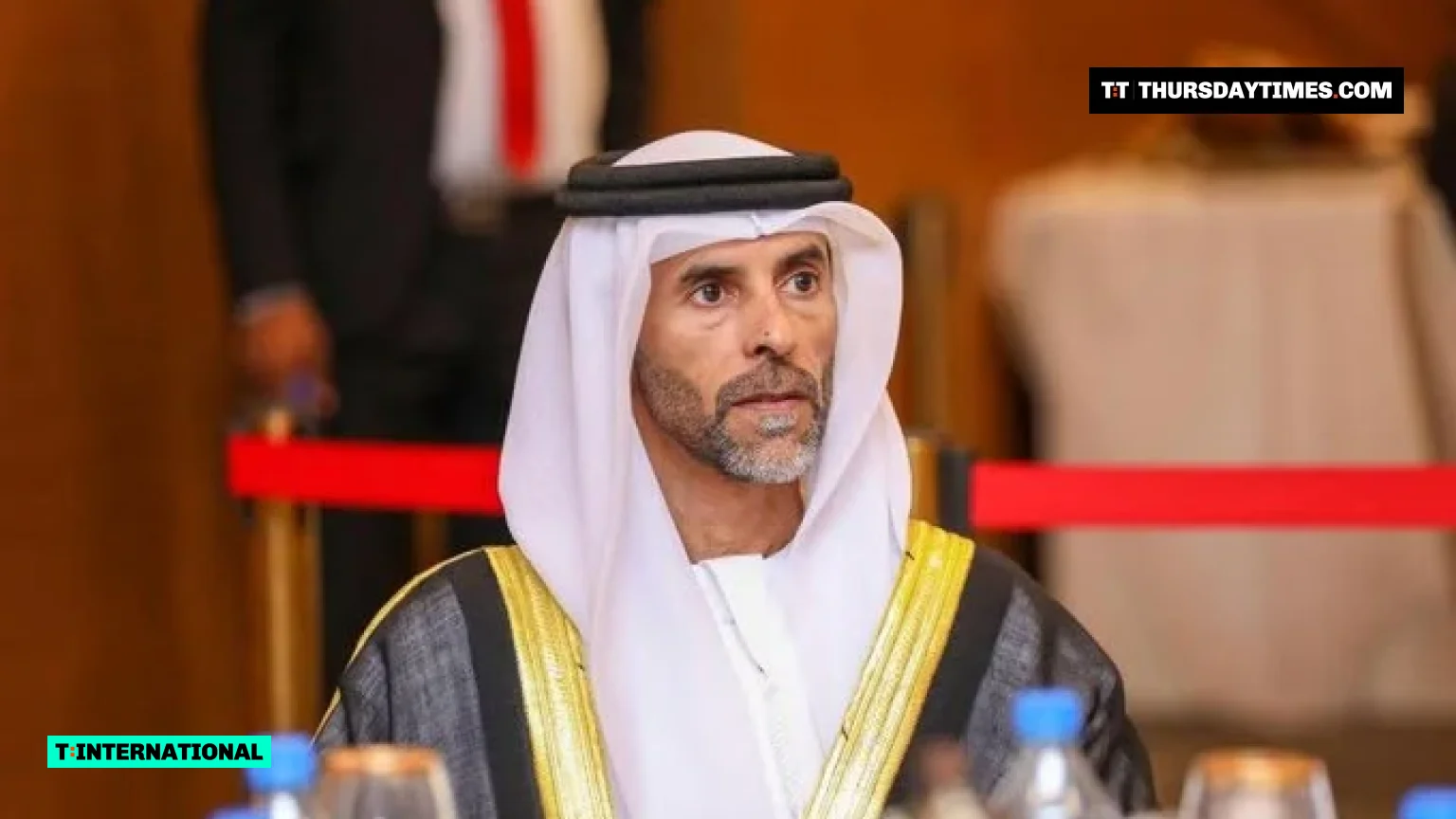
Ahmad Juma Al-Rumaithi, the UAE ambassador to Somalia
The UAE’s ambassador to Somalia, Ahmad Juma Al-Rumaithi, in a file photo. — UAE MINISTRY OF FOREIGN AFFAIRS/HANDOUT
Thursday Emirates · Mogadishu

Somalia has ordered the United Arab Emirates’ ambassador to leave the country within 72 hours and recalled its own envoy from Abu Dhabi, accusing the Emirates of violating its sovereignty in what the government called an “open invasion”. The UAE condemned the decision on Thursday as “escalatory and hostile”.

Information Minister Abdifatah Kasim Mohamud announced the measures in a broadcast on the state news agency. He said the UAE had acted against Somalia’s sovereignty, territorial integrity, national unity, internal security and independence, and warned that action would be taken against anyone who cooperates with the UAE in the “invasion”. He urged Somalis to unite in defence of the country. He did not say what had prompted the expulsion.

Two days earlier, President Hassan Sheikh Mohamud accused the UAE of giving economic and political backing to regional administrations that oppose the federal government. According to the Somali state news agency, he said Abu Dhabi had signed agreements covering the ports of Berbera in Somaliland, Bosaso in Puntland and Kismayo in Jubaland with those administrations rather than with Mogadishu.

A Crisis Group analyst said the ports are major sources of income that give the regional authorities more independence from the capital. Mogadishu, he said, regards such deals as a breach, because it holds that international agreements should go through the internationally recognised federal government.

The UAE foreign ministry said the order reflected “irresponsible positions” that weaken cooperation between the two countries. It expressed regret at what it called attempts by the Somali government to bring its “internal power struggles” into bilateral relations, and said decisions affecting relations between states should be guided by shared interests and kept free of political considerations.

Ties were already strained. The UAE closed its embassy in Mogadishu and withdrew its diplomatic staff in January, accusing Somalia of “hostile policies” that included cancelling bilateral agreements.

Protesters gathered in Mogadishu on Thursday in support of the expulsion, according to reports. The 72-hour deadline falls due over the weekend.

Damaged glass facade on the upper floors of the PIF tower in Riyadh

Houthi strike damages PIF tower, Riyadh’s tallest skyscraper

Riyadh · thursdaytimes.com
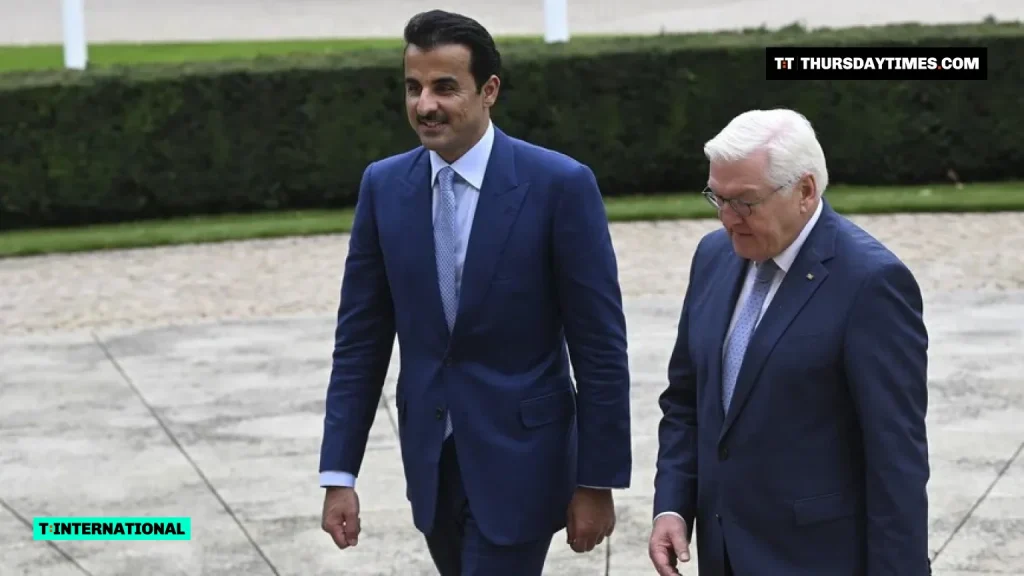
Sheikh Tamim bin Hamad Al Thani and Frank-Walter Steinmeier walking in Berlin

Qatar pledges 15 billion euros for Germany as Amir visits Berlin

Berlin · thursdaytimes.com

Qatar’s Amir and Swiss president hold talks on first state visit

THE THURSDAY TIMES · THURSDAYTIMES.COM3
EDITORIAL · OPINION · SUNDAY 22 NOVEMBER 20264

The monologue magician, Musadik Malik

A forum built for civilisations needed an envoy who could speak in them, and Pakistan sent one.

Some envoys arrive with a briefcase. Musadik Malik arrived in Delhi with a sentence, and by Saturday evening the sentence had grown into an argument: that the enemy of a civilisation is seldom the one across the border. It is the weather. Pakistan sent the right man to the right room, and he spoke as if the room had been waiting for him.

The occasion was the first Civilisational Dialogue Forum of the Shanghai Cooperation Organisation, held at Delhi’s Purana Qila, an old fort that has watched empires come and go and has learned to be patient. It was the first visit to India by a Pakistani federal minister since 2023. Whoever stepped through those gates would carry more than a name card. He would carry the weight of three years of silence.

Pakistan chose a man who understands that silence is not broken by shouting. Musadik Malik is known at home as a minister who can hold a television studio, who can argue without raising his voice and explain without condescension. Those are not small gifts in a region where most arguments are conducted at full volume. In Delhi he put them to better use than any speech could have.

“I think it’s wonderful that we’re speaking across,” he said on the sidelines on Friday. “We are having a dialogue across civilizations, across cultures.” He called the forum “a very welcome sign”. Then, as a good magician does, he turned the audience’s attention away from the hand that held the trick and towards the thing that mattered. “The entire region is in flux, the geopolitics is in flux,” he said, “and I think the easiest thing to do is to speak about things that affect us all.”

There is a whole philosophy of statecraft in that one line. When the ground is moving, the sensible traveller does not argue about whose land it is. He looks for the rope everyone can hold. Malik found it, and he offered it to the room without a flourish.

That was his finest moment, and it was almost a poem. “Dialogue is between distinct entities,” he said. “Singularity does not require dialogue; it requires a monologue. Dialogue is about diversity.” In two sentences he answered the oldest complaint of the subcontinent, that to talk is to concede. It is the reverse. Only a confident people can afford a conversation with someone who is not like them. A monologue is the refuge of those who fear to be answered.

On Saturday, on the forum’s second day, he stood inside the fort itself and did something rarer than a speech. He read the walls. Delhi, he reminded his hosts, was made by people who came from outside as well as by those who were always here. Humayun, who rode in from Central Asia, laid the foundations of this very fort, and Sher Shah Suri, the rival who drove him out, left his own mark on it. Archaeologists, Malik said, are reading the city layer by layer, and no single layer deserves to be called the only authentic one.

It was a kind courtesy to the host, and it was also a thesis about home. Pakistan, he said, is a bouquet of many flowers, and its history cannot be understood from one viewpoint. Its roots reach north to Bukhara and Samarkand and west to Persia and Arabia. It holds the Indus Valley and Gandhara, and Taxila, where students once came from far away to learn. It is the land whose Buddhist art travelled the Silk Road towards China, and whose languages and poetry still carry the accent of Central Asia and Persia. A country made like that, he argued, should stay open to people and ideas, and nobody should have to give up who they are in order to take part.

Then he turned the lamp towards the real enemy, and the room grew quiet. The danger to civilisation, he said, is not another civilisation. It is climate change. He spoke of the floods in Nepal that killed more than 1,400 people, and of Pakistan’s own floods of 2022, which killed about 1,700 and put a third of the country under water. And he spoke of Mohenjo-Daro, the city that outlasted every army sent against it.

Four days of rain, he said, brought down walls that no one had been able to break for 4,500 years. In the same floods the ruins gave shelter to the families the water had driven from their homes. It is hard to think of an image that makes the case for dialogue more plainly. A heritage that survived conquerors and centuries can be undone in a week, and no border will stop the next storm. Those who share a river, a monsoon and a past have more reason than anyone to share a plan.

Asked about relations between the two countries, he did not retreat into the careful fog that diplomats prefer. “I think all of our relationships will improve,” he said, and he spoke of a “macro view” that would take in political and social questions together. It is the language of a man who believes that the quarrel is real and also that it is not the whole story. Pakistan has always held that the two can be true at once.

When journalists pressed him on terrorism, he declined to let a forum on civilisations be turned into a bilateral courtroom. “I have come here on a multilateral forum and I want a good multilateral forum to be held,” he said. But he did not look away from the subject. “Many incidents have occurred in your country as well,” he reminded them, and then, of his own: “every day, we have to carry their coffins on our shoulders.” Thousands of Pakistanis have been martyred, he said, and what the region needs is a transparent mechanism, resting on evidence and open to both sides, that can restore trust. It is a proposal Pakistan has put forward more than once. Restraint of that kind is not evasion. It is craft.

A cultural forum asks for a particular sort of envoy. A blunt instrument would have turned it into a quarrel. A cipher would have turned it into a photograph. Pakistan needed a man who could be warm without being weak, who could speak of shared heritage without surrendering a single argument, and who could make the other side feel, for an afternoon, that listening was not a defeat. That is a rare combination, and Musadik Malik has it.

He used the margins well, too. On the sidelines he met Tajikistan’s culture minister, Sattoriyon Amonzoda, and Mohammad Mahdi Imanipour, who heads Iran’s Islamic Culture and Relations Organisation, and spoke with both of cultural ties and wider cooperation. They were the very neighbours his speech had just sketched, Central Asia to the north and Persia to the west, and it was a pleasing symmetry to see the map he described sitting down to talk.

There is also the matter of what comes next. Pakistan chairs the SCO council of heads of state for 2026–27, and the next leaders’ summit is due in Islamabad in August 2027. A country that expects to host guests does well to show, a few months earlier, that it knows how to be one. In Delhi, Pakistan was a guest of grace. It spoke of culture and climate and left the bluster at home, and it is the visitor who behaves like that who is remembered when the host’s own speeches are forgotten.

Magicians do not explain their tricks, and neither should we. What can be said is this: a room that came expecting a stalemate left having heard the word “dialogue” spoken as if it meant something, and having been shown, in the cracked walls of a 4,500-year-old city, why it must. Whether Delhi answers in kind is for Delhi to decide.

Editorial · The Thursday Times
Illustration of Musadik Malik as a magician lifting an olive branch from a top hat, with the Purana Qila behind him and rain over the water
“It was the first visit to India by a Pakistani federal minister since 2023.”
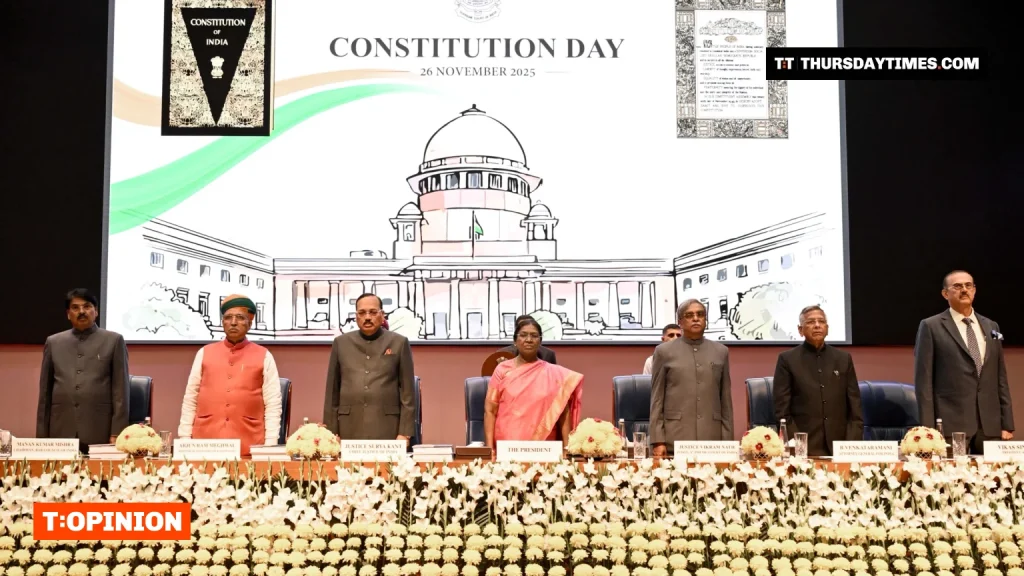
Dignitaries stand on a stage before a Constitution Day 2025 backdrop showing the Constitution of India and its Preamble page
President Droupadi Murmu and Chief Justice Surya Kant on stage at the Constitution Day function organised by the Supreme Court of India in New Delhi on 26 November 2025. — PIB

Constitution Day, and a new Constitution for India

“I regard the Constitution of India as a hoax, a ploy, a sham, a swindle, and a shenanigan,” writes former Supreme Court of India Justice Markandey Katju.

Words by Justice Markandey Katju

26 November is celebrated every year in India as Constitution Day, the day on which the Constituent Assembly adopted the Indian Constitution, in 1949. It came into force on 26 January 1950.

As a former Supreme Court judge, I am invited every year by the Chief Justice of India to a function in the Supreme Court on 26 November to celebrate Constitution Day. The chief guest is usually the President of India, and other dignitaries who usually attend are the Chief Justice of India, other judges of the Supreme Court, the Union law minister, the Attorney General of India, and others.

I never go to this function, my reason being that I regard the Constitution of India as a hoax, a ploy, a sham, a swindle, and a shenanigan, whose purpose is to deceive and befool the Indian people.

The Constitution uses in its Preamble words like “We, the people”, “democratic” and “sovereign”, to convey the impression that the people are the rulers in India, when the truth is that a handful of crooks are the real rulers.

The Constitution proclaims certain “Fundamental Rights” of the people. But the truth is that poverty is destructive of all rights, and there is massive poverty in India.

What use is freedom of speech, liberty, and the like to a man who is poor, hungry, or unemployed? He wants food and a job, not abstract or theoretical rights.

A Constitution is just a piece of paper, unless implemented on the ground. If it is written in the Constitution that India is a very prosperous country, with rivers of milk and honey flowing in it, that does not make it so. Similarly, mentioning in the Constitution that India is a secular country does not make it de facto secular, and this is evident from how minorities are being treated.

The truth is that the Indian Constitution has been torn to shreds, and made a scarecrow and a hollow, empty shell.

Now I have got drafted a new Constitution of India to replace the one promulgated in 1950 (which has become antiquated, obsolete, and otiose), for consideration and, if found suitable, adoption by the great people of India. It is given below.

4THE THURSDAY TIMES · THURSDAYTIMES.COM
SUNDAY 22 NOVEMBER 20265

Smaller provinces: a public vote can ask the question, but not settle it

Supporters of a public vote on smaller provinces say the people must decide, and the PPP says the Constitution already sets the route. What a referendum can and cannot do, and where the real veto sits.

TT Monitoring Desk · 6 min read
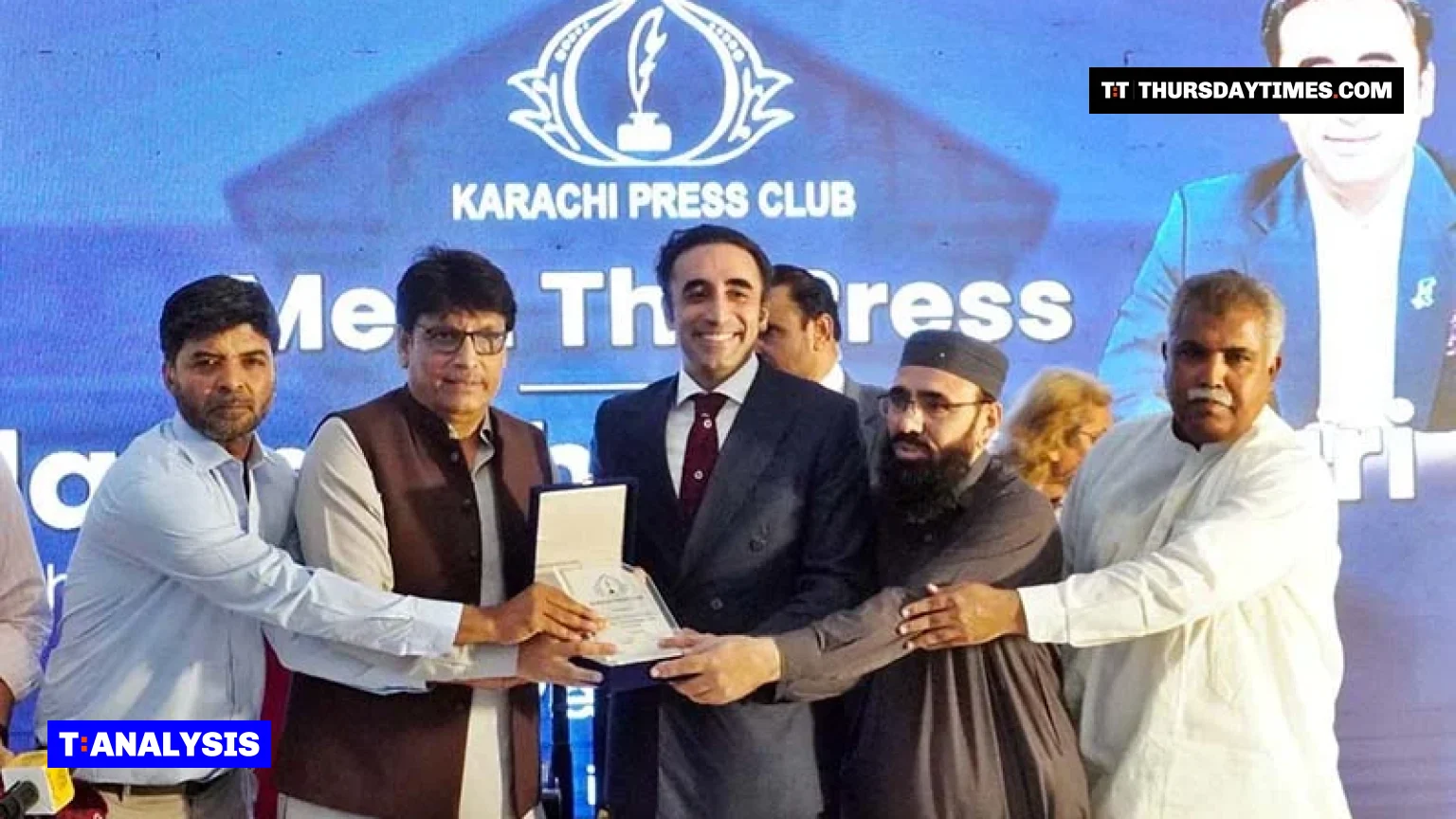
PPP chairman Bilawal Bhutto Zardari holds a commemorative shield with Karachi Press Club office-bearers
PPP chairman Bilawal Bhutto Zardari receives a commemorative shield from Karachi Press Club office-bearers on 17 November 2026. — APP

Since July, when Interior Minister Mohsin Naqvi said the governance system had collapsed and called for more provinces or administrative units, Pakistan’s argument over smaller provinces has narrowed to a single question: who decides? Supporters of a public vote say the answer is the people. The Pakistan Peoples Party says the answer is already written in the Constitution. On 21 November both claims have some force, and neither has been tested, because there is no bill, no cabinet decision, and no formal request to the Election Commission.

The sequence matters. On 31 July Naqvi made his call at an economic summit in Islamabad, after Health Minister Mustafa Kamal, who leads the MQM-P, had floated the division of Sindh. On 4 September the Sindh Assembly passed a resolution rejecting any attempt to divide the province, and Chief Minister Syed Murad Ali Shah said there would be no compromise on its geographical unity. On 14 November President Asif Ali Zardari met Prime Minister Shehbaz Sharif after Naqvi proposed a referendum. Three days later, at the Karachi Press Club, PPP chairman Bilawal Bhutto Zardari rejected the idea and warned that dividing Sindh by force would bring bloodshed to Karachi and Hyderabad. The president and the prime minister met again on 19 November and pledged to settle their differences through dialogue.

On 20 November the opposition PTI and Information Minister Attaullah Tarar both said a referendum could settle the matter, while Railways Minister Hanif Abbasi said no decision had been taken and that any move would need approval from both houses of parliament, as The Thursday Times reported. A day later the Election Commission said it had received no request or instructions, and the federal cabinet has not formally discussed the idea. Party sources say the PML-N plans to consult the PPP and the MQM-P, and that a national political conference and a parliamentary committee are possible if consensus emerges. Bilawal has hinted that a 28th Amendment is being considered, but nothing has been tabled. The Thursday Times’s editorial of 20 November faulted the language of bloodshed, yet agreed with the PPP on one point: a referendum run by the executive is not the constitutional route. For the wider map debate, see what it would take to give Pakistan 12 provinces.

Supporters of a public vote begin with sovereignty. No provincial assembly, they argue, can claim to speak for its voters on how they want to be governed unless the voters have been asked, and the government cannot treat governance as a favour it grants. Each province should vote for itself, they say, so that no province imposes its will on another. If the PPP is confident of public opinion in Sindh, the argument runs, it has nothing to fear from a transparent poll and should welcome the result. They add that smaller units would bring government closer to people, make the bureaucracy more accountable, and open more political space for those who believe in service and delivery.

There is a record to point to. Aamir Dogar, the PTI’s chief whip in the National Assembly, said Imran Khan has consistently favoured smaller provinces and that a South Punjab province was in the party’s 2018 manifesto. Kamal, speaking on 20 November, argued that the MQM-P turned to the demand because local governments in Sindh lack real powers, and said his party would have backed the 26th or 27th Amendment had it given local governments constitutional authority. He also pointed to Article 239 as the mechanism the Constitution already provides.

Supporters also cite Sindh’s own history of subdivision, from three divisions and 11 districts in 1973 to seven divisions and 30 districts today, and ask why Sindh cannot have provinces within its existing boundaries. That comparison needs care. Sindh now has 30 districts, and its divisions number six or seven depending on whether Bhambore, a recent addition, is counted. The 1973 starting point is harder to document, and the count of 11 districts could not be confirmed. The argument also cuts both ways. Divisions and districts are administrative tiers that a provincial government can create on its own authority, as the PPP, which has governed Sindh for 18 years, has done. A province is a different kind of unit, with its own legislature, its own share of national revenue, and its own seats in the Senate. The first does not settle the second.

The PPP’s case rests on three arguments. The first is process. Bilawal has said the Constitution already sets a procedure, and that a referendum amounts to looking for another route. “It is not about a referendum, it is about intent,” he said, according to reports of his remarks. The party says it does not oppose new provinces where people want them, and has said it would not stand in the way of a South Punjab province if the Punjab Assembly passed a resolution. The second is fear of division. Sindh regained provincial status only in 1970, after the One Unit years, and Karachi and Hyderabad carry memories of ethnic violence. The party warns that forcing the issue risks reviving them. The third is that boundaries are not the problem. Bilawal has argued that political and institutional failures, not the map, are the root of the governance crisis.

The counter-case has weaknesses, and critics have named them. Ministers have pointed out that the PPP has governed Sindh for 18 years and was fully involved in the 26th and 27th Amendments it now criticises. Critics say that warning of bloodshed hardens positions and gives opponents an easy reply. And it is less clear what the PPP would offer urban Sindh in place of a new province, though the MQM-P’s core complaint, that local governments lack the powers to deliver basic services, is one a reform of local government could address without redrawing a map.

The route is narrower than either camp usually admits. Under Article 239, a bill that changes the limits of a province cannot go to the president for assent until that province’s own assembly has passed it by two-thirds of its total membership. The bill itself must first clear two-thirds of the total membership of each house of parliament. A referendum is a separate matter. Article 48 lets the prime minister refer a question of national importance to a joint sitting and, if that approves, put it to the public as a question answerable by yes or no. Nothing in that article makes the result a substitute for the amendment. As one senior lawyer put it, a referendum cannot override the requirements of Article 239.

Reports in 2025 and 2026 put the governing coalition above the National Assembly threshold, at roughly 233 to 237 seats, and above the Senate threshold, so the federal houses are not the main obstacle. The obstacle is in Karachi. The PPP is reported to hold about 116 of the 168 seats in the Sindh Assembly. It would need only 57 to block a bill, so Sindh’s consent, not the centre’s, decides whether any new province carved from Sindh can be created. Supporters of a vote know this, which is why they stress that Sindhis, not MPAs, should speak. A province-wide poll, though, raises its own question. If all of Sindh votes on dividing Sindh, the result will depend on how the whole province votes, not just its cities, and nobody has said how a question like that would be framed.

That does not make a vote useless. A clear result could shift the political cost of a decision, either giving the PPP a reason to move or giving the federal side a reason to stop. Kamal has said the prime minister has the authority to hold a referendum, and the PML-N’s own consultations may produce a question and a mechanism. The Election Commission’s two-month preparation window means nothing can happen quickly, and the MQM-P has postponed its 29 November rally for new provinces, with Kamal saying it would withdraw if there were any risk of clashes. For now, the first real test is not a ballot box. It is whether the PPP, the MQM-P, and the PML-N can agree on a question they are prepared to take to parliament.

Both sides can claim the people. Only one route leads to a new province, and it runs through the Sindh Assembly.

THE THURSDAY TIMES · THURSDAYTIMES.COM5
HOME · CULTURE · FOOD · SUNDAY 22 NOVEMBER 20266

Daily pill daraxonrasib shrinks pancreatic tumours in early trial

A hand holds a bottle of daraxonrasib tablets
A bottle of daraxonrasib tablets labelled by the MD Anderson Cancer Center in Houston. File photo. — REUTERS

A daily pill combined with chemotherapy shrank or cleared tumours in just over 60 per cent of 61 patients, though doctors say it is not a cure.

TT News Desk · London

A daily pill called daraxonrasib, taken alongside chemotherapy, shrank or cleared tumours in just over 60 per cent of patients with advanced pancreatic cancer in an early trial, results that cancer charities are calling the biggest advance in decades.

Tumours stopped growing in almost all of the 61 patients, who had recently been diagnosed with advanced disease that had spread to other parts of the body. In about 8 per cent, or one in 12, the cancer became undetectable on CT scans.

Doctors stress it is not a cure, and it is unclear how long the treatment might keep the disease at bay. Patients were followed for a year and a half on average, and some did not see their cancer return in that time. Longer studies are needed to learn whether any can be put into remission, and for how long.

Pancreatic cancer is notoriously hard to treat and has the lowest survival rate of all common cancers in the UK. Chemotherapy can shrink tumours a little, but the cancer often grows back, and most patients with advanced disease survive months, not years.

Cancer Research UK called the result “the biggest leap forward in decades”. Its Dr Sam Godfrey said the drug had “found a way of drugging the undruggable”. Dr Wungki Park of Memorial Sloan Kettering Cancer Center in the US, who is involved in the trial, said doctors were seeing deeper responses and “a near doubling in the duration of disease control”, which may eventually translate into longer survival.

Daraxonrasib is a targeted inhibitor that has already been approved in the US. It locks on to and shuts off RAS mutations, which are found in most pancreatic cancers and drive tumour growth. Dozens of other cancers, including lung and ovarian, can carry similar mutations, so the drug might help other patients too. Godfrey said he hoped the early success could be rolled out to other cancers. The work is being presented at the EORTC–NCI–AACR Symposium 2026.

Pancreatic cancer accounts for about 3 per cent of all cancers in the United States and about 8 per cent of cancer deaths, killing around 53,000 people a year. In Britain there are about 11,500 diagnoses and around 10,200 deaths a year, according to Cancer Research UK.

Students hold locked phone pouches and phones at a California school
First published 17 November 2026

Study finds school phone bans add one to two weeks of learning

TT News Desk · New York

Strict phone restrictions in US schools lead to small academic gains, according to a large study published on Tuesday, 17 November, by Harvard’s Center for Education Policy Research.

The researchers compared the test scores of 3.3 million students in about 4,600 schools. Schools that required students to keep phones in locked pouches for the whole day saw “modest” improvements in academic growth compared with similar schools without such rules. The study estimates the gain at roughly one to two weeks of extra learning over a school year.

“Our answer is yes, phone bans do have a positive effect on growth. But it’s not a panacea,” said Thomas Kane, the Harvard professor who led the work. He said the gain is about half the annual decline in test scores since smartphones became widespread, and that further gains could come if schools keep the bans in place. The study used maths and reading results for grades four to 10 over the past five academic years.

The finding sits uneasily with earlier research. A study published in May by researchers at Stanford, the University of Michigan, Duke, and the University of Pennsylvania, covering the same number of schools using the pouches, found “close to zero” effect on test scores overall, though it did record modest gains in high school maths over three years. One of its authors, Stanford economist Thomas Dee, said the early results from phone bans were “largely disappointing” and that he was not comfortable projecting future gains from small estimates based on a few years of data.

More than 40 US states now have laws restricting phones in schools, but the rules vary widely and enforcement is patchy. San Diego State University psychologist Jean Twenge said some bans were largely cosmetic, with students stowing spare phones in their pouches. Students may also simply move to laptops, and phone use outside school may matter more. Kane said researchers cannot yet test that, because social media companies have not shared data that could link time spent on their platforms to student results.

Beckham’s brand sues Coty for $41m over discount fragrance sales
Raye leads Grammy nominations with 11 as Beyoncé hits 100thRosalía is second with nine, and Dolly Parton is nominated three times after her death in August. The ceremony is on 7 February.
Apple opens 200,000-person study on how people use AI for health
6T:LIFE · THE THURSDAY TIMES · THURSDAYTIMES.COM
CRICKET · FOOTBALL · THE WORLD · SUNDAY 22 NOVEMBER 20267
Rishabh Pant looks to the sky after his hundred as Dhruv Jurel stands beside him in Wellington
CRICKET

Pant hits 128 as India pass 600 against New Zealand in Wellington

Pant made 128 and India reached 629-6 at lunch on day four in Wellington, with a lead of more than 250 over New Zealand.

TT Cricket Desk · Wellington

Rishabh Pant hit 128, his ninth Test hundred, as India reached 629-6 at lunch on the fourth day of the first Test against New Zealand at the Basin Reserve on Sunday, a lead of more than 250.

Pant resumed on 55 not out and reached three figures by lofting Glenn Phillips over long-off for six, before kissing the badge of his helmet and pointing to the sky. He hit 10 fours and six sixes, and at one point sent Phillips out of the ground, the ball running down Cambridge Terrace alongside the Sunday morning traffic. He was caught at deep midwicket by Nathan Smith off Rachin Ravindra on the last ball before lunch.

Anshul Kamboj, who had yet to score overnight, attacked early with a flurry of lofted drives and was out for 38 from 42 balls, with six fours and a six. His dismissal brought Dhruv Jurel to the crease, and Jurel was 32 not out at the break.

India began the day on 486-4, leading by 118. KL Rahul made 136 and Yashasvi Jaiswal 85 at the top of the order, Devdutt Padikkal scored 80, and Shubman Gill fell for 98, before Pant’s hundred. Reports said it was the first time in Test cricket that each of a side’s top five batters had scored 80 or more.

Phillips had figures of 1-127 from 22 overs at lunch, to go with the 118 he made with the bat in New Zealand’s first innings. Seamer Jacob Duffy took 1-201 from 33 overs, the second most runs conceded by a bowler in an innings in a Test in New Zealand.

Stirling knocks out Prochazka in UFC Qatar main event

Navajo Stirling stopped former champion Jiri Prochazka with a second-round right hook in Doha, extending his unbeaten record to 12 fights.

New Zealand’s Navajo Stirling knocked out former light-heavyweight champion Jiri Prochazka with a right hook in the second round of the UFC Qatar main event in Doha on Saturday, the biggest win of his career.

The finish came at 4:58 of the second round. Stirling, 29, dodged a punch and countered with the right hook that sent Prochazka to the canvas, and the referee stepped in after a follow-up strike on the ground. The result extends his unbeaten start to 12 fights.

Stirling had peppered the Czech with leg kicks in the early stages before waiting for his moment, and looked comfortable against a man who has won 32 of his 40 professional fights and was seen as the toughest test of his four-year career. It was his fourth straight win of 2026, all of them by knockout, and Prochazka, 34, conceded afterwards that Stirling was “the better fighter” on the night.

A win like this would normally open the door to a title shot, but there is an obstacle. The light-heavyweight champion, Carlos Ulberg, trains at the same gym in New Zealand as Stirling, and fighters rarely face their training partners. Ulberg beat Prochazka for the title in April but has not fought since, after tearing a knee ligament in that contest. Asked who he wanted next, Stirling said: “I’m not too sure yet, we’ll figure something out and see who’s above me.”

In the co-main event, Kevin Vallejos beat the former bantamweight champion Aljamain Sterling by unanimous decision. Dan Hooker beat Brian Ortega on the judges’ cards, after which Ortega, 35, announced his retirement. On the undercard, Ireland’s John Mitchell stopped Britain’s Shoaib Yousaf in the first round of a fight between two UFC debutants, taken on four days’ notice.

Navajo Stirling and Jiri Prochazka trade shots during their UFC Qatar main event in Doha
Navajo Stirling and Jiri Prochazka trade shots in the UFC Qatar main event in Doha on Saturday. — GETTY IMAGES
Carlos Alcaraz shouts in celebration at the ATP Finals in Turin
Carlos Alcaraz celebrates during his ATP Finals semi-final win over Ben Shelton in Turin on 21 November 2026. — GETTY IMAGES

Zverev and Alcaraz to meet in ATP Finals final on Sunday

Alexander Zverev and Carlos Alcaraz will contest the ATP Finals title on Sunday after both won their semi-finals on Saturday.

Zverev, the world number one, beat Daniil Medvedev 7-6 (0), 6-4 in 88 minutes. Medvedev did not create a single break point, and Zverev has yet to drop a set or a service game in Turin. He is a two-time champion at the event.

Alcaraz needed more work. Ben Shelton took the first set, but the Spaniard levelled and then won the decider on a tie-break, 3-6, 6-3, 7-6 (1). It is his second straight final at the tournament. His left thigh was heavily taped after the pain he felt in his win over Medvedev on Wednesday, which was followed by a scan.

Zverev reached the last four by beating Shelton in the group stage, while Medvedev took the last semi-final place by beating Tiafoe on Friday. Alcaraz finished the group unbeaten against Cobolli, having beaten Medvedev despite a thigh scare earlier in the week.

THE THURSDAY TIMES · THURSDAYTIMES.COM7
PULL-OUT · THE THURSDAY TIMES22.11.20268
Westline
BRITAIN, FROM THE OTHER SIDE OF THE LINEWESTLINE × THE THURSDAY TIMES
A STATE THAT STOPPED DECIDING

The backlog Britain built

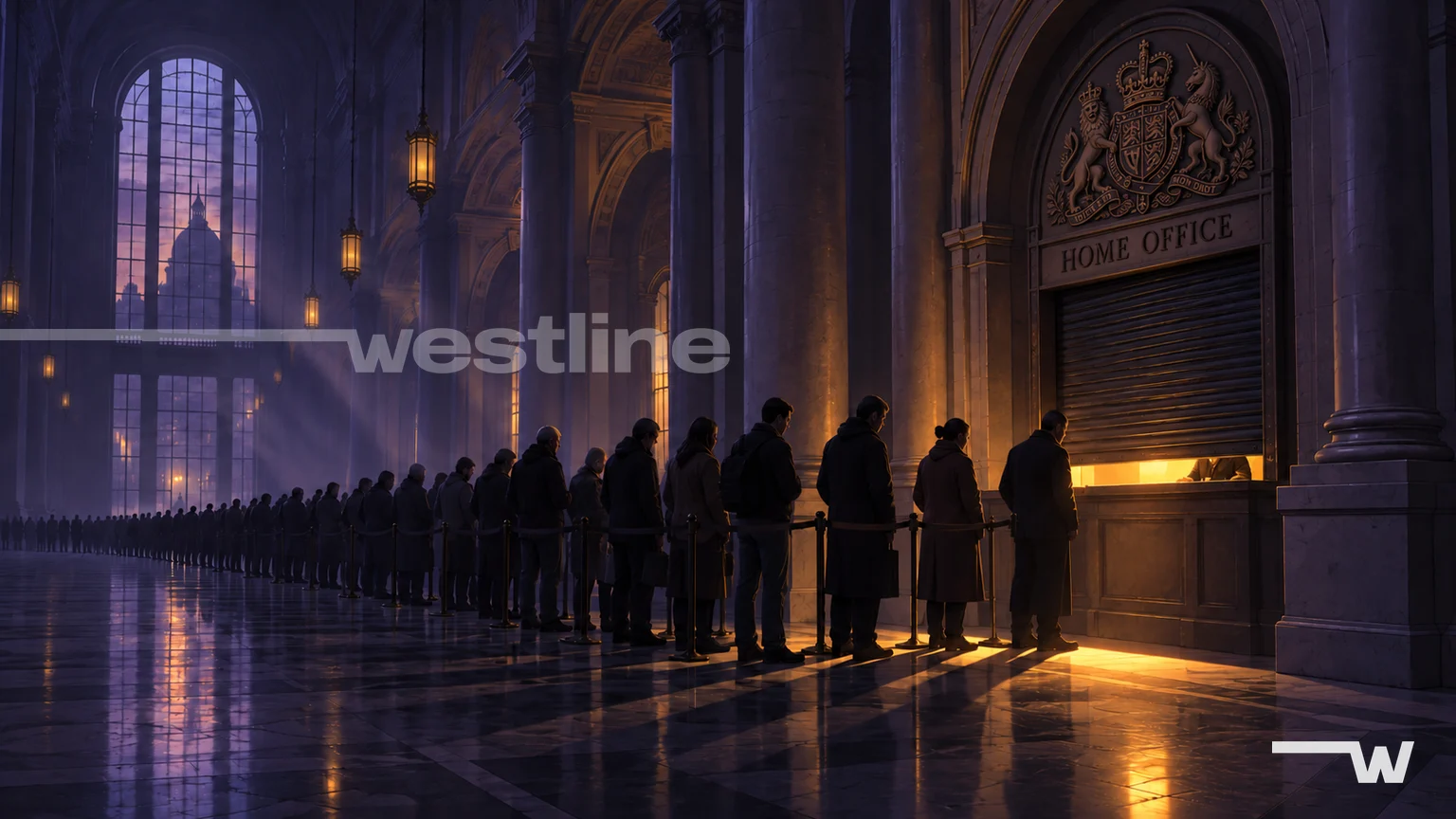
A queue stretches back into the dark while the Home Office counter stays barely open — Illustration: Westline

Ministers of both parties have spent a decade blaming the people in the queue. The numbers point at the people running it.

Abdullah Esquire
Read it in fullthursdaytimes.com/westline

CONSIDER SOMEONE WHO CLAIMED asylum in Britain in January 2023. Where they came from, and how they arrived, matters less than what happened next — which is to say, very little. When the National Audit Office took a sample of 5,000 claims lodged that month and checked on them nearly three years later, more than half were still unresolved. In the meantime our claimant will probably have been housed at public expense, largely barred from working, interviewed by a caseworker who may not have been in post for long, refused, appealed, and then left waiting again: this time for a tribunal that now takes, on average, well over a year to hear a case.

In the political conversation, that person is the problem. The backlog is discussed as though it were a weather system blown in off the Channel — too many boats, too many claims, too many people gaming the system. Arrivals do matter, and nobody serious pretends otherwise. The number of people claiming asylum peaked at around 110,000 in the year to September 2025, the highest figure in nearly two decades.

But a backlog is not a measure of how many people turn up. It is the gap between the cases that come in and the cases a department decides — and decides properly. Judged that way, the story of Britain’s asylum queue is not one of an overwhelmed border. It is the story of an institution that, over ten years, stopped doing its core job, then tried to do it at a sprint, then passed the consequences down the corridor to the courts. The people in the queue designed none of it.

Initial asylum decisions made per year

Home Office annual statistics · output collapsed before small boats became a mass phenomenon, then quadrupled on command

The rot set in long before small boats became a nightly news item. In 2015 the Home Office made 28,623 decisions on asylum applications. By 2017 that had fallen by a quarter, to 21,269, and the department never recovered its old pace. The more striking figure is what happened per head. According to the Institute for Government, in 2011/12 some 380 caseworkers were each producing around 13.7 decisions a month. By December 2022 there were 1,237 of them, managing about four apiece. The workforce had more than tripled; the output of each worker had fallen by over two-thirds.

Then, in January 2019, with ministerial approval, the department dropped its own service standard: the commitment to decide 98 per cent of straightforward claims within six months. The stated reason was to prioritise the most vulnerable cases rather than the simplest. The practical effect was to remove the one clock that had been ticking. The Migration Observatory later found that in 2014 eight in ten applicants received an initial decision within six months; within five years it was one in four.

Why this isn’t a story about the Channel In 2021 the UK had 14.9 cases in its asylum backlog per 10,000 people, more than Germany or France, even though it received far fewer applications per head than either. Countries facing heavier demand were simply getting through their caseloads faster. By December 2022 two-thirds of those waiting — almost 110,000 people — had been in the queue for more than six months. That is not a surge. It is a department that had quietly stopped deciding things.

In December 2022 Rishi Sunak did something the Home Office had not done in years: he set it a deadline. The so-called legacy backlog — roughly 92,000 claims lodged before 28 June 2022 — would be cleared within twelve months. The department doubled its decision-makers to around 2,500 and, for nationalities with very high grant rates such as Afghans, Eritreans and Syrians, swapped lengthy interviews for a questionnaire. The results were instructive. In one four-week stretch in November and December 2023, officials made 20,481 initial decisions, more than in the whole of 2021. Across that year they made 112,138. For anyone who still believed the queue was driven by forces beyond Whitehall’s control, that was the rebuttal.

The sprint had a cost, though, and it was paid in shortcuts. Asylum withdrawals in 2023 were more than four times the 2022 figure, and 79 per cent of them were “implicit” — claims the Home Office itself closed because someone missed an interview, missed a questionnaire deadline or had not updated an address. When the pledge was declared met, 4,537 legacy cases were still awaiting a decision, and the chair of the UK Statistics Authority warned that the episode might affect public trust. A Conservative government that had staked its reputation on control ended up being rebuked by the statistics watchdog for its arithmetic.

Worse, at the same moment that one arm of the department was racing through old cases, another had been told to stop deciding new ones. The Illegal Migration Act meant that claims from those who had arrived irregularly after 7 March 2023 could not be granted. By the end of that year, 55,533 of the 98,599 claims awaiting a decision had been made after the bill was introduced. The backlog stopped falling and, by March 2024, stood at 118,329 people. Those claims were being held for removal to Rwanda, a scheme that by Labour’s later accounting had cost around £700 million — £290 million of it paid to Kigali — to send four volunteers. The Home Affairs Committee later concluded that holding up decisions while the scheme stalled had made the crisis worse. Parliament had, in effect, legislated the state into not processing cases, and then the state paid to house everyone it had declined to process.

Every month a claim sits undecided is a month of bed, board and administration, and this is where the failure becomes a fiscal one. In 2019 the Home Office signed seven regional contracts with Serco, Mears and Clearsprings, expecting them to cost £4.5 billion over ten years. The National Audit Office now puts the figure at £15.3 billion. Between December 2019 and December 2024 the number of asylum seekers in paid-for accommodation rose from about 47,000 to 110,000. Hotels, the emergency option, became the default: at the peak, in September 2023, 56,018 people were in them, spread across roughly 400 sites.

The economics were dreadful. In 2024-25 hotels held around 35 per cent of people in asylum accommodation but swallowed 76 per cent of the contracts’ annual cost.

NAO, asylum accommodation contracts (2025) · hotels held just 35% of people in the system

The three providers made a combined profit of £383 million between 2019 and 2024. The NAO’s verdict was that the department had few levers to control the cost. Across the Home Office and Ministry of Justice, asylum cost £4.9 billion in 2024-25.

For a centre-right reader, this ought to be the scandal. A man waiting for a decision cannot choose to move out of a hotel and is, for the most part, forbidden from earning his own keep. The bill is not run up by his presence so much as by the length of his stay, and the length of his stay is set in Whitehall. Treat the backlog as a migrant problem and you reach for deterrents. Treat it as a productivity problem and you reach for the thing that actually saves money: a decision.

WESTLINE · A THURSDAY TIMES PULL-OUT8
Archive