

WHEN DONALD TRUMP FIRST ENCOUNTERED Field Marshal Asim Munir in a serious diplomatic setting, the usual Western script about Pakistan was already out of date. For years, Washington had spoken of Pakistan through the language of fatigue: counterterrorism complications, mistrust, aid conditionality, strategic drift, a difficult partner useful in bursts and frustrating in stretches. Trump himself had once publicly accused Pakistan of duplicity. Yet politics, especially Trumpian politics, often turns not on memory but on immediacy. By the time Munir entered Trump’s orbit, he was not arriving as a petitioner from a tired file. He was arriving as the man many believed could actually deliver things.
That distinction matters. Trump rarely responds most warmly to constitutional charts or diplomatic niceties. He responds to perceived centres of gravity. He wants to know who can move events, who can pick up a phone and alter an outcome, who can produce action rather than explanation. In many countries, the formal officeholder and the practical powerholder are not always the same person. Trump has often shown an instinct for bypassing theory and seeking the person he believes holds the real levers. In Pakistan’s case, Munir appeared to him not as a subordinate military officer within a civilian framework, but as the figure closest to the hard engine room of the state.
The answer starts long before Munir, before the Oval Office, before Truth Social. It begins in Manhattan restaurants in the 1970s, in the company of a lawyer whose name still hangs over Trump like a spectre: Roy Cohn.
Roy Cohn was more than Trump’s attorney. He was the blueprint for a certain way of being powerful. Cohn had helped prosecute Ethel and Julius Rosenberg, whispered in Joe McCarthy’s ear, and reinvented himself as a fixer who could make problems disappear and enemies suffer. He talked softly, dressed sharply, and radiated an almost theatrical fearlessness.
From Cohn, Trump learned the famous three rules: never admit, never apologise, always counter-attack. But those were just tactics. The deeper lesson was aesthetic. Cohn taught Trump that charisma is a weapon, that a man who can dominate a room with charm and menace has an advantage before anyone looks at the facts.
In Cohn’s world, you were either a killer or a sucker. Killers were not defined by ideology but by how they carried themselves under fire. They smiled in court corridors, flirted with reporters, made outrageous claims without blinking. They understood that power is as much about performance as it is about law.
Trump absorbed that worldview completely. Decades later, you can still see Cohn’s fingerprint in the way he evaluates people. He is uninterested in quiet competence. He is fascinated by spectacle. He likes people who understand the camera, who can turn a hostile question into a punchline, who never look like they are begging for approval even when they are.
“Trump has always preferred operators to theorists.”
One can imagine the scene as Trump likely processed it. Here, Asim Munir was not another polished civilian premier trained in the soft idioms of Davos and Brussels, nor a cautious foreign minister speaking in calibrated phrases. Here was a career soldier, former intelligence chief, later elevated to field marshal, carrying the kind of biography Trump instinctively recognises as serious. Uniforms, rank, intelligence backgrounds, command structures, proximity to force: these are symbols that communicate quickly to Trump because they fit his own visual vocabulary of authority.
This is why the phrase “my favourite Field Marshal,” however jocular or theatrical in delivery, is more revealing than it first sounds. Trump does not speak randomly, even when he appears to improvise. He uses language to signal instinctive hierarchies. He likes labels that dramatise status. King. Winner. Tough guy. General. Field marshal. Such titles reduce complex institutions into digestible brands of command. In praising Munir through rank itself, Trump was not merely flattering a guest. He was acknowledging a figure who fit neatly into his preferred mythology of leadership.
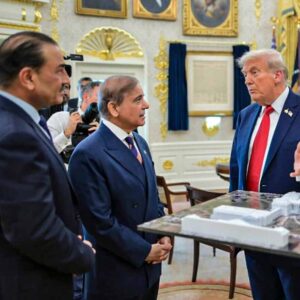
But Munir’s appeal is not just costume or title. If it were only pageantry, Trump’s attention would have moved on quickly. What seems to have deepened the connection was timing. Munir entered Trump’s field of vision during a period in which Pakistan was regaining relevance through utility. Islamabad was being discussed again not as a headache, but as a possible channel: with Tehran, with Gulf capitals, with regional security files, with crises where geography and relationships matter more than moral commentary. Trump tends to admire those who become useful at the exact moment usefulness is scarce.
“He may dislike states abstractly but admire individuals concretely.”
That is a recurring Trump pattern. He often values people who can do something others cannot. If traditional allies are constrained, if European capitals are procedural, if bureaucracies are slow, then the intermediary who can improvise becomes attractive. Pakistan, through geography, military networks and historical ties, can occasionally occupy such a role. Munir, as the figure associated with those capacities, becomes more than a foreign official. He becomes an operator. Trump has always preferred operators to theorists.
There is also the matter of temperament. Trump likes visible confidence, but he does not always like noise. He admires men who seem settled in themselves, who do not appear eager for approval, who can project force through restraint. Munir’s public image has generally been one of control rather than exuberance. He does not dominate headlines through flamboyant quotability. He projects reserve. That can be powerful with Trump because reserve, when paired with rank, reads as self-possession. It suggests a man who does not need to advertise authority because he assumes it is already understood.
Contrast this with the leaders Trump often cools on. The nervous flatterer. The over-explainer. The technocrat who arrives with twenty caveats. The democratic moralist who wants to lecture him in public while asking favours in private. Trump tends to see these figures as weak, tedious or performative in the wrong way. Munir appears to offer the opposite profile: concise, consequential, disciplined and difficult to read fully. In Trump’s personal taxonomy, that can place someone immediately above the ordinary diplomatic crowd.
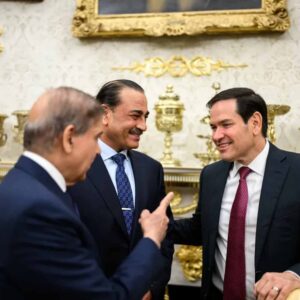
Another crucial detail is that Munir seems to understand the asymmetry of dealing with Trump. To gain traction with Trump, one must give him enough symbolic respect to satisfy ego, but not so much that it appears pathetic. Many fail at this balance. They either resist him theatrically for domestic applause or flatter him so extravagantly that contempt follows. The more successful counterparts show esteem while preserving their own stature. Munir’s military bearing helps here. A senior commander can offer cordiality without seeming subordinate because rank itself supplies dignity.
“Reserve, when paired with rank, reads as self-possession.”
This helps explain why Trump’s praise of Munir can sound warmer than his treatment of leaders from larger or richer states. Wealth alone does not impress Trump if paired with softness. Democratic legitimacy alone does not impress him if paired with indecision. Munir appears to him as something more elemental: command. Trump’s worldview is less interested in how a leader was selected than whether that leader appears able to impose outcomes. In that sense, Munir may be more legible to Trump than many elected heads of government.
There is an irony here. Trump once castigated Pakistan publicly. Yet Trump’s politics has never been sentimental about consistency. He can reverse himself quickly when a person enters the picture who satisfies his instincts. He may dislike states abstractly but admire individuals concretely. He may condemn systems yet warm to strong personalities inside them. Munir seems to have benefited from that distinction. Pakistan the problem can become Pakistan the asset if embodied by someone Trump sees as effective.
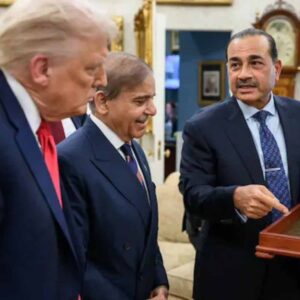
The intelligence background matters too. Trump has long been fascinated by back channels, hidden leverage, private understandings and the sense that official narratives conceal the real game. A former spymaster naturally carries that aura. Munir’s career allows him to appear not merely as a general but as someone who knows how states actually work beneath the press release level. For Trump, who often prefers the unofficial lane to the formal memo, that mystique adds value.
“Trumpian politics often turns not on memory but on immediacy.”
Yet moments matter. In global politics, a U.S. president’s instinctive regard can create openings impossible to manufacture through paperwork alone. Calls get returned faster. Proposals receive a hearing. Intermediaries are trusted sooner. In a volatile region, that can be significant. Pakistan’s renewed diplomatic relevance owes to many structural factors, but personal chemistry with Trump likely amplifies it.
So the story is narrower and sharper than broad geopolitical cliché. Trump appears drawn to Munir because Munir arrived at the intersection of three things Trump values most: visible authority, practical utility and controlled self-confidence. He looked like power, seemed able to exercise power, and carried himself like someone who expected to be taken seriously. For Trump, that combination is often enough to change an entire country’s place in the room.
Before the memos, before the agenda, before the analysts begin explaining what it all means, Trump looked across the room and thought he saw power wearing itself naturally. For him, that first instinct has often been the only briefing that mattered. □
