The Editorial Desk

Views from The Thursday Times' editorial desk.

How Pakistan overtook India in global diplomacy

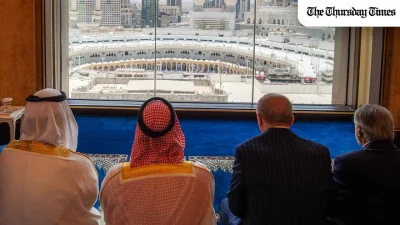
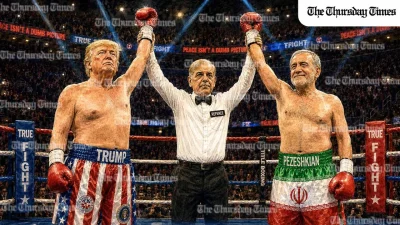
What does it take to go from an unanswered White House phone call to a UN Security Council seat in two years? Ask Pakistan. The Makkah Defence Pact. US-Iran mediation. An invite from Damascus. India lost Washington's favor in the same stretch.
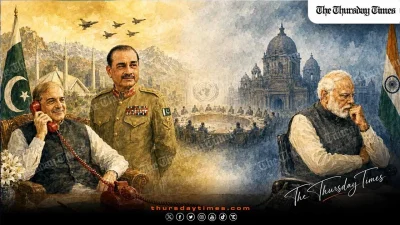
Two years ago, Pakistan had little pull in Washington, no place in the Gulf's defense architecture, and no seat at the UN Security Council. Today, it holds all three, and is rewriting the region's balance of power in the process. — MICHAEL MCCALL FOR THE THURSDAY TIMES

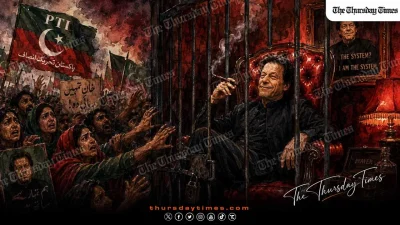
A prisoner in his own inner citadel

Imran Khan’s sister says he is fit, with normal blood pressure and improved eyesight. Official records document specialist treatment and family access. Yet the international narrative remains one of isolation and medical crisis. The record versus the rhetoric.

International coverage has prominently reflected claims of isolation, mistreatment and declining health. But court filings, documented medical treatment and Khan’s sister describing him as physically fit point to a more complex picture that warrants equal attention. — MICHAEL MCCALL FOR THE THURSDAY TIMES

Pakistan’s word is now worth a treaty

Countries do not enter mutual defence commitments with partners whose reliability they doubt, because the cost of misjudging that is measured in soldiers. Riyadh and Ankara have decided Pakistan is a state whose word will hold when it is expensive to hold it.

There is a particular kind of sentence that states write only when they mean it. An armed attack on Saudi Arabia, Turkey or Pakistan will be regarded as an attack on all three.

India’s playbook for dissent has run out of pages

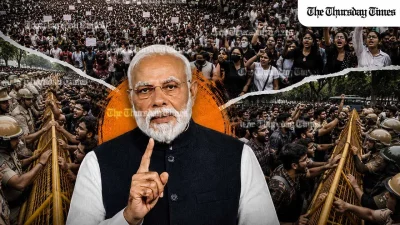
A Chief Justice called unemployed youth cockroaches. An exam sat by 22 lakh students was leaked, and some of them killed themselves. India's government waited, then delegitimised, then used force, then blamed Pakistan. Each step has failed.

India's government waited out its students, then used force, then blamed Pakistan. Each step came off the same shelf. Each one has failed. — MICHAEL MCCALL FOR THE THURSDAY TIMES

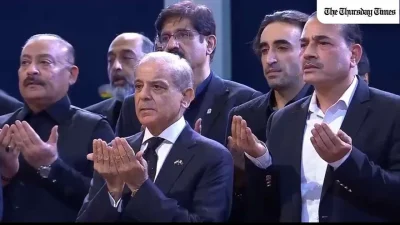
At Khamenei’s funeral, Pakistan made a statement

Pakistan may have disagreements with Iran, and Iran may have disappointed Pakistan by leaning too warmly towards India at times. But neighbours who share borders must also share funerals.

At Khamenei’s funeral, Pakistan made a statement

Pakistan’s Swiss success was bigger than one man

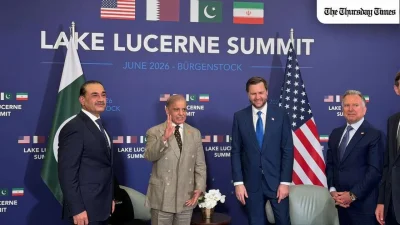
Pakistan’s role at the Lake Lucerne Summit marked a rare diplomatic success, placing Islamabad alongside Qatar as a mediator in the US-Iran process. Shehbaz Sharif gave the effort political direction, while Field Marshal Asim Munir added security credibility.

Pakistan’s mediation at Bürgenstock was not a one-man story, but Field Marshal Asim Munir’s role gave Islamabad’s diplomacy the security credibility needed in one of the world’s most sensitive negotiating tracks. — FILE

And we’ll keep on fighting til’ the end

From crisis, isolation and doubt, Pakistan has stepped into the diplomatic centre of gravity. If the US-Iran peace framework holds, Islamabad will not merely have brokered a deal. It will have reminded the world that nations are not condemned to the reputations others write for them.

If this peace holds, Pakistan will have done more than broker an agreement. It will have recovered a part of its own national imagination. — MICHAEL MCCALL FOR THE THURSDAY TIMES

Pakistan’s mediation role ≠ Israeli normalisation

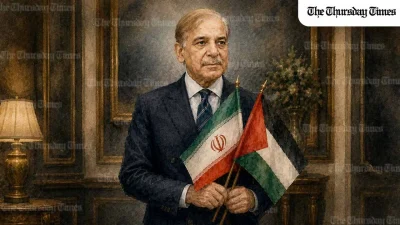
Pakistan’s role in de-escalation does not amount to acceptance of normalisation with Israel. Islamabad’s Palestine policy remains rooted in statehood, Al-Quds, and pre-1967 borders, not the politics of the Iran file.

Trump’s attempt to link an Iran settlement with Abraham Accords expansion places Pakistan in a position it has long refused: treating Palestine as a transactional file. — MICHAEL MCCALL FOR THE THURSDAY TIMES

India debates while Pakistan mediates

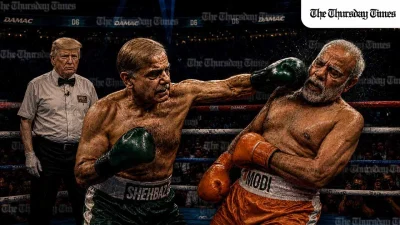
Senior RSS and military remarks in India have reopened the question of dialogue with Pakistan, exposing the limits of New Delhi’s hardline public posture. At the same time, Islamabad is trying to show that its relevance now extends beyond India, through crisis diplomacy involving Iran, the US, the Gulf, China and multilateral finance.

India’s debate over reopening dialogue with Pakistan comes as Islamabad tries to recast itself as a diplomatic corridor for wider regional and global crises. — MICHAEL MCCALL FOR THE THURSDAY TIMES

Pakistan’s diplomatic prowess has made it a target

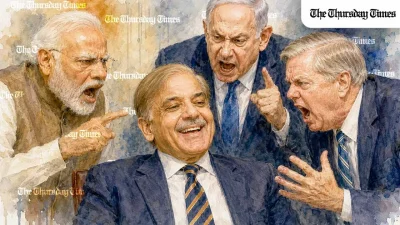
Pakistan’s growing diplomatic relevance has triggered a sharper narrative war, with foreign criticism, hostile media framing and domestic security incidents being used to cast Islamabad as unstable just as it re-enters the centre of regional diplomacy.

From Netanyahu’s remarks to CBS reporting, Lindsey Graham’s criticism, Indian media amplification and renewed attacks inside Pakistan, the pattern is no longer easy to dismiss. Islamabad’s new diplomatic visibility has triggered a sharper contest over narrative, credibility and power. — MICHAEL MCCALL FOR THE THURSDAY TIMES