
PAKISTAN’S 2025 WAS NOT A year of easy headlines. It was a year of pressure that could have narrowed the country’s options, yet often did the opposite. Month by month, Islamabad kept widening its diplomatic space, stabilising key economic indicators, and adding practical “state capacity” tools that strengthen foreign policy in ways speeches never can. The most important shift was tonal and tactical: Pakistan’s external posture leaned less on emotion and more on transaction, leverage, and credibility, building alignment where it was possible and managing friction where it was not.
January began with domestic politics commanding attention, but Pakistan’s outward-facing story quietly reinforced something bigger: capability is diplomacy. Early in the year, Pakistan signalled that it wanted to be seen not only as a security file or a balance-of-payments story, but as a state building modern tools for governance. The language of foreign policy increasingly pointed to deliverables: better monitoring, better planning, and a stronger ability to manage disasters and resources. That framing matters because it changes how partners talk about Pakistan. Countries align more easily with a state they believe can execute.
February was the clearest “alignment month” with China, and it did not come wrapped in theatrics. The message was simple: connectivity still matters, long-horizon projects still matter, and Pakistan’s relationship with Beijing remains the anchor of its strategic geography. By focusing on infrastructure, logistics, and development narratives that can survive political cycles, Pakistan kept the China relationship in the realm of durable state interest rather than seasonal diplomacy. This is alignment in the traditional sense: strategic depth, investment logic, and mutual signalling that both capitals treat the partnership as core.
February also showed Pakistan working its softer levers. Hosting major sport and welcoming international attention is not just cultural; it is reputational. Every successful large-scale event becomes a quiet argument that Pakistan can plan, secure, host, and deliver. That makes future diplomacy easier: investors and governments are reassured by normality that can be organised, not merely claimed. At the same time, public health commitments and global eradication work continued to shape how international partners engage with Pakistan not only as a recipient of support, but as a frontline state doing heavy lifting for global outcomes.
March hit with a brutally clear reminder that security challenges remain live. Violence in Balochistan and the broader militant landscape again tried to dictate Pakistan’s national agenda. Yet Pakistan’s foreign policy value proposition became sharper precisely because of that pressure: Islamabad used the reality of militant threat to argue for international clarity and cooperation, pressing partners to treat certain groups not as local irritants but as destabilising actors with financing and propaganda ecosystems that cross borders. This is where Pakistan’s security narrative became more legible to outsiders: not “our problem”, but “a regional risk that spills”.
From this point, a key pattern became visible in Pakistan’s external relationships: alignment became issue-based, not sentimental. Pakistan did not need every partner to agree on everything; it needed specific partners to align on specific files. That is exactly what happened over the year, especially on counterterrorism, crisis de-escalation, and economic stabilisation. The advantage of this model is that it creates resilience: one relationship can be tense in one domain but productive in another, without the whole partnership collapsing.
April was quieter in headlines and stronger in the kind of work that actually moves countries forward. The stabilisation story did not depend on one dramatic announcement; it depended on the state staying inside a predictable policy corridor long enough for confidence to slowly return. Pakistan’s external conversations in this period were increasingly shaped by credibility questions: can the country maintain reform discipline, avoid sudden reversals, and keep its external obligations manageable? For foreign policy, this matters because financial credibility is diplomatic leverage. It changes the tone of every conversation from “emergency” to “opportunity”.
May forced Pakistan’s diplomacy into its hardest test: crisis management in a volatile neighbourhood. When tensions with India escalated into direct exchanges involving modern capabilities, Pakistan’s external objective was to keep the crisis bounded and prevent the regional story from swallowing everything else Pakistan was trying to achieve. The constructive point here is not romanticism; it is the reality that countries earn international confidence when they show an ability to manage escalation, communicate clearly, and return to political and economic governance instead of slipping into open-ended confrontation. Pakistan’s broader diplomatic messaging in this period leaned toward restraint, process, and international engagement rather than permanent brinkmanship.
May also clarified something important for Pakistan’s longer-term foreign policy planning: technology now shapes diplomacy. Drones, surveillance, rapid information cycles, and the speed of escalation have changed the region’s strategic grammar. Pakistan’s diplomats, not only its generals, had to operate in that new grammar, and the year pushed Islamabad further toward a foreign policy that treats technology as a strategic variable. That theme comes back later in the year with digital finance and space capability.
June brought foreign policy back into the language of economics. Pakistan’s fiscal season highlighted a state trying to balance security pressures with the need to reassure markets and partners. For Islamabad, “geo-economics” was not a slogan in 2025; it was the scaffolding holding together multiple external relationships. Pakistan’s messaging increasingly linked external partnerships to tangible outputs: investment, trade access, energy, supply chains, and institutional confidence. When a country can show improving stability metrics, it becomes easier for friendly governments and institutions to justify engagement, and for private capital to consider entry.
This is where one of Pakistan’s most meaningful alignments became obvious: alignment with the international financial system’s confidence signals. Whether one likes it or not, stabilisation pathways, programme discipline, and institutional reviews shape how the world prices Pakistan. Keeping that corridor intact gave Islamabad more diplomatic oxygen. It also made it easier for partners in the Gulf and Asia to treat Pakistan as investable rather than only supportable.
July was Pakistan’s most visibly “grown-up” foreign policy month because it put Islamabad at the centre of multilateral procedure rather than the edge of multilateral sympathy. Pakistan’s month leading a major UN forum was used to project an image of convening power: setting agendas, chairing discussions, and speaking in institutional language. That kind of visibility is not cosmetic. It is one of the few ways middle powers can demonstrate seriousness without military theatrics, and it helps Pakistan align itself with countries that prefer rules-based frames even when their politics differ.
July was also when Pakistan’s relationship with the United States looked more transactional and therefore more sustainable. The year did not show a return to old dependency patterns; it showed a narrower, more pragmatic engagement built around defined interests: security cooperation where it overlaps, economic dialogue where it can be advanced, and selective partnership in areas like energy and strategic resources. That is alignment of a modern kind: not an alliance, but a set of working convergences that can survive leadership changes.
And inside Pakistan’s own policy architecture, July carried a forward-looking signal: financial modernisation. When a central bank starts discussing pilots and frameworks rather than only warnings, it suggests the state is trying to build future-facing capacity. That matters internationally because investors, regulators, and partner states increasingly judge countries by whether they can govern new financial realities, not just whether they can govern old ones. Pakistan’s message to the world in 2025 increasingly sounded like: we are building the rails, not just managing the risks.
August combined two realities that Pakistan has learned to handle simultaneously: climate stress and diplomatic movement. Severe flooding and mass displacement in parts of the country demanded immediate response capacity. The positive story here is not that floods happened, but that disaster response and state mobilisation have become faster and more organised compared with earlier eras. Every improvement in relief, evacuation, and public health prevention is also a foreign policy asset, because it shows partners that assistance can be translated into outcomes, and that the state can coordinate across institutions under pressure.
August was also where Pakistan’s regional diplomacy gained a valuable new lane: the reset with Bangladesh. A high-level visit after a long gap carried real strategic symbolism. It suggested Pakistan was willing to re-open regional relationships that had been frozen by history and politics, and to re-enter the conversation as a South Asian actor with more than one axis. That kind of diplomatic reopening is a form of alignment, too: it creates space for trade, cultural engagement, and future cooperation that does not depend on any single great power.
This is also the period where Pakistan’s counterterrorism narrative found firmer resonance in Western policy circles. When external partners adopt language and legal steps that mirror Pakistan’s threat assessments—particularly regarding specific militant groups—it represents alignment that is operational, not rhetorical. It strengthens Pakistan’s case internationally and makes it harder for violent actors to operate through global loopholes.
September carried a quieter kind of reputational recovery: travel, aviation routes, and regulatory confidence. When national carriers, routes, and compliance standards begin to normalise, it signals to the world that Pakistan is not shut out of routine systems. These changes are not glamorous, but they matter because they restore the everyday channels through which business and diplomacy function. A country that can reconnect routine links gains more than convenience; it gains legitimacy.
October was a defining month for Pakistan’s neighbourhood diplomacy because it highlighted who is willing to “show up” for Pakistan in real time. The Afghanistan border file remained volatile, but what mattered for alignment was the visible role of Qatar and Türkiye in de-escalation and mediation tracks. This is alignment you can point to: partners investing diplomatic capital to prevent violence from expanding, and using their regional credibility to create channels that Pakistan can work through. It also reflects something Pakistan has cultivated over recent years: deeper functional ties with key Middle Eastern actors who increasingly operate as crisis managers, not just donors.
October also reinforced Pakistan’s more optimistic arc: capability-building that serves governance. Space and remote-sensing advances were framed not as prestige but as tools for agriculture, environmental monitoring, and disaster management. This kind of “practical sovereignty” changes how partners view Pakistan. It makes climate collaboration, development assistance, and technology partnerships feel more like joint ventures than rescue missions. It also allows Pakistan to tell a new story internationally: we are investing in instruments that reduce future risk, not only pleading about present danger.
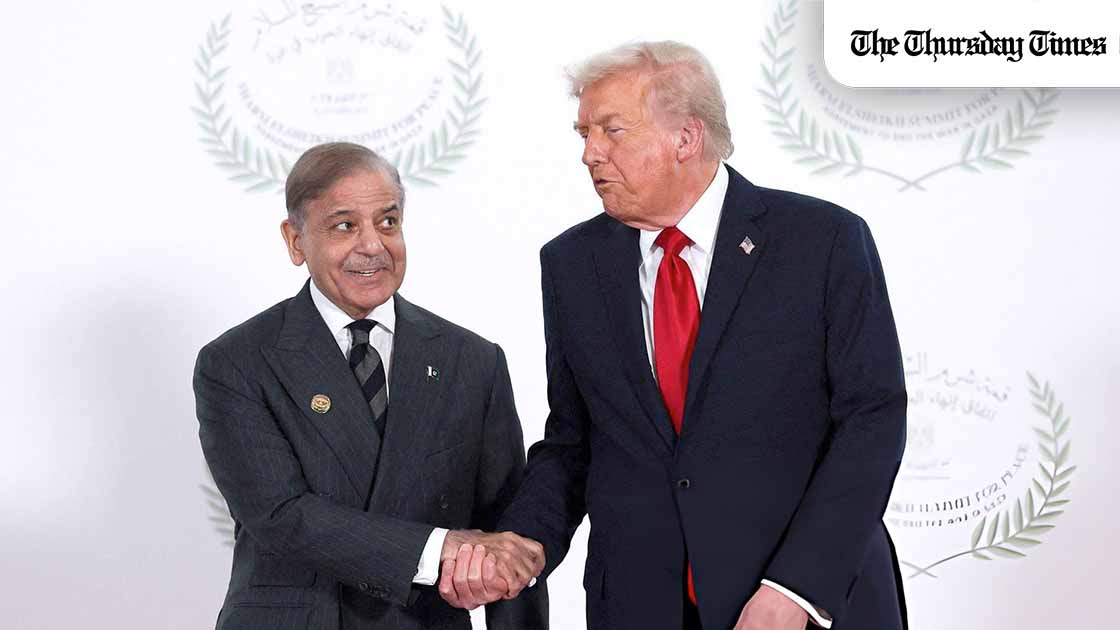
November was where Pakistan’s multilateral diplomacy became more visibly connected to the Muslim world and the wider coalition politics around major international crises. Pakistan’s diplomatic positioning increasingly sat alongside a cluster of states that matter in global mediation and stabilisation debates: Saudi Arabia, Qatar, the UAE, Egypt, Jordan, Türkiye, and Indonesia. These countries do not align with Pakistan because they share identical politics; they align because they share overlapping interests in regional stability, managed outcomes, and the use of institutions to shape crises rather than merely comment on them. Pakistan’s relevance grew in 2025 precisely because it was operating inside those coalitions, not outside them.
November also carried an important reminder that Pakistan’s state capacity is not only seen in diplomacy and security but in public health and social organisation. Large-scale vaccination drives and eradication efforts do not usually define a country’s geopolitical profile, but they should. They demonstrate reach, coordination, and persistence—qualities that translate into investor confidence and partner trust.
December closed the year with the kind of signals that make future foreign policy easier: external validation and forward momentum. Programme reviews, disbursement decisions, and policy easing all feed into the same diplomatic outcome: Pakistan becomes less of an emergency file and more of a managed-risk partner. On reforms, the momentum around restructuring and privatisation gave Pakistan a stronger story to tell international investors and friendly capitals that had long asked for evidence of difficult decisions, not merely promises.
Yet December also underlined that Pakistan’s foreign policy will remain a balancing act. The western border remained tense, and the neighbourhood did not magically stabilise. But Pakistan ended 2025 with more room to manoeuvre than it began with. That is the real measure of foreign policy progression: not whether the world became kind, but whether the state widened its choices.


