

ISLAMABAD (The Thursday Times) — In Islamabad, the difference between “expected” and “announced” is not a technicality. It is the line between speculation and state policy. That distinction is what Pakistan’s Foreign Office drew on Thursday, after a Reuters report appeared to turn an unconfirmed possibility into a settled storyline, and by extension, to frame Pakistan as already moving towards a decision on Gaza.
The Thursday Times has learned from sources with knowledge of the matter that no decision has been taken on Pakistan joining any proposed International Stabilization Force for Gaza, and that internal deliberations, where they exist, remain far from the kind of closure implied by the reporting. Those sources describe the situation plainly: discussion has not translated into commitment, and Pakistan has not crossed the threshold that matters, an authorised decision.
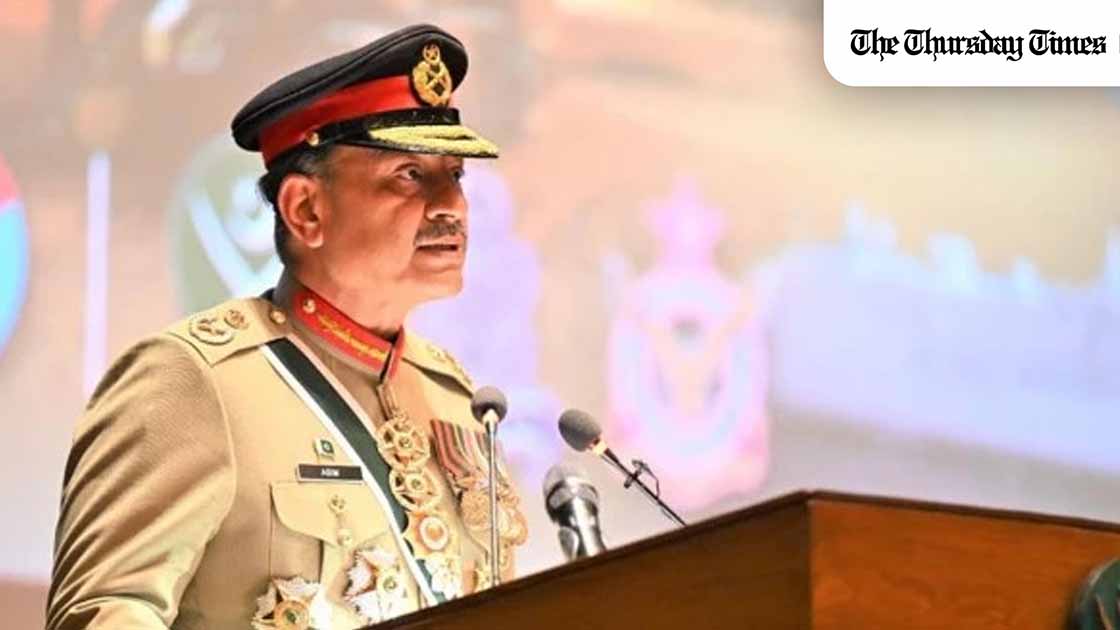
The Reuters report, published on 17 December, said Pakistan’s Chief of Army Staff and Chief of Defence Forces, Field Marshal Syed Asim Munir, was expected to travel to the United States in the coming weeks, with talks likely to focus on a proposed multinational stabilisation force for Gaza. But Pakistan’s Foreign Office made clear on Thursday that the tone of finality attached to that claim does not reflect Islamabad’s position, or Islamabad’s process.
Speaking at the weekly press briefing, Foreign Office spokesperson Tahir Hussain Andrabi said he could contradict the Reuters story “in its essence” because it suggested the visit had been planned and carried a sense of finality. He added that he had no information on any such visit and that Pakistan would wait for an official announcement by the Government of Pakistan if it were to be organised, noting that official visits are announced in advance, which has not happened here.
From Pakistan’s perspective, this is not merely about a diary entry. It is about narrative sovereignty. Pakistan’s leadership visits capitals routinely, but high level military travel is read domestically as strategic signalling, and Islamabad does not allow external reporting to define the signal before the state has chosen to send it. When a report implies inevitability, it compresses Pakistan’s room to manoeuvre at home, where Gaza is not a distant foreign policy file but a deeply emotive national question.
On the larger issue, the Foreign Office’s position was even more direct. Pakistan, Andrabi said, has not taken any decision on the deployment of its troops as part of any International Stabilization Force to Gaza. He also stated he was not aware of any specific request made to Pakistan on sending troops. The discussions, he said, are ongoing in “certain capitals”. That phrasing matters. It places Pakistan outside the frame of a concluded plan, and it keeps Islamabad’s posture where it wants it, engaged in diplomacy, but unbound by someone else’s timeline.
The Thursday Times can further confirm through its sources that the government has not signed off on any participation and has not moved into operational planning for a deployment. In practical terms, that means there is no settled mandate, no agreed command structure, no domestic authorisation, and no political ownership of a decision that would carry enormous consequences.
International conversations may be moving, but Pakistan’s calculus is unique. Any troop role in Gaza would immediately be tested against public sentiment, domestic political stability, Pakistan’s long standing position on Palestine, and the reputational cost of being perceived as enabling an externally designed security architecture. Even the most carefully worded participation could be misread as complicity, and Islamabad is fully aware of that risk.
This is why Thursday’s briefing should be read as a deliberate reset. Pakistan is not rejecting diplomacy, and it is not closing the door on discussions taking place in other capitals. But it is refusing, clearly, to let unnamed sources and foreign headlines lock it into a position it has not adopted.
For now, Pakistan is signalling a familiar posture: keep channels open, keep decisions sovereign, and keep the public record aligned with official announcements rather than leaks. In other words, if Pakistan is going to move on something as politically charged as Gaza, it will do so on its own terms, and it will say so in its own voice.


