
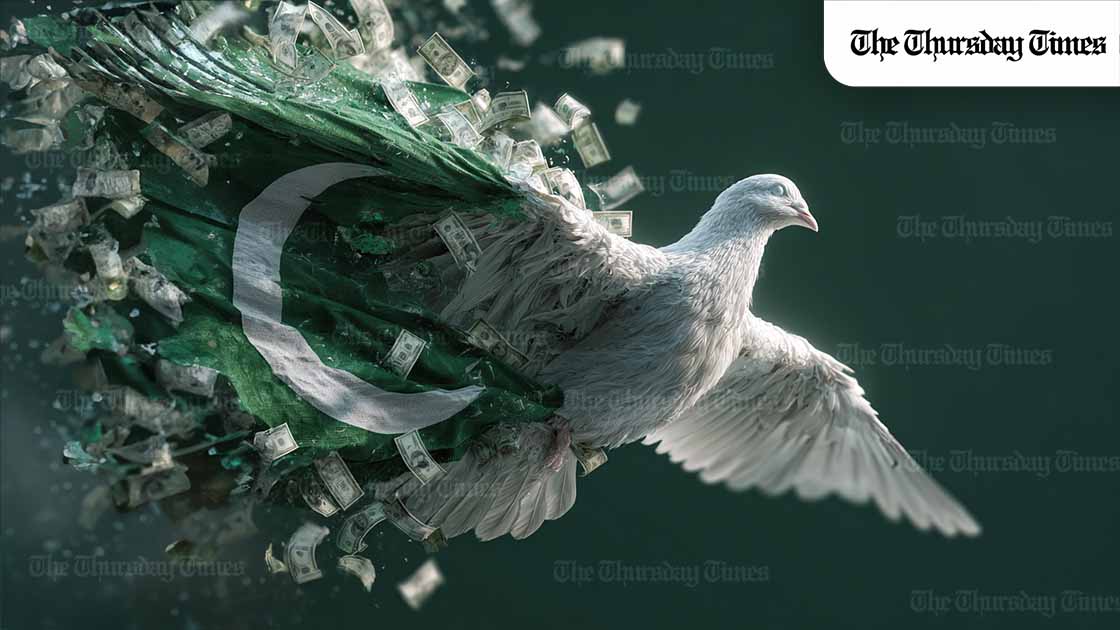
PAKISTAN HAS ANNOUNCED ITS COMEBACK many times before. Each time it was framed as destiny, each time it collapsed into debt, disorder, and diplomatic irrelevance. That is precisely why Davos 2026 should not be read as a redemption story but as something far more uncomfortable: a stress test. What made this moment different was not optimism—it was constraint. Pakistan did not arrive as a wounded state pleading for indulgence, nor as a swaggering one demanding recognition. It arrived as a country with no more fiscal room, no more narrative room, and no more geopolitical room to keep lying to itself. The pivot at Davos mattered not because it was inspiring, but because it was coerced by reality. This was not a performance of confidence. It was a performance of discipline.
PART 1: THE END OF THE EXCUSE ECONOMY
For the first time in decades, Pakistan did not introduce itself to the world through grievance. There was no melodrama about Western double standards, no ritual victimhood about Kashmir, no performative indignation about Islamophobia, no thinly veiled threats about regional instability if its demands were not met. Instead, Pakistan did something far more radical: it behaved like a normal state. It spoke in the language of timelines, bottlenecks, payments infrastructure, energy security, reform continuity, and manufacturing scalability. In diplomacy, tone is not cosmetic. Tone is policy. Countries that sell grievance attract sympathy; countries that sell infrastructure attract capital. Pakistan finally chose the second script, and in doing so quietly declared war on its own most destructive addiction: the excuse economy.
This was not accidental. Pakistan’s foreign policy has long suffered from identity compression—being reduced in global consciousness to two corrosive caricatures: India’s enemy and the War on Terror’s haunted house. Both identities are now economically lethal. No serious investor wants to bankroll a country whose brand is permanent confrontation or permanent suspicion. Davos was the first coordinated attempt to amputate that identity rather than cosmetically repackage it. Pakistan did not centre itself around India. It did not posture about rivalry. It did not sell its military relevance to Western security doctrines. It did not dramatise terrorism. That silence was strategic. Nations mature when they stop introducing themselves through their enemies. Pakistan is trying—belatedly—to graduate from being a geopolitical reaction to becoming an economic proposition.
The Pakistan Pavilion was not a marketing booth. It was a confession of intent. Instead of parading nationalist fantasies, it foregrounded startups, agribusiness innovation, climate resilience, logistics corridors, and manufacturing capacity. This was not romance; it was readiness. In geopolitics, perception precedes permission. Davos was Pakistan asking the world to reconsider its permissions. The subtext was blunt: we are not asking you to save us; we are asking you to use us. That is the difference between a charity case and a platform state.
Soft power, long treated in Islamabad as decorative fluff, finally became strategic substance. The FIFA President’s pledge to visit Pakistan was not a feel-good sports headline—it was reputational re-legitimisation. Cultural institutions only attach their brands to countries they believe will not implode mid-contract. Football is not geopolitics, but it is legitimacy theatre, and legitimacy theatre always precedes capital flows. Countries emerging from reputational exile always re-enter through culture first. South Korea did it with K-pop. Qatar did it with sport. Turkey did it with television dramas. Pakistan is beginning—awkwardly, belatedly—to understand that you cannot spreadsheet your way out of a reputational hole. You have to perform normality before the world allows you to perform prosperity.
The Nestlé expansion announcement mattered not because of its dollar value but because of its banality. Multinationals expand in countries they believe will not politically self-harm for at least a decade. Corporate capital is more honest than diplomats. It does not care about speeches. It cares about probability curves. That decision alone quietly rewrote dozens of internal risk memos across boardrooms worldwide. This is how reputations actually recover—not through press releases, but through spreadsheets that stop flagging your country in red.
The Visa engagement was even more revealing. Pakistan’s elite has historically fetishised megaprojects while ignoring the plumbing of modern economies. Payments infrastructure is not tech fluff; it is economic sovereignty in digital form. You cannot formalise your economy, widen your tax base, digitise welfare, or attract fintech without it. By placing payments modernisation at the centre of its foreign economic diplomacy rather than treating it as a side show, Pakistan finally acknowledged a humiliating truth: you cannot industrialise on paper when your economy still runs on cash envelopes.
And then there was the most underreported pivot of all: Pakistan’s reframing of its defence identity. The JF-17 was not marketed as a nationalist flex or a regional threat. It was marketed as a product. That is not cosmetic—it is philosophical. A state that sells weapons commercially must behave predictably, because buyers price political stability into every deal. No one signs defence contracts with a country they expect to politically combust. Pakistan is quietly signalling that it wants to be judged not as a volatile security state, but as a reliable industrial one. That is not just soft power. That is reclassification.
Energy diplomacy with Azerbaijan’s SOCAR exposed the difference between rhetoric and adulthood. Pakistan did not sell dreams; it sold timelines. It did not talk about transformation; it talked about bottlenecks. Energy security is not an economic variable—it is an existential one. A country cannot export its way into prosperity when its factories flicker on and off. By prioritising infrastructure over ideology, Pakistan did something revolutionary by its own historical standards: it treated energy not as a political talking point but as a commercial choke point.
None of this proves success. Pakistan has a PhD in reform reversal. It announces discipline, then votes itself out of it. It embraces stability, then sabotages it for short-term political sugar highs. But here is the uncomfortable truth: every successful national turnaround begins as theatre. The difference between theatre and transformation is whether institutions then lock the script into law, contracts, and budgets. What made Davos different is not sincerity—it is scarcity. Pakistan no longer has the fiscal or geopolitical luxury to relapse into chaos. Discipline is no longer a moral choice. It is a survival condition.
PART 2: WHY THIS MOMENT WILL ACTUALLY STICK
The real argument is not that Pakistan has changed. It is that Pakistan no longer has alternatives. This is not a leadership story. It is a constraint story. Countries rarely reform because they become virtuous. They reform because they run out of exits. Pakistan is now out of exits. It cannot afford populist economics. It cannot afford permanent confrontation with India. It cannot afford terror ambiguity. It cannot afford elite paralysis. It cannot afford foreign policy schizophrenia. The old playbook has been exhausted to the point of farce. What Davos revealed was not a moral awakening, but a structural cornering.
There is a deeper geopolitical logic at work here. The world is fragmenting into economic blocs, supply-chain clubs, and regulatory alliances. Middle-sized states that cannot anchor themselves inside at least two of these networks will be downgraded into geopolitical dead zones. Pakistan’s outreach across Gulf capital, Western finance, Central Asian energy, and global tech is not hedging. It is survival choreography. This is what a late but intelligent entry into multipolar realism looks like.
The quiet retreat from India-centric identity politics may prove to be the most revolutionary move of all. Pakistan did not posture at Davos. It did not centre itself as a rival. It did not perform historical grievance. This was not humility—it was strategy. Rivalry is an economic tax. Every year Pakistan defines itself against India, it prices itself out of foreign capital. Moving on from rivalry is not surrender; it is graduation. Nations grow up when they stop building their identities out of their enemies’ shadows.
The same maturity was visible in how Pakistan handled its terrorism legacy—by not handling it theatrically at all. It did not deny the 2000s. It did not dramatise them either. It simply refused to remain imprisoned inside them. Countries, like people, are more than their worst decade. The world does not expect Pakistan to be perfect. It expects Pakistan to be predictable. That is a much lower bar—and a much more economically useful one.
Critics will dismiss all of this as PR theatre. They are not wrong to be sceptical. Pakistan has turned Davos into a catwalk before. But this time the stakes are existential. What makes this moment different is not confidence—it is constraint. Pakistan no longer has bailout elasticity. It no longer has diplomatic indulgence. It no longer has regional patience. The global system is less forgiving, more transactional, and far less sentimental than it was in the 2000s or even the 2010s. Pakistan is being forced into adulthood by a harsher world order.
“Pakistan is back—this time, for good” is not a slogan. It is a falsifiable thesis. It will be disproven if reforms stall, if politics implodes, if energy timelines slip, if payments modernisation is abandoned, if defence exports revert to chest-thumping instead of contracts, if terror narratives resurface, if India once again becomes Pakistan’s only international personality.
But if—even imperfectly—Pakistan holds this line, then Davos 2026 will not be remembered as another PR tour. It will be remembered as the moment Pakistan stopped performing victimhood and started performing statehood.
And if it fails again, the verdict will be harsher than ever before. Because this time, Pakistan cannot claim it did not know what had to be done.


