BALOCHISTAN’S CITIES ARE AWOKEN, TIME and time again, to a sense of continuity rather than surprise.
The sounds which carry through the city’s early hours, of distant gunfire and sirens cutting through cold air, and of helicopters tracing slow arcs above the city, are read less as chaos and more as signals. Pakistan, quickly and unmistakably, issues statements that the violence of past days would not be allowed to harden into routine. Its response always unfolds with the calm certainty of a state acting on experience. Cordons are drawn, intelligence channels activated, and statements are released which are intentionally plain. Those who sought attention through coordinated attacks would not be granted time, space, or momentum.
This is not to the state’s discredit.
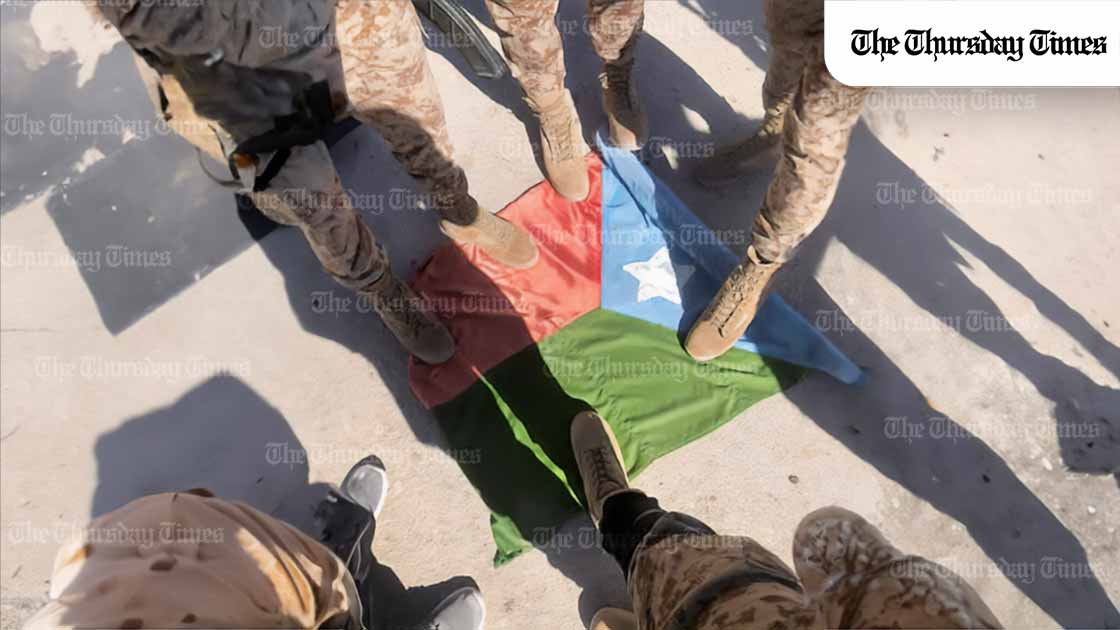
Attacks attributed to the Baloch Liberation Army are described by Pakistan as an effort to manufacture inevitability, to project the idea that distance and terrain have finally outpaced the writ of the state. Pakistan always answers by collapsing such distance. Operations are presented as intelligence-led and focused, intended to prevent follow-on strikes and to deny militants the prolonged spectacle that fuels fear. The objective is stability first, because without stability nothing else is possible.
The BLA has long styled itself as a liberation movement, speaking in the language of grievance and historical neglect. It claims to represent an entire people while operating as a tightly held militant organisation. Over the years, it has chosen targets that resonate far beyond Balochistan, ports, highways, engineers, and symbols of economic movement, insisting that insecurity itself is proof of legitimacy. Yet this approach has always produced the opposite effect. By targeting development and everyday life, the group has ensured that the state responds not as a negotiator but as a guardian of public order, and that the wider population experiences disruption rather than deliverance.
Pakistan’s answer this week followed a pattern refined over time. A coordinated strike is met with coordinated containment. Areas are secured swiftly. Cells are pursued before they can disperse. The emphasis is on speed because speed reassures ordinary citizens and deprives militants of narrative control. The language of the briefings reflected this confidence. Numbers were released, locations named, and the message repeated that the situation was under control. Calm, not drama, was the intended tone.
Alongside the operations ran a broader story about origins and sponsorship. Islamabad described the violence as externally backed, pointing toward India and situating the attacks within a regional context that Pakistan knows well. India rejected the allegation, as expected. Yet the charge itself carried weight because South Asia’s history is dense with moments when internal unrest was shaped decisively by external involvement. Pakistan did not need to explain the reference. The memory it invoked is shared and enduring.
That memory is 1971. In Pakistan, the creation of Bangladesh is remembered not as an abstract lesson but as lived experience. India’s support for Bengali forces and its eventual military intervention remain central to how Pakistan understands vulnerability and sovereignty. The lesson drawn is not denial of past mistakes but recognition that once a neighbour steps decisively into a domestic fracture, outcomes accelerate beyond control. Borders change quickly. Wounds last far longer.
What makes the parallel feel immediate today is Bangladesh’s own evolving relationship with its history. In recent years, moments of upheaval have seen attacks on state symbols and monuments linked to Sheikh Mujibur Rahman, figures once treated as untouchable pillars of national identity. For observers in Pakistan, these scenes carried a quiet warning. Independence does not freeze politics. It does not guarantee unity. Nations continue to argue with their pasts long after borders are settled.
At the same time, regional alignments have shifted again. Dhaka and Islamabad, once defined by estrangement, have explored warmer engagement. Dialogue has reopened. Cooperation has been discussed. This is a confirmation that history does not remain fixed. Interests move, relationships adapt, and yesterday’s certainties soften under present realities. The subcontinent, it seems, is never finished with itself.
Against this backdrop, the promise offered by Baloch separatism appears thin. A viable state requires stability, recognition, and economic continuity. A project built on sustained insecurity struggles to deliver any of these. Ports require trust. Trade requires predictability. Governance requires consent expressed through institutions rather than fear. Pakistan’s argument has been that whatever grievances exist, and it acknowledges that they do, dismantling the foundations of order cannot be the path to remedy.
There is also a quieter reality that receives less attention. The BLA does not speak for all Baloch, and it never has. Across Pakistan’s institutions, including its armed forces, Baloch citizens have served with distinction for generations. Families from the province have shed blood for the country, built careers within it, and tied their futures to its stability. Their patriotism is not performative. It is lived daily, in uniform and out of it, and it stands as a counterweight to any attempt to reduce Baloch identity to militancy.
This is why the state insists on clarity. Violence aimed at civilians, infrastructure, and livelihoods is not romanticised as resistance. It is treated as a threat to ordinary life, and answered accordingly. Pakistan’s leaders have argued that restraint in the face of coordinated attacks is not virtue but negligence. Swift retaliation, in this view, is the first step toward restoring the conditions in which politics and development can function.
The operations of the past days were therefore framed as protection rather than punishment. Hospitals were secured. Roads reopened. Markets returned to routine. The message was directed as much to residents as to militants. Life would continue, and the state would ensure it did. That assurance matters in places where fear can otherwise become habit.
None of this denies the need for long-term engagement. Pakistan’s own discourse increasingly acknowledges that security must be followed by governance, and that development must be visible, fair, and inclusive. But the sequence is considered non-negotiable. Order first, then reform. Without the first, the second never takes root.
As the immediate phase of operations recedes, attention will turn again to roads, schools, water, and representation. These are the measures by which success will ultimately be judged. Pakistan understands that numbers announced in briefings fade quickly. What lasts is whether ordinary people feel safer and more invested in the future than they did before.
For now, the state has chosen decisiveness. It has drawn on history, regional experience, and institutional confidence to assert that Balochistan’s future will not be written by those who trade in disruption. The violence of recent days has been answered with resolve, and with a narrative that places unity above fragmentation.
In the long arc of the subcontinent, Pakistan sees itself not repeating the errors of hesitation but acting on the lessons of memory. The frontier remains part of the nation, its people integral to the whole. Whatever storms pass through, the direction is set. The story Pakistan tells itself and the world is that stability will be defended, sovereignty maintained, and the promise of belonging preserved. ∎