
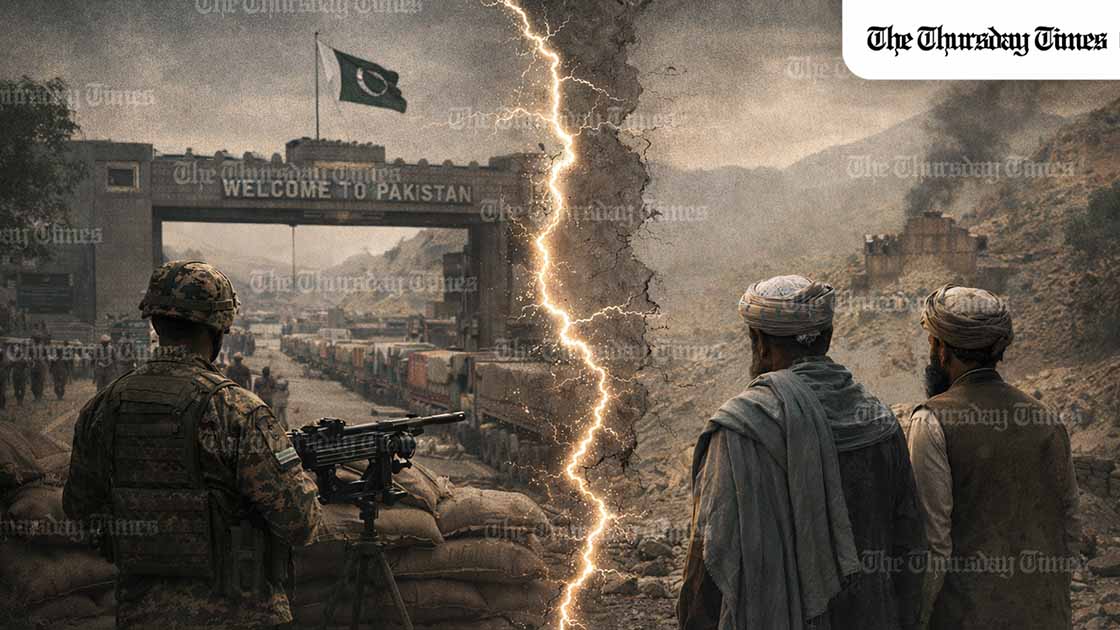
Islamabad is pushing back against any suggestion that a fresh peace channel with the Afghan Taliban has opened, insisting that its position has not changed and that the threshold for any easing remains the same: verifiable action against cross-border militancy.
Reuters reported on March 6 that Pakistan’s government spokesperson said “no negotiations” were taking place and that there was “nothing to talk about” until terrorism from Afghan soil ends.
That stance is not an improvisation born of a single week’s crisis. It reflects a line Pakistan’s Foreign Office has repeated for months in public briefings and formal démarches. In January, the Foreign Office said the “only outstanding issue” in relations with Afghanistan was “terrorism emanating from Afghan soil”, adding that Pakistan’s demand was simple and legitimate: Afghan territory must not be used for terrorist attacks inside Pakistan. In December, the ministry said Kabul had been urged to take “immediate, concrete and verifiable measures” against all terror groups operating from its territory.
Against that backdrop, attempts to project the image of an emerging peace track look less like diplomacy than theatre. Any private trip, clerical contact, or informal outreach may generate headlines, but it does not amount to an official Pakistani initiative unless the state says so. Pakistan’s publicly stated position, as reflected in both Reuters reporting and official Foreign Office statements, remains centred not on symbolic dialogue but on dismantling the militant infrastructure that Islamabad says continues to operate from Afghan territory.
The timing matters. The latest border fighting has been the most serious in years. Reuters reported that the conflict had displaced more than 100,000 people in Afghanistan, while Pakistan’s spokesperson publicly ruled out talks even as outside countries offered mediation. That combination of military escalation and diplomatic refusal has sharpened Islamabad’s message: ceasefire language alone is no longer enough to command attention in Rawalpindi or Islamabad.
If that message sounds blunt, it is because Pakistani officials increasingly argue that the cycle has become familiar. Attack, denial, mediation, temporary calm, renewed violence. The Foreign Office’s wording has become more exacting over time, moving beyond general appeals for restraint to demands for action that is “concrete and verifiable”. That phrase is doing most of the work now. It implies that assurances, intermediaries and atmospherics will not substitute for measurable steps on the ground.
There is also a credibility question around some of the figures who appear in these discussions. US Treasury records show that Fazal ur Rehman Khalil was designated in 2014 for acting for or on behalf of Harakat ul Mujahidin, which Washington identified as a terrorist group operating across Pakistan, India and Afghanistan. That history does not by itself explain the purpose of any current visit or contact, but it does mean that any effort to present such a figure as a neutral or authoritative bridge to peace deserves especially careful scrutiny.
What Pakistan is signalling, then, is not a rejection of peace in principle but a refusal to detach peace from conditions. Officials are effectively saying that if Kabul wants de-escalation, it already knows the entry price. Stop harbouring militant actors, close the space in which they operate, and show in practice that Afghan soil will not be used to mount attacks across the border. Until then, the state appears determined to deny the Taliban the diplomatic optics of talks without delivery.
Peace, in Islamabad’s current telling, cannot be claimed as rhetoric while violence survives as policy by other means. The message to Kabul is stark, and deliberately so, no talks for the sake of talks, no process for the sake of appearances, and no reset without proof. Or, in simpler terms, walk the talk.


