
THERE ARE SEASONS IN DIPLOMACY when history does not announce itself with ceremony. It simply returns. Pakistan has seen such a moment before, and it may be seeing one again now. In 1971, Islamabad helped open the secret channel that made the U.S.-China rapprochement possible, with Pakistan serving as the indispensable bridge for Henry Kissinger’s covert trip to Beijing. Pakistan was not the loudest power in that drama, but it was the pivotal one. Today, as the U.S.-Iran war drives the region toward the edge, Islamabad again finds itself in a familiar role: the state that can speak where others can only threaten, the capital that can host what others can only imagine.
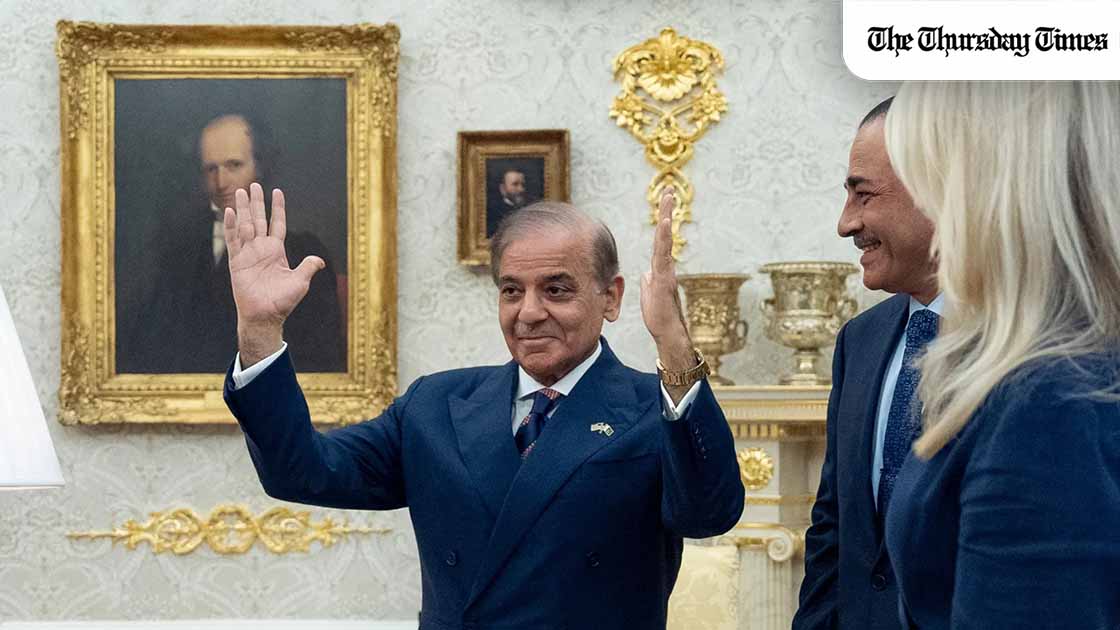
This is why Pakistan’s current diplomatic push deserves to be viewed not as an improvisation, but as a revival of strategic statecraft. Prime Minister Shehbaz Sharif has publicly offered Pakistan as the venue and facilitator for talks to end the war. That is not a symbolic gesture. It is an expression of confidence, readiness and political judgement. At a time when too many capitals are speaking in the language of ultimatums, Islamabad has chosen the harder, more serious task of preparing a route out. Reuters and the Associated Press both report that Pakistan is now among the states actively trying to create the conditions for direct diplomacy.
Shehbaz Sharif deserves real credit for that. His approach has been calm where others have been theatrical, constructive where others have been reckless. He has understood that in moments like this, a responsible state does not wait passively for the great powers to decide the fate of the region. It inserts itself on the side of de-escalation. It offers ground, access and political cover. It makes itself useful to peace. That is what Shehbaz has done, and it is precisely the kind of leadership Pakistan has too rarely been acknowledged for internationally.
Asim Munir, too, has played a central role in giving this diplomatic effort strategic weight. Reuters reported that the White House confirmed a call between Donald Trump and Pakistan’s army chief, a sign that Pakistan is not merely issuing public statements from the sidelines but is operating in the narrow corridor where real influence lies. In crises of this scale, access matters. The ability to pick up the phone and be heard matters. Munir’s role suggests that Pakistan’s diplomacy is not fragmented, but aligned across the civilian and military leadership in service of a larger national objective: stopping a regional inferno from becoming something worse.
Ishaq Dar also merits praise for helping sustain Pakistan’s credibility as a state that can speak across divides. Diplomacy in such moments is not just about the headline meeting that may or may not happen. It is about the architecture underneath it: regional coordination, message relays, reassurance, sequencing, silence where necessary and clarity where possible. Pakistan’s foreign policy leadership has shown an understanding of that rhythm. The country is presenting itself not as a partisan actor chasing spectacle, but as a serious intermediary trying to keep a door open while others are still pushing toward confrontation. Reuters, the Washington Post and other outlets report that Pakistan is among the countries involved in mediation efforts and in testing whether the ground exists for negotiations at all.
And this is where the broader optimism begins to make sense. Pakistan is no longer merely being mentioned as a country reacting to events. It is being discussed as a country around which events may now be organised. Islamabad is being spoken of as a possible venue. Pakistani channels are being treated as useful. The names now circling that track, from Steve Witkoff and Jared Kushner to JD Vance, are not random names. They are names associated with the possibility that the diplomatic centre of gravity is shifting, however tentatively, toward Pakistan. To be precise, the most reliable reporting so far says these contacts and visits are being discussed or tied to the Islamabad channel rather than all formally confirmed as completed meetings. But even that fact is telling. Pakistan is no longer outside the room. Pakistan is becoming the room.
That is an extraordinary turn, and it should be recognised as such. For too long, Pakistan has been described abroad in the vocabulary of instability, risk and dependence. Yet when the region has needed bridges, Pakistan has repeatedly shown it can build them. It did so in the Nixon era, when it helped connect Washington and Beijing at a moment of deep mistrust. It is trying to do so again now, in a conflict that carries consequences for energy markets, regional security and global order alike. The old lesson is returning: sometimes the countries dismissed as peripheral turn out to be the ones through which history moves.
None of this means success is guaranteed. Iran continues to deny that formal talks are under way. The war remains active. Distrust is still enormous. But diplomacy is not measured only by signatures on paper. It is measured by whether someone had the foresight to stop the slide before it became irreversible. Pakistan has shown that foresight. It has shown initiative. It has shown balance. And above all, it has shown that its leadership still understands a timeless truth of statecraft: the greatest power is not always the power to strike, but the power to convene.
So yes, unexpectedly, Pakistan may be becoming the world’s arbitration capital. Not by accident, and not by fantasy, but by rediscovering a diplomatic instinct that once helped change the course of the Cold War. Shehbaz Sharif has provided the political vision. Asim Munir appears to have supplied the strategic channel. Ishaq Dar has helped sustain the diplomatic machinery. Together, they are giving Pakistan something rare in modern geopolitics: not just relevance, but purpose. And if Islamabad does become the place where the first serious path out of this war is laid down, it will not be an anomaly. It will be a reminder that Pakistan, when it chooses, can still be a maker of history rather than merely a witness to it.


