
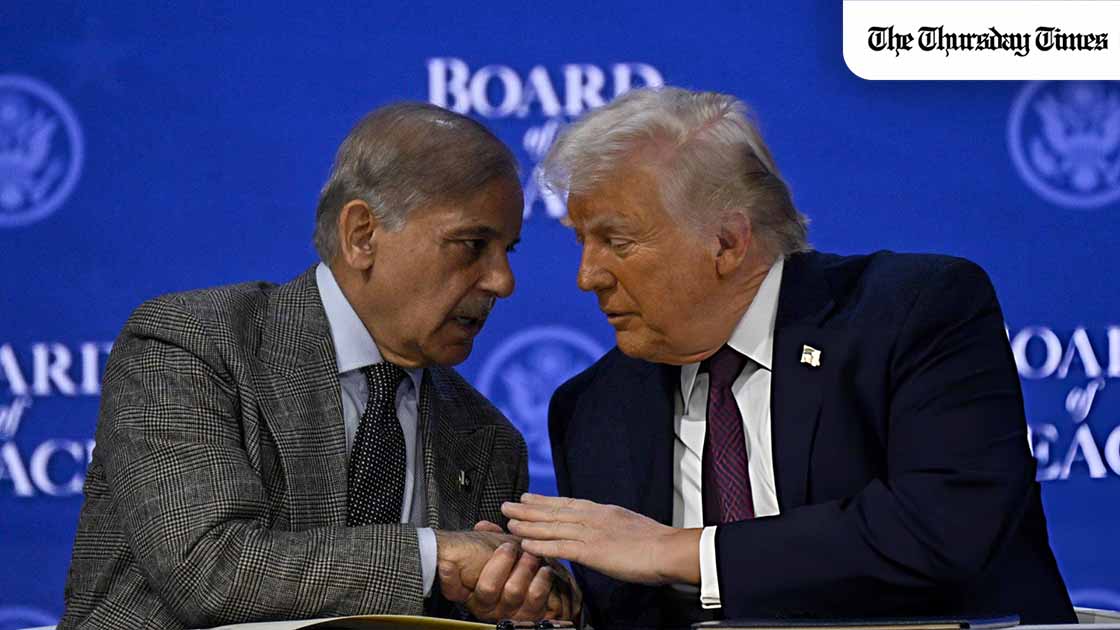

The recent ceasefire between the United States and Iran has provided a fragile window, essentially buying time for real peace-making through deeper negotiations. It is not the endpoint; at best, it is a pause. However, Pakistan has positioned itself globally by playing a crucial role as a mediator whilst the region was on the brink of a catastrophic war.
Pakistan not only found itself navigating conflict de-escalation in the Middle East at an extraordinarily volatile moment, but it also reshaped perceptions of itself as a credible diplomatic actor. What makes Pakistan’s timing vital in the escalation between Iran and the US is that the conflict’s potential extends not only to the Gulf but also to South Asia and beyond. The stakes were extremely high, given the important global energy routes at risk and the regional alliances under tension. Pakistan’s diplomatic engagements and cautious efforts helped make room for dialogue in such a charged atmosphere, where the eruption of a major war had appeared increasingly inevitable.
It is important to recognise, however, that a ceasefire is merely an intermission, not real peace. The underlying tension between Washington and Tehran has not been resolved, and mistrust still persists. Pakistan’s recent achievement should therefore be considered only the beginning of a long and complex process of peace-building in the region. This temporary pause offers a fragile window to test the durability of conflict de-escalation.
The evolving geopolitical landscape is unfolding another narrative quietly: the decreasing visibility of India as a regional power. India had been conducting deliberate diplomatic campaigns to isolate Pakistan on the global stage for many years, yet it appeared largely insignificant during this crisis, unable to position itself as a stakeholder or mediator in a critical regional issue. Rather than isolating Pakistan, India found itself wholly ineffective during an escalation directly affecting its broader neighbourhood. This reflects a deeper miscalculation, not merely a diplomatic error. Pakistan, by contrast, has positively developed its relationships with multiple powers — the US, Iran, Saudi Arabia, and China alike.
Pakistan’s balancing efforts are, nonetheless, considerably complicated. Its strategic commitments, particularly its longstanding security arrangement with Saudi Arabia, make its role as mediator more complex. Iran’s recent attacks on Saudi oil fields, alongside its past actions, place Pakistan in a sensitive position. Remaining politically neutral amid escalations between Iran and the Gulf countries is no straightforward matter.
Iran, too, must be strategically cautious. Although it claims to be acting in response to the presence of US military bases in Gulf countries, the pattern of its behaviour warrants deeper analysis. Attacks on Saudi Arabia, the UAE, Qatar, and other Gulf states widen the risk of escalation and could derail negotiations altogether. The question of Iran’s intent remains: do these attacks serve genuine geopolitical aims, or are they purely defensive? There is no straightforward answer, but the consequences could be dire. Pakistan’s ability to remain a neutral mediator is further diminished by such escalations, particularly those involving Saudi Arabia.
Despite these complexities, Pakistan has demonstrated a clear shift from its past image. For decades, the country was perceived as a security liability — associated more with conflict than with its resolution. That narrative is now being challenged by a ceasefire facilitated in no small part by Pakistani diplomacy. Pakistan has effectively rebranded itself as a constructive force capable of facilitating negotiations between rivals, one of which is a superpower.
Yet the real measure of this diplomatic accomplishment lies not in celebrating symbolic achievement but in securing concrete economic benefits. Diplomatic wins alone cannot resolve the country’s fundamental economic weaknesses, which remain under severe and persistent strain. Pakistan should use the leverage it has gained on the international stage to strengthen trade relations and attract greater investment, capitalising on its newfound credibility.
Most importantly, the same principles of conflict resolution, diplomacy, strategic thinking, and negotiation must be applied domestically. The current efforts to de-escalate tensions between a superpower and a regional power are proof of Pakistan’s capacity as a successful mediator — and that same capacity must be turned inward. To manage and ultimately resolve its conflict with Afghanistan, Pakistan should employ similar methods of reconciliation and dialogue. It must recognise that peace begins at home, and that it can only be achieved through consistency and genuine political will.
From this perspective, the recent breakthrough in the US–Iran conflict represents both a test and an opportunity. It is an opportunity for Pakistan to position itself as an advocate for peace and to redefine its place within the international order. It is also a test of whether external achievement can be translated into domestic and economic progress. For the first time in its history, Pakistan has helped shape global events rather than merely reacting to them. And that, in itself, is a significant shift.


