

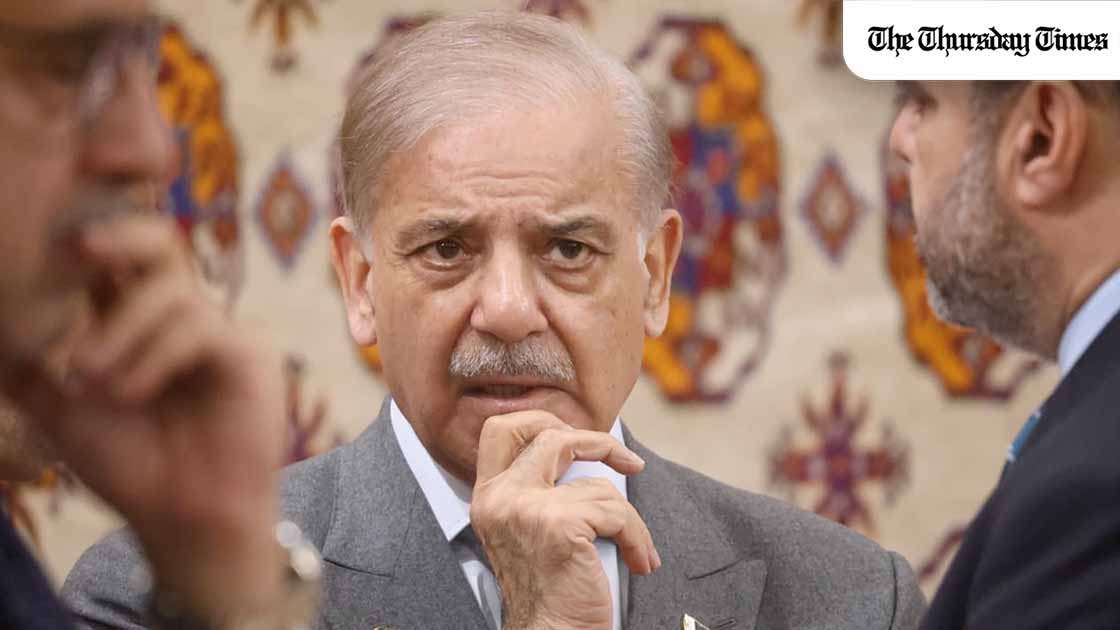
ISLAMABAD (The Thursday Times) — A wave of international phone calls to Prime Minister Shehbaz Sharif over a 24-hour period underscored growing diplomatic recognition of Pakistan’s role in facilitating the U.S.–Iran ceasefire, with seven foreign leaders reaching out to commend Islamabad’s mediation efforts.
According to official readouts, the calls came from Europe, the Middle East and beyond, each explicitly acknowledging Pakistan’s diplomatic engagement in helping de-escalate tensions between Washington and Tehran.
European leaders highlight Pakistan’s diplomacy
From Europe, President Emmanuel Macron of France phoned Sharif to congratulate Pakistan for its mediation, praising Islamabad’s efforts in bringing both sides toward dialogue. French messaging emphasised the importance of diplomatic channels opened during the crisis.
Chancellor Friedrich Merz of Germany also conveyed appreciation, recognising Pakistan’s role in facilitating the ceasefire and encouraging continued negotiations.
Prime Minister Giorgia Meloni of Italy echoed similar sentiments, commending Islamabad’s diplomatic efforts and welcoming renewed engagement between the United States and Iran.
In Central Europe, Chancellor Christian Stocker of Austria expressed strong endorsement of Pakistan’s mediation, describing Islamabad’s role as constructive in supporting de-escalation.
Gulf recognition for Pakistan’s mediation
In the Gulf, Amir Tamim bin Hamad Al Thani of Qatar phoned Sharif to congratulate Pakistan on what was described as successful diplomatic engagement leading to the ceasefire.
King Hamad bin Isa Al Khalifa of Bahrain also expressed deep appreciation, highlighting Pakistan’s role in helping reduce regional tensions.
Lebanon seeks continued engagement
Prime Minister Nawaf Salam of Lebanon thanked Sharif for Pakistan’s peace efforts and discussed the importance of extending de-escalation to other areas affected by regional instability.
A concentrated burst of diplomatic outreach
Taken together, the seven calls — from France, Germany, Italy, Austria, Qatar, Bahrain and Lebanon — represented a concentrated burst of diplomatic outreach rarely seen within such a short timeframe. Each conversation explicitly referenced Pakistan’s mediation, signalling broad acknowledgment of Islamabad’s diplomatic involvement.
The calls also reflected geographic breadth: Western Europe, Central Europe, the Gulf and the Levant all engaged directly with Islamabad, suggesting Pakistan’s role resonated across multiple diplomatic blocs.
For Pakistan, the rapid succession of calls marked an unusual moment of international visibility, with foreign leaders not merely welcoming a ceasefire but directly crediting Islamabad’s diplomatic initiative and communication channels in helping bring it about.


