

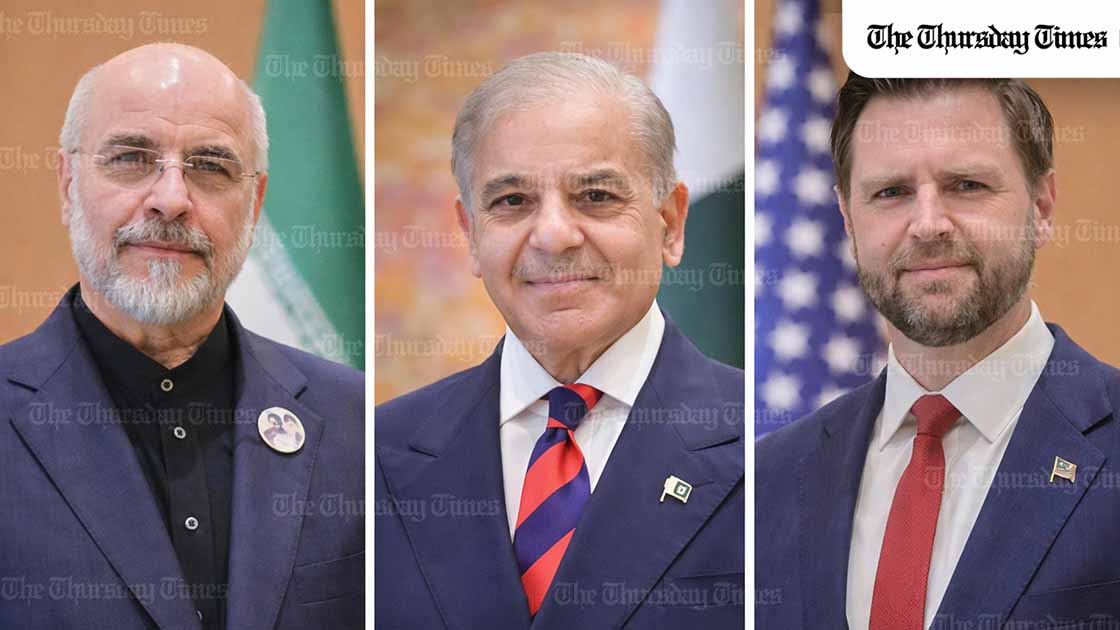
TEHRAN (The Thursday Times) — Iran has signalled that negotiations with the United States may continue after the latest round of talks in Islamabad, but has made clear that future progress will depend on whether Washington can overcome a deep and enduring trust deficit.
In a statement issued after more than 20 hours of negotiations, Iran’s parliament speaker, Mohammad Baqer Ghalibaf, said Tehran had entered the process in good faith but remained constrained by the legacy of past conflicts. “Before the negotiations, I emphasized that we have the necessary good faith and will, but due to the experiences of the two previous wars, we have no trust in the opposing side,” he said.
۱/پیش از مذاکرات تأکید کردم که ما حسن نیت و ارادهٔ لازم را داریم ولی به دلیل تجربیات دو جنگ قبلی، اعتمادی به طرف مقابل نداریم.
همکاران من در هیئت ایرانی میناب۱۶۸ ابتکارات رو به جلویی مطرح کردند ولی طرف مقابل در نهایت نتوانست در این دور از مذاکرات اعتماد هیئت ایرانی را جلب کند.
— محمدباقر قالیباف | MB Ghalibaf (@mb_ghalibaf) April 12, 2026
The remarks offer one of the clearest indications yet of why the Islamabad talks did not produce a breakthrough. They suggest that, from Tehran’s perspective, the core obstacle was not a lack of engagement but a failure by the United States to convert dialogue into confidence.
Ghalibaf said Iranian negotiators had presented proposals aimed at moving the process forward, but that these efforts ultimately fell short of building the trust required for an agreement. “My colleagues on the Iranian delegation raised forward-looking initiatives, but the opposing side ultimately failed to gain the trust of the Iranian delegation in this round of negotiations,” he said.
Even so, the tone of the statement stopped short of declaring the process a failure. Instead, it reframed the outcome as an unresolved test. “America has understood our logic and principles, and now it’s time for it to decide whether it can earn our trust or not,” Ghalibaf said, signalling that diplomacy remains possible if conditions change.
That formulation keeps the door open to further talks, while placing the burden squarely on Washington to demonstrate credibility in any future round. It also reflects a broader Iranian position that negotiations are only one element of a wider strategy to defend national interests.
At the same time, Tehran made a point of publicly acknowledging Pakistan’s role in facilitating the talks. Ghalibaf described Pakistan as a “friendly and brotherly country” and thanked it for helping bring the negotiations together, sending greetings to the Pakistani people.
The acknowledgement is significant for Islamabad, which has sought to position itself as a credible intermediary in a region marked by persistent tensions and diplomatic breakdowns. By hosting the talks and maintaining a channel between two adversaries, Pakistan ensured that dialogue continued even in the absence of an agreement.
For Pakistan, the outcome represents a diplomatic moment in which influence is measured less by the result of a single meeting and more by the ability to keep negotiations alive. While no deal emerged, the absence of public acrimony and the continuation of diplomatic language from both sides suggest that the process has not collapsed.
Ghalibaf’s statement also carried a domestic message, emphasising national unity and public support for Iran’s negotiating stance, while praising his delegation for what he described as intense discussions. The reference to sustained national backing indicates that any future agreement will need to align not only with international expectations but also with internal political considerations.
For now, the Islamabad talks appear to have clarified the central issue shaping the next phase of diplomacy: trust. Iran has signalled that it is willing to continue engaging, but only if the United States can demonstrate that its positions translate into actions capable of rebuilding confidence.


