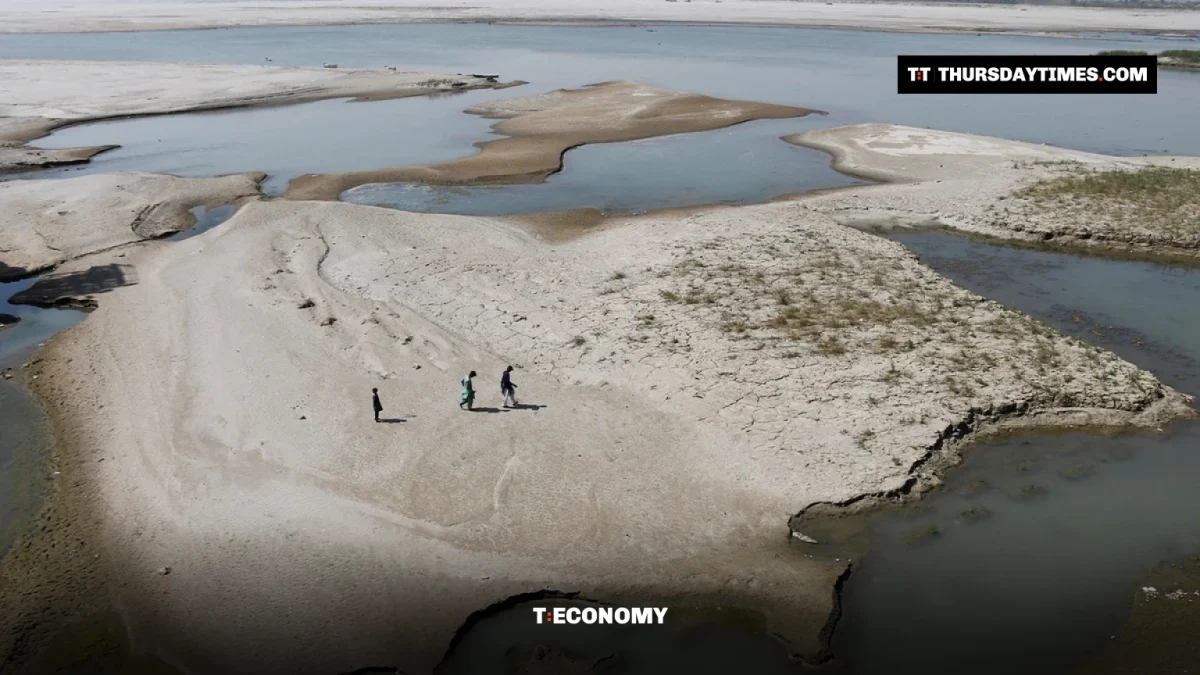
ISLAMABAD (The Thursday Times) — Pakistan needs about $18 billion in federal money over the next decade to build dams, protect against floods and modernise canals, a Planning Commission report says, as it proposes making water security part of the country’s national security agenda.
The National Water Security framework, part of the government’s URAAN Pakistan plan, aims to raise water-use efficiency from about 40 per cent to 70 per cent and lift the water reaching farm gates from 58.3 million acre-feet to 79 MAF by 2029, Geo News reported. Agriculture takes roughly 95 per cent of the country’s freshwater.
Storage: 11 per cent of the Indus
Pakistan’s live storage of 15.3 MAF holds only about 11 per cent of the Indus’s annual flow, the report warns, and it sets a target of 23.5 MAF by 2029. Projects already funded under the development budget should add 9.8 MAF, while a pipeline of proposed schemes including the Akhori off-channel storage, the Shyok dam and the Skardu dam could add about 14.5 MAF more.
One figure stands out: the warning time for floods arriving at the Marala Headworks on the Chenab, where the river enters Pakistan from Indian-held Kashmir, has shrunk from 40 hours in 2014 to just 5.5 hours in 2025. The report recommends a fourth National Flood Protection Plan, a National Glacier Protection Act and updated flood design standards.
Groundwater and the solar pump problem
The Indus Basin aquifer is the second most overstressed in the world, and groundwater in Punjab is falling by half a metre to a metre a year. The report blames solar tubewells in part, since they let farmers pump at almost no running cost, and proposes tying subsidies for them to registration and extraction limits.
Other proposals include incentives for drip and sprinkler irrigation, raising the abiana water charge to cover real maintenance costs, recycling at least a quarter of urban wastewater – with 53 per cent of monitored urban sources unsafe to drink – and creating a water system integrator under the Indus River System Authority to track water from river to farm. The report says the 2029 targets can only be met if infrastructure, regulation and governance reforms move together.