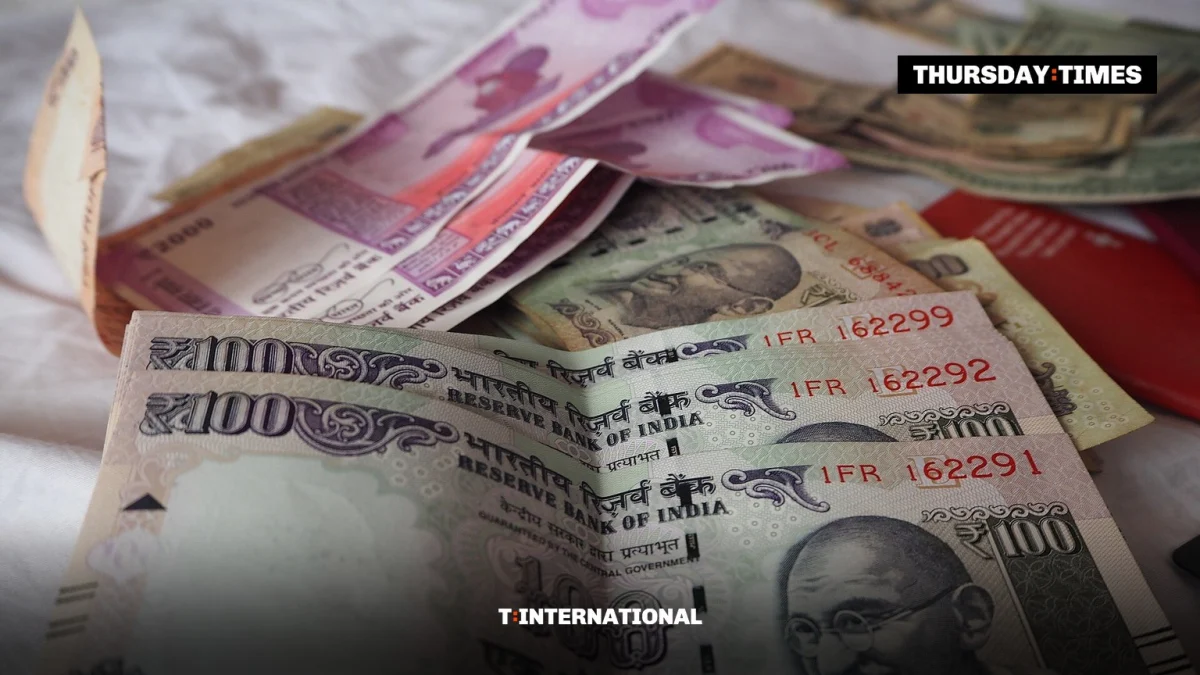
MUMBAI (The Thursday Times) — India is mounting an increasingly costly defence of the rupee, deploying tens of billions of dollars and resorting to extraordinary market interventions to protect a currency that has come under pressure from elevated oil prices and investor outflows, the Financial Times reported.
The Reserve Bank of India has used about $90 billion since June of the more than $140 billion it raised from the Indian diaspora to prop up the rupee, including through sales to the spot market and currency swaps to absorb surplus liquidity, two foreign-exchange bankers told the FT. “They have been aggressive,” one of the bankers said. The RBI did not respond to the FT’s request for comment.
One of Asia’s worst performers
The rupee is one of Asia’s worst-performing currencies this year, having fallen 5% against the dollar. Rising crude prices stemming from the war in Iran have driven up the cost of energy imports for one of the world’s largest oil consumers, while record foreign selling of Indian equities has added to the currency’s weakness.
As the rupee neared new lows this month, the RBI took unexpected steps to curb volatility: opening a special window to absorb state oil companies’ dollar purchases away from the spot market, cutting the threshold for rupee-linked derivative transactions that require no proof of underlying exposure, and requiring dealers to hold a 20% cash reserve on forward contracts with the central bank. Those measures came on top of earlier steps such as curbing short positions against the rupee and courting deposits from Indians living abroad.
The rupee has strengthened 0.7% over the past week to trade at about Rs94.5 to the dollar on Thursday, a six-week high, helped in part by foreign inflows ahead of the public offering of telecoms firm Jio Platforms, set to be India’s biggest-ever listing.
‘It is not sustainable’
Bankers and economists told the FT the RBI cannot keep running down its reserves at the current pace. The central bank’s reserves have fallen by about $60 billion from an early September peak of $785 billion, while its net forward dollar liabilities ballooned to $200 billion in August from about $137 billion in July, according to official data.
“It is not sustainable,” said Dhiraj Nim, a Mumbai-based economist and foreign exchange strategist at ANZ Group. “FX reserves are finite and the forward book obligations are large. The RBI will not draw down reserves to an extent that reserve adequacy becomes a concern.”
Nim said the central bank was also reluctant to raise interest rates aggressively because of the potential hit to economic growth; India’s year-on-year GDP growth slowed to 7.8% in the quarter to end-June from 8.6% the quarter before. The RBI raised rates this month for the first time since 2023, by a quarter point to 5.5%, after inflation accelerated to 5.5% in September, nearing the bank’s 6% tolerance limit. “If the currency becomes disorderly, more aggressive hikes cannot be ruled out,” Nim said, adding that the RBI appeared to have “drawn a line in the sand” at Rs97 per dollar.
‘Not capital controls’
RBI Governor Sanjay Malhotra told local media this month that the central bank remained committed to a stable rupee and did not target a particular exchange rate or band. He rejected suggestions that this month’s measures amounted to capital controls, arguing they were meant to ensure currency markets served genuine hedging needs rather than speculative bets.
Krishna Srinivasan, the IMF’s Asia-Pacific director, said at a briefing in Mumbai that India should let the exchange rate move as the first line of defence against the ongoing oil shock. “Malhotra’s been more open and explicit about letting the market broadly determine where the exchange rate should be, with the bank’s role simply to curb any excess volatility,” said Miguel Chanco, chief emerging Asia economist at Pantheon Macroeconomics. “This ethos is certainly now being tested by the fallout from the war in the Middle East, which is Malhotra’s first real ‘crisis situation’.”∎