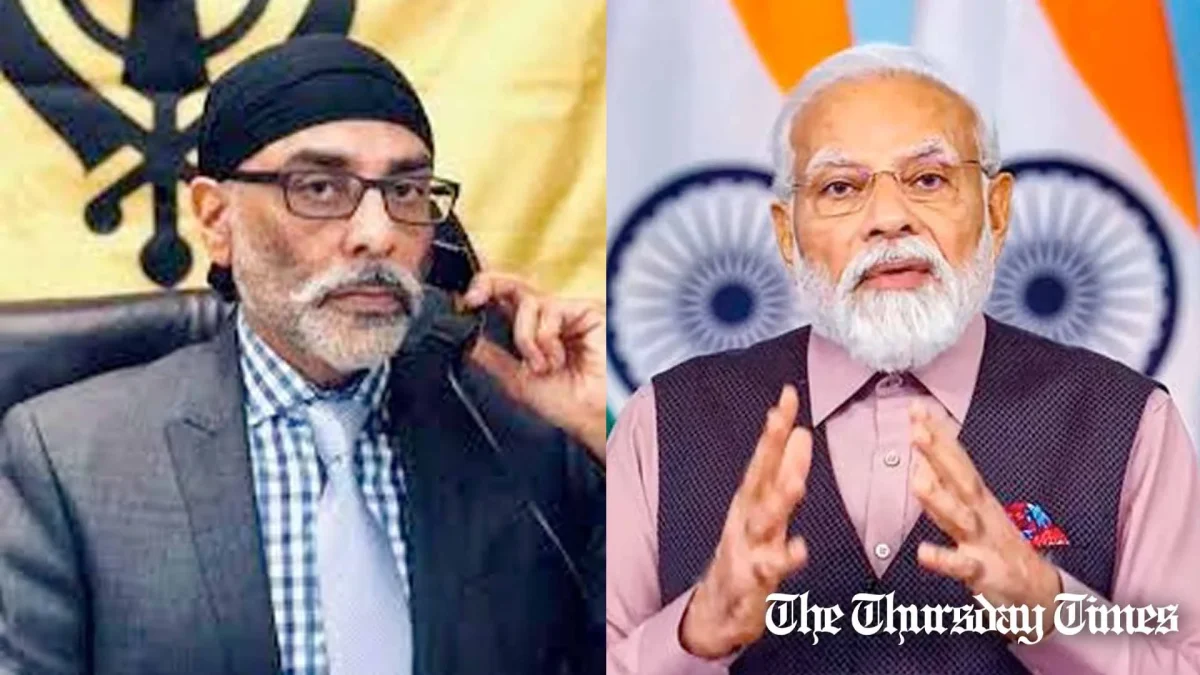
WASHINGTON, D.C. (The Thursday Times) — US authorities have successfully disrupted a plot to assassinate Gurpatwant Singh Pannun, a Sikh separatist, on American soil. Pannun, who holds American and Canadian citizenship, serves as the general counsel for Sikhs for Justice, an organisation advocating for a separate Sikh state, Khalistan. The United States’ federal government has suspicion to believe that India was involved in the plot to assassinate Pannun.
The US became aware of the threat following the murder of Hardeep Singh Nijjar, another Canadian Sikh separatist, in Vancouver. Canadian Prime Minister Justin Trudeau subsequently highlighted credible allegations implicating India in Nijjar’s murder. This accusation was firmly rejected by India as “absurd.”
Amidst these developments, the US issued a diplomatic warning to India, especially after Prime Minister Narendra Modi’s high-profile visit to Washington, D.C. Concurrently, US federal prosecutors have prepared a sealed indictment against at least one individual implicated in the plot, awaiting a decision on its disclosure. This decision is complicated by an ongoing Canadian investigation into Nijjar’s murder and the fact that one indicted suspect may have left the US.
Both the US Justice Department and the FBI have refrained from commenting on the matter. However, the National Security Council emphasised the paramount importance of ensuring the safety and security of US citizens.
Following Trudeau’s revelations about the Vancouver incident, the US shared details of the Pannun case with a broader group of allies, sparking concerns about a potential pattern of targeted attacks. Pannun himself, while acknowledging the threats, expressed confidence in the Biden administration’s ability to address challenges to America’s sovereignty.
The Biden administration, while urging India’s cooperation in the Canadian investigation, has been cautious in its public stance, given India’s strategic role in the Quad security group and the broader strategy to counter China.
This situation has led to internal debates within the Biden administration about the potential impact on India’s image as a trusted partner. The administration has faced criticism from human rights groups over its deepening ties with India, particularly given the Hindu nationalist leanings of India’s ruling Bharatiya Janata Party and accusations against Modi of promoting violence against minorities.
The issue of India’s alleged involvement in these incidents was reportedly raised by President Biden during his meeting with Modi at the G20 summit, highlighting the delicate nature of US-India relations and the complexities of international diplomacy.∎