THE RECENT ATTEMPT OF A suicide attack in South Waziristan was not an isolated eruption of violence in a forgotten corner of the map. It was part of a pattern Pakistan has been forced to confront again and again: terrorists infiltrating, regrouping, striking, and then relying on the world’s short attention span to make Pakistani suffering disappear. In Azam Warsak, security forces intercepted an explosives-laden vehicle before it could crash into a security post. A greater massacre was prevented, but civilians were still injured. That is the bitter reality of Pakistan’s border regions: even when the attack fails, ordinary people are left to absorb the blast.
The terrorists Pakistan identifies as Fitna al-Khawarij have turned repetition into strategy. They do not need to hold territory in the old sense to terrorize a population. They need routes, handlers, safe houses, ideological cover, explosives, and enough permissive space to keep sending men and vehicles toward Pakistani targets. Their war is fought through suicide vehicles, ambushes, raids on police posts, and attacks on civilians who happen to live near the front line. It is not resistance. It is terrorism, and it should be named without hesitation.
South Waziristan is only one part of the map. In Balochistan, Pakistan has seen coordinated terrorist violence on a scale that should have commanded far greater international attention. In early 2026, Pakistani forces fought off a series of attacks across multiple locations in the province, including Quetta, Nushki, Dalbandin, Kalat, Gwadar, Pasni, Tump, and Mastung, according to reporting and security trackers. Those attacks were attributed to the Baloch Liberation Army, which Pakistan treats as a terrorist organization, and they killed security personnel while triggering major counterterrorism operations.
The violence in Balochistan has not been confined to remote outposts or conventional security targets. A suicide car bomber attacked buses carrying security forces in Naushki in 2025, killing officers and civilians, and the Baloch Liberation Army claimed responsibility. Around the same period, Pakistan was still dealing with the aftermath of a deadly train attack in Balochistan, where hostages were killed before security forces intervened. These are not the actions of political dissenters. They are the methods of terrorists willing to turn roads, railways, workers, passengers, and police into instruments of spectacle.
Punjab, too, has not been immune. The idea that terrorism is contained only in the former tribal districts or in Balochistan is dangerously outdated. In Mianwali, a district that sits at a sensitive junction between Punjab and Khyber Pakhtunkhwa, terrorists have repeatedly attempted to test the state’s defenses. In December 2024, more than 20 terrorists armed with rocket launchers and hand grenades attacked Chapri Police Station; Punjab Police repelled the assault, killing four terrorists while two policemen were injured.
That was not the end of the threat in Punjab. In August 2025, Punjab’s Counter Terrorism Department said it killed two terrorists near Kundian in Mianwali who were allegedly planning attacks on police. In January 2026, CTD officials said six terrorists were killed during an operation near Chapri Dam after intelligence indicated they were planning to attack police and other security agencies. The pattern is unmistakable: terrorists probe the edges of Punjab, especially areas bordering KP, hoping to widen the battlefield and prove that no province is beyond reach.
This is why the South Waziristan attack must be read nationally, not locally. From KP to Balochistan to Punjab, Pakistan is not facing random violence. It is facing a networked terrorist challenge that mutates by geography but remains consistent in purpose: weaken the state, frighten civilians, exhaust security forces, and create the impression that Pakistan is permanently unstable. The names of the groups may differ. The tactics may vary. But the logic is the same.
The cross-border dimension cannot be ignored either. Pakistan has repeatedly accused Afghanistan of allowing space to the Tehreek-e-Taliban Pakistan and allied anti-Pakistan terrorists, while Kabul denies these allegations. International reporting continues to note that Pakistan blames Afghanistan for sheltering the TTP, a group linked to but separate from the Afghan Taliban, and that the TTP has intensified attacks inside Pakistan in recent years.
Afghanistan’s Taliban rulers cannot claim sovereignty when it is convenient and evade responsibility when violence flows outward. If Kabul governs Afghan territory, then it carries responsibility for preventing that territory from being used by terrorists who kill Pakistanis. Denials are not enough. A serious government must dismantle networks, restrict movement, block financing, arrest facilitators, and prove through action that its soil is not a staging ground for violence against a neighbor.
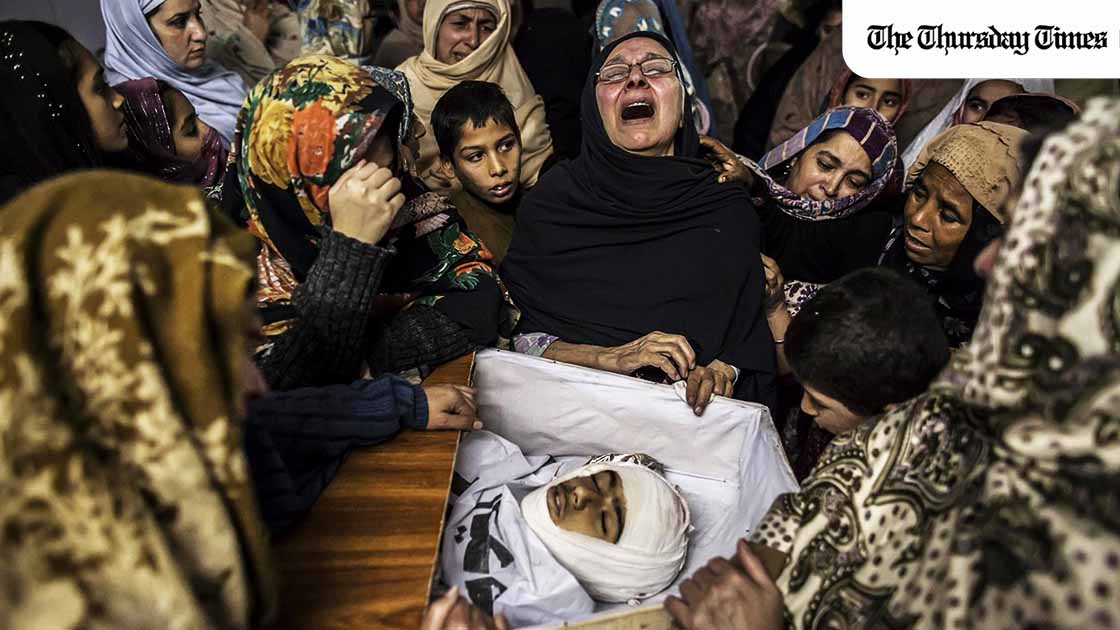
Yet the international media response remains glaringly uneven. When Afghanistan alleges civilian harm, global outlets report quickly, prominently, and often sympathetically. When Pakistani civilians, policemen, soldiers, travelers, laborers, or schoolchildren are targeted by terrorists, the attention is brief, technical, and strangely bloodless. The Afghan civilian is presented as a human tragedy. The Pakistani civilian is too often reduced to an incident count.
This is not an argument for ignoring Afghan suffering. Afghan civilians deserve protection, dignity, and international concern. The argument is that Pakistani civilians deserve the same. The people of South Waziristan, Bannu, Bajaur, Mianwali, Quetta, Naushki, Gwadar, and Mastung should not have to compete for moral recognition. Their grief should not be filtered through geopolitical fashion. Human rights cannot be universal in press releases and selective in practice.
Pakistan’s own political class must also stop treating terrorism as an issue to be condemned only when convenient. Khyber Pakhtunkhwa has paid an unbearable price. Balochistan has endured repeated bloodshed. Punjab has seen attempts to expand the theater of violence. A serious national response requires more than military operations and ritual statements. It requires political unity, unapologetic naming of terrorists, sustained intelligence work, border management, prosecution of facilitators, and diplomatic pressure on every state or actor that enables these networks.
The foiled attack in South Waziristan should bring relief, but not comfort. Relief, because security forces prevented a massacre. No comfort, because 14 civilians were still injured, and because the same machinery of terrorism continues to search for the next opening. Pakistan is fighting terrorists who cross borders, exploit silence, and depend on the world’s selective outrage. The least the international community can do is stop pretending not to see the Pakistani dead. ∎