

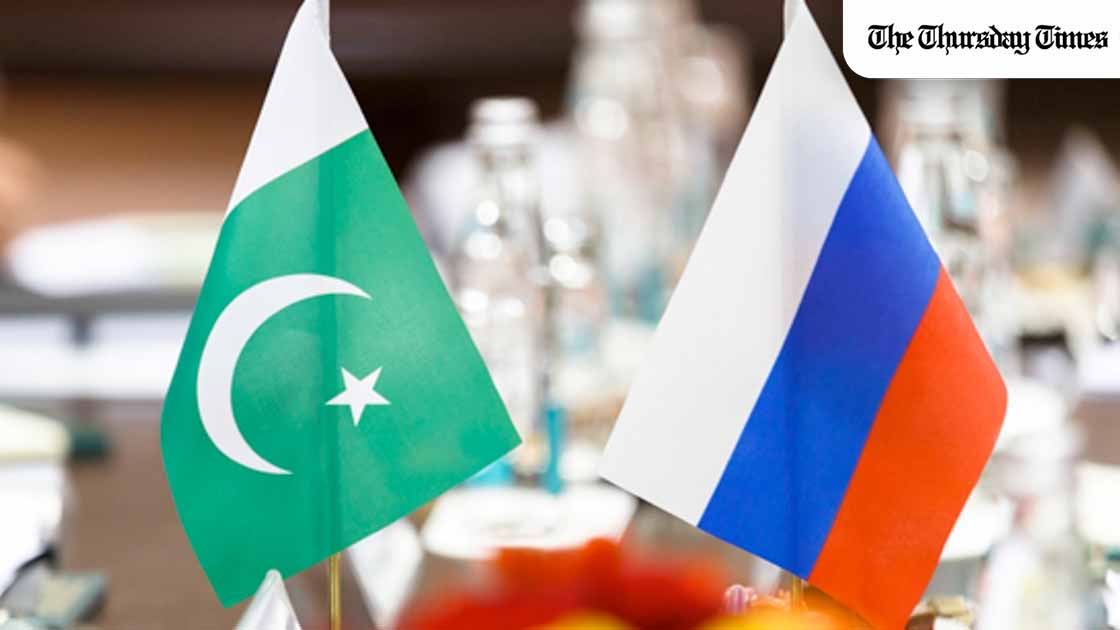
ISLAMABAD (The Thursday Times) — Pakistan is seeking to attract tens of thousands of Russian tourists each year and eventually generate as much as $1 billion in annual revenue from that market, according to the country’s ambassador to Russia, as Islamabad pushes to recast itself as a more visible destination for international travel.
The effort reflects a broader ambition inside Pakistan to turn tourism into a more meaningful source of foreign exchange at a time when the country remains under economic pressure and is searching for new streams of revenue. It also comes as shifting travel patterns, sanctions-related restrictions and instability in parts of the Middle East appear to be reshaping where Russian travellers are willing, or able, to go.
Pakistan’s ambassador to Russia, Faisal Niaz Tirmizi, said the country could begin by hosting small groups of Russian tourists through tour operators before gradually increasing arrivals to 50,000 a year.
If that target is reached and managed effectively, he said, the segment alone could bring in up to $1 billion annually.
The proposal is ambitious, especially for a country whose tourism sector has long been constrained by security concerns, patchy infrastructure and a weak international image. But Pakistani officials have become increasingly eager to present the country’s northern mountain regions, historical sites and cultural diversity as underused economic assets rather than unrealised potential.
Mr. Tirmizi framed the opportunity in terms of wider disruption in global tourism markets. Before 2022, he said, around 24 million Russians travelled annually to countries including Turkey, Egypt, Thailand, Malaysia and India. That figure, he added, has since fallen to about 15 million a year, reflecting restrictions in Europe and North America as well as renewed security anxieties linked to conflict in the Middle East.
For Pakistan, the calculation is straightforward: if even a small share of those travellers can be redirected, the economic gains could be significant.
According to the ambassador’s account of his meeting with Andrey Ignatyev, the head of the Russian Union of Travel Industry, Russian tourists typically spend between $1,000 and $5,000 on overseas trips lasting one to two weeks. Countries that successfully attract them, he said, can earn between $1 billion and $7 billion a year from that market.
Pakistan is trying to position itself as one of the destinations that could benefit.
Officials have increasingly emphasised the appeal of the country’s northern areas, including Hazara, Skardu and Hunza, where dramatic mountain landscapes, trekking routes and local cultures have become central to the state’s tourism messaging. Those regions have long drawn domestic visitors and a limited number of foreign travellers, but the government now appears intent on marketing them more aggressively abroad.
Mr. Tirmizi also pointed to what he described as a sharp increase in overall international arrivals, saying Pakistan received more than one million foreign tourists in 2025, an 820 percent rise over previous years. That figure, if sustained, would suggest a striking recovery for a sector that for many years was seen as peripheral to the national economy.
Still, turning interest into a durable tourism market will require more than official optimism.
The ambassador acknowledged the need for a coordinated strategy, including stronger branding, closer work with airlines and wider use of digital platforms to reach potential visitors. Those are familiar prescriptions in emerging tourism economies, but in Pakistan’s case they carry particular urgency. The country must not only advertise itself, but also persuade travellers that it is accessible, reliable and secure.
The timing is also notable. As Pakistan seeks closer commercial and political ties with Russia, tourism offers a softer avenue of engagement, one that sits alongside growing discussion of trade, education and cultural exchange. Mr. Tirmizi said President Vladimir Putin regarded Pakistan as a friendly country and supported stronger links in those areas.


