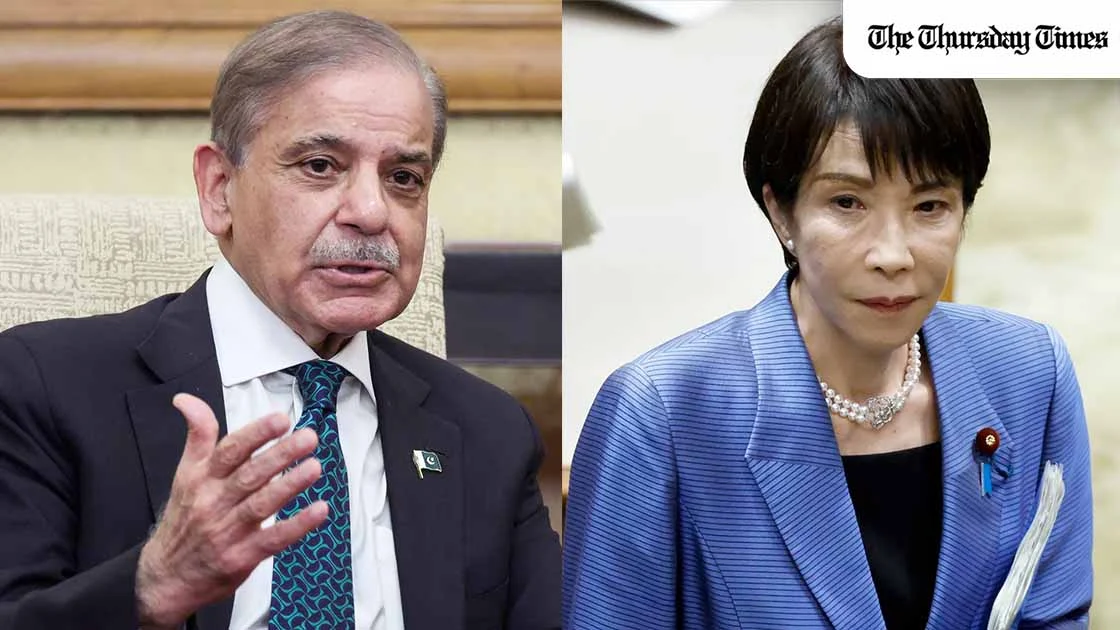
ISLAMABAD (The Thursday Times) — Japan’s Prime Minister Sanae Takaichi expressed support for Pakistan’s diplomatic efforts in easing tensions between the United States and Iran, following a call with Pakistan’s Prime Minister Shehbaz Sharif on Monday.
According to Japanese officials, Takaichi conveyed her respect for Islamabad’s role in facilitating the recent negotiations, which brought U.S. and Iranian representatives together in a rare direct engagement in the Pakistani capital. While the talks ended without a formal agreement, they have been widely viewed as a step toward reducing hostilities.
The 15-minute conversation focused on the broader situation in the Middle East, where tensions in recent weeks have raised concerns over regional stability and global trade flows. Takaichi emphasised that de-escalation remains the most urgent priority, highlighting the need to prevent further disruption.
A central concern discussed during the call was the security of maritime routes, particularly the Strait of Hormuz, a vital artery for global energy supplies. Takaichi stressed the importance of ensuring safe and uninterrupted navigation for vessels of all nations, describing it as essential to maintaining stability in international markets.
She also underlined Japan’s view that a negotiated settlement should be reached as swiftly as possible, signalling Tokyo’s preference for diplomacy over prolonged confrontation. Officials indicated that Japan intends to continue coordinating closely with international partners to support efforts aimed at stabilising the region.
Sharif, in turn, briefed Takaichi on the recent U.S.-Iran talks and Pakistan’s ongoing diplomatic engagement. He reaffirmed Islamabad’s commitment to dialogue and expressed interest in deepening cooperation with Japan in advancing peace efforts.
The exchange reflects growing international attention on Pakistan’s role in mediating one of the region’s most sensitive disputes. By maintaining contact with global partners such as Japan, Islamabad appears intent on sustaining momentum for diplomacy following the inconclusive round of talks.
With the situation in the Middle East still fragile, the emphasis from both sides on dialogue, maritime security and international coordination underscores the high stakes of preventing further escalation — and the continued reliance on diplomacy to manage them.