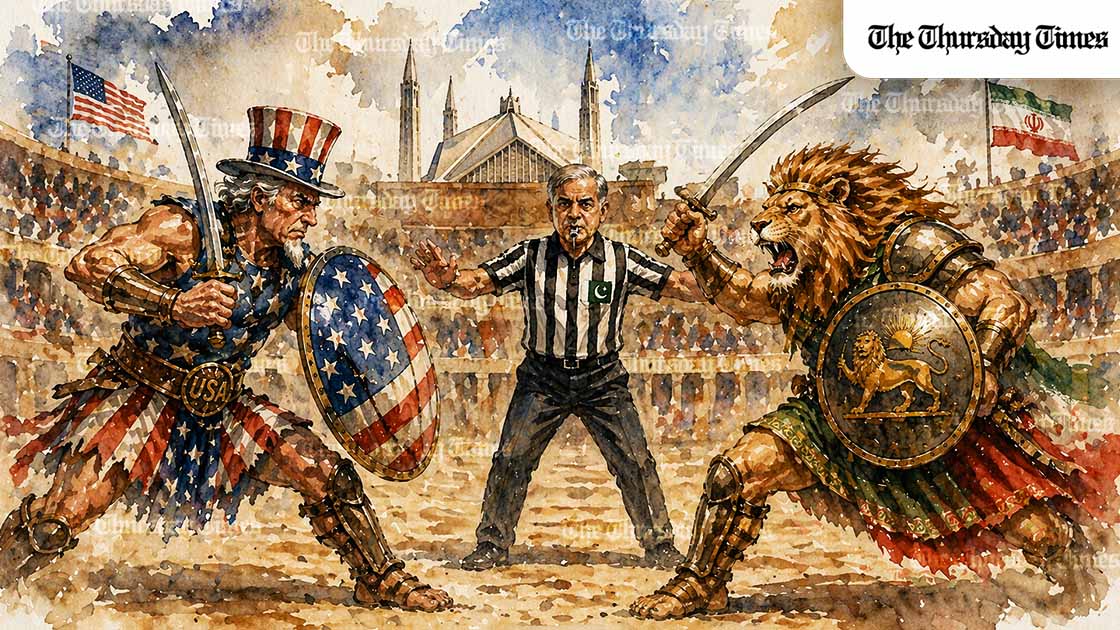
THERE IS A TEMPTATION IN modern diplomacy to treat peace only as spectacle. Cameras arrive, motorcades roll, flags are arranged, and the world assumes that progress is measured by handshakes. When no handshake comes, many conclude that failure has arrived. That is the wrong reading of what appears to be happening with the so-called Islamabad Talks 2.0. The absence of a dramatic second round does not necessarily signal collapse. It may instead reveal something more serious: that both sides have entered the uncomfortable phase where real concessions are weighed.
The first lesson of any conflict between the United States and Iran is that symbolism often outruns substance. Statements are issued for domestic audiences, threats are amplified for leverage, and each side insists it will not bend first. Yet history repeatedly shows that public rigidity and private flexibility can coexist. A stalled sequel to talks in Islamabad may therefore be less a diplomatic obituary than a sign that the negotiations have moved behind thicker doors.
Pakistan’s role in this moment deserves more attention than it is receiving. For decades, Islamabad was too often described abroad only through crisis vocabulary: instability, security, militancy, dependency. That language never captured the full reality of a state with strategic geography, military weight, diplomatic reach and working relationships across rival blocs. Today, Pakistan is attempting to convert those assets into something more durable: relevance through mediation.
That is not a small ambition. Few countries can speak to Washington without hostility, maintain lines to Tehran without rupture, engage Beijing without awkwardness, and retain standing across large parts of the Muslim world. Pakistan can. It does not possess unlimited leverage over any one side, but diplomacy is not always about commanding outcomes. Often it is about being one of the few places where adversaries can still be in the same sentence.
The delay in a second round of talks should therefore be understood in context. Neither Washington nor Tehran wants to appear weak. The United States does not wish to reward pressure or invite accusations of retreat. Iran does not wish to negotiate under visible coercion. Each side is performing resolve while searching for a formula that allows movement without humiliation. That choreography is as old as statecraft itself.
This is why pauses can matter. A rushed summit can produce headlines and little else. A delayed summit can sometimes produce the groundwork that makes agreement possible. If military incidents, maritime disputes, sanctions language or sequencing issues are still unresolved, then forcing delegations into a room may satisfy television producers more than diplomats. Better a postponed meeting than a collapsed one.
For Pakistan, however, patience carries risks. Mediation raises expectations quickly. If talks resume, Islamabad will be praised as a bridge. If talks fail, critics will claim the bridge was imaginary. That is the burden of middle-power diplomacy: visibility increases before influence is proven. Pakistan will need steadiness, discretion and a refusal to oversell each rumour as a breakthrough.
There is also a wider regional logic at play. Stability between Washington and Tehran is not merely a bilateral matter. It affects Gulf shipping lanes, insurance costs, oil prices, investor confidence and the political temperature across several capitals. When tension rises in the Strait of Hormuz, households far from the Middle East can feel it in fuel bills and inflation. Peace talks are not abstract theatre; they touch daily economics.
This is where Islamabad’s hosting role becomes more than ceremonial. If Pakistan can help preserve a channel, even without immediate success, it performs a valuable service. In diplomacy, preventing total silence is itself an achievement. Wars often deepen not only because of hostility, but because no one remains trusted enough to carry messages between enemies.
The phrase Islamabad Talks 2.0 sounds like a product launch, and perhaps that is part of the problem. Diplomacy is rarely linear, rarely branded, and almost never tidy. There may be no grand second act on schedule, no arrival convoy this week, no smiling photographs under chandeliers. Instead there may be phone calls, draft texts, denials, clarifications and incremental shifts that only become visible later.
Pakistan should resist the urge to chase applause and focus instead on credibility. Quiet competence outlasts noisy triumphalism. If both sides continue to view Islamabad as a useful venue, that alone is strategic progress. Trust in diplomacy is accumulated slowly and lost quickly.
For Washington and Tehran, the choice is familiar. Continue the cycle of maximalist language and managed escalation, or test whether indirect enemies can become direct negotiators. Neither path is easy, but only one contains the possibility of de-escalation.
So will Islamabad Talks 2.0 happen? Undoubtedly so, in an optimist’s point of view on the world. But the more important question is whether the pause now underway can mature into conditions worth meeting for. If it does, history may remember this lull not as failure, but as the quiet interval in which diplomacy finally became serious. ∎