International

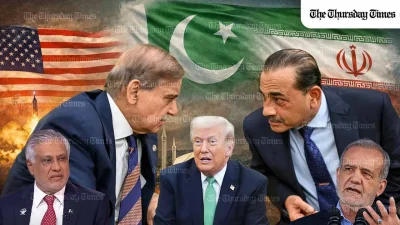
Pakistan is intensifying quiet diplomacy with Washington, Tehran and Gulf capitals in an effort to prevent the US-Israel-Iran conflict from spiralling further and to position Islamabad as a possible venue for peace talks. — COLLAGE/THE THURSDAY TIMES

The BBC’s one-sided Kandahar narrative

A broadcaster like the BBC must do more than relay claims; it must test them. When it gives one side’s language prominence while sidelining the other’s evidence and security case, it stops just reporting and starts shaping a narrative.

Audiences today are not passive. They compare footage, statements, satellite imagery, and open-source analysis in real time. — FILE/THE THURSDAY TIMES
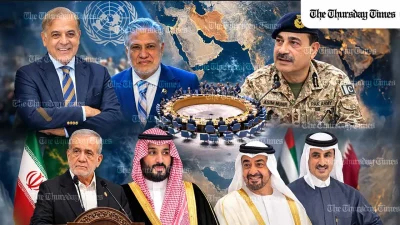
akistan has publicly condemned attacks on Iran and on Gulf states, while insisting that the region cannot be stabilised through force. Islamabad says the only serious path forward is restraint, de-escalation and talks. — COLLAGE/THE THURSDAY TIMES
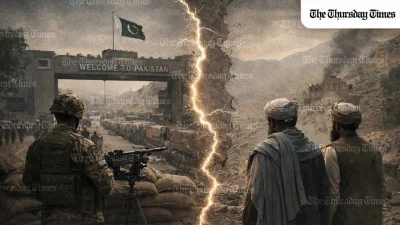
Pakistan has shut down talk of backchannel peace talks, saying there will be no dialogue unless Kabul first takes concrete and verifiable action against militants operating from Afghan soil. — FILE/THE THURSDAY TIMES

Bias masquerading as expertise

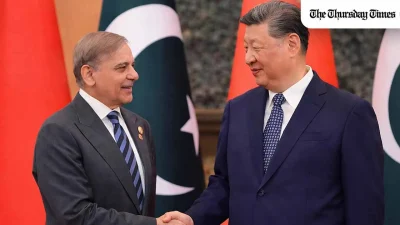
The Diplomat’s piece rests on Ajmal Sohail’s unverified claims, presenting a politically situated Afghan figure as a neutral expert while offering no credible independent evidence for its most serious allegations. It also fails the basic logic test: Pakistan’s all-weather partnership with China makes the claim that Islamabad is targeting Chinese interests extremely difficult to sustain.

The Diplomat relies on Ajmal Sohail’s unverified claims, presents a politically situated Afghan figure as a neutral expert, and ignores the basic reality that Pakistan’s all-weather partnership with China makes such allegations hard to sustain. — FILE

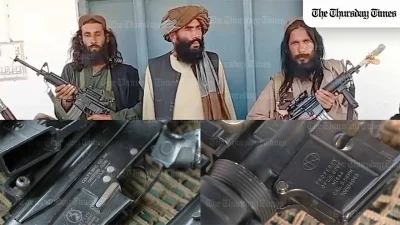
US weapons are turning up in Pakistan’s war zone

A claim by US Congressman Ryan Zinke that Taliban fighters in Pakistan are using American Humvees and M16s has revived Pakistan’s long-running warning about post-2021 weapons spillover, as Pakistani reporting cites CNN-linked serial checks and alleged recoveries of US-origin kit in KP and Balochistan.

Weapons left behind after the US withdrawal from Afghanistan are increasingly appearing in militant attacks in Pakistan, raising concerns about regional instability and the long-term security consequences of unregulated military stockpiles. — MONTAGE/THE THURSDAY TIMES
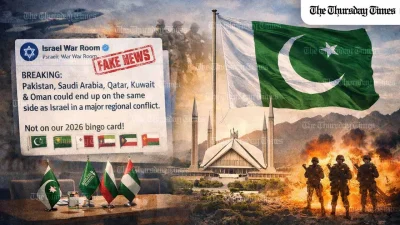
A viral X post is being miscast as an official Israeli source to push a false claim that Pakistan and Gulf states are aligning with Israel, even though Islamabad’s posture is deterrence and de-escalation aimed at preventing regional spillover. — FILE / THE THURSDAY TIMES
Official records from Indian Occupied Jammu and Kashmir show over 357,000 educated youth unemployed while tens of thousands of sanctioned posts remain unfilled, suggesting a structural hiring freeze that challenges India’s post-2019 constitutional changes and development claims. — FILE/THE THURSDAY TIMES

The night India’s command structure lit itself aflame

In military doctrine, Modi's instructions to Naravane are not operational freedom. It is abdication. Decisions that could trigger a war between nuclear-armed states are not meant to be pushed downward at the last moment.

As the Chinese continued to advance, Naravane found himself caught between commanders on the ground prepared to act and a political system that had not yet decided whether it wanted to own the consequences of action. — MONTAGE/THE THURSDAY TIMES

Epstein’s emails are now haunting Modi’s diplomacy

Epstein's emails about Modi's Israel visit read less like commentary and more like a mission report. The action was “for the benefit of” Donald Trump. And finally, the verdict is delivered in capital letters: IT WORKED.

What emerges, taken strictly at face value, is not just an allegation but a story with a moral arc: secret advice, theatrical obedience, foreign benefit, declared success. — MONTAGE/THE THURSDAY TIMES
Published by Thursday Media International thursday.media