

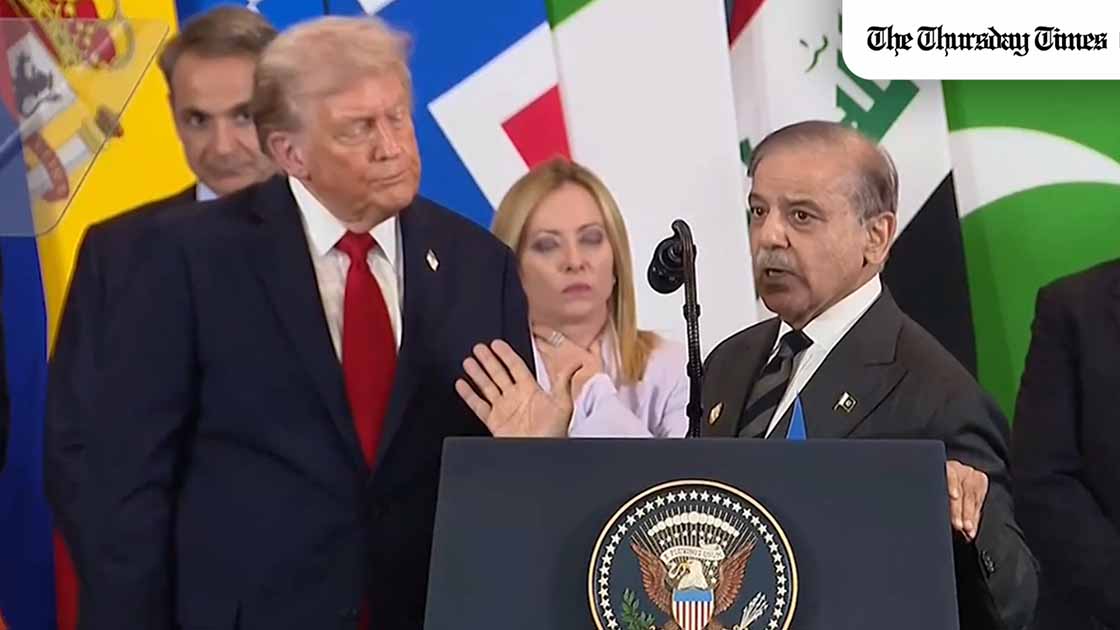
ISLAMABAD (The Thursday Times) — Prime Minister Shehbaz Sharif has made a direct public appeal for diplomacy to be given more time, saying efforts to secure a peaceful settlement to the ongoing war in the Middle East are advancing with enough momentum to potentially yield meaningful results in the near future.
In a statement posted on social media, Sharif said diplomatic efforts were progressing “steadily, strongly and powerfully”, framing the current moment as one in which negotiations may still avert a deeper regional catastrophe if the principal actors allow space for political engagement to work.
Diplomatic efforts for peaceful settlement of the ongoing war in the Middle East are progressing steadily, strongly and powerfully with the potential to lead to substantive results in near future. To allow diplomacy to run its course, I earnestly request President Trump to extend…
— Shehbaz Sharif (@CMShehbaz) April 7, 2026
At the centre of Pakistan’s appeal is a request to US President Donald Trump to extend his deadline by two weeks. Sharif presented that extension not as a procedural delay, but as a necessary diplomatic opening, arguing that a short pause could create the room needed for talks to move from urgent contacts to a more substantive settlement framework.
Pakistan also used the moment to address Tehran directly. Sharif said Pakistan, “in all sincerity”, was requesting the “Iranian brothers” to reopen the Strait of Hormuz for a corresponding two-week period as a goodwill gesture. That appeal places maritime stability at the heart of Islamabad’s diplomatic thinking, reflecting the waterway’s importance not only to the immediate crisis but also to global energy markets and wider regional security.
The Prime Minister went further, calling on all warring parties to observe a two-week ceasefire across the board. The wording was notable for its breadth. Rather than limiting the appeal to one side, Pakistan positioned itself as urging restraint from all actors involved, reinforcing its preferred image as a state trying to pull the conflict back from escalation and towards negotiation.
Sharif’s intervention is significant because it turns Pakistan’s behind-the-scenes diplomatic messaging into an overt public position. Islamabad is no longer merely signalling support for de-escalation in broad terms; it is now attaching concrete proposals to that support: more time, a reopened Strait of Hormuz, and a temporary ceasefire designed to give diplomacy a real chance.
That sequencing matters. A deadline extension would lower immediate pressure. Reopening Hormuz would send a stabilising signal to the region and the wider world. A two-week ceasefire would then create the minimum political and military breathing space required for diplomacy to attempt what Sharif called the “conclusive termination of war”.
The language of the statement also reveals how Pakistan wants its role to be understood. This is not the rhetoric of a spectator. It is the rhetoric of a state attempting to shape outcomes, urge restraint, and convert diplomatic contact into a framework for peace. Whether those appeals are accepted is another matter, but Islamabad has plainly decided that the moment requires visible political intervention.


