
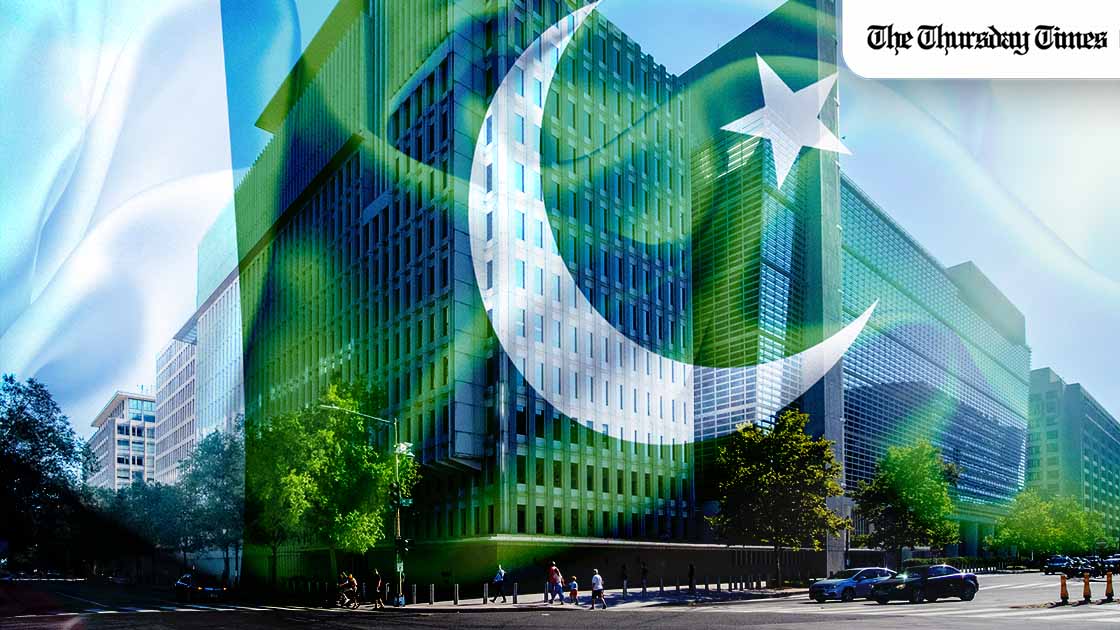
NEW YORK (The Thursday Times) — The World Bank has quietly redrawn one of the oldest administrative lines in global development geography, removing Pakistan from its South Asia regional grouping and placing it in the Middle East and North Africa category from fiscal year 2026.
The change appeared not in a major announcement or press conference, but in the institution’s own DataBank metadata glossary, where Pakistan and Afghanistan are now listed as part of the Middle East and North Africa region. Until now, Pakistan had long been grouped alongside India, Bangladesh, Sri Lanka, Nepal, Bhutan and the Maldives under South Asia.
At one level, the adjustment is technical. Multilateral institutions periodically revise classifications to align lending portfolios, economic models, internal management structures and regional strategies. Yet regional labels are never purely administrative. They shape how countries are discussed, benchmarked and understood by investors, diplomats and development planners.
For Pakistan, the move carries significance because it comes at a moment when the country is steadily broadening its external orientation. Once viewed almost exclusively through the prism of South Asian rivalry, Pakistan has in recent years deepened economic and strategic ties westward, particularly with the Gulf.
Saudi Arabia, the United Arab Emirates and Qatar have emerged as among Pakistan’s most consequential financial and diplomatic partners. Riyadh has repeatedly supported Pakistan’s balance sheet through deposits and rollover arrangements. Emirati capital has expanded its footprint in logistics, aviation and infrastructure. Millions of Pakistani workers remain central to Gulf labour markets, sending back remittances that underpin domestic consumption and foreign exchange reserves.
At the same time, Islamabad’s political language has changed. Pakistani officials increasingly speak of connectivity corridors, energy integration and westward trade routes linking Central Asia, the Gulf and the Arabian Sea. In that framework, Pakistan is less a peripheral South Asian state and more a hinge economy connecting regions.
The symbolism is also unavoidable. South Asia, as commonly understood, has often meant a region dominated by India’s scale, markets and political gravity. Pakistan’s own story inside that grouping was frequently told in comparative terms: growth against India, security against India, diplomacy against India.
A shift into the Middle East and North Africa grouping does not erase geography, nor does it dissolve South Asia as a lived reality. Pakistan shares deep cultural, linguistic and historical ties across the subcontinent. Trade routes, migration patterns and family histories cannot be recoded by database language.
But the reclassification suggests that external institutions increasingly see Pakistan through a broader lens. Its economic dependencies, labour flows, security relevance and diplomatic networks now stretch decisively westward as well as eastward.
The timing is notable. Pakistan has sought a larger regional role amid turbulence across the Gulf and wider Middle East, presenting itself as a bridge state able to talk across blocs. That posture has coincided with stronger ties to Gulf capitals and renewed attempts to market Pakistan as an investment and logistics hub rather than simply a crisis economy.