
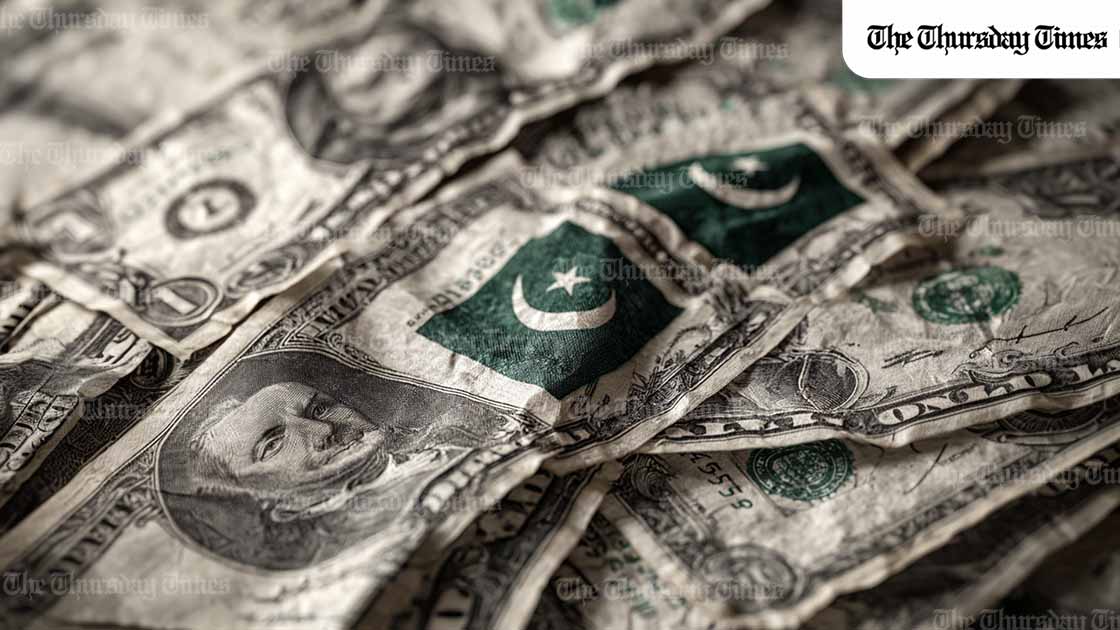
WASHINGTON, D.C. (The Thursday Times) — Pakistan has intensified preparations for a return to international borrowing markets after a four-year absence, with Finance Minister Muhammad Aurangzeb holding high-level talks with Rothschild & Co. during the World Bank–IMF Spring Meetings 2026.
The discussions signalled a more assertive effort by Islamabad to restore access to global capital after years marked by economic stress, foreign exchange shortages and repeated negotiations with multilateral lenders. Officials said the government is considering several instruments, including Eurobonds, a Panda bond aimed at Chinese investors, and dollar-settled rupee-linked transactions as part of a broader funding strategy.
For Pakistan, the move represents more than a technical financing exercise. A successful return to capital markets would be interpreted by investors as evidence that macroeconomic stability is improving after a prolonged period of volatility. It would also broaden financing options beyond bilateral deposits and multilateral support.
Mr Aurangzeb reportedly told advisers that work on a proposed Panda bond had reached an advanced stage, with regulatory approval expected soon. If completed, such an issuance would mark a notable diversification of Pakistan’s investor base, linking the country more directly with Chinese domestic capital markets.
The minister also welcomed advice from Rothschild on a possible Liability Management Operation, a tool governments use to refinance or restructure outstanding debt in order to smooth repayment schedules and reduce borrowing costs. For Pakistan, whose sovereign yields have often reflected investor caution, such measures could help rebuild confidence.
Officials from both sides also discussed blended finance structures involving multilateral development institutions. These arrangements combine public and private capital to lower risk and borrowing costs, an increasingly important mechanism for emerging economies seeking infrastructure and climate funding.
Pakistan’s delegation pointed to climate finance commitments tied to the World Bank Group’s 10-year Country Partnership Framework, suggesting Islamabad hopes to combine traditional debt issuance with sustainability-linked funding opportunities.
Markets will now focus on whether Pakistan can translate advisory discussions into actual transactions at sustainable rates. Global conditions remain uncertain, with higher-for-longer interest rates and investor selectivity posing challenges for lower-rated sovereign borrowers.
Still, the timing of the outreach reflects a shift in tone. After years focused on crisis management, Pakistan is now presenting itself as a country seeking normalisation, credibility and renewed engagement with global investors.
Whether markets accept that case will depend less on meetings in Washington than on continued fiscal discipline, reserve strength and political steadiness at home. But for the first time in years, Pakistan is openly preparing not merely to survive, but to finance growth on international terms.