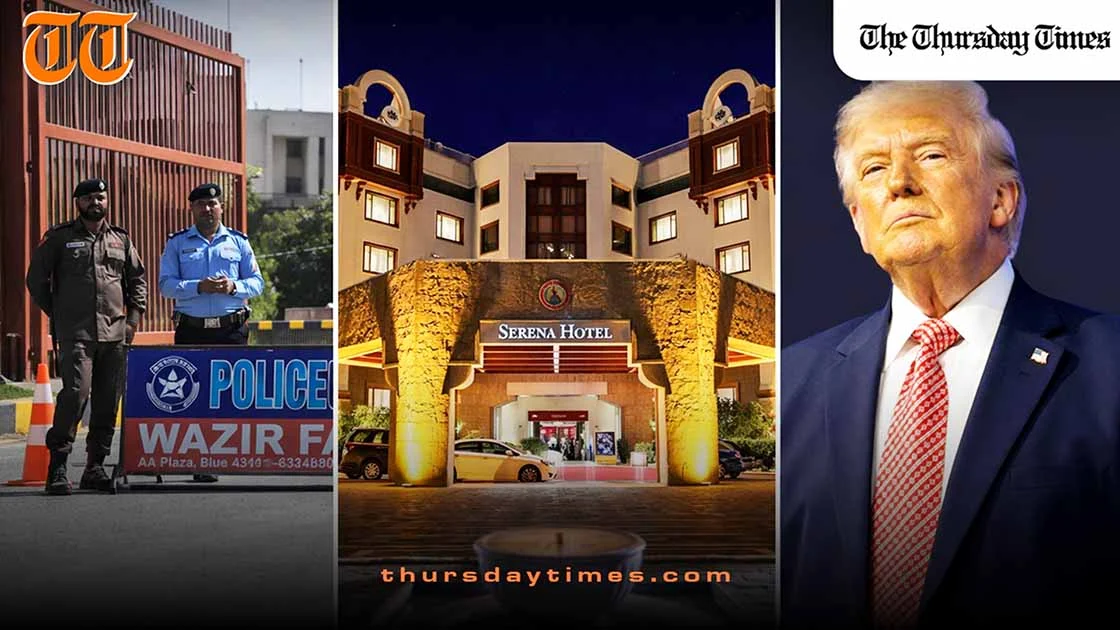
ISLAMABAD (The Thursday Times) — Pakistan’s capital region entered an unusual state of alert on Saturday after reports that major hotels in Islamabad had asked guests and business tenants to vacate, while authorities in Rawalpindi suspended private, public and goods transport with immediate effect. The abrupt restrictions, coupled with tightened security and blocked routes, have intensified speculation that Islamabad may be preparing for another major phase of diplomacy linked to the United States and Iran.
The atmosphere had already been charged by President Donald Trump’s recent remark that he could travel to Islamabad if a deal with Iran is signed there. Coming only days after an earlier round of talks in the Pakistani capital ended without a final agreement but left the diplomatic track alive, the comment transformed what might otherwise have seemed like a routine security tightening into something far more politically significant.
In Islamabad, the focus quickly turned to reports that two leading hotels had been told to clear guests ahead of a possible high-level event. One of the venues named in circulating accounts was the Serena Hotel, a location long associated with visiting delegations, international conferences and sensitive meetings. In a city where symbolism matters, the mention of Serena immediately sharpened the sense that the preparations were linked to something more than ordinary protocol.
ضلعی انتظامیہ اسلام آباد/اہم اعلان
وفاقی دارالحکومت میں پبلک اور ہیوی ٹرانسپورٹ کے حوالے سے ضلعی انتظامیہ کا اہم اعلان، شہر میں ہیوی ٹرانسپورٹ اور پبلک ٹرانسپورٹ کو تاحکم ثانی معطل کیا جا رہا ہے، شہریوں سے التماس ہے کہ سیکورٹی اداروں کے ساتھ تعاون کریں, شکریہ
— DC Islamabad (@dcislamabad) April 19, 2026
Across neighbouring Rawalpindi, the disruption was even more visible. A public notice announcing the immediate suspension of all private, public and goods transport gave the day an unmistakably extraordinary tone. Such broad restrictions are rare even in a region accustomed to heavy security, and they added weight to the growing belief that the capital region was preparing for a moment of unusual consequence.
Yet officials offered no clear public explanation for the measures. That silence has allowed rumour and expectation to fill the gap. With roads blocked, checkpoints tightened and movement restricted, many in Islamabad have interpreted the scene through the only lens that currently seems to fit: Pakistan’s rising role in one of the most delicate diplomatic crises now unfolding beyond its borders.
That role has expanded quickly. Once seen primarily as a useful intermediary, Islamabad is now increasingly viewed as a possible venue where difficult diplomacy can be kept alive when other channels falter. Trump’s suggestion that he might come to the city if a deal is signed there gave that perception a dramatic new edge. It implied not just confidence in Pakistan as host, but the possibility that Islamabad could become the setting for a genuinely consequential international breakthrough.∎