WASHINGTON (The Thursday Times) — More people now hold a favourable view of China than of the United States across most of 36 countries surveyed, and more express confidence in Chinese President Xi Jinping than in US President Donald Trump, according to a Pew Research Center report published on 15 July 2026. The findings, drawn from surveys of 42,151 adults conducted between 8 February and 13 May 2026, mark a reversal. Global views of the United States worsened last year as Trump’s second term began, but most people still had a more positive opinion of the US than of China. This year, Pew reports, that is no longer the case.
Key findings
- Countries surveyed: 36. Adults surveyed: 42,151. Fieldwork: 8 February to 13 May 2026
- China viewed more favourably than the US in most of the 36 countries
- US viewed more favourably than China in just six countries, including India, Japan, the Philippines and South Korea
- More people now have confidence in Xi than in Trump, though both rate low overall
- Xi’s highest confidence rating anywhere: 37%, in the United Kingdom
- Pakistan: 84% call China a reliable partner, 36% say the same of the US
The reversal is not driven by a single cause. Pew found that views of China have improved in recent years while opinions of the United States have worsened, with the two trends meeting to flip the balance. Canada offers the clearest illustration. In 2023, a majority of Canadians, 57 percent, had a positive view of the United States, while 14 percent viewed China positively. By 2025 Canadians were equally favourable towards both. Now more Canadians hold a favourable view of China, at 44 percent, than of the United States, at 33 percent. Pew reports the same pattern across a number of other countries, and notes that Americans’ nearest neighbours, Canadians and Mexicans, both now view China more positively than the United States.
The United States is viewed more positively than China in just six of the 36 countries surveyed, four of them in the Asia-Pacific region: India, Japan, the Philippines and South Korea.
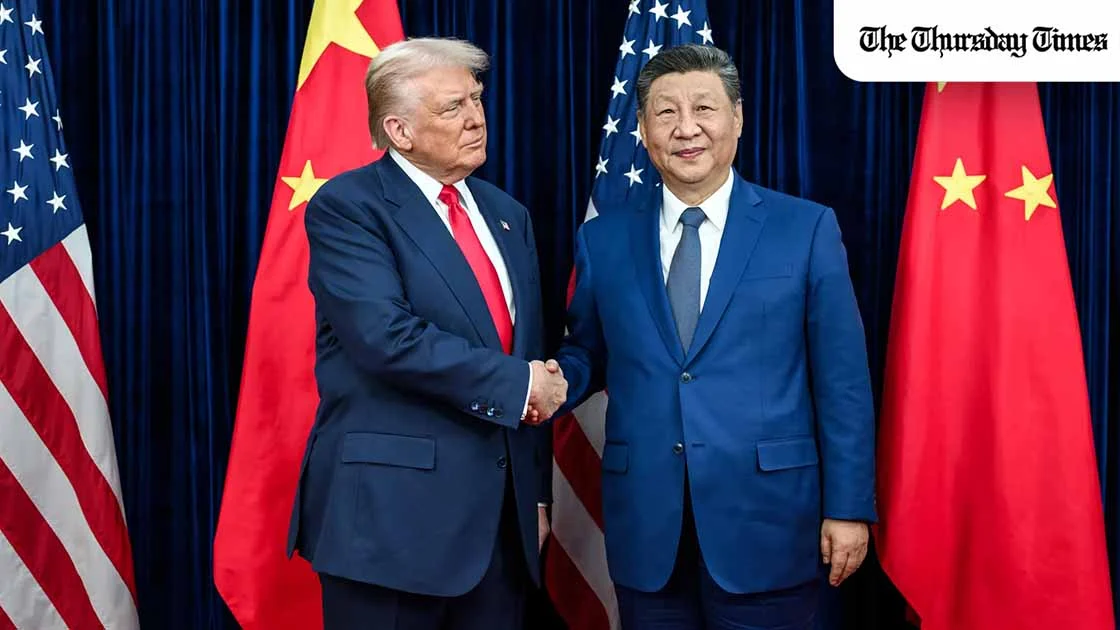
The picture on the two leaders requires care. Confidence in both Trump and Xi is generally low, and Pew’s finding is less that Xi has become popular than that Trump has fallen further. In European countries neither leader receives a majority-positive rating, but views of Xi tend to be more favourable. In Germany, Greece, Italy, the Netherlands, Spain, Sweden and the United Kingdom, Xi leads Trump by double digits, yet his highest favourability rating anywhere is just 37 percent, from the UK. In several nations neighbouring China, including India, the Philippines and Japan, Trump receives higher ratings than Xi. South Koreans now view the two leaders similarly, a dramatic shift from last year, when that public was around twice as confident in Trump, at 33 percent, as in Xi, at 15 percent.
One area where the United States still outrates China is personal freedoms, though that gap is narrowing for an uncomfortable reason. More people say the US government respects the personal freedoms of its people than say the same of the Chinese government, but Pew found the convergence is driven largely by steep drops in the shares crediting the United States, rather than by gains for China. In Sweden, the percentage saying the US respects personal freedoms has fallen from 61 percent in 2021 to 27 percent today. Pew recorded similar drops of 25 percentage points or more in Canada, France, Germany, Italy, the Netherlands, South Korea and Spain. Israel and Japan remain sharp exceptions: 80 percent of Israelis say the US respects its people’s freedoms against 15 percent for China, and in Japan the figures are 61 percent against 6 percent.
Pew asked additional questions in the 17 middle-income countries it surveyed across Latin America, sub-Saharan Africa, the Middle East and the Asia-Pacific, where both Washington and Beijing have concentrated foreign policy attention. People in those countries raised more concerns about American foreign policy than Chinese. A median of 75 percent said the United States interferes in the affairs of other countries a great deal or a fair amount, against 45 percent who said the same of China. In nearly every country surveyed, more people saw the US as an interferer than China. Many also saw China as the more reliable partner and were more likely to say it contributes to peace and stability. In South Africa, 72 percent called China a reliable partner against 46 percent for the United States, and the share of South Africans saying China contributes to global peace and stability rose from 47 percent in 2023 to 64 percent in 2026.
Pew notes that the largest differences in perception of the two powers, in either direction, tend to be in the Asia-Pacific region, and it singles out two countries as the extremes. In Pakistan, people are far more likely to say China is a reliable partner than the United States, at 84 percent against 36 percent. In the Philippines, the mirror image holds, with 81 percent describing the United States as a reliable partner against 42 percent for China. In several Latin American countries, including Argentina, Brazil, Colombia and Peru, similar shares describe both powers as reliable partners.
The survey captures perception at a moment, between February and May of this year, and measures what publics say rather than what either government does. On Pew’s own framing, what it records is a shift moving in two directions at once: a China seen more warmly than before, and a United States seen considerably less so.∎