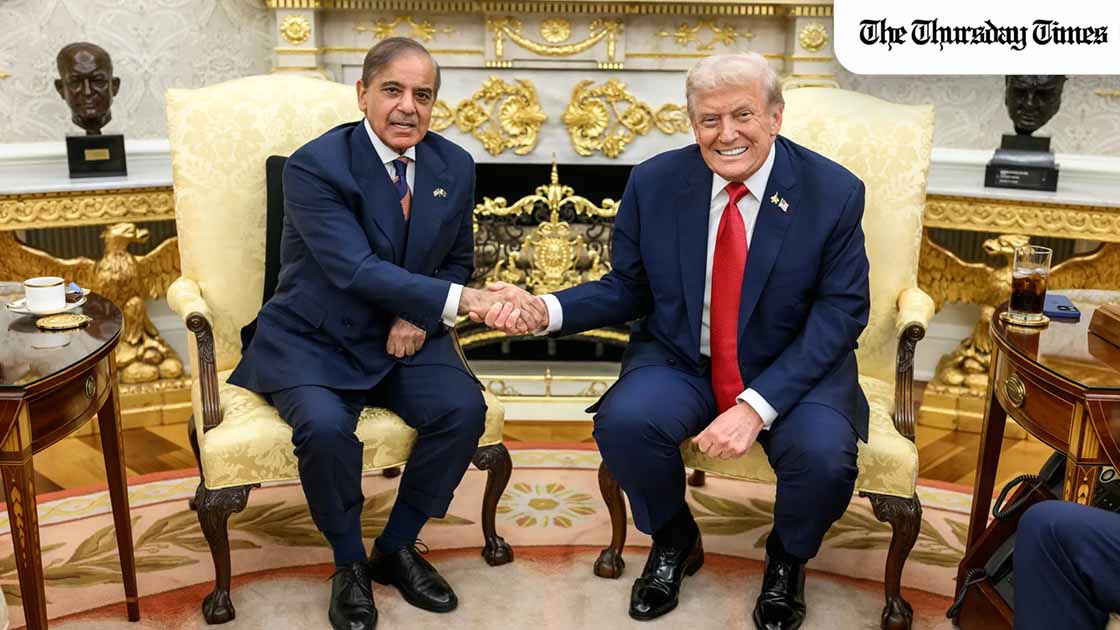
LONDON (The Thursday Times) — Pakistan has asked the United States to establish a $10 billion Exchange Stabilisation Support Facility, according to Reuters, in a move that could provide substantial support to the country’s foreign exchange position and strengthen economic ties between Islamabad and Washington.
The request follows Pakistan’s diplomatic role during the Iran conflict, which has raised hopes in Islamabad that closer political engagement with the United States could translate into broader economic cooperation.
Reuters reported that Pakistan proposed a bilateral facility worth $10 billion, with a maturity of up to five years, in a request sent to US Treasury Secretary Scott Bessent.
If approved, the facility could strengthen Pakistan’s foreign exchange reserves, ease pressure on the rupee and improve access to external financing while the country continues implementing reforms under its International Monetary Fund programme.
The US Treasury declined to comment on the reported request, while Pakistan’s Ministry of Finance did not immediately respond to Reuters.
Pakistan’s Finance Minister Muhammad Aurangzeb met Bessent in Washington on Tuesday, where the two sides discussed regional economic conditions and opportunities to expand bilateral cooperation.
According to Pakistan’s Ministry of Finance, Aurangzeb sought greater US support to improve access to international capital markets, increase foreign exchange reserves and strengthen Pakistan’s sovereign credit ratings. Both countries also reaffirmed their commitment to expanding economic cooperation, encouraging greater American investment and advancing strategic projects.
Pakistan is currently implementing a $7 billion IMF programme aimed at strengthening public finances and supporting long-term macroeconomic stability.
Exchange stabilisation facilities are rarely extended by the US Treasury through its Exchange Stabilization Fund and can include dollar financing, currency swaps or financial guarantees designed to support a country’s reserves and currency.
Reuters noted that Argentina received such a facility in 2025, the first new arrangement for a foreign government since Uruguay in 2002.
Pakistan secured a $3 billion IMF Stand-By Arrangement in 2023 before agreeing a $7 billion Extended Fund Facility and a separate $1.3 billion climate resilience programme.
The State Bank of Pakistan has projected that foreign exchange reserves could reach around $20 billion by the end of 2026. A US-backed facility could further strengthen those reserves, improve investor confidence and support Pakistan’s external financing position.
Economic engagement between Pakistan and the United States has also expanded into digital finance, real estate and mining. Pakistan has pursued a stablecoin initiative involving an entity linked to World Liberty Financial, while discussions continue over the redevelopment of New York’s Roosevelt Hotel and greater US participation in the Reko Diq mining project.
If approved, the proposed facility would represent one of the most significant examples of bilateral financial cooperation between Pakistan and the United States in recent years.