By the time crowds packed Connaught Place in central New Delhi on October 16, waving national tricolours under the banner “Lehra Do Tiranga”, the Cockroach Janta Party’s campaign against Chief Election Commissioner Gyanesh Kumar had stopped looking like a youth movement with a viral name and started looking like something closer to a cross-generational public reckoning. NPR reported that the rally drew protesters spanning generations, students alongside retirees, united by a grievance that has quietly touched more than 130 million struck names on India’s electoral rolls.
Police detained CJP founder Abhijeet Dipke ahead of the demonstration, a now-familiar pattern in this protest wave: arrest the figurehead, hope the crowd thins. It has not worked. If anything, each detention has supplied the movement with a fresh, simple argument that resonates well beyond committed activists, that waving a flag and asking a public official to resign is not, in any functioning democracy, a crime.
A protest that keeps outgrowing its organisers
What makes the Connaught Place turnout significant is not its size alone but its composition. This is no longer a demonstration organisers can dismiss as the work of a narrow, online-radicalised fringe. Retirees who have voted in every Indian election since the Emergency do not typically show up to wave flags at a 20-something’s protest party unless they believe something fundamental, their own name’s place on the electoral roll, is genuinely at risk. The breadth of the Delhi crowd is itself evidence that the SIR controversy has moved past partisan opposition talking points and into territory that cuts across India’s political spectrum.
The timing compounded the message. The rally came the same week opposition MPs led by Rahul Gandhi filed a Supreme Court petition demanding an independent audit of the voter deletions, and only days after the government de-notified Jantar Mantar, Delhi’s historic protest ground, in favour of three alternative sites. Organisers and ordinary attendees alike have drawn the obvious inference: when a state starts quietly reshuffling where dissent is permitted to physically occur at the same moment it is accused of quietly reshuffling who is permitted to vote, the pattern is not reassuring.
Patriotism as protest, not against it
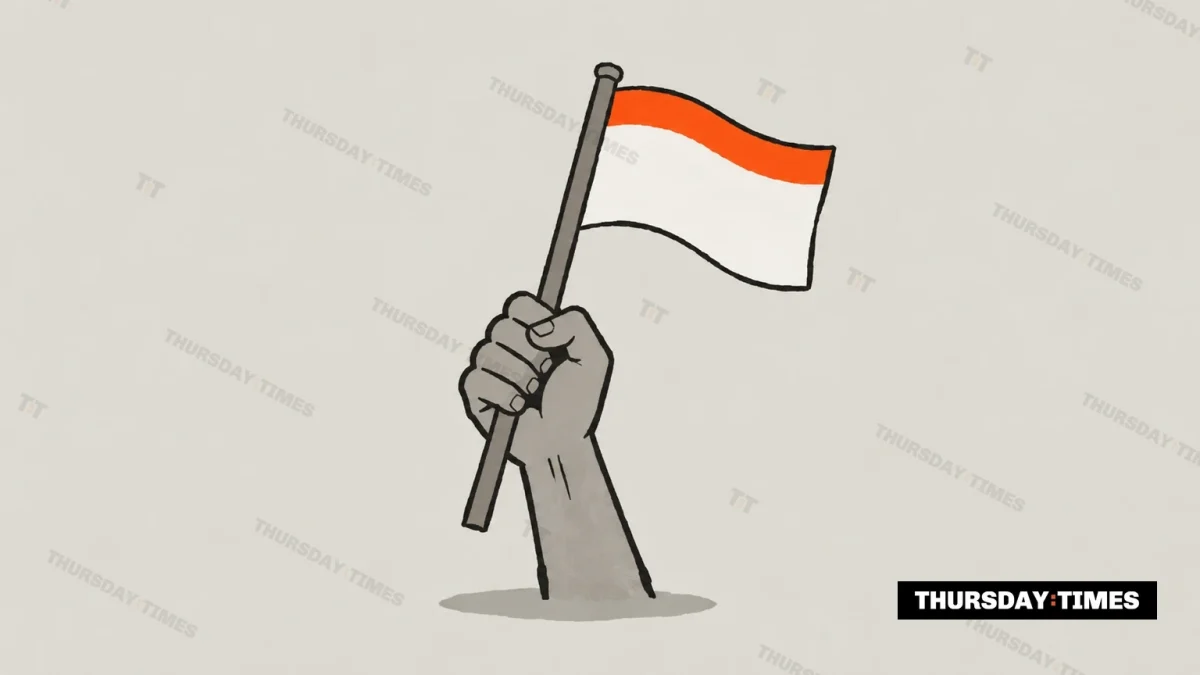
The choice of a tricolour-waving march, rather than confrontational street theatre, was also a deliberate rhetorical move, and an effective one. It denies the government the easiest available framing, that this is an anti-national rabble to be managed rather than a citizenry to be answered. A flag in a protester’s hand is a harder thing to criminalise than a slogan, and the movement’s organisers appear to understand that the optics of patriotic, peaceful, multigenerational assembly do more to legitimise their grievance than any amount of online outrage could.
None of this guarantees the SIR process will be reversed or that Kumar will step down. But a protest movement that can fill a central Delhi landmark with grandparents and students carrying the same flag, over the same grievance, in the same week its claims reach the Supreme Court, is not a passing moment of youthful frustration. It is a constituency the Election Commission can no longer simply wait out.∎