THERE ARE MOMENTS IN THE life of a nation when history does not arrive with drums. It arrives through exhausted negotiators, sleepless capitals, careful wording, damaged trust, and the stubborn belief that war must not be allowed to write the final sentence. Pakistan’s role in brokering the US-Iran peace framework is one of those moments. It is not merely a diplomatic episode. It is a chapter in Pakistan’s long, bruising, unfinished journey from being treated as a crisis state to emerging as a global stakeholder.
This agreement, now being spoken of through the language of a memorandum, should be understood not simply as a pause between Washington and Tehran, but as the emergence of what may be remembered as the Islamabad Memorandum. That name matters. Islamabad was not a decorative venue in this process. It was not a distant capital applauding from the sidelines. It became the place where messages were carried, positions were softened, red lines were tested, and the first architecture of de-escalation began to take shape. In a world where diplomacy is often claimed by the loudest capitals, Pakistan quietly became useful to history.
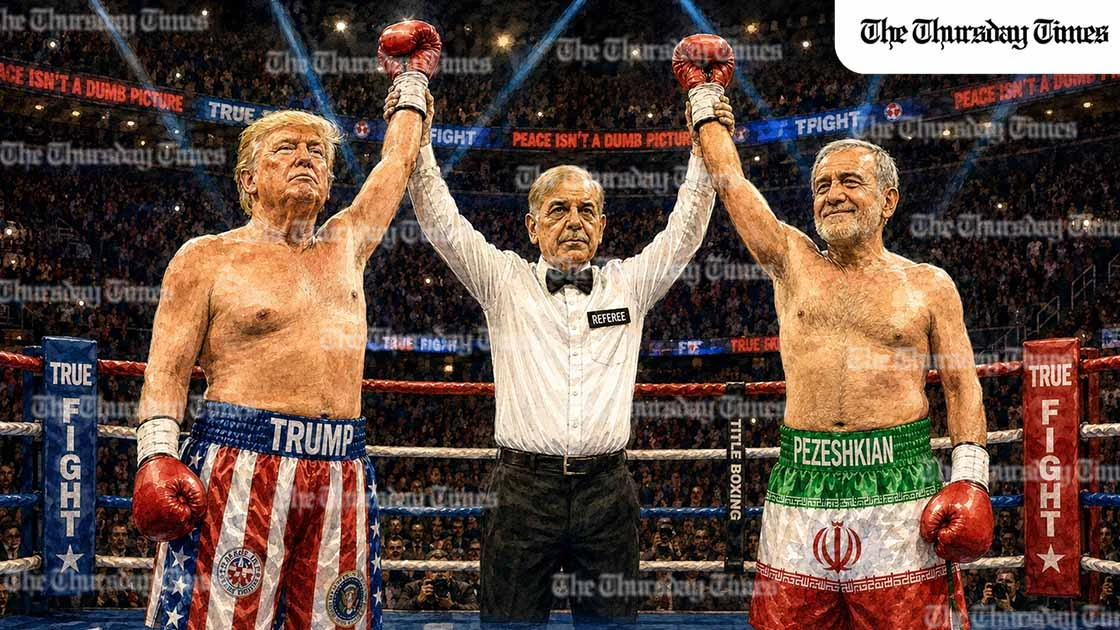
Pakistan’s role deserves to be stated plainly. It was not just facilitation. It was mediation with emotional intelligence. Islamabad understood the psychology of both sides. The United States needed assurance, verification, navigational security and a political outcome that could be presented as strength. Iran needed dignity, relief, sovereignty and a way to step back without appearing defeated. Between those two demands lay a dangerous silence. Pakistan helped fill that silence with language, process and possibility.
This is the real work of diplomacy. It is not glamour. It is not a flag in a photograph. It is the patient discipline of helping adversaries imagine an exit before escalation becomes irreversible. The reported agreement did not fall from the sky. It came after pressure, doubt, mistrust and moments when the process could easily have collapsed. There would have been hard nights when each side tested the patience of the other. There would have been warnings, walk-backs, denials, competing drafts and competing egos. The fact that the process survived those lows is itself a diplomatic achievement.
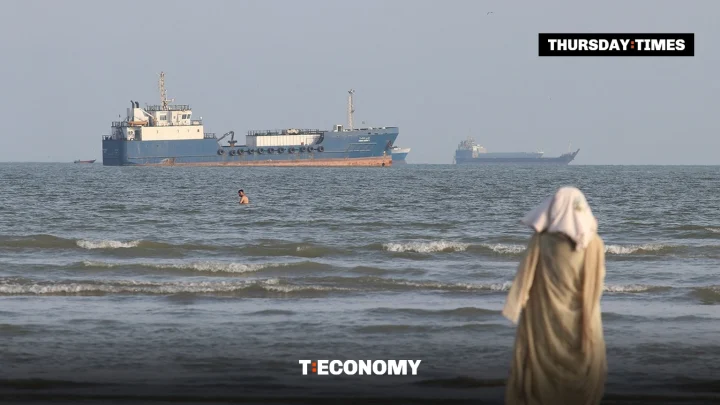
Pakistan’s success lies in recognising that the region could not survive another widening war. The Gulf was tense. The Strait of Hormuz had become the world’s most dangerous economic artery. Lebanon risked becoming a wider front. Oil markets were nervous. Regional actors were calculating their next moves. In that environment, any failure of diplomacy would not have remained confined to Iran and the United States. It would have travelled through shipping lanes, energy prices, sectarian fault lines, refugee flows and domestic politics across the Muslim world.
Had Pakistan not played this role, the beneficiaries would not have been the ordinary people of Iran, America, Lebanon, the Gulf or Pakistan. The beneficiaries would have been those who thrive on permanent war. More specifically, the absence of a serious Muslim diplomatic intervention would have created more space for the expansionist logic often described by critics as the Greater Israel project. A region divided, exhausted and locked in recurring conflict is always easier to dominate. A region capable of negotiation, restraint and political coordination is harder to bend. Pakistan’s mediation therefore did not merely interrupt a war. It interrupted a strategic drift that could have strengthened the hands of those who see instability as opportunity.
This is why the moment matters beyond headlines. Pakistan did not fire a missile. It did not close a sea lane. It did not posture for applause. It worked the phones, carried the message, helped build confidence and brought adversaries closer to a framework. That is a different kind of power. It is soft power, but not the weak kind. It is the kind of soft power that grows when a country becomes trusted enough to host, interpret, persuade and stabilise. In this episode, Pakistan’s global reception has shifted. It has received diplomatic acknowledgement not as a problem to be managed, but as a state capable of managing problems.
That increase in soft power is not cosmetic. It matters for Pakistan’s future. Countries are not judged only by their economies or armies. They are judged by whether they can be useful to a turbulent world. For too long, Pakistan’s international image has been trapped in a narrow vocabulary: debt, instability, extremism, default, militancy, political crisis. Those realities cannot be denied, but they are not the whole country. The US-Iran framework offers another vocabulary: mediator, bridge, stakeholder, convenor, stabiliser. A nation needs such words. Without them, it begins to see itself only through its wounds.
The emotional force of this moment comes from that contrast. Pakistan has not arrived here as a flawless country. It has arrived here as a wounded one. It has carried years of economic strain, political division, institutional mistrust and international suspicion. It has been underestimated by friends and adversaries alike. Yet wounded nations sometimes understand the cost of conflict better than comfortable ones. Pakistan knows what instability does to generations. It knows what happens when violence becomes policy and crisis becomes routine. That knowledge, painful as it is, gave Pakistan the instinct to push for de-escalation when others were still measuring advantage.
This is why Pakistan’s journey to the peace table should be read with ambition rather than vanity. This is not a moment for hollow chest-thumping. It is a moment for national seriousness. Pakistan has shown that it can matter. The question now is whether it can build upon that relevance. Diplomatic success must not become another passing headline consumed by domestic noise. It must become part of a larger national strategy in which Pakistan positions itself as a responsible Muslim-majority power, a regional stabiliser, and a serious global stakeholder.
The phrase global stakeholder is important. Pakistan has often behaved like a state reacting to decisions made elsewhere. This moment suggests a different possibility. A global stakeholder does not merely wait for crises to reach its doorstep. It shapes outcomes before they become disasters. It does not only ask what the world can do for Pakistan. It asks what Pakistan can do to stabilise the world, and then uses that relevance to build security, investment, credibility and respect. That is the mature foreign policy Pakistan should now pursue.
The Islamabad Memorandum also shows the value of geography when it is used intelligently. Pakistan sits at the meeting point of the Gulf, Central Asia, South Asia and the wider Muslim world. That geography has often been treated as a curse, a reason for insecurity and pressure. But geography can also be diplomatic capital. Pakistan can speak to Iran with neighbourhood familiarity, to the United States with the memory of a long and complicated relationship, to the Gulf with religious and strategic proximity, to China with deep partnership, and to Turkey and Qatar through shared regional concerns. Few states possess such overlapping access. Fewer still use it well. In this case, Pakistan did.
Geneva’s role in the expected signing also carries meaning. It is not accidental that Switzerland has emerged as the formal stage. Geneva offers neutrality, diplomatic infrastructure and a central European meeting ground that allows both sides to step outside the emotional geography of the conflict. It is a practical midpoint in the diplomatic imagination, a place where distance can soften rhetoric and where the final act can be presented not as a concession to one capital, but as a shared step before the world. Islamabad may have carried the pulse of the process. Geneva gives it the neutral room in which to breathe.
Yet optimism must remain disciplined. The deal is not the end of the story. The nuclear question remains difficult. Sanctions relief remains politically sensitive. The reopening of the Strait of Hormuz must be implemented, not merely announced. Lebanon remains a dangerous fault line. Israel’s response will matter. Hezbollah’s restraint will matter. Washington’s internal politics will matter. Tehran’s internal politics will matter. Every diplomatic breakthrough must survive the people who profit from its failure.
Still, the existence of risk does not diminish the achievement. It reveals its scale. Peace is always fragile at birth. It does not emerge fully armoured. It begins as paper, language, sequence and trust. It begins with men who distrust one another agreeing not to destroy the room before the next meeting. That is why Pakistan’s contribution should be respected. It helped produce a diplomatic pause in a moment when the logic of war was becoming dangerously easy.
The next question is what Pakistan does with this recognition. The answer cannot be foreign policy alone. International prestige must be matched by domestic strength. If Pakistan wants to be taken seriously as a global stakeholder, it must pursue economic self-sufficiency with the same urgency that it brought to mediation. No country can permanently exercise influence abroad while remaining financially vulnerable at home. Sovereignty is not just a flag. It is fiscal capacity, productive industry, export strength, energy security and the ability to make decisions without always looking over one’s shoulder at creditors.
Economic self-sufficiency does not mean isolation. It means dignity in interdependence. Pakistan must build the conditions in which diplomacy produces investment, trade, technology transfer and national confidence. A country that can help calm the Strait of Hormuz should also be able to reform its tax system, protect investors, support exporters, educate its youth and modernise its energy base. The world has seen Pakistan’s diplomatic usefulness. Pakistan must now prove its economic seriousness.
There is also a deeper internal lesson. A country that can mediate between enemies abroad must learn to reduce hostility within. Pakistan’s next journey must be towards political and social peace at home. The bitterness of domestic politics, the mistrust between institutions, the polarisation of society, and the exhaustion of ordinary citizens cannot be ignored. A nation cannot indefinitely project stability outward while feeling fractured inward. The same patience, restraint and maturity required in international diplomacy are now required in national life.
This does not mean pretending that differences do not exist. It means creating a political culture in which disagreement does not become destruction. Pakistan needs peaceful politics, not passionless politics. It needs strong debate without permanent rupture. It needs institutions that understand limits, parties that accept responsibility, and citizens who are not forced to live between despair and rage. If Pakistan’s diplomats can help Washington and Tehran find language for coexistence, Pakistan’s leaders can surely find language for national repair.
The great promise of this moment is psychological. Pakistan has been reminded that it is not condemned to crisis. It can still surprise the world. It can still act with intelligence. It can still matter in the councils where war and peace are decided. That matters for a young population raised on disappointment. Nations need proof that competence is possible. They need evidence that decline is not destiny. The US-Iran peace framework provides that evidence, however fragile and incomplete it remains.
The challenge now is to turn one diplomatic success into a national direction. Pakistan should not merely celebrate its role. It should institutionalise it. Invest in diplomacy. Strengthen regional desks. Build mediation capacity. Train negotiators. Support think tanks. Develop expertise on energy security, maritime law, sanctions, nuclear diplomacy and conflict resolution. Pakistan’s future influence should not depend only on personalities or moments of crisis. It should be built into the machinery of the state.
There will be sceptics. Some will say Pakistan is claiming too much. Some will argue that the United States and Iran moved because war had become too costly. Some will point to Qatar, Switzerland, Turkey, China or other actors and say Pakistan was only one part of a wider process. That may be true. Diplomacy is rarely a solo performance. But nations do not need exclusive ownership of peace to take pride in having helped make it possible. If Pakistan was one of the bridges, then it was still a bridge. And in a burning region, bridges matter.
This is the moment Pakistan must understand with humility and ambition together. Humility, because the deal is not final in spirit until it survives implementation. Ambition, because Pakistan has earned the right to think bigger. It has shown that relevance is not gifted by powerful states. It is earned through timing, credibility, access and courage. For a country so often spoken of in the language of limitation, that is no small recovery.
If the Islamabad Memorandum holds, Pakistan will have helped reduce the temperature of one of the most dangerous confrontations in the world. If it falters, Pakistan will still have shown that it was willing to stand between escalation and catastrophe. That, too, has value. History does not only remember the treaties that lasted. It also remembers the hands that tried to keep the doors open when war was waiting outside.
In the end, this is not only a story about the United States and Iran. It is a story about Pakistan rediscovering its diplomatic imagination. It is about a country often dismissed as unstable becoming necessary to stability. It is about a state burdened by economic and political troubles stepping into a role larger than its wounds. It is about soft power earned not through slogans, but through usefulness.
Pakistan’s road to the peace table has been long, uneven and painful. But in this moment, it has reached a place of consequence. It has shown that even after years of being doubted, bruised and misread, a nation can still shape events beyond its borders. The task now is to make that achievement durable. Peace abroad must inspire reform at home. Recognition abroad must produce confidence at home. Diplomatic relevance must become economic strength. And Pakistan, having helped others step back from war, must now help itself step forward into renewal.∎