English

Moving beyond survival

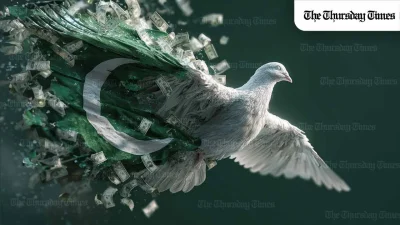
After years of being defined by debt scares, bailouts and economic uncertainty, Pakistan is showing signs of a broader recovery marked by renewed market access, stronger investor confidence, diplomatic relevance and momentum that isn't stopping anytime soon.

A string of positive developments suggests Pakistan may be entering a new chapter after years of economic strain. Market access, investor confidence and diplomatic relevance are beginning to replace the language of crisis. — MICHAEL MCCALL FOR THE THURSDAY TIMES

When rivals need a bridge, they still call Islamabad

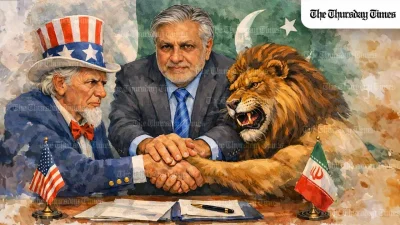
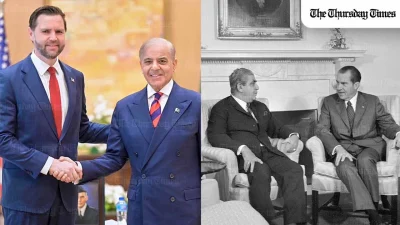
Pakistan’s emergence as the setting for U.S.-Iran diplomacy in 2026 was not a sudden stroke of luck but the return of an older strategic role; long before officials sat across from one another in Islamabad, Pakistan was already the back channel by which messages, assurances and ceasefires were carried.

What Islamabad demonstrated in 2026 is not merely diplomatic agility, but institutional memory. The methods may have evolved, the actors may have changed, but the underlying approach remains consistent. — MONTAGE/THE THURSDAY TIMES

As Pakistan builds bridges, India builds fantasies

While New Delhi continues to sell Pakistan internally as a terrorist state, Islamabad is increasingly positioning itself as a mediator, a bridge-builder and a country whose real strategic mission is peace.

India’s domestic narrative continues to project Pakistan primarily through a security lens. Political rhetoric and segments of media discourse reinforce the image of Pakistan as an unchanging adversary. This portrayal may serve short-term domestic cohesion, but it can also create a feedback loop. — MONTAGE/B62 STUDIOS/THE THURSDAY TIMES

The Power to Dar

At a moment when Asia has been pulled towards confrontation and uncertainty, Ishaq Dar has helped place Pakistan at the centre of the diplomatic effort for peace. In the past month, his steady, coalition-building approach has turned Islamabad into a credible channel for dialogue, resulting in the Islamabad Accords.

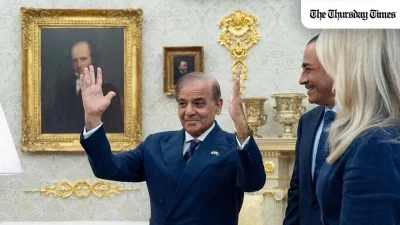
At no point did Dar’s diplomacy descend into chest-thumping. There was no need for needless spectacle, no rush to turn every opening into self-congratulation. The posture remained measured. — MICHAEL MCCALL FOR THE THURSDAY TIMES

Absolute cinema

Pakistan is no longer just reacting to events. It is increasingly being seen as a country around which events may be organised. Islamabad is emerging as a possible venue, Pakistani channels as useful, and names such as Steve Witkoff, Jared Kushner and JD Vance suggest that the diplomatic centre of gravity may, however tentatively, be shifting toward Pakistan.

Diplomacy is not measured only by signatures on paper. It is measured by whether someone had the foresight to stop the slide before it became irreversible. Pakistan has shown that foresight. — FILE/THE THURSDAY TIMES

Manipur’s slow break

Separatism rarely begins with a declaration. It begins with a sentence that sounds almost reasonable in a frightened place: we cannot live under them. We, as Pakistanis, know this better than anyone.

When the state answers fear with shutdowns and smoke, Bharat does not look united; it looks as though it is coming apart at the seams. — MICHAEL MCCALL FOR THE THURSDAY TIMES

Independent Republic of Manipur?

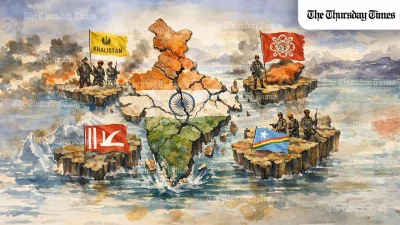
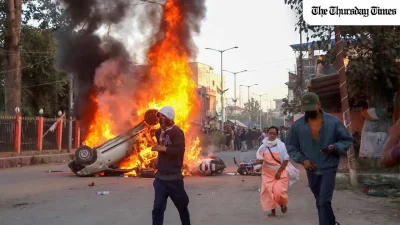
Manipur has stopped behaving like a state and started behaving like a border. When a cabinet changes land like a provocation and a confidence vote inside the Assembly cannot calm the street outside, the idea of “Republic of Manipur” stops being metaphor and starts sounding like a warning.

In Manipur, the state still exists on paper, but on the ground a separate country is being rehearsed in fear, barricades, and broken trust. — FILE/THE THURSDAY TIMES

The BLA’s poseurs receive the death they deserve

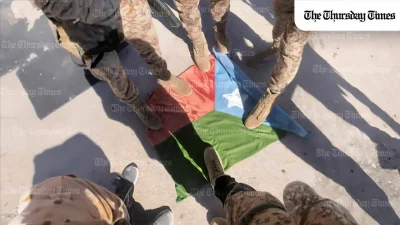
While the BLA's violence seeks to manufacture inevitability in Balochistan, the answers it receives from Pakistan collapse distance and deny it spectacle it craves so dearly—time and time again.

As Balochistan was challenged in quick succession, Pakistan's experience shaped the response before fear could settle, and the line held. — MONTAGE/THE THURSDAY TIMES

We can finally be proud

Davos was not a redemption arc but a stress test. Pakistan did not arrive seeking applause or indulgence, but to demonstrate whether discipline could finally replace denial. What mattered was constraint—and the recognition that the old escape routes no longer exist.

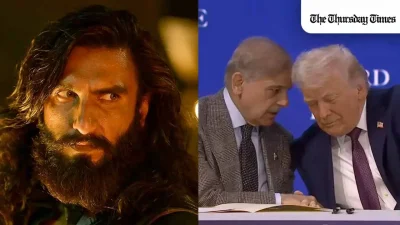
Davos 2026 was not a redemption arc but a stress test. Pakistan arrived not to inspire confidence, but to demonstrate whether discipline could finally replace denial. — MICHAEL MCCALL FOR THE THURSDAY TIMES

On the offensive

There is a certain discipline in Ahmed Sharif’s choice of words as of late. Melodrama is avoided, but denial is not indulged either. If Pakistan is to argue its case internationally, he suggests that it must first lay out its qualms.

Ahmed Sharif has pulled off what too many official pressers avoid. He put the year on the table as a ledger, not a mood. Operations, incidents, deaths, disruptions. — MICHAEL MCCALL FOR THE THURSDAY TIMES
Published by Thursday Media International thursday.media