International

Great injustice to Urdu in India

“This great language, which has produced perhaps the best poetry in modern India … and which is a shining gem in the treasury of Indian culture, is today neglected, and by some people even looked at with suspicion,” writes former Supreme Court of India Justice Markandey Katju.

A young woman in a headscarf sits looking at her phone at a desk in a small library, walled floor to ceiling with shelves of Urdu books

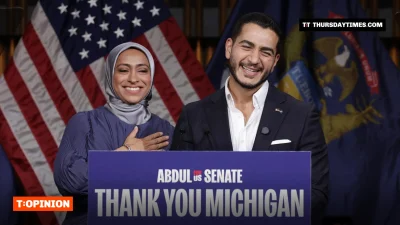
The significance of Abdul El-Sayed’s victory

“Dr El-Sayed’s victory is a message not only for America but also for India and the whole world,” writes former Supreme Court of India Justice Markandey Katju.
Abdul El-Sayed laughs at a podium reading Thank You Michigan as his wife, Sarah Jukaku, smiles beside him with her hand on her chest, between the US and Michigan flags

The fetish of democracy

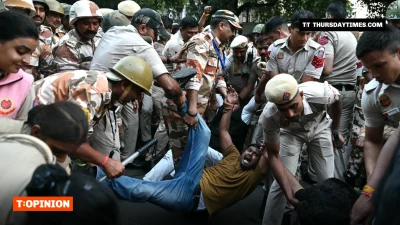
“90% of Indians have feudal, not rational, mindsets, full of casteism and communalism, which I often call ‘gobar’, so they are unfit to vote,” writes former Supreme Court of India Justice Markandey Katju.
Police officers in helmets and uniforms drag a shouting protester in jeans across the road during a crowded demonstration

The way out for India

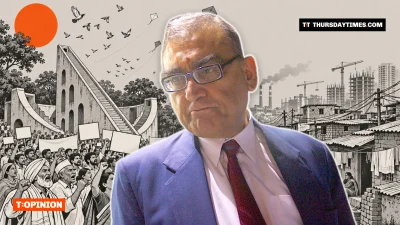
Elections cannot end India’s poverty and division, the former Supreme Court of India judge argues. Only a united people’s struggle can

Justice Markandey Katju in front of an illustration of protesters at Jantar Mantar, kites in the sky, and slums and factories

Bonn’s quiet climate reality check

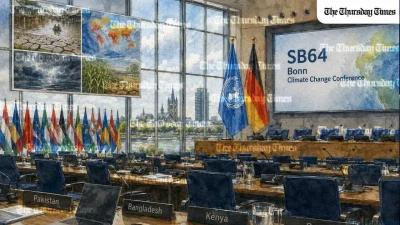
The Bonn Climate Change Conference may not attract the drama of a COP summit, but SB64 offered a clear reality check: the future of climate diplomacy will be judged less by promises and more by whether countries can deliver practical, fundable and sustainable climate action.

Bonn’s quiet climate reality check

The strange intimacy between Pakistan and Zohran Mamdani

Zohran Mamdani is not Pakistani, yet he has stirred a rare warmth in Pakistan. His comfort with Urdu and Hindustani, his visible Muslim identity and his wider South Asian cultural ease have made him feel less like a distant foreign politician and more like someone many Pakistanis instinctively understand.

Zohran Mamdani may not be Pakistani, but his public presence has struck a deep chord in Pakistan. His use of Urdu and Hindustani, visible Muslim identity and wider South Asian sensibility have made him feel culturally intimate across borders. — MICHAEL MCCALL FOR THE THURSDAY TIMES VIA BLOOMBERG

Public vandalism and criminal prosecution

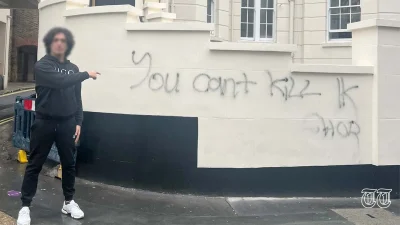
The Criminal Damage Act 1971 states that the penalty for offences, such as graffiti, carry up to 10 years in prison, or a fine of up to £5k.

A file photo is shown of graffiti in Westminster.
Published by Thursday Media International thursday.media