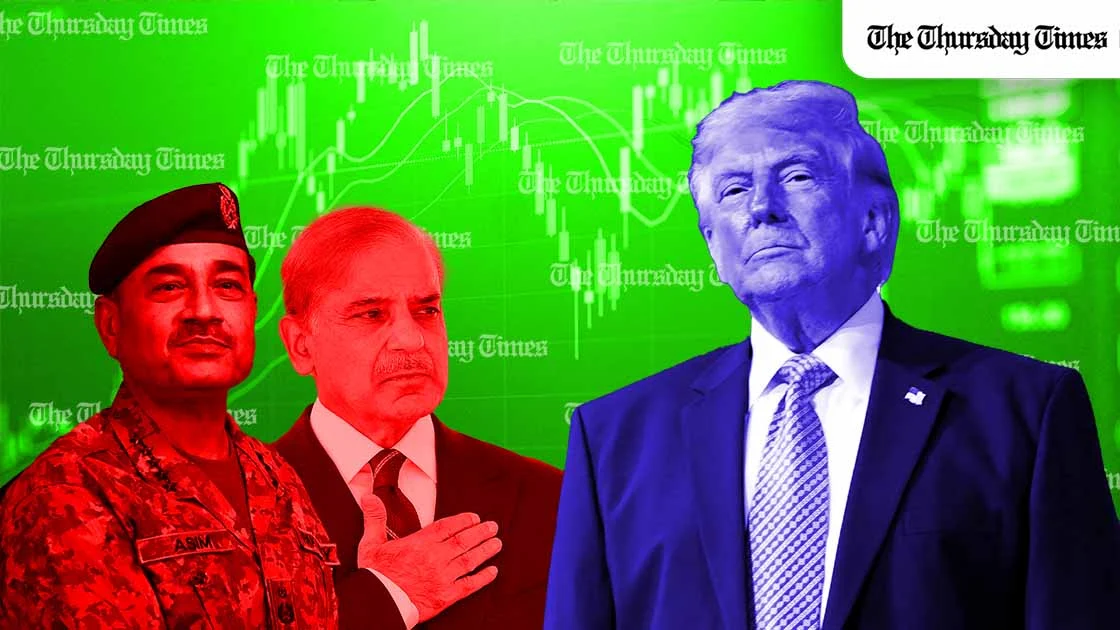
LONDON (The Thursday Times) — A once-unthinkable question is now being traded like a stock: will President Donald Trump visit Pakistan before the end of May?
On one online prediction market, traders this week placed the odds at roughly 35 per cent that Mr Trump will physically enter Pakistani territory by May 31, a striking measure of how quickly Islamabad has entered global diplomatic conversation.
The market’s emergence follows days of speculation that Pakistan could host a further phase of U.S.-Iran diplomacy after recent ceasefire efforts and reported negotiations involving multiple regional capitals. While no official White House travel schedule has been announced, the mere possibility has been enough to attract wagers worth nearly $14,000 in trading volume.
Prediction markets are often noisy, imperfect indicators. They blend news signals, rumour, sentiment and hedging rather than offering certainty. Yet they can also reveal what conventional politics sometimes misses: the speed at which narratives shift.
Only weeks ago, few analysts would have placed Pakistan near the centre of American diplomatic planning. But Islamabad’s reported mediation role in easing tensions between Washington and Tehran has altered that picture. Traders now appear to believe there is at least a plausible path to a high-level visit if a wider diplomatic breakthrough emerges.
For Pakistan, even the existence of such a market carries symbolic weight. For years, the country has sought to project itself not merely as a security state, but as a regional broker capable of engaging Washington, Gulf capitals, Beijing and Tehran at once. A presidential visit would represent a dramatic endorsement of that ambition.
Yet in geopolitics, momentum can matter as much as planning. If talks suddenly accelerate and Pakistan is viewed as the venue trusted by all sides, probabilities could shift sharply again.∎