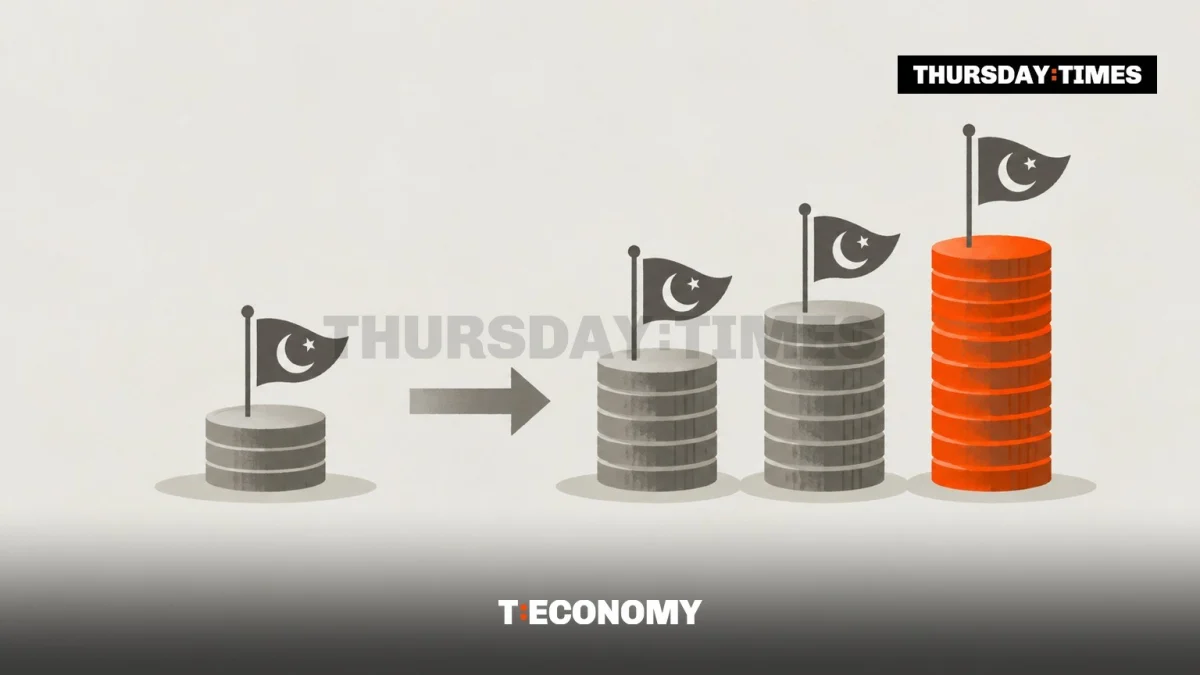
ISLAMABAD (The Thursday Times) — Pakistan could triple average incomes by 2050 if it speeds up structural reforms, the World Bank said Thursday, warning that growth in the income of the average Pakistani has been stuck at around 1.6% a year despite the country’s return to macroeconomic stability.
The finding comes from the World Bank Group’s latest Pakistan Development Update: Attaining Escape Velocity, which credits sound macroeconomic policy with stabilising the economy despite the impact of the Middle East conflict. Real GDP growth rose to 3.7% in the fiscal year that ended in June, from 3.2% the year before, while revenue growth and spending restraint pushed the primary fiscal surplus to a record 2.9% of GDP and allowed reserves to rebuild on strong remittances.
Those improvements were recognised by S&P and Moody’s, both of which upgraded Pakistan’s credit rating this year, clearing the way for the country’s return to international debt markets with a $3 billion Eurobond.
‘Reforms are now urgently needed’
“Pakistan has made real progress in restoring stability, and markets have taken notice,” said Bolormaa Amgaabazar, the World Bank’s Country Director for Pakistan. “But real per capita growth — the rate at which the income of the average Pakistani increases — remains stuck at around 1.6%. Reforms to drive faster growth are now urgently needed.”
The report says that if Pakistan upgrades its policies and institutions to the quality seen in the average middle-income country, it could sustain growth of 6.2–6.9% a year, enough to reach Vietnam’s current income level by 2050.
“With macro stabilisation achieved but fiscal resources and foreign exchange still tightly constrained, structural reform to encourage private investment is the necessary next step towards higher living standards,” said Sebastian Essl, the report’s lead author. “Achieving this kind of private-sector led growth requires a plan, coordination, and committed reform implementation.”
Building on recent steps
The Bank pointed to reforms already under way as a foundation to build on, including power-sector tariff adjustments that cut energy subsidies from 1.1% of GDP in FY25 to 0.8% in FY26, continued trade liberalisation under the National Tariff Policy, and the recent privatisation of Pakistan International Airlines.
Sustained progress, it said, would now depend on strengthening the business environment, reforming the tax system, reducing the state’s footprint in the economy and expanding access to finance.∎