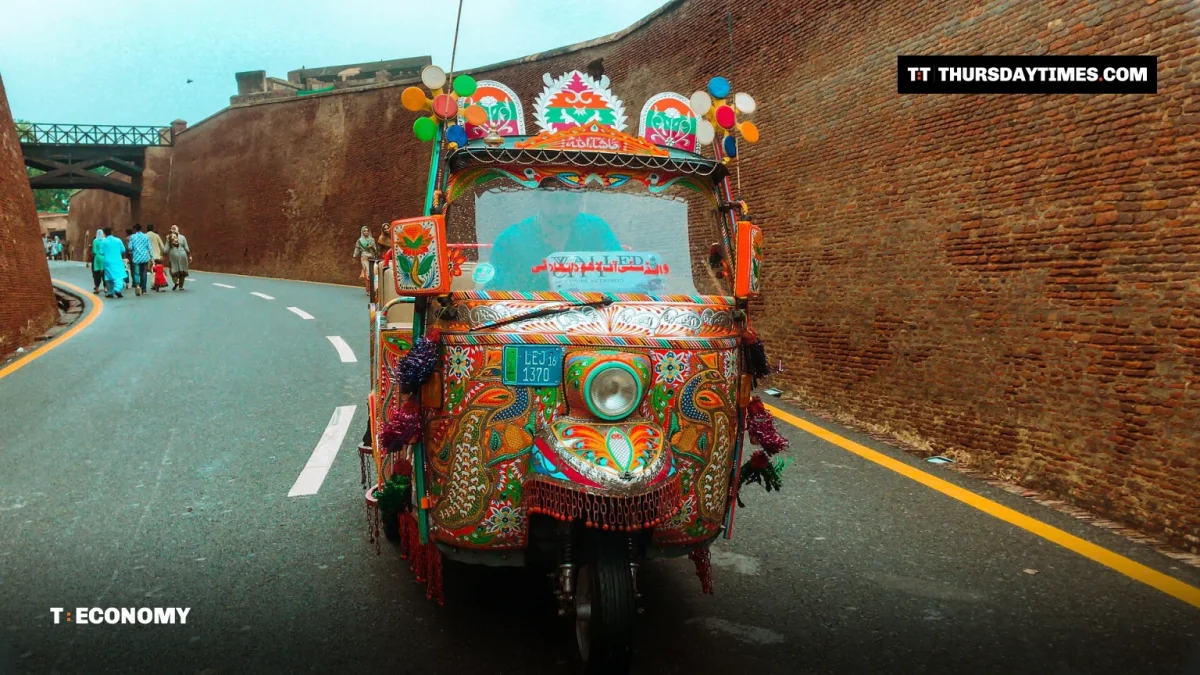
LAHORE (The Thursday Times) — The price of LPG has surged in Pakistan since two border crossings with Iran closed on October 17, halting imports, traders say, and the rickshaw drivers who run on it say they can no longer feed their families properly.
Traders said a 12kg cylinder jumped 56% to Rs7,000 within days of the closure, or about Rs583 a kilogram on the open market. Pakistan had been importing about 7,000 tonnes of LPG a day from Iran, the Pakistan LPG Association said.
Rashid Ali, 33, has driven a rickshaw in Lahore for 13 years. His day starts at 6am and can run until midnight. He used to make about $6.50 a day. Now he is lucky to make $3, and his family has cut back to two meals a day.
“Previously, when LPG was cheap, we could earn a decent income,” he said. “Now, it’s just not possible to get by on seven or eight hundred rupees, is it?”
He pays Rs600 a day to rent the rickshaw and fills up four or five times a day, at Rs300 to Rs400 a time. Rent on his home is Rs11,000 a month, and he has two young children. Passengers will not pay more either. “For a trip that should cost 200 or 250 rupees, they might only offer 80, 100, or 150 rupees,” he said.
Majeed Ghauri, chairman of the Awami Rickshaw Union, calls LPG “the fuel of the poor”. He said about 70% of his members’ 43,000 auto-rickshaws and nearly 8,000 Qingqis run on it.
The reasons for the closure are disputed. The Balochistan government cited security and smuggling, while Iran’s foreign ministry blamed technical issues. Iran’s ambassador later said Tehran had imposed no restrictions, including on LPG exports, and blamed changes in Pakistan’s import paperwork.
The squeeze comes with inflation at 9.6% in October and the central bank having raised interest rates to 12% last week, citing energy and wheat prices. The government is also preparing to move LPG to market-based pricing, with subsidies kept for low-income households.