TEHRAN (The Thursday Times) — Iran will not allow any of its enriched uranium to leave the country under a deal with the United States, its security chief, Mohsen Rezaei, said on Wednesday, adding that Tehran had told Russia the stockpile would stay at home.
“Even the smallest amount of enriched nuclear material will not be taken out of Iran,” Rezaei, the secretary of the Supreme National Security Council, told a Lebanese television channel in an interview released in excerpts on Wednesday. “We have informed our Russian friends that the enriched materials will remain in Iran and that we will use them ourselves.”
Russia has often been named as a possible destination for Iran’s stockpile under a peace settlement. Rezaei said Iran needed the material to design and build nuclear-powered ships and submarines.
Before the US and Israeli strikes on its nuclear sites in June 2025, the International Atomic Energy Agency estimated that Iran held 440.9 kilograms of uranium enriched to 60 percent. Inspectors have not been able to verify how much of it survived, or where it is kept, and Iran has barred them from the bombed facilities at Fordow, Natanz, and Isfahan.
A warning over US bases
Rezaei warned that any new US attack on Iran would be answered with strikes on American military bases, including bases far from Iran. He said ending the war on every front in the region, especially Lebanon, was one of Tehran’s “fundamental conditions”. He also claimed Iran’s electronic warfare had advanced to the point that it could take control of American drones and bring them down intact.
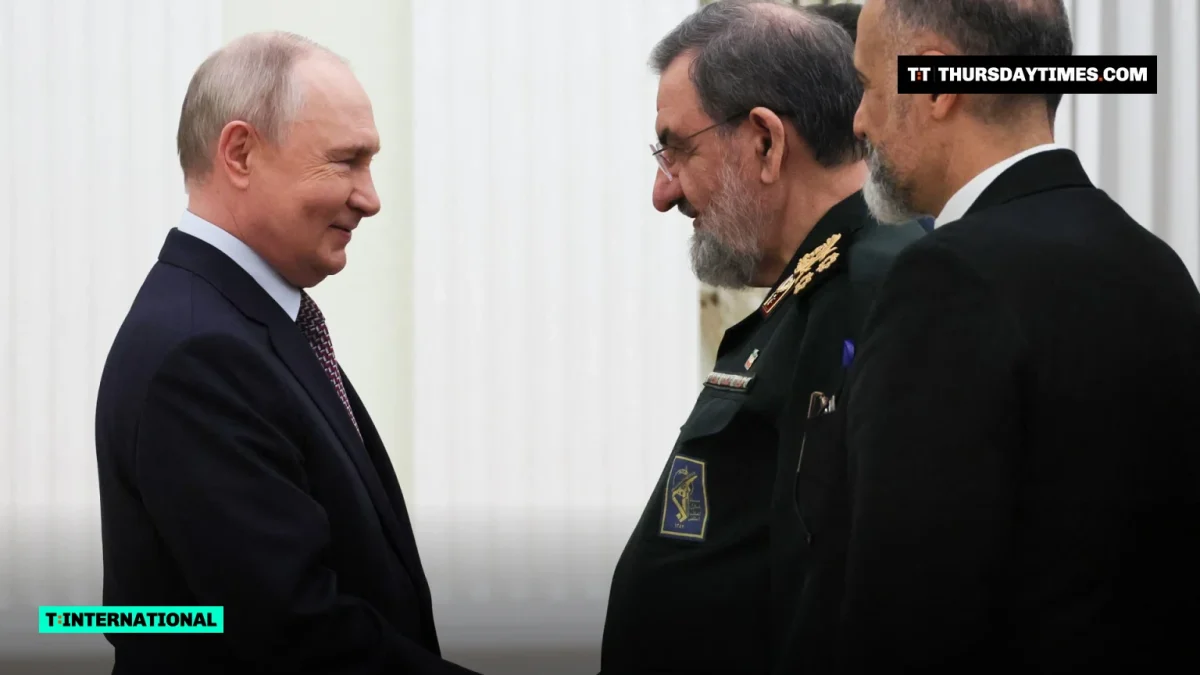
Rezaei, a former commander of the Revolutionary Guards, was appointed to the council in August and represents Supreme Leader Mojtaba Khamenei on it. He met Russian President Vladimir Putin at the Kremlin last week. On Tuesday he said the Strait of Hormuz would stay shut until Washington met Iran’s conditions, and called reports of talks in Qatar “a pure lie”, as TT reported.
Tehran protests a $20m reward
Foreign Minister Abbas Araghchi, meanwhile, called on the United Nations and the IAEA to condemn a US offer of up to $20 million for information on Iran’s nuclear programme, which he called “repugnant and regrettable”. The US military said last Friday that the money and “possible relocation” were on offer for information about the programme’s “facilities, equipment, and associated personnel”.
“Iran calls upon the UN Secretary-General, the Security Council, and the Director General of the IAEA to condemn this repugnant announcement explicitly and unequivocally,” Araghchi wrote in a letter to all three. He repeated that Iran’s nuclear programme was peaceful.
The war between Iran and the United States began on February 28. Large-scale fighting has largely stopped, but the nuclear programme, the US naval blockade of Iranian ports, and the closure of Hormuz remain unresolved. President Donald Trump said on Monday the war was “effectively over” militarily, and Secretary of State Marco Rubio said on Tuesday that the economic pressure on Iran was so heavy there was “no need for major combat operations”. Qatar and Pakistan have led mediation efforts to end the war.