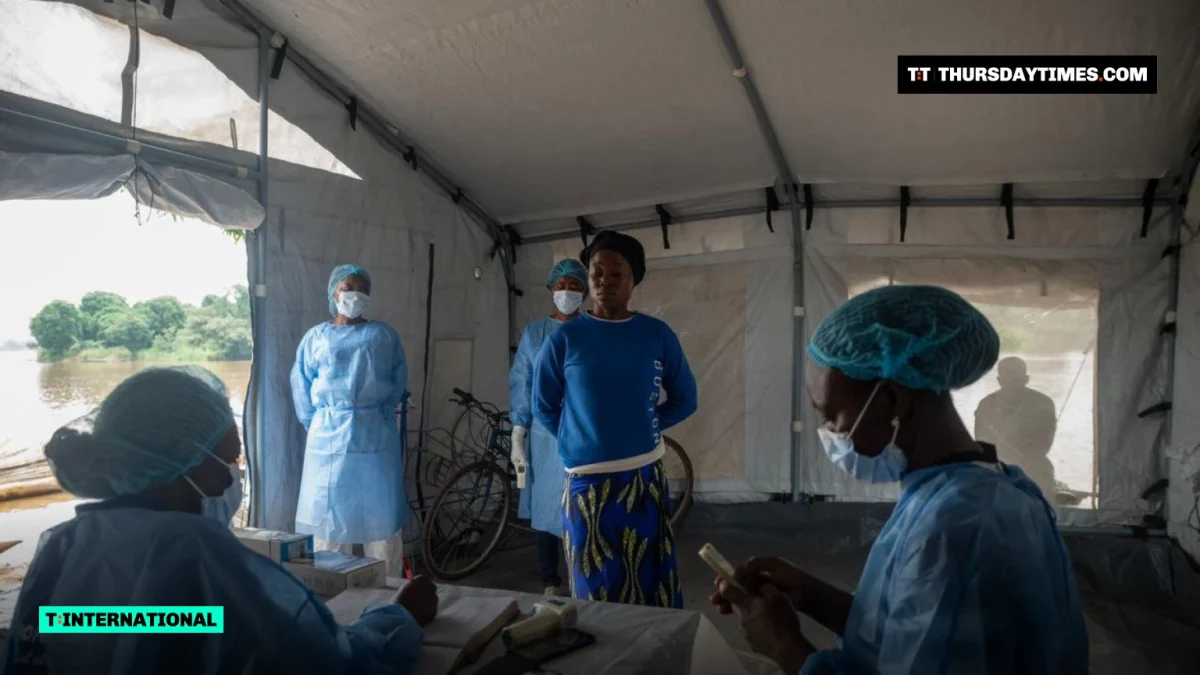
KINSHASA (The Thursday Times) — Hundreds of millions of dollars given to fight Ebola in the Democratic Republic of Congo are not reaching the health workers trying to stop it, the medical charity Médecins Sans Frontières (MSF) said on Thursday, warning that the six-month-old outbreak “remains out of control”.
“Despite the vast amounts of money provided for the response, many frontline responders are left trying to contain the outbreak with empty hands and empty pockets,” said Javid Abdelmoneim, the charity’s international president.
Unpaid staff, empty ambulances
MSF said health workers were going unpaid or untrained, ambulances were left without fuel, and some surveillance teams existed only on paper. It also criticised an excessive concentration of effort in some areas. Pay for front-line workers in North Kivu is running three months late.
“Our teams are often left speechless by the dysfunctions they witness,” Abdelmoneim said. “Six months into the response, this situation is simply unacceptable.”
Clinics spreading the virus
The charity said some health facilities had become new centres of transmission. In Beni, in North Kivu, close to three-quarters of patients had been infected inside a health facility.
In Ituri province, where the outbreak was first detected, only 9% of MSF’s patients had already been known contacts of earlier cases, so most new infections were not being traced in advance. Almost two-thirds of deaths in the past month happened in communities rather than in treatment centres. On November 9, fewer than 80% of about 34,000 contacts were reached, against a target of 95%.
Nearly $1bn paid out
Africa CDC says $962 million has been paid out to the organisations running the response. More than $700 million of that has yet to be accounted for by Congolese authorities, who are reconciling the figures with the agency. MSF called for transparency and accountability in how the money is spent.
Congo’s National Institute for Public Health has counted 11,114 cases and 5,433 deaths since the outbreak was declared on May 15, with 72 new cases and 46 deaths recorded on November 10 alone. The Bundibugyo strain behind it has no approved vaccine or treatment, and the virus has crossed into Uganda, Kenya, and Nigeria. Kenya discharged its last Ebola patient this week.