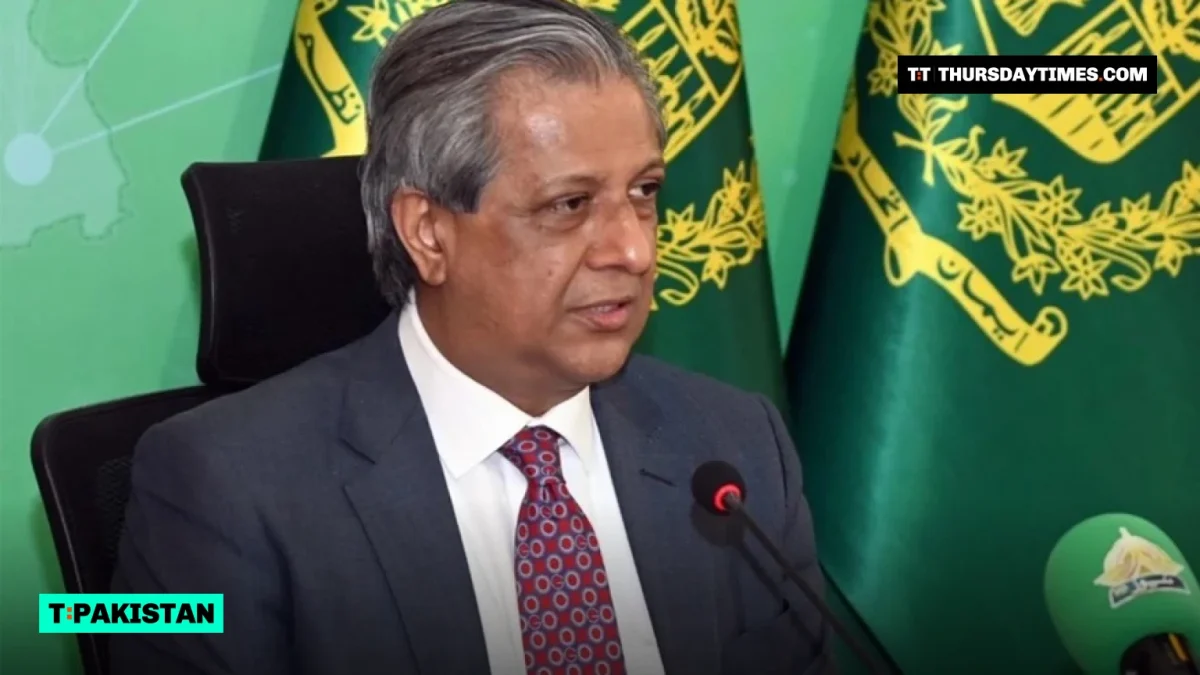
ISLAMABAD (The Thursday Times) — Law Minister Azam Nazeer Tarar has said the Indus Waters Treaty cannot be ended by one side alone, calling India’s suspension of the agreement contrary to its spirit and to international law, as he urged Pakistan and India to settle their disputes through dialogue rather than force.
Delivering the keynote address at the Margalla Dialogue in Islamabad on Wednesday, Tarar said the shared history, geography, and sensitivities of the two countries made it essential to resolve disputes through international agreements and the mechanisms of the United Nations and other multilateral bodies.
Referring to the recent escalation between the neighbours, he said Pakistan had offered to facilitate an independent investigation into the incident by any country or agency in the world. Instead of taking up that offer and the diplomatic and legal routes available, “the path of military aggression was chosen”, he said.
“The rule of law, at both domestic and international levels, remains the foundation for a fair and sustainable resolution of disputes,” Tarar said, adding that when states disregard it, people on both sides bear the consequences.
A treaty that outlasted wars
Tarar described the Indus Waters Treaty, brokered by the World Bank, as a unique and successful international agreement that had stayed in force for more than six decades despite wars and long periods of tension.
He said it set out a structured framework for sharing water, exchanging information, and resolving disputes through the Permanent Indus Commission, a Neutral Expert, and a Court of Arbitration. The treaty did not provide for unilateral termination and required the consent of both parties, he said, and ignoring the rights of a lower riparian state went against its spirit and against basic principles of international law.
States had two broad choices in a dispute, Tarar said: the use of force, or settlement through law, dialogue, and institutions. In the modern era, force carried grave and lasting consequences. “Diplomacy, engagement and international legal frameworks should therefore be prioritised,” he said.
He said he hoped every country in the region would turn to international law and multilateral mechanisms to resolve its disputes, warning that the cost of conflict would fall on people on both sides of the border.
The two-day Margalla Dialogue brought together officials, former diplomats, and analysts from Pakistan and abroad to discuss regional security. Among the speakers was the Indian defence analyst Pravin Sawhney.