NEW YORK (The Thursday Times) — Pakistan has backed the United Nations Security Council’s renewal of sanctions on Yemen’s Houthis and condemned “in the strongest terms” their continued attacks on Saudi Arabia, calling them “terrorist attacks” that must end immediately and unconditionally.
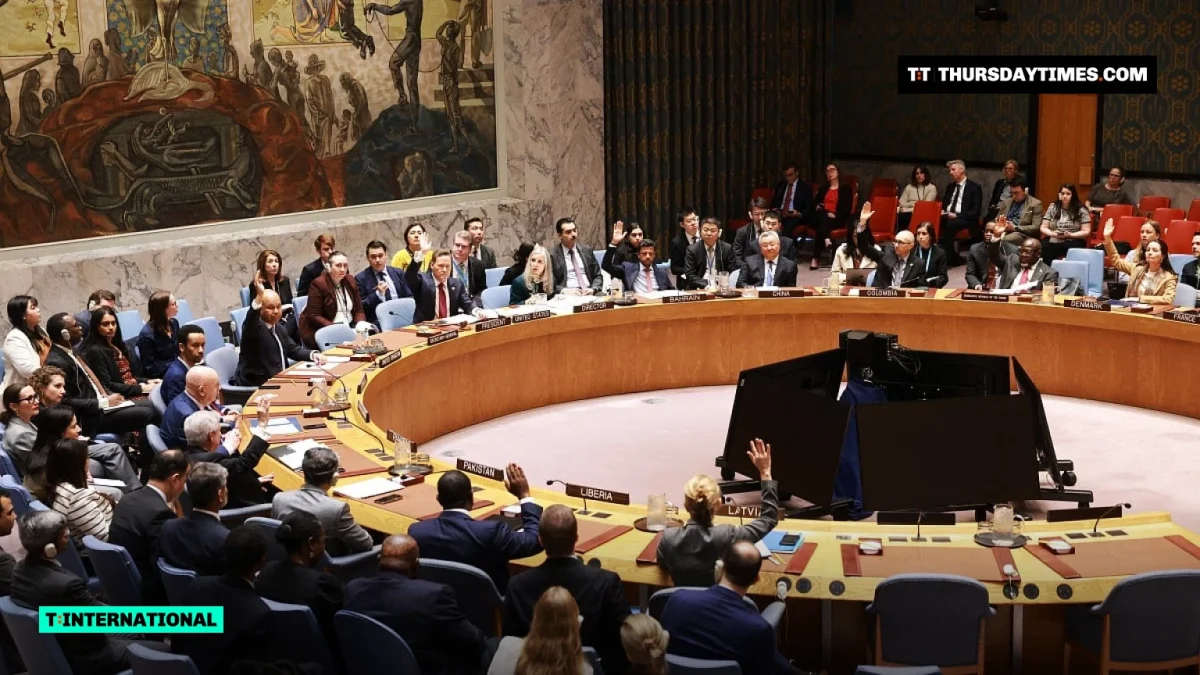
The 15-member Council adopted Resolution 2837 without objection on Thursday. It renews for 12 months the travel ban and asset freeze on individuals and entities designated under the Yemen sanctions regime, and extends for 13 months the mandate of the panel of experts that monitors them. The resolution “strongly condemned” the Houthis’ military escalation and demanded that they “immediately and unconditionally cease” their escalation and attacks, according to the UN’s official summary of the meeting.
The Council also asked the Secretary-General to expand the panel to six members, including maritime security expertise, urged states to step up efforts against weapons smuggling by land and sea, and said it intends to decide by January 11 on steps to stop specified dual-use components and precursor chemicals from reaching designated people and groups. An arms embargo on the Houthis under a 2015 resolution remains in force with no end date.
‘Unwavering solidarity’
Speaking after the vote, Pakistan’s Permanent Representative to the UN, Ambassador Syed Haider Shah, expressed Pakistan’s “full and unwavering solidarity” with Saudi Arabia’s leadership, government, and people, and underscored the kingdom’s right to defend its territory and protect its citizens and residents under the UN Charter and international law, Pakistan’s mission to the UN said in a statement.
He said Pakistan had voted for the resolution to reaffirm the importance it attaches to the work of the Council’s Yemen sanctions committee, and that holding to account those who threaten Yemen’s peace was essential for a durable peace. He reaffirmed support for Yemen’s sovereignty, independence, unity, and territorial integrity, and for a UN-led peace process, and thanked Britain, which led the negotiations.
Britain said the new measures meant the sanctions regime “keeps pace with evolving threats”. The United States said the conflict “is not just a local conflict” and “jeopardizes global energy markets”, citing Houthi attacks on Saudi airports and oil fields. Russia said “it would be wrong to place all of the blame” on the Houthis, and China said Council sanctions are “merely a means, not an end in themselves”.
Attacks on the kingdom
The Houthis have stepped up drone and missile attacks on Saudi Arabia in recent weeks. On Thursday they said they had targeted a pumping station on the kingdom’s East-West pipeline and an oil facility in Yanbu, a claim Saudi Arabia has not confirmed. The G7 has condemned the strikes, and Riyadh has been pressing the European Union to list the group as a terrorist organisation.
Pakistan and Saudi Arabia signed a mutual defence agreement in September 2025, and Pakistan’s military has called the kingdom’s security non-negotiable.