BRATISLAVA (The Thursday Times) — Thousands of people rallied across Slovakia on Tuesday against Prime Minister Robert Fico’s government, marking the anniversary of the 1989 Velvet Revolution that ended communist rule in Czechoslovakia. Opposition parties and civic groups organised protests in dozens of towns, including Košice and Banská Bystrica.
The largest gathering was on SNP Square in Bratislava, where organisers estimated that 25,000 people turned out. Protesters chanted “We’ve had enough of Fico”, and one banner told the prime minister to “go to hell”.
Opposition tries to stand together
The capital’s rally brought together the liberal groups Progressive Slovakia and the Democrats with the pro-business Freedom and Solidarity party, the Christian Democrats, and an alliance of ethnic Hungarians. Together they hope to defeat Fico and his coalition in next year’s parliamentary election.
“Just as in 1989, what unites us must be stronger than what divides us,” said Michal Šimčka, leader of Progressive Slovakia, a major opposition party. “We’ll win only if we stick together.”
Anger over Russia outreach
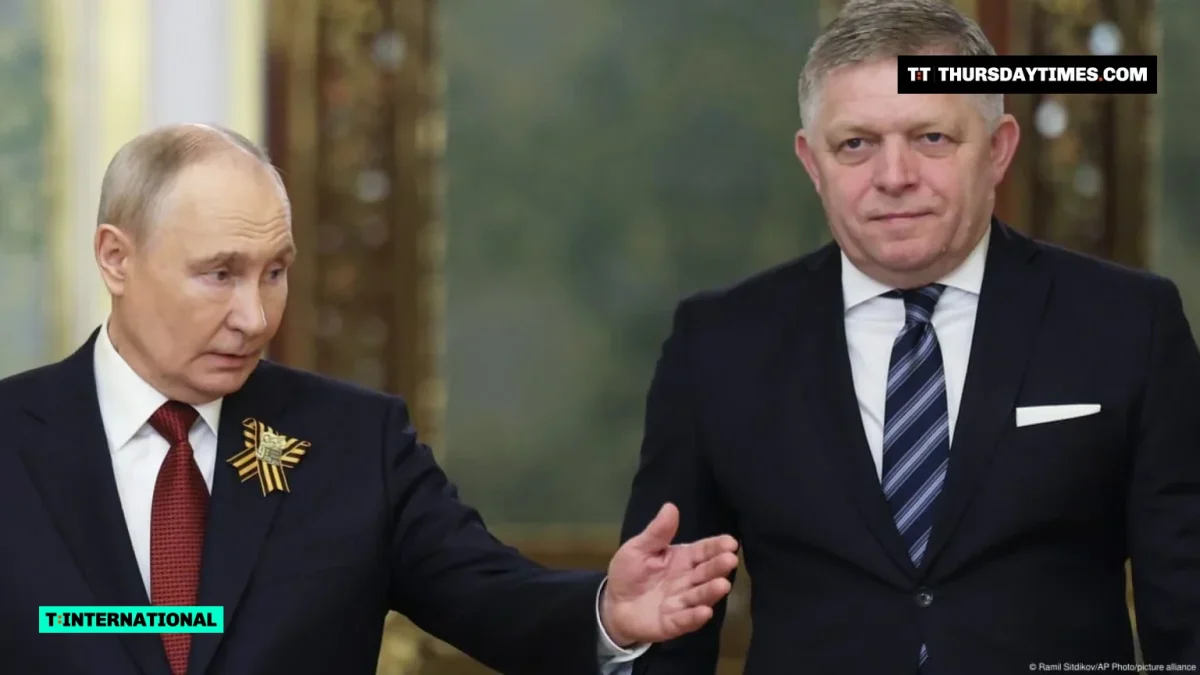
The government angered opponents by sending Foreign Minister Juraj Blanár to Russia for talks on renewing economic cooperation, the first such visit since Russia’s full-scale invasion of Ukraine in 2022. Fico agreed the plan during one of his trips to Moscow to meet President Vladimir Putin, and held a cabinet meeting on Blanár’s report only hours before the rally.
Igor Vico, a 74-year-old doctor at the Bratislava rally, said Slovakia was the last country in the European Union still negotiating with the Russians, calling it “a disgrace”.
Europe’s most pro-Russian leader
With Hungary’s Viktor Orbán ousted in April, Fico is now seen as the most pro-Russian leader in Europe. He has ended Slovakia’s military aid to Ukraine, opposes EU sanctions on Russia, wants to block Ukraine from joining NATO, and rejected EU loan guarantees for Kyiv. Slovakia, which is a member of both the EU and NATO, amended its constitution last year to state that national law takes precedence over EU law.
Fico, who has served as prime minister four times, has faced repeated protests since returning to power in 2023. Critics also accuse him of trying to exert greater control over the media and culture.