
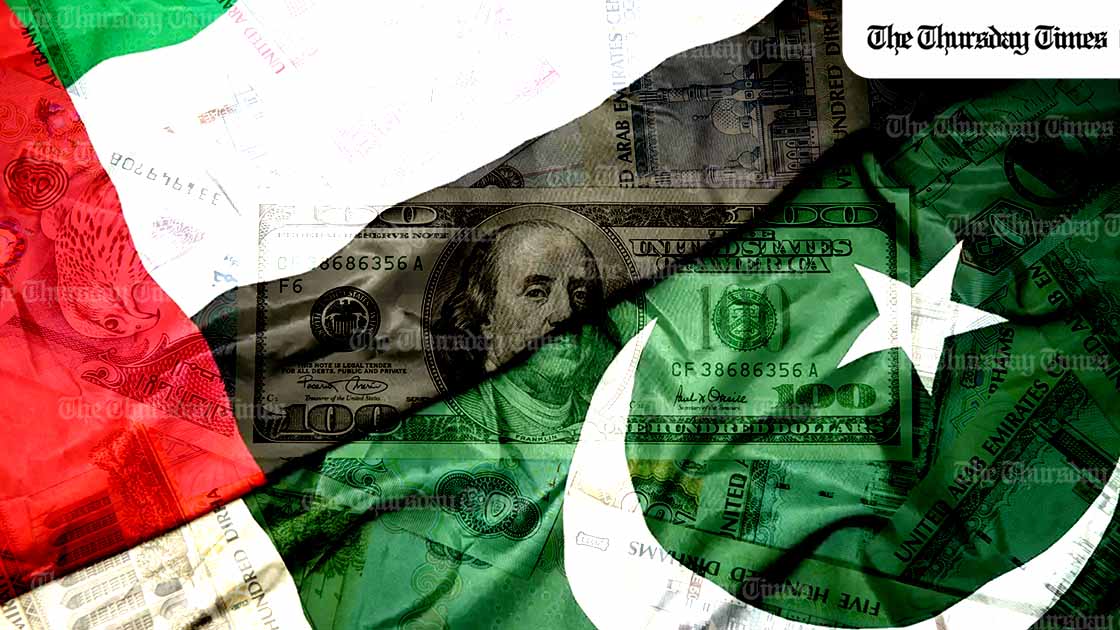
ISLAMABAD (The Thursday Times) — Pakistan has said that it plans to repay the remaining balance of a $3.5 billion loan from the United Arab Emirates by April 23, a move that underscores both the country’s financial discipline and the fragility of its external position as it waits for the next disbursement under its International Monetary Fund programme. Finance Minister Muhammad Aurangzeb said Pakistan still expects IMF approval of its next tranche, worth nearly $1.3 billion, by early next month.
The repayment matters well beyond the transaction itself. For years, Pakistan’s economic story has been shaped by rollover arrangements, emergency support and the constant pressure of looming obligations. Paying back the UAE on schedule allows Islamabad to argue that it is managing its liabilities with greater credibility, even as it continues to rely on multilateral backing and support from key Gulf partners.
That balancing act is delicate. Reuters reported last week that the full UAE repayment amounts to roughly 18 per cent of Pakistan’s foreign exchange reserves, which stood at $16.4 billion in late March. Those reserves remain central to Pakistan’s commitments under its $7 billion IMF programme, which aims to lift them above $18 billion by June.
Mr Aurangzeb has presented the government’s approach as one of flexibility rather than dependence on a single lifeline. Alongside the IMF process, Pakistan has been weighing options that include Eurobonds, Islamic sukuk, commercial borrowing and its first Panda bond issuance, a planned $250 million sale backed by multilateral institutions. Officials have also discussed the need for a strategic petroleum reserve and wider energy reforms as the country tries to shield itself from regional shocks.
Saudi Arabia has already stepped in with an additional $3 billion in support, according to Reuters, easing some of the immediate pressure created by the UAE obligation. That support, on top of an earlier $5 billion deposit arrangement, has reinforced the impression among investors that Pakistan’s most important partners are still willing to help stabilise the economy when required. Reuters said Pakistan’s international bonds rallied on the news.
Still, the picture is not one of easy recovery. The IMF programme remains the anchor of confidence, and the next tranche matters because it would signal continued endorsement of Pakistan’s economic management at a time when the country is trying to rebuild market trust. A timely release would help reassure investors, steady reserve expectations and strengthen the government’s argument that a period once defined by near-constant crisis may be giving way to something more durable.
In that sense, the scheduled repayment to the UAE is more than an accounting event. It is a test of whether Pakistan can begin to shift the narrative from short-term survival to disciplined financial management, without pretending that the era of vulnerability has yet passed.