
RIYADH (The Thursday Times) — Saudi Arabia has credited Pakistan’s mediation in the United States-Iran peace agreement, adding powerful regional weight to a diplomatic breakthrough that has already drawn wider recognition from global leaders and international institutions.
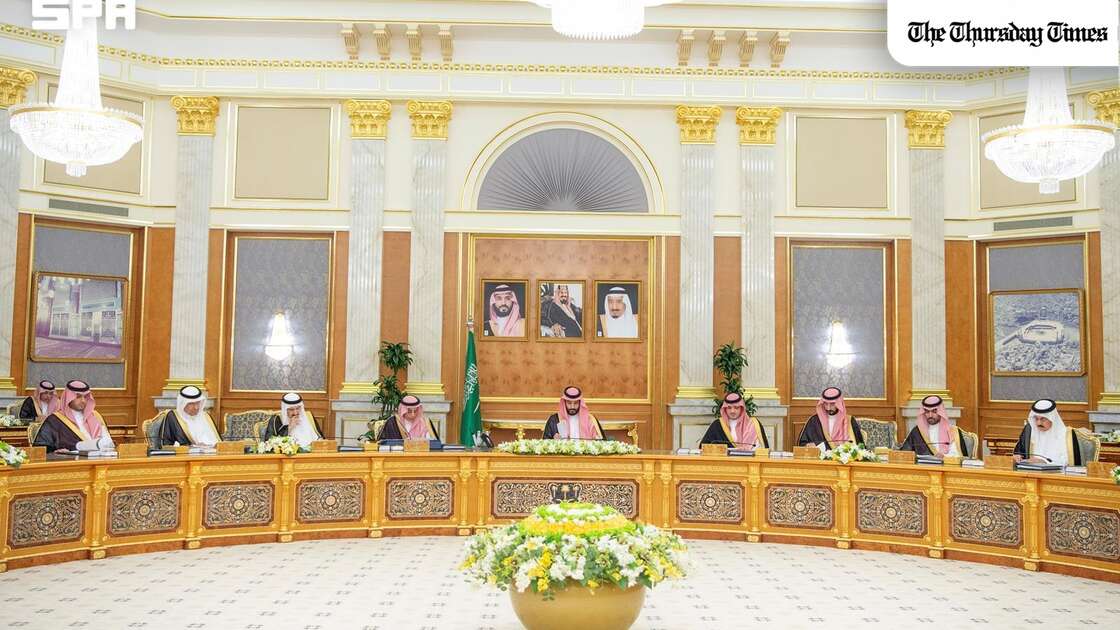
The Saudi Cabinet, meeting under Crown Prince Mohammed bin Salman in Jeddah, welcomed the agreement between Washington and Tehran to end military operations and begin detailed negotiations aimed at reaching a permanent settlement. It also expressed appreciation for the mediation efforts undertaken by Pakistan and Qatar, placing Riyadh among the key capitals publicly backing the process.
For Pakistan, the Saudi response is more than a formal diplomatic courtesy. It strengthens Islamabad’s claim that its crisis diplomacy helped keep open a negotiating path at a moment when the Middle East appeared at risk of sliding into a broader conflict.
The agreement is now moving into its next phase, with the United States and Iran expected to begin detailed negotiations on the political, security and economic terms of a permanent accord. Those talks are expected to address Iran’s nuclear programme, possible sanctions relief, maritime security and the wider regional questions that continue to shadow the conflict.
Saudi Arabia’s endorsement carries particular significance because the Kingdom sits at the centre of Gulf security and energy calculations. Any confrontation between Washington and Tehran has immediate consequences for Riyadh, its neighbours and the global economy, especially when tensions threaten the Strait of Hormuz.
The Saudi Cabinet said it looked forward to peace being achieved in a manner that restores freedom of navigation through the Strait of Hormuz, one of the world’s most important routes for oil and gas shipments. The waterway has become one of the clearest tests of whether the agreement can move from announcement to implementation.
Pakistan has framed its role as quiet diplomacy rather than headline diplomacy. Pakistani officials have said the purpose of the mediation was to prevent escalation, preserve channels of communication and stop the crisis from hardening into a wider regional confrontation.
Prime Minister Shehbaz Sharif has highlighted Pakistan’s role in helping bring Washington and Tehran toward agreement, while also acknowledging the role of Field Marshal Asim Munir in the broader civil and military diplomatic effort. Pakistani security officials have described that effort as restrained, discreet and focused on keeping all sides engaged when the risks of miscalculation were rising.
According to Pakistani defence officials, Islamabad’s concern was not only the immediate fighting between the United States and Iran. They feared that a prolonged confrontation could deepen divisions across the Muslim world, place regional states under pressure to choose sides and create a conflict that would be far harder to contain.
That is why Riyadh’s acknowledgement matters. Saudi Arabia did not only welcome the end of military operations. It recognised the mediation channels that helped produce the agreement, giving Pakistan’s diplomatic role a level of regional validation that will matter as talks enter a more difficult stage.
The wider international response has also helped Pakistan present the breakthrough as one of its most consequential diplomatic interventions in recent years. Global leaders and foreign ministers have welcomed the agreement and praised the mediation efforts that helped bring the two sides to the table, with Pakistan, Qatar, Saudi Arabia, Türkiye and other regional actors named in international reactions.
The United Nations secretary-general welcomed the development as a step toward reducing regional tensions, while several European and Asian governments urged swift implementation and a return to sustained diplomacy. Their responses reflected cautious optimism rather than celebration, with many governments stressing that the agreement’s success will depend on what happens next.
That caution is justified. The text of the accord has not been fully disclosed, and the most difficult issues remain unresolved. Ending military operations creates space for negotiations, but it does not settle disputes over Iran’s nuclear activity, sanctions, maritime enforcement, regional armed groups or the future security balance of the Gulf.
Iranian officials have already linked a durable settlement to wider regional issues, including tensions in Lebanon. That shows how quickly a bilateral understanding between Washington and Tehran can become entangled with the broader Middle East security landscape.
For Saudi Arabia and other Gulf states, the agreement is not an abstract diplomatic success. It is tied to shipping confidence, energy exports, oil prices, investor sentiment and the risk of being pulled into a confrontation between two powers whose rivalry has repeatedly shaped the region’s security environment.
For Pakistan, the moment offers a rare diplomatic opening. Saudi recognition allows Islamabad to argue that its mediation was not symbolic, but part of a wider regional and international effort to prevent escalation and create space for a permanent settlement.
The next phase will be the real test. Bringing the United States and Iran to a halt in military operations was the first achievement. Keeping them at the table, and turning a fragile agreement into a durable peace, will be far more difficult.
For now, Pakistan has gained something substantial: Saudi credit, regional legitimacy and global recognition for a mediation effort that helped move one of the world’s most dangerous confrontations from the battlefield back to the negotiating table.