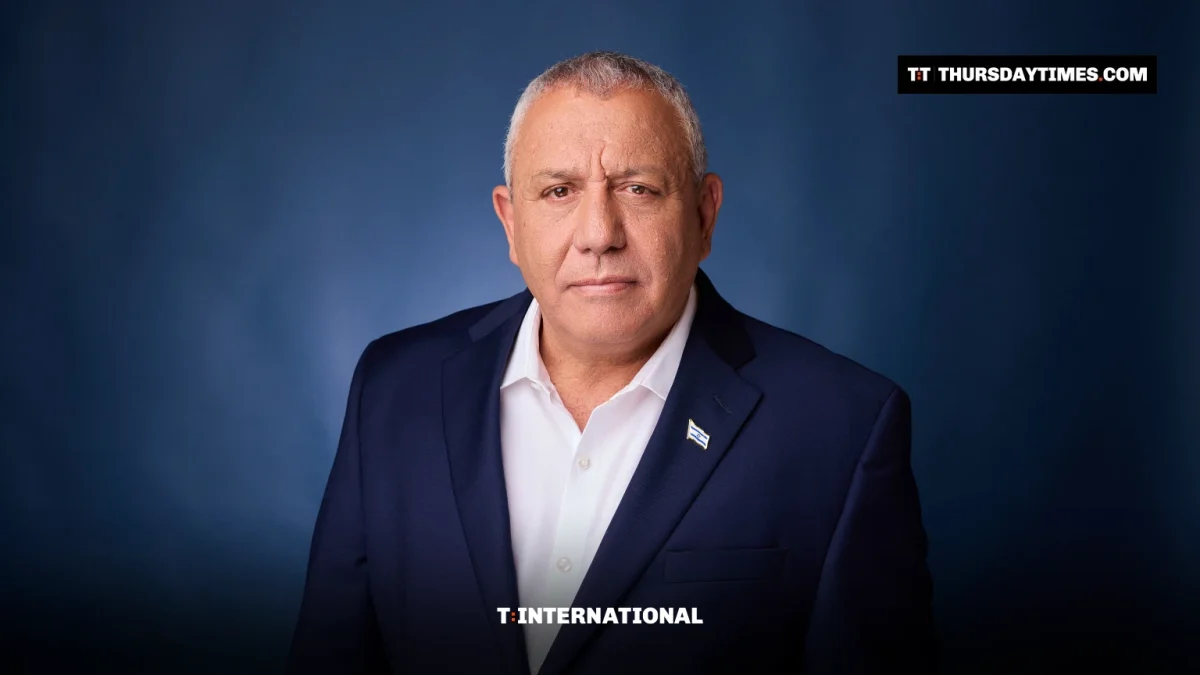
JERUSALEM (The Thursday Times) — Gadi Eisenkot, the former army chief leading the main challenge to Benjamin Netanyahu in Israel’s general election, has built his campaign on the argument that the man who led Israel into its longest war should not lead it out.
Polls before Tuesday’s vote showed his alliance, which draws support from the right and the centre, in a tight race with Netanyahu’s Likud-led bloc, with neither side holding a clear path to the 61 seats needed for a majority in the 120-member Knesset.
Soldier
Born in 1960 in Tiberias, Eisenkot spent nearly four decades in the military and served as chief of staff of the Israel Defense Forces from 2015 to 2019. In 2008, as head of Northern Command, he set out what became known as the Dahiya doctrine, the use of overwhelming force against areas from which Hezbollah fired, named after the Beirut suburb flattened in the 2006 Lebanon war.
Politician
He entered politics in 2022 alongside Benny Gantz. After the Hamas-led attack of October 7, 2023, he joined Netanyahu’s war cabinet as an observer. Weeks later his son, Gal, was killed fighting in Gaza. He left the war cabinet with Gantz in June 2024, criticising Netanyahu’s handling of the war and of the hostages held in Gaza, and later launched his own party, Yashar.
His pitch
Eisenkot has accused Netanyahu of “relying on a campaign of fearmongering, lies and threats” and said he was confident US President Donald Trump, who has endorsed Netanyahu, would work “in full co-operation with any leader chosen by the people”. He says the next government must stop Iran from getting nuclear weapons, whether by force or through a US-backed deal.
He has ruled out partnering with Arab parties, citing a lack of shared values, despite Netanyahu’s claims that he could not govern without them. Analysts have nonetheless sketched a scenario in which Arab parties back an Eisenkot-led minority government from outside. Follow our coverage of the vote.