JERUSALEM (The Thursday Times) — Israelis turned out in record numbers for an election billed as a turning point, but across the Middle East the vote was met with a shrug: people in Egypt, Gaza, Lebanon, Jordan and Iran told Reuters they expected nothing to change whoever wins.
“If one wins, he wants to strike you; if the other wins, he wants to kill you. That’s it, nothing else,” said Tarek al-Kaissy in Jordan, summing up the contest between Benjamin Netanyahu and his rival, former army chief Gadi Eisenkot.
Where the count stands
With nearly 86 per cent of votes counted on Wednesday, Israeli media forecast Netanyahu’s bloc of right-wing, hardline and ultra-Orthodox parties winning 53 seats in the 120-seat Knesset, against 48 for the Eisenkot-led opposition. That leaves Netanyahu short of a majority, but his opponents can only unseat him by relying on the Arab parties, which many Jewish leaders reject, and he would stay on as caretaker during any coalition talks. Earlier, with two-thirds counted, his bloc was on 54.
‘They want to eradicate the Palestinian people’
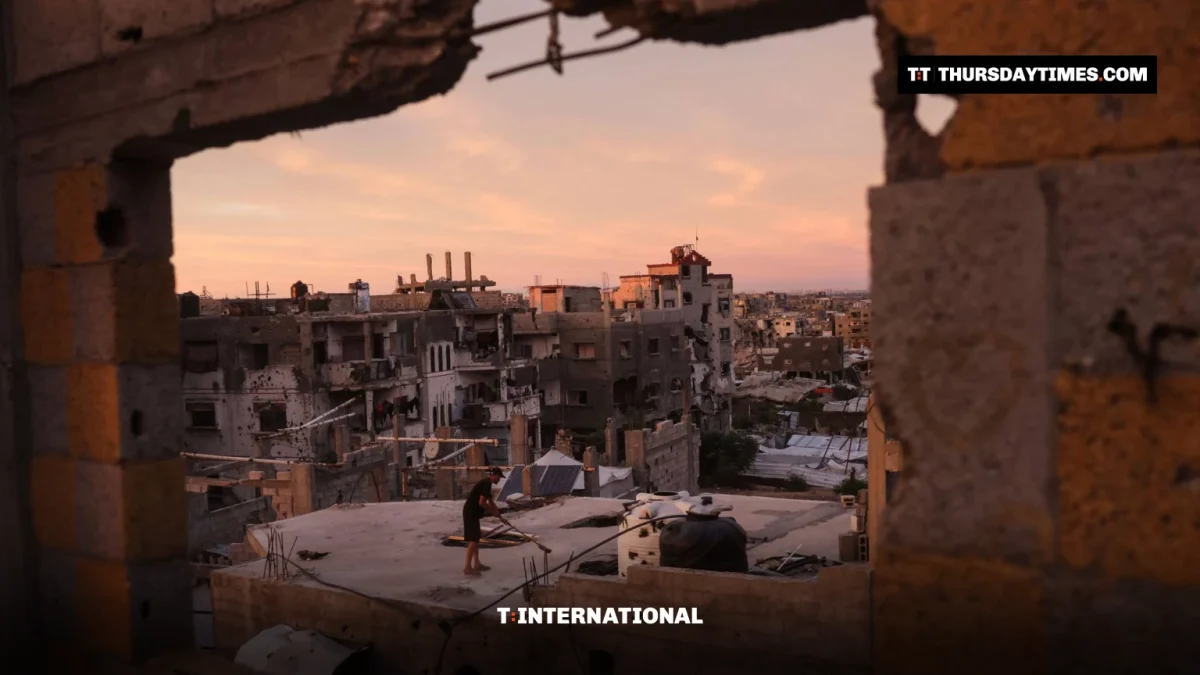
In Gaza, where more than 74,000 Palestinians have been killed in the war according to local health authorities, displaced resident Majed Jundia saw no difference between the two men. “They want to eradicate the Palestinian people so they do what they want,” he said.
In Egypt, the first Arab country to make peace with Israel, 62-year-old lawyer Outhman Selim said his hope that a Netanyahu defeat would pull Israel away from the far right had been dashed. In Lebanon, 81-year-old Kamel Haddad said he could not care less who won. “Let them tear each other apart, what difference does it make to me? They might get preoccupied with one another… Perhaps they would leave us be for a bit.”
Eisenkot no dove
Eisenkot offered little comfort to Israel’s neighbours. On the campaign trail he stressed his authorship of the “Dahiyeh doctrine” of answering attacks with disproportionate force, which he applied as a commander during the 2006 war with Hezbollah. Netanyahu, for his part, used his election-night speech to raise the prospect of renewed joint strikes on Iran with US President Donald Trump. In Tehran, where banners of the slain Supreme Leader Ayatollah Ali Khamenei still hang, 50-year-old Abdollah Karimi said: “I genuinely see the possibility of attack.”
Pakistan, which does not recognise Israel, has not commented on the result. Pakistanis on the street told TT before the vote that they wanted Netanyahu gone.