GILGIT (The Thursday Times) — Gilgit-Baltistan marked its 79th Independence Day across all 10 of its districts on Sunday with flag hoisting, a 21-gun salute and tributes to the local fighters who ended Dogra rule in the region on November 1, 1947.
The main ceremony was held at Chinar Bagh in Gilgit, where Governor Syed Mehdi Shah and Chief Minister Haji Amjad Hussain raised the national flag. Contingents of police and security forces presented a salute, and the two leaders and the Force Commander Northern Areas laid wreaths at the Martyrs’ Memorial. The day began with special prayers in mosques.
Governor Shah said the courage and sacrifices of the region’s forefathers had allowed its people to live in freedom. The day called on them to pledge loyalty to the homeland and play an active part in its development, he said, adding that freedom was a blessing all had a duty to safeguard. He also praised the armed forces, saying they had shot down more than seven Indian aircraft in the recent confrontation with India.
Chief Minister Hussain said the people of Gilgit-Baltistan had overthrown the Dogra regime despite limited resources and then taken the historic decision to accede to Pakistan.
Similar ceremonies, silent walks and sports events were held in Skardu, Diamer, Ghizer, Hunza, Nagar, Ghanche, Astore and Shigar. Tributes also came from elsewhere in Pakistan, including from the PTI and from PPP leader Syed Nasir Hussain Shah, who praised the heroes’ sacrifices and the region’s culture and beauty, while the occasion also brought renewed calls for the region’s greater constitutional integration.
What happened in 1947
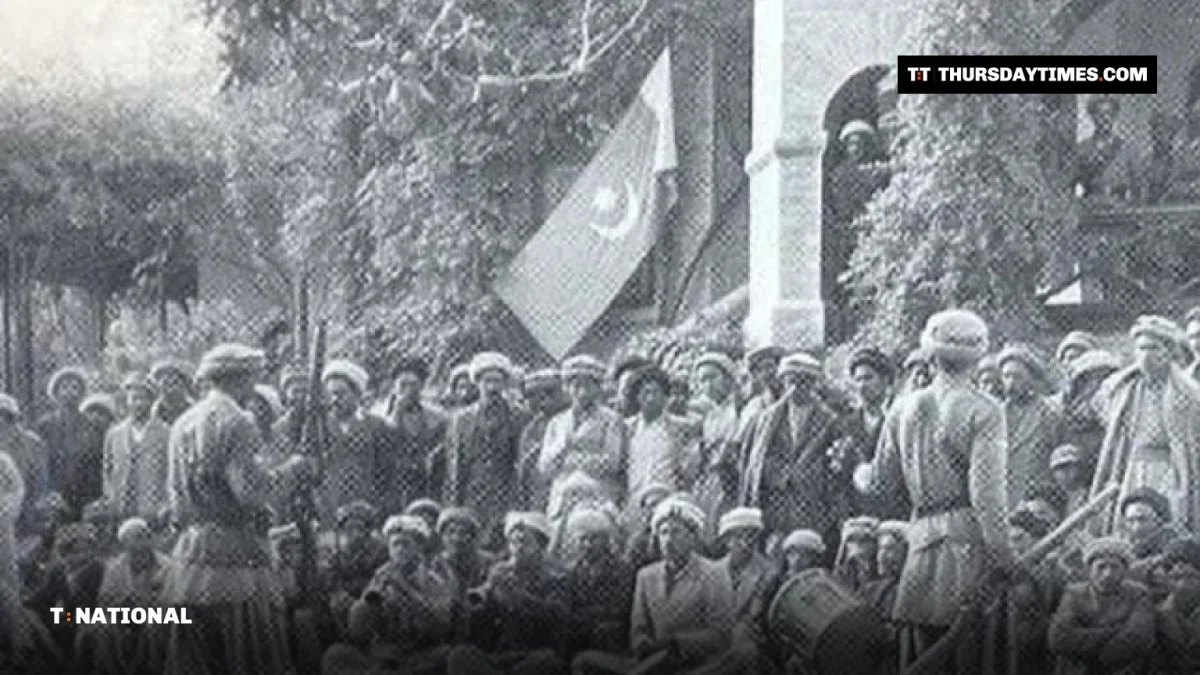
After partition, the region was part of the princely state of Jammu and Kashmir. On November 1, 1947, the Gilgit Scouts and local forces, with Subedar Major Babar Khan among their leaders, moved against the Maharaja’s governor, Brigadier Ghansara Singh, who surrendered. The Scouts’ British commander, Major William Brown, also played a leading part.
A provisional government declared an independent Islamic Republic of Gilgit that day. Its leaders then opted for Pakistan, and on November 16 the Pakistani government’s representative, Sardar Mohammad Alam Khan, arrived in Gilgit and took charge as political agent.