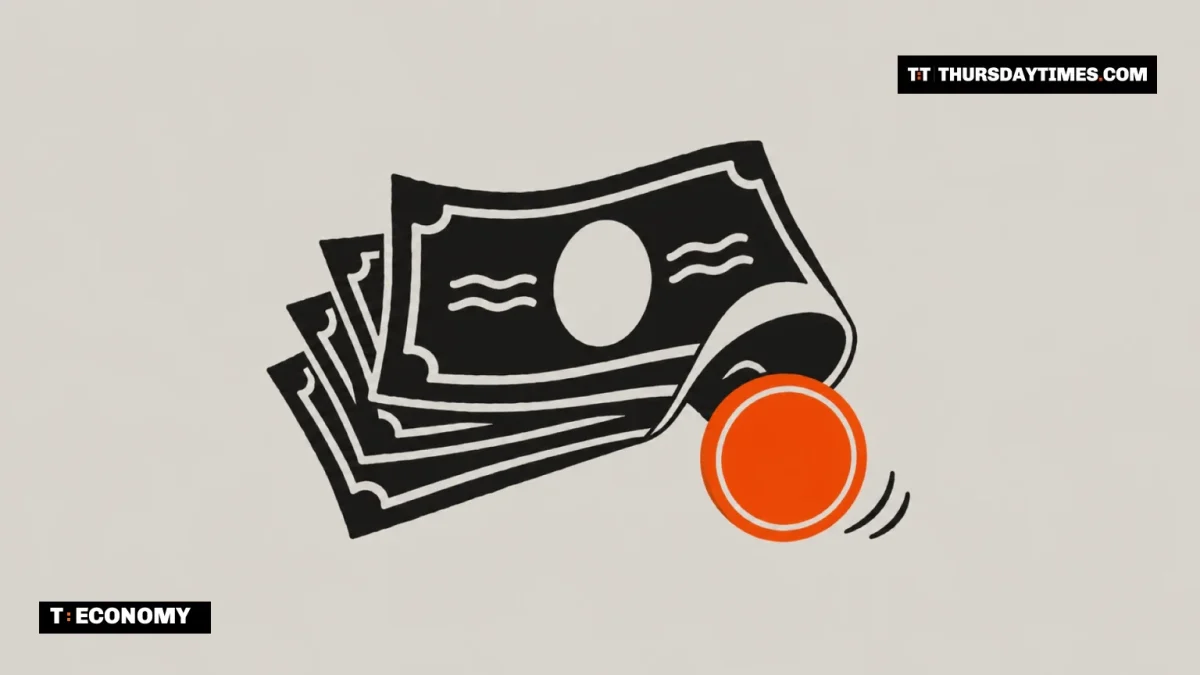
ISLAMABAD (The Thursday Times) — The federal cabinet has approved designs for a new series of Pakistani currency notes and decided to replace the Rs10 note with a coin, the Prime Minister’s Office said on Wednesday.
The cabinet, chaired by Prime Minister Shehbaz Sharif, took the decision on the Finance Ministry’s recommendation. It has not said when the new notes will appear, when the Rs10 note will stop being legal tender or whether there will be a deadline for exchanging existing notes.
The State Bank of Pakistan said in September, when rumours of a deadline were circulating, that any withdrawal would be formally announced and that the public would be given adequate time to exchange notes. So there is no reason to rush to swap the Rs10 notes in your wallet.
What is changing
The cabinet was told that the designs reflect the country’s culture, history and development. They were finalised by a special committee after suggestions from artists and designers across the country, and consultations with economists and financial institutions.
Counterfeiting was described in the briefing as a major problem. The new notes will carry advanced security features meant to be hard to copy and easier for the public and banks to check. They will also be made from more durable material, so that they need replacing less often. The statement did not describe the designs in further detail.
Why the Rs10 note is going
The cabinet was told that low-value coins last longer than low-value notes around the world, and that the change would save the cost of constantly replacing them. State Bank Deputy Governor Inayat Hussain told a Senate committee in August that the central bank was considering dropping the note because of its rising production cost, and that it had tried twice before.
The Rs10 note makes up about 35 per cent of the notes printed each year, according to one recent estimate, at a replacement cost of Rs8 billion to Rs10 billion a year. Rs10 coins are already in circulation, but they have never caught on, which leaves the government with a task that may prove harder than designing a note: getting Pakistanis to carry them.