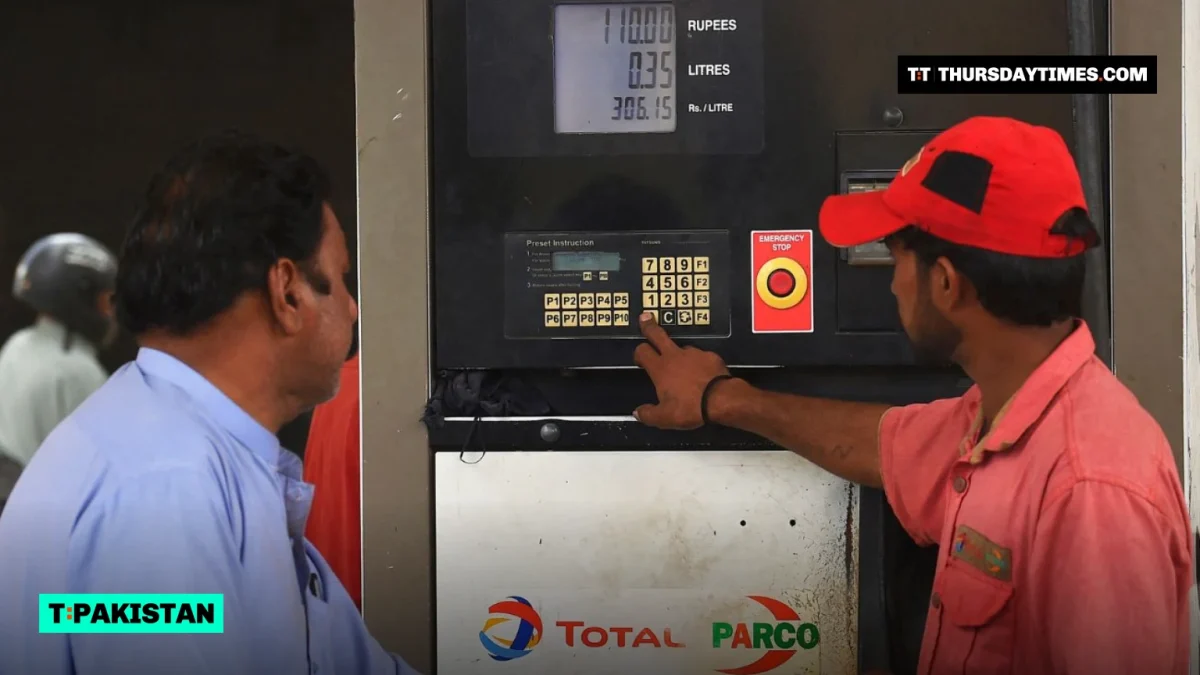
ISLAMABAD (The Thursday Times) — Pakistan cut the price of petrol by Rs8 a litre to Rs338 on Tuesday, the second cut in less than a week, as world oil prices slid to two-month lows on signs that the confrontation with Iran is cooling.
High-speed diesel, which runs the trucks, buses and tractors that move most of the country’s goods, was cut by Rs7 to Rs371 a litre. The Oil and Gas Regulatory Authority said the new ex-depot prices take effect from Wednesday, November 11, under the pricing mechanism approved by the federal government.
The old rates of Rs346 for petrol and Rs378 for diesel had been in force only since last week, when the government cut petrol by Rs6.59 and diesel by Rs4.25. Taken together, petrol is now Rs14.59 a litre cheaper and diesel Rs11.25 cheaper than it was a week ago.
Petrol price follows oil to a two-month low
The cut tracks a fall in crude. Brent, the international benchmark, dropped about 2 per cent on Tuesday to around $90.64 a barrel, and US crude fell to about $85.41, putting both on course for their lowest closes since late August after US officials played down the need for further military action against Iran.
Pakistan imports most of its oil, so swings in world prices reach the pump within days. Petrol cost Rs266.17 a litre at the end of February, before the Gulf war sent crude soaring, and peaked at Rs458.41 in early April, according to official price notifications.
Even after Tuesday’s cut, petrol is still about Rs72 a litre dearer than it was before the war, and diesel about Rs90 dearer than its pre-war price of Rs280.86. A lasting peace in the Gulf would be worth far more to Pakistan’s fuel bill than any single cut.
What cheaper diesel means for prices
Diesel matters most for inflation. Nearly all of Pakistan’s food and freight moves by road, so a lower diesel price usually feeds into transport fares and market prices, though more slowly than an increase does. Petrol matters most to the millions who ride motorcycles and drive small cars to work.
The government has faced calls to pass on more of the fall in world prices to consumers. A Jamaat-e-Islami delegation has been holding talks with Deputy Prime Minister Ishaq Dar on petroleum prices.