DUBAI (The Thursday Times) — The six Gulf Cooperation Council states have agreed to set up a forward headquarters for their Unified Military Command in Kuwait and to assign “appropriate” forces to it, the bloc’s Secretary-General, Jasem Mohamed Albudaiwi, has said.
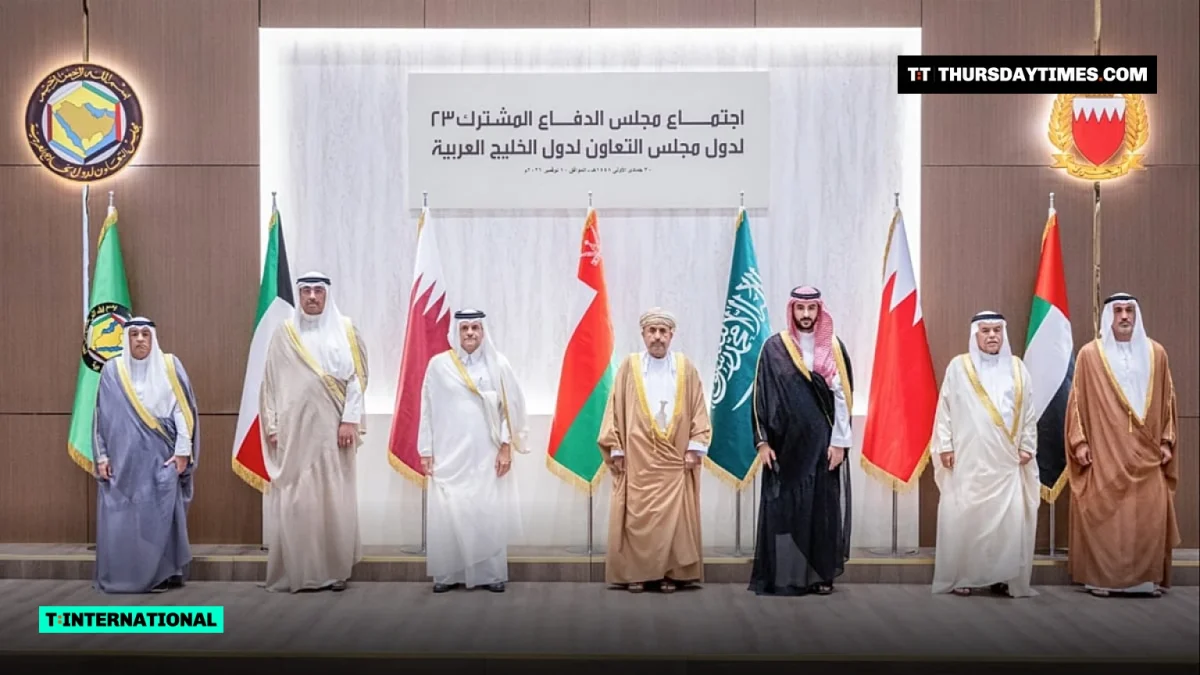
The decision was taken on Tuesday at the 23rd meeting of the GCC Joint Defence Council in Manama. Bahrain’s Minister of Defence Affairs, Lieutenant General Abdullah bin Hassan Al-Nuaimi, chaired the session, which was attended by defence ministers and representatives from Bahrain, Kuwait, Oman, Qatar, Saudi Arabia, and the United Arab Emirates.
No details have yet been released on where in Kuwait the headquarters will sit, how many troops will serve there, or which forces will be assigned to it.
Albudaiwi said the meeting acted on directives from Gulf leaders at their extraordinary summit in Jeddah in April, which called for stronger joint military action and a better ability to face common threats. He said the council had also adopted other decisions that would take Gulf military cooperation to a broader level of integration.
Why Kuwait
A forward command is a headquarters placed closer to likely flashpoints than a force’s main command, so that forces can be coordinated and deployed faster. Kuwait sits at the northern tip of the Gulf. It borders Iraq and Saudi Arabia, and faces Iran across the water.
The GCC created its Unified Military Command at a summit in Kuwait in December 2013, to plan and run joint operations and to defend member states’ territory, airspace, and waters. Its main headquarters, in Riyadh, opened in 2021.
Gulf states, most of which host large US military bases, have faced repeated Iranian missile and drone attacks since the United States and Israel went to war with Iran on February 28. The war has disrupted flights and shipping, and put the region’s oil and gas exports at risk. Iran-aligned armed groups in Iraq have also launched drones at Gulf states.
Albudaiwi condemned the Iranian attacks on GCC states that damaged civilian sites and infrastructure. He paid tribute to the armed forces of member states and offered condolences for those killed.
He also condemned Houthi attacks on Saudi Arabia, including the targeting of holy sites, and said the security of the Kingdom was an integral part of the security of every GCC country. On Wednesday, Saudi air defences destroyed three Houthi cruise missiles aimed at Riyadh.
Another layer of Gulf defence
The new headquarters adds to a growing web of defence arrangements in the region. In August, Saudi Arabia, Pakistan, and Türkiye signed the Makkah defence pact, under which an attack on one is treated as an attack on all three. Pakistan and Saudi Arabia have also had a bilateral mutual defence agreement since 2025.
On Wednesday, Pakistan and Kuwait hailed their newly ratified defence agreement as Prime Minister Shehbaz Sharif met Kuwait’s Prime Minister on the sidelines of COP31 in Antalya.